Table of Contents
- Start With the Right Questions Before You Buy
- What Causes Oily Hair and Scalp
- How to Choose the Best Shampoo for Oily Scalp
- Scalp Exfoliation for Oily Hair: Scrubs, Masks, and Clay
- How Often to Wash Oily Hair (and How to Wash It Right)
- Dry Oily Scalp Treatment: When Oil and Flaking Coexist
- Signs of Over-Cleansing and When to See a Dermatologist
- Frequently Asked Questions
Last Updated: October 17, 2026
Start With the Right Questions Before You Buy
Learning how to choose a scalp treatment for oily hair starts with one question: what is actually causing the grease? Most people blame their shampoo. In practice, the fix depends on whether you have true oiliness, product buildup, or a flaky scalp that only looks oily.
The wrong product makes things worse, not better.
Below, we break down a simple framework for matching a scalp treatment to your actual symptoms. The goal is a scalp that feels balanced, not stripped.
Is It Oil, Buildup, or Something Else?
Oily scalp means the sebaceous glands produce excess sebum, the natural oil that coats your skin and hair. Buildup is different: it’s residue from shampoo, conditioner, dry shampoo, or styling products sitting on the scalp. Flaking adds a third layer, since dandruff and irritation can look greasy at the roots.
Here is how to tell them apart:
- True oiliness: Greasy roots within a day of washing, all over the scalp
- Buildup: Heavy or coated feeling, often with dull hair and itchy patches
- Dandruff or irritation: Visible flakes, redness, or itching that worsens with harsh products
If your scalp is red, painful, or shedding more hair than usual, see a dermatologist before buying anything.
The right scalp treatment depends on the cause, not the symptom. Greasy roots from buildup need clarifying, while true oiliness needs gentle balancing.
What Causes Oily Hair and Scalp
Sebaceous glands sit next to every hair follicle, and they release sebum to protect the skin. Some people simply produce more. Genetics, hormones, stress, and heat all push those glands to work harder.
A common mistake is over-washing. Stripping the scalp with harsh cleansers can trigger more oil production as the skin tries to compensate. Heavy conditioners applied at the roots cause the same greasy look.
Other everyday culprits:
- Touching your hair and scalp through the day
- Dirty hairbrushes that spread oil and dead skin cells
- Sleeping in leave-in products or dry shampoo
- Hot water and rough towel-drying
None of these are permanent problems. They are habits, and habits are easier to change than biology.
How to Choose the Best Shampoo for Oily Scalp
The best shampoo for oily scalp is a gentle, sulfate-free formula that cleans without stripping. Look for lightweight surfactants and skip heavy oils, silicones, and thick butters near the roots.

Read the label before you buy. A shampoo built for oily scalps should feel light, rinse clean, and leave no film behind. If your hair feels coated after washing, the formula is too heavy for you.
Match the Active to Your Symptom, Not the Bottle
Most people buy the loudest label, “clarifying,” “detox,” “oil control”, and end up with the wrong active for their actual problem. Use this symptom-to-ingredient map instead:
- Greasy roots within a day, no flakes or itch: a gentle balancing shampoo with mild surfactants. You do not need an active drug ingredient; you need consistent, non-stripping cleansing.
- Greasy roots plus visible flakes and itch: an over-the-counter medicated shampoo with zinc pyrithione, salicylic acid, or ketoconazole. These are the actives used in products regulated as drugs for dandruff and seborrheic dermatitis.
- Heavy, coated roots with dull hair but no flakes: a clarifying shampoo used occasionally to remove product and hard-water residue.
- Greasy roots plus redness, burning, or soreness: stop self-treating and see a dermatologist. Medicated shampoos can worsen an irritated or broken scalp.
How to Read the Ingredient List in Order
Ingredients are listed by concentration, so the first five or six names tell you more than the marketing copy. A practical read:
- First ingredient should be water in almost any shampoo. If an oil or butter appears in the top five, it is likely too heavy for oily roots.
- Surfactants come next. Gentler options include cocamidopropyl betaine, sodium cocoyl isethionate, and sodium methyl cocoyl taurate. Harsher sulfates like sodium lauryl sulfate clean aggressively and can leave the scalp tight.
- Actives appear mid-list. Salicylic acid, zinc pyrithione, and ketoconazole are the ones with a defined job. Tea tree oil and niacinamide are common in cosmetic formulas but are not drug actives.
- Silicones and heavy oils near the top, dimethicone, coconut oil, shea butter, signal a formula built for dry or damaged hair, not an oily scalp.
Ingredients That Manage Sebum Without Stripping
Some ingredients help control oil. Others just hide it. Here is what to look for:
- Salicylic acid: Loosens dead skin cells and helps clear buildup. Best for oily scalps with flaking or clogged-feeling roots.
- Zinc pyrithione: Common in anti-dandruff formulas for flaking scalps. Pair with a gentle cleanser so you are not stripping and medicating at once.
- Ketoconazole: A stronger antifungal active for persistent flaking and itching. Follow the label’s frequency, not a daily routine.
- Tea tree oil: A gentle option many people find soothing. It can irritate sensitive skin, so patch-test first.
- Clay and charcoal: Absorb surface oil in masks and scrubs. They do not change sebum production.
- Niacinamide: Found in some balancing formulas for scalp care. Evidence for oil control is modest, so treat it as a supporting ingredient, not a fix.
Avoid alcohol-heavy tonics and anything that leaves your scalp tight and dry. Tightness is a sign of over-cleansing, not a clean scalp.
Pick the active by symptom: balancing cleanser for plain oiliness, a medicated active for flakes and itch, a clarifier for buildup, and a dermatologist for redness or pain. The label word “detox” tells you nothing.
Scalp Exfoliation for Oily Hair: Scrubs, Masks, and Clay
Scalp exfoliation for oily hair removes dead skin cells, product buildup, and excess oil that shampoo alone misses. A gentle scrub or clay mask once a week is plenty for most people.
How to exfoliate safely:
- Wet your hair and part it into sections
- Apply the scrub or mask directly to the scalp, not the lengths
- Massage with fingertips for one to two minutes
- Rinse thoroughly with lukewarm water
- Follow with a lightweight conditioner on the ends only
Skip gritty scrubs if your scalp is irritated or flaking heavily. A soothing clay mask or a professional scalp treatment is a safer choice.
How Each Format Actually Works
Exfoliating products are not interchangeable. They remove oil and buildup by different mechanisms, and the mechanism determines who should use them:
- Physical scrubs use particles, sugar, salt, jojoba beads, or silica, to lift dead skin and residue by friction. They give the most immediate “clean” feeling, but friction is the risk: on an inflamed or broken scalp, scrubbing can worsen irritation.
- Clay and charcoal masks absorb surface oil and lift loose residue as they dry. They do not dissolve buildup the way an acid does, and leaving them on too long can leave the scalp tight and dry.
- Exfoliating acids, salicylic acid is the common one in scalp products, chemically loosen dead skin cells and oil inside the follicle opening. This is the better route for clogged-feeling roots and flaking, and it is gentler than scrubbing when the scalp is reactive.
- Enzyme or gentle gel exfoliants rely on fruit enzymes or mild acids and suit sensitive scalps that cannot tolerate grit.
Match the Treatment to Your Scalp and Hair
One routine does not fit every head. A quick framework:
- Fine, straight hair: oil travels down the strand fast, so stick to lightweight clarifying or acid-based treatments and avoid heavy clay that can leave residue.
- Thick or coarse hair: can tolerate a clay mask or physical scrub more often because oil moves slowly and the scalp is less exposed.
- Curly or coily hair: wash less often, so buildup accumulates, but scrubbing disrupts curl pattern and can cause breakage. Prefer acid-based exfoliants applied with fingertips and section carefully.
- Color-treated hair: many clarifying and exfoliating products can fade color. Look for color-safe formulas and limit clarifying treatments.
- Sensitive or reactive scalp: skip grit entirely. Use a fragrance-free, acid-based or enzyme exfoliant at low frequency, and stop if you feel stinging.
Frequency and the Over-Cleansing Trap
Once a week is the ceiling for most people, and many do fine every two weeks. The warning signs that you are overdoing it:
- Tightness or stinging right after rinsing
- Redness or a raw feeling along the part line
- Oil returning within hours of washing
- New flaking that was not there before
If any of these appear, cut exfoliation back and return to a gentle balancing shampoo for a week or two. Do not stack a scrub, a clarifying shampoo, and a medicated anti-dandruff product in the same week, that combination strips the scalp and can trigger more oil and irritation.
| Treatment Type | Best For | Frequency | Watch Out For |
|---|---|---|---|
| Gentle balancing shampoo | Daily greasy roots | Daily or every other day | Heavy silicones |
| Clarifying shampoo | Product buildup | Once a week | Over-drying, color fade |
| Physical scalp scrub | Dead skin cells, buildup | Once a week | Irritated or broken skin |
| Clay or charcoal mask | Excess surface oil | Once a week | Leaving it on too long |
| Acid-based exfoliant | Clogged roots, flaking | Once a week or every two weeks | Stinging on sensitive skin |
| Dry shampoo | Between washes | Occasional use | Buildup if overused |
Exfoliation manages oil and buildup, it does not treat a medical condition. If flaking, redness, or itching persists after several weeks of gentle, consistent care, see a dermatologist rather than escalating to stronger products.
How Often to Wash Oily Hair (and How to Wash It Right)
How often to wash oily hair depends on your scalp, not a fixed rule. Many people with true oiliness do best washing daily or every other day with a gentle shampoo. Washing less does not “train” an oily scalp for everyone.
The method matters as much as the frequency. Use lukewarm water, focus shampoo on the scalp, and let it run through the lengths as you rinse.
Double Shampooing and Thorough Rinsing
Double shampooing means washing twice in one shower. The first pass lifts oil and buildup; the second cleans the scalp properly. It helps most on days when your roots feel heavy.
Thorough rinsing matters just as much. Leftover shampoo and conditioner sit on the scalp and cause buildup. Rinse until the water runs clear, then rinse a few seconds more.
Apply conditioner from mid-length to ends only. Keep it off the roots, and your scalp will stay cleaner between washes.
Dry Oily Scalp Treatment: When Oil and Flaking Coexist
A dry oily scalp treatment has to do two jobs at once: calm the flaking and manage the oil. This combination is common, and harsh anti-dandruff products often make the dryness worse.
Start with a gentle, fragrance-free cleanser and a lightweight moisturizing scalp serum. Add a zinc pyrithione or salicylic acid shampoo a couple of times a week if flakes persist. If flaking, redness, or itching does not improve after a few weeks of consistent care, book a dermatologist visit.
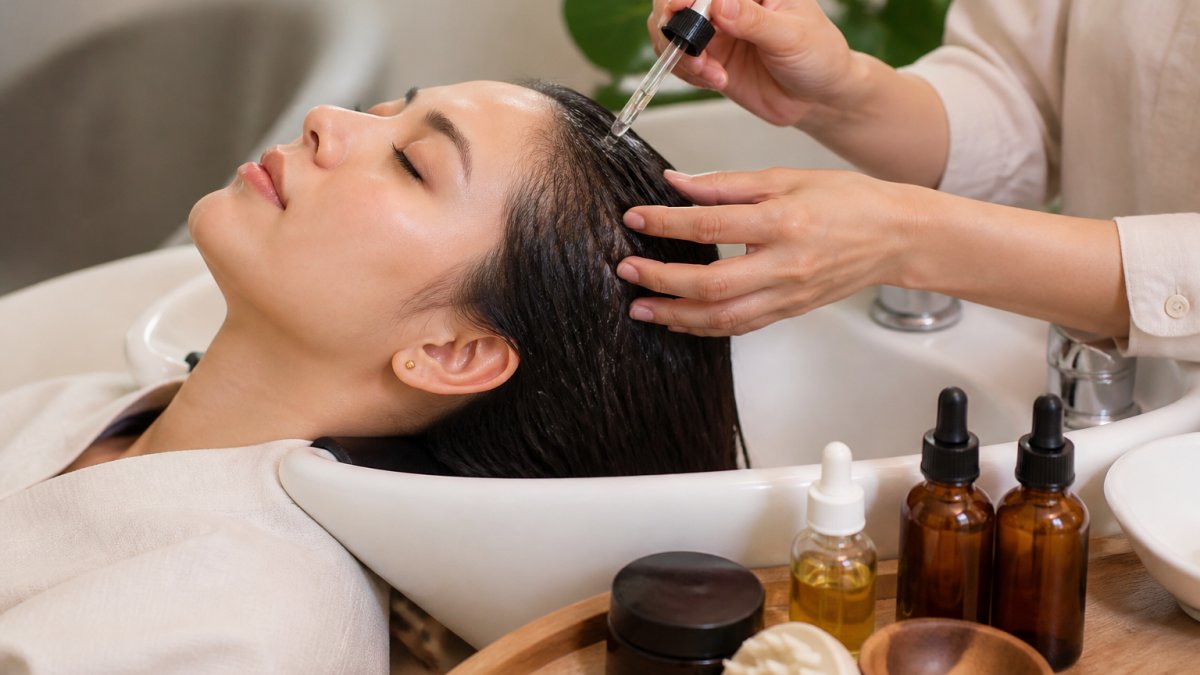
For persistent buildup and flaking, a professional scalp treatment can help reset the scalp. At Camellia Scalp and Skin Lounge, our head spa rituals combine scalp cleansing, exfoliation, and a relaxing scalp massage in a calm lounge setting. We also offer transparent pricing and same-day availability options.
Signs of Over-Cleansing and When to See a Dermatologist
Over-cleansing shows up as tightness, stinging, redness, and more oil within hours of washing. If your scalp feels dry right after shampooing but greasy by lunch, you are likely stripping it.
Signs you should see a dermatologist:
- Persistent redness, pain, or open sores
- Thick, silvery, or yellow flakes
- Sudden or patchy hair loss
- Itching that disrupts sleep
- No improvement after several weeks of gentle care
A dermatologist can check for conditions like seborrheic dermatitis or folliculitis (the American Academy of Dermatology). Scalp treatments help with oil, buildup, and comfort. They are not a medical cure.
Do not layer strong clarifying shampoos, scrubs, and anti-dandruff products in the same week. Stacking them strips the scalp and can trigger more oil and irritation.
Frequently Asked Questions
What is the best scalp treatment for an oily scalp?
There isn’t one single best option, because the right scalp treatment depends on what’s driving the oil. A balancing or gentle shampoo works for daily maintenance, a clarifying shampoo removes product buildup once a week or so, and a scalp exfoliator with clay or charcoal helps lift dead skin cells. If flaking and itching come with the oil, look for treatments that address both. A scalp analysis with a professional can help match the treatment to your specific scalp condition.
How often should I use a scalp treatment for an oily scalp?
Most people with an oily scalp can use a clarifying shampoo or scalp exfoliator once a week, and a gentle balancing shampoo on the other wash days. If your scalp is also dry or sensitive, start with every other week and watch for tightness, stinging, or increased flaking, which are signs you’re over-cleansing. Wash frequency itself depends on how quickly sebum returns, which varies from person to person. Adjust gradually rather than changing everything at once.
Can an oily scalp also be dry or itchy?
Yes. A dry oily scalp is common, and it usually means the scalp is producing excess sebum while also lacking moisture or showing irritation. Harsh shampoos that strip the scalp can trigger more oil production as the skin tries to compensate, which makes the problem worse. Look for gentle, sulfate-light cleansers and lightweight, oil-free moisturizing ingredients rather than heavy oils. If itching and flaking persist, a dermatologist can check whether a skin condition is involved.
When should I see a dermatologist about an oily scalp?
Book a dermatologist if you have persistent flaking, redness, or itching that doesn’t improve with a consistent gentle routine, if you notice patchy hair thinning or loss, or if the oiliness started suddenly. These signs can point to conditions that need medical treatment rather than over-the-counter products. A dermatologist can examine your scalp, confirm what’s causing the symptoms, and recommend prescription options if needed. General scalp care supports scalp health, but it doesn’t replace a medical diagnosis.
Greasy roots, flaking, and buildup rarely fix themselves with another drugstore bottle. If your scalp needs a proper reset, Camellia Scalp and Skin Lounge offers Japanese-inspired head spa rituals with scalp analysis, deep cleansing, exfoliation, and a relaxing scalp massage. Our licensed professionals build a plan around your scalp, and our pricing is posted upfront. Book now and give your scalp the care it has been asking for.