Last Updated: November 7, 2026
Quick Summary
Natural remedies for an itchy scalp in women over 40 focus on restoring moisture and calming irritation, since oil production drops and the scalp barrier weakens with age. Try jojoba or coconut oil pre-treatments, gentle fragrance-free shampoo, colloidal oatmeal paste, and diluted apple cider vinegar rinses. Cool rinses and skipping styling products ease itch fast.
- Pre-treat with jojoba or coconut oil for 20 minutes before washing, once or twice a week.
- Dilute apple cider vinegar one part vinegar to three parts water, and patch test first.
- Use light oils like jojoba for fine hair; richer oils suit coarse or curly hair.
- See a professional if itch lasts more than a few weeks or comes with redness or sores.
- Dry scalp shows powdery white flakes; dandruff flakes are larger, yellowish, and greasy.
Table of Contents
- Why Your Scalp Itches More After 40
- Perimenopause and Itchy Scalp: What Hormonal Changes Do
- How to Stop an Itchy Scalp Immediately
- A Dry, Itchy Scalp Treatment at Home You Can Follow
- Itchy Scalp and Hair Loss: When Thinning Is a Signal
- Matching the Remedy to the Likely Cause
- Hair Texture, Styling, and Protective-Style Considerations
- When to Stop Self-Treating and Book a Scalp Consultation
- Frequently Asked Questions
Why Your Scalp Itches More After 40
An itchy scalp after 40 is usually not a new allergy. It is often the result of skin that has lost moisture and oil over time, combined with years of product use.
The itch itself is a signal. Your scalp barrier, the outer layer that holds moisture in and irritants out, can become thinner and drier with age.
Here is what changes after 40:
- Oil production drops. Sebum keeps the scalp supple. Less of it means more dryness and tightness.
- The barrier weakens. Moisture escapes faster, so irritation sets in sooner.
- Product buildup compounds. Years of styling products, dry shampoo, and hard water leave residue that traps irritants.
The fix is not always a stronger shampoo. Often it is a gentler routine plus targeted moisture.
Dry Scalp vs. Dandruff: Telling Them Apart
Dry scalp and dandruff look similar but need opposite care. Dry scalp is often associated with lack of moisture. Dandruff is commonly associated with yeast overgrowth on the scalp.
| Feature | Dry Scalp | Dandruff |
|---|---|---|
| Flake look | Small, white, powdery | Larger, yellowish, greasy |
| Scalp feel | Tight, dry, itchy | Oily, sometimes red |
| When it flares | Winter, after hot showers | Year-round, worse with stress |
| Best response | Moisture and gentle cleansing | Antifungal or exfoliating treatment |
A common mistake is treating dry scalp with harsh dandruff shampoo. That strips the little oil you have left and makes the itch worse. If your flakes are powdery and your scalp feels tight, lean toward moisture.
Perimenopause and Itchy Scalp: What Hormonal Changes Do
Perimenopause and itchy scalp can be connected, since hormonal changes affect skin across the body.
The result is a scalp that feels dry, tight, and easily irritated. Some women also notice more sensitivity to products they used for years.
What helps during this stage:
- Wash less often with a gentle, fragrance-free shampoo
- Add moisture back with a scalp oil before washing
- Avoid hot water, which strips oil fast
If your itch started around the same time as hot flashes or irregular cycles, hormones are likely part of the picture.
How to Stop an Itchy Scalp Immediately
To stop an itchy scalp fast, cool the scalp and calm the irritation before you reach for more product. Most instant relief comes from removing the trigger, not adding a new treatment.
Try these steps in order:
- Rinse with cool water. Heat inflames an itchy scalp. A cool rinse calms it within minutes.
- Stop scratching. Scratching breaks the skin and invites infection. Press with your fingertips instead.
- Skip the styling products for a day. Hairspray, gel, and dry shampoo can all trap irritants.
- Apply a cool compress. A damp, cool towel on the scalp for five minutes eases the urge to scratch.
- Use a gentle, fragrance-free moisturizer or oil. A few drops of jojoba can soothe tight, dry skin.
If the itch is severe and keeps you up at night, that is a sign to see a professional rather than keep self-treating.
A Dry, Itchy Scalp Treatment at Home You Can Follow
A dry, itchy scalp treatment at home works best as a simple weekly routine, not a one-time fix. The goal is to cleanse gently, add moisture back, and avoid anything that strips the scalp.
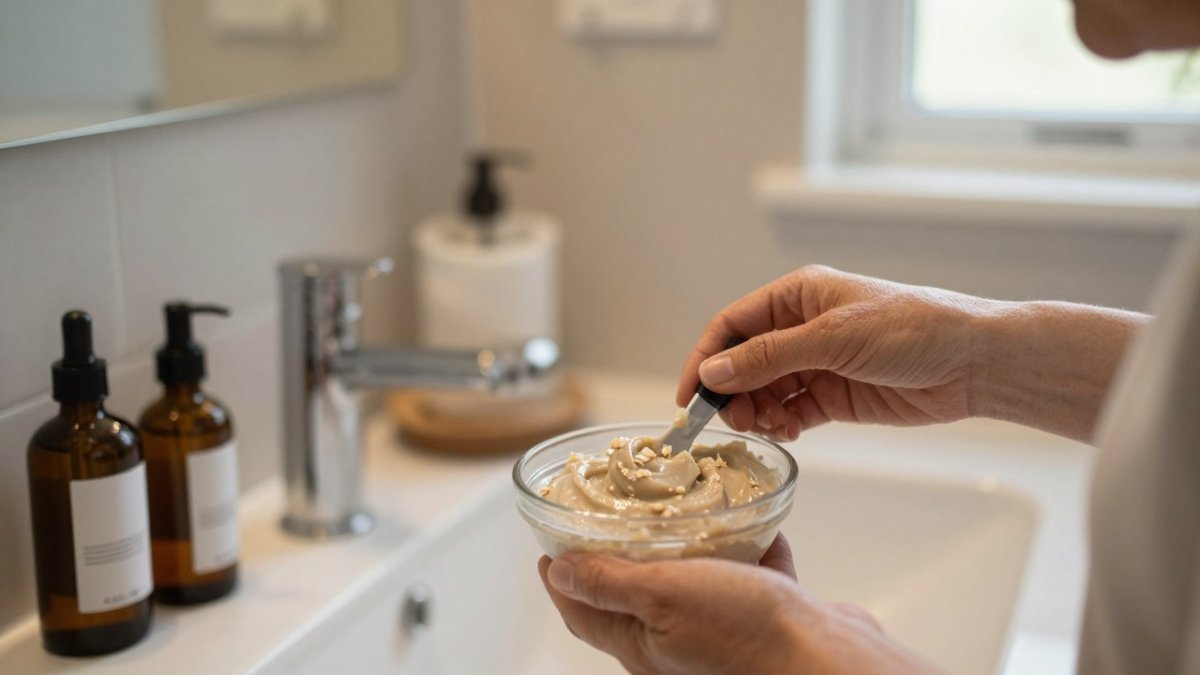
Follow this routine once or twice a week:
- Pre-treat with oil. Massage a small amount of jojoba or coconut oil into the scalp. Leave it 20 minutes.
- Cleanse gently. Use a mild, fragrance-free shampoo. Rinse thoroughly with lukewarm water.
- Soothe with oatmeal. Apply a colloidal oatmeal paste for 10 minutes, then rinse.
- Finish with a light oil. A few drops on damp scalp help lock in moisture.
- Let hair air-dry. Skip heat styling on treatment days.
Oils, Vinegar, and Oatmeal: What to Use and How
Not every natural remedy suits every scalp. Here is how the most common ones work and how to use them safely.
- Coconut oil: Deeply moisturizing. Best for dry scalp. Use a small amount, since too much can clog pores.
- Jojoba oil: Closest to your skin’s own oil. Light and safe for most scalps.
- Argan oil: Lightweight and soothing. Good for sensitive scalps.
Watch out: Undiluted apple cider vinegar can burn sensitive skin. Always dilute it, and do a patch test first.
Safety and Dilution Rules for Essential Oils
Essential oils are strong and need dilution before any use on the skin. Some people use essential oils such as tea tree or peppermint, and each has limits.
Follow these rules:
- Dilute every time. Dilute essential oils in a carrier oil before applying them to the scalp.
- Patch test first. Apply a small amount behind the ear and wait 24 hours.
- Avoid peppermint near the eyes. It can sting.
Watch out: Essential oil quality varies, so buy from a trusted source. Buy from a trusted source and never apply them neat.
Itchy Scalp and Hair Loss: When Thinning Is a Signal
Itchy scalp and hair loss can appear together, and that pairing deserves more attention than either symptom alone. The key question is whether the shedding is temporary and reactive or progressive and patterned, because the two call for different responses.
Two patterns worth telling apart
Reactive shedding (telogen effluvium). A stressor pushes more hairs than usual into the resting phase, and they shed two to three months later. Common triggers include illness with fever, surgery, major weight loss, severe stress, and some medications. The shedding is usually diffuse across the whole scalp, and it tends to be temporary once the trigger resolves.
Progressive thinning. This is a gradual, patterned change, often along the part or at the temples, and it is more closely tied to genetics and hormonal shifts. Itchy scalp is not always part of it, but when inflammation or a scalp condition is also present, the two can overlap.
Why itch and shedding show up together
Inflammation is the common thread. A scalp that is irritated, flaky, or colonized by yeast can create an environment that stresses hair at the root. Scratching makes it worse by breaking the skin and inviting secondary irritation. In some cases the itch is the primary problem and the shedding follows; in others, both trace back to a hormonal shift or a product reaction.
Signs that warrant professional evaluation
See a clinician or a licensed scalp professional if you notice any of the following:
- Shedding that continues for more than two to three months without an obvious trigger
- Visible widening of the part, thinning at the temples, or a changing hairline
- Patches of smooth, bare skin rather than diffuse thinning
- Redness, scaling, crusting, sores, or pus on the scalp
What a professional evaluation can tell you
A professional scalp evaluation can help identify factors that are hard to see in a mirror. Depending on what is found, a qualified clinician may suggest next steps, including a referral to a dermatologist.
Watch out: Do not assume every shed hair after 40 is permanent, and do not assume it is harmless either. Early evaluation tends to be more useful than waiting, because some causes are easier to address before thinning becomes advanced.
What you can do while you wait
Keep your routine gentle and consistent. Avoid tight styles, harsh shampoos, and scratching. Continue a mild, fragrance-free wash schedule and a light moisturizing oil if your scalp tolerates it. Track shedding with photos taken under the same lighting every few weeks, which gives a professional a clearer picture than memory alone.
Matching the Remedy to the Likely Cause
The right remedy depends on the cause. Use this quick guide to match your symptoms to a starting point.
| Likely Cause | Key Sign | First Step |
|---|---|---|
| Dry scalp | Powdery flakes, tight feel | Moisturizing oil, gentler wash |
| Dandruff | Greasy yellow flakes | Dandruff shampoo, exfoliation |
| Product buildup | Itch after styling | Clarifying rinse, fewer products |
| Hormonal dryness | Itch with cycle changes | Moisture focus, gentle routine |
| Sensitivity | Stinging, redness | Fragrance-free products, patch test |
If you are unsure which cause fits, start gentle. A mild routine rarely makes things worse, and it often reveals the answer within a couple of weeks.
Hair Texture, Styling, and Protective-Style Considerations
Hair texture changes how a remedy behaves. Fine hair holds oil poorly, while coarse or curly hair can handle richer products. Protective styles like braids and tight buns add another layer of care.
Keep these in mind:
- Fine hair: Use light oils like jojoba. Heavy coconut oil can weigh hair down.
- Curly or coarse hair: Richer oils and thicker masks work well.
- Protective styles: Cleanse the scalp between installs. Buildup under braids is a common itch trigger.
- Tight styles: Loosen tension. Pulling can irritate the scalp and stress hair at the root.
A scalp-friendly routine respects your texture. The same oil that soothes coarse hair may overwhelm fine hair, so adjust amounts rather than skipping moisture entirely.
When to Stop Self-Treating and Book a Scalp Consultation
Book a scalp consultation when home care stops working. If you have tried gentle cleansing and moisture for several weeks with no relief, the cause is likely something a trained eye needs to see.
Reasons to seek professional help:
- Itch that lasts more than a few weeks
- Redness, sores, or crusting
- Hair loss that is getting worse
- Flaking that does not respond to treatment
A professional scalp analysis can identify buildup, dryness, or irritation you cannot see in the mirror. At Camellia Scalp and Skin Lounge, our professionals provide customized scalp treatments, including Japanese-inspired head spa rituals and deep cleansing, based on your individual needs.
An itchy scalp after 40 is common, but it is not something you have to live with. Start with a gentle routine, match your remedy to the cause, and give it a few weeks.
Frequently Asked Questions
What natural remedies can help an itchy scalp in women over 40?
Some people use colloidal oatmeal masks, jojoba or argan oil, diluted apple cider vinegar rinses, or aloe vera gel. Tea tree and peppermint oil are strong and need dilution in a carrier oil. Because skin gets drier and thinner with age, start with one remedy at a time, patch test first, and give each a couple of weeks before judging results. Persistent itch deserves a professional scalp assessment.
Can perimenopause or menopause cause an itchy scalp?
Falling estrogen affects skin moisture and barrier function, and many women notice drier, more reactive skin, including the scalp, during perimenopause. Hormonal shifts can also change sebum production, which may worsen flaking. An itchy scalp at this stage is common but not something to ignore. If itch comes with redness, sores, or noticeable shedding, have a dermatologist or scalp specialist look at it rather than assuming it is hormonal.
Can an itchy scalp cause hair loss?
Itch itself does not pull hair out, but the conditions behind it can. Scratching damages the scalp barrier, and inflammatory conditions such as seborrheic dermatitis can affect the hair follicle environment. If you are noticing more shedding in the shower or on your pillow alongside persistent itch, treat it as a signal to get assessed. Early evaluation gives you more options than waiting for thinning to become obvious.
How can I stop an itchy scalp quickly at home?
For a quick, gentle routine, rinse with cool water instead of hot, and skip styling products for a few days. Some people also use a colloidal oatmeal or aloe mask, or a diluted apple cider vinegar rinse. Avoid scratching with fingernails, since broken skin invites irritation. These steps calm symptoms temporarily. If itch returns within days, the cause has not been addressed, and a scalp analysis is the better next step.
