Quick Summary
Hard water leaves dissolved calcium and magnesium on the scalp and hair, where they stay behind as the water evaporates. These minerals mix with oil, sweat, and product to form a stubborn hard water buildup that can cause dullness, dryness, and itching.
- Check your utility’s annual water quality report to confirm whether your water is hard.
- Chelating shampoos bind dissolved minerals so they rinse away from hair and scalp.
- Rinse for at least one full minute so minerals are carried away, not just loosened.
- Limit chelating or clarifying treatments to one per week, then reduce to every two weeks or monthly.
- Mineral buildup can improve within a few weeks, while persistent itching or pain needs professional evaluation.
Table of Contents
- What Hard Water Is and Why It Leaves a Film on Your Scalp
- Signs of Hard Water on Hair and Scalp
- Is It Mineral Buildup, Dandruff, or Product Residue?
- Hard Water Buildup on Scalp Removal: A Step-by-Step Routine
- How to Protect Hair From Hard Water Naturally
- How Long Hard Water Hair Damage Takes to Reverse
- Booking a Scalp Assessment for Persistent Buildup
- Frequently Asked Questions
What Hard Water Is and Why It Leaves a Film on Your Scalp
Last Updated: November 8, 2026
Hard water is water that carries high levels of dissolved calcium and magnesium. Hard water can leave flaky, itchy scalps and hair that feels coated no matter how often it is washed. The impact of hard water on scalp buildup is one of the most common and least understood causes of these complaints.
When hard water evaporates on your scalp or dries in your hair, those minerals stay behind. They mix with oils, sweat, and leftover product, and over time they form a stubborn hard water buildup that is easy to mistake for dandruff or simply “bad hair days.”
How calcium and magnesium accumulate on hair and scalp
Calcium and magnesium are not harmful to drink, but they behave differently on skin and hair. They cling to the hair shaft and the scalp, especially where oil collects.
- Shower water leaves minerals on the scalp with each rinse.
- Heat from styling tools can bake mineral deposits onto the hair shaft.
- Repeated washing adds more minerals without fully removing the old layer.
- Conditioners and styling products can trap minerals underneath them.
Over weeks and months, this buildup can make hair feel rough, look dull, and resist moisture. Water hardness varies by location, so the amount of buildup can depend on where you live.
Signs of Hard Water on Hair and Scalp
Hard water effects often show up gradually. Many people notice a pattern before they connect it to their water.
Common signs include:
- Hair that feels dry, rough, or straw-like even after conditioning
- Dull hair that lacks shine
- Hair that becomes heavy or limp soon after washing
- Products that seem to stop working
- A tight or waxy feeling on the scalp
If these signs appear alongside a dirty or gritty feeling after rinsing, mineral buildup is a likely contributor.
Itching, flaking, and irritation
Scalp itching and flaking are the signs people most often worry about. A film of minerals and oil can irritate the skin and make the scalp feel uncomfortable.
Watch out: Persistent itching, pain, redness, or sores should be evaluated by a qualified professional. Mineral buildup can cause irritation, but it does not explain every scalp symptom.
Is It Mineral Buildup, Dandruff, or Product Residue?
These three problems can look and feel alike, but they have different causes, different timelines, and different fixes. Sorting them out matters because the treatment for one can make another worse, a harsh clarifying wash can aggravate a dry, irritated scalp, and a heavy oil can seal minerals and product residue against the skin.
Use this general symptom checklist to help narrow it down before you buy another product.
| Clue | Mineral buildup | Dandruff (seborrheic dermatitis pattern) | Product residue |
|---|---|---|---|
| How it feels | Gritty, waxy, or filmy; hair squeaks less after rinsing | Itchy, sometimes tight; flakes cling to scalp and hairline | Coated or heavy, especially near the roots and crown |
| What you see | Dull film on the hair shaft, spots on glasses, soap that lathers poorly | White or yellow flakes, sometimes redness along the hairline | Flakes that look like dried product, not skin |
| When it appears | Builds steadily over weeks and months | Comes and goes in patterns; worse in dry or cold seasons for some people | Often follows a new product, heavy styler, or skipped rinse |
| How it responds | Improves with filtered final rinse and a chelating treatment | May need a medicated shampoo or professional care | Improves when you switch to lighter products and rinse longer |
| Where it shows | Scalp and hair shaft, especially where oil collects | Scalp, hairline, eyebrows, sometimes behind the ears | Roots, crown, and anywhere styler is concentrated |
A simple way to start is to note when symptoms appear. Mineral buildup grows steadily over time and is tied to your water source. Product residue often follows a new product or a rushed rinse.
Watch out: Persistent itching, pain, redness, open sores, or flakes that spread beyond the scalp should be evaluated by a qualified professional. Mineral buildup can cause irritation, but it does not explain every scalp symptom, and a skin condition that is treated as buildup can get worse with repeated harsh washing.
One more distinction worth knowing: product residue usually rinses away with a thorough wash and a lighter routine, while mineral film can survive normal shampooing because the minerals bind to the hair shaft.
Hard Water Buildup on Scalp Removal: A Step-by-Step Routine
Removing mineral buildup takes patience and the right sequence. Aggressive scrubbing can irritate the scalp, and overusing strong treatments can dry hair and skin, so a measured routine works better than a single deep clean.
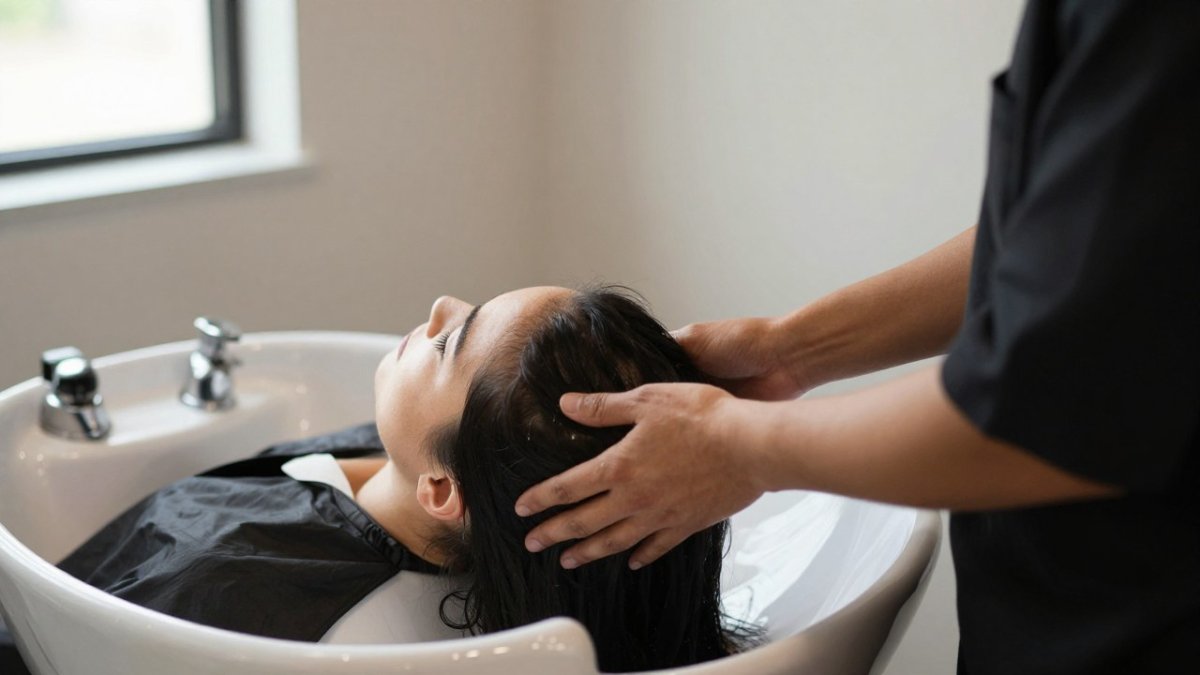
Total time: About 30 to 40 minutes, once every one to two weeks while you address buildup, then monthly for maintenance.
- Confirm your water first. Before you buy anything, check whether hardness is actually the problem. Your utility’s annual water quality report lists hardness in milligrams per liter (mg/L) or grains per gallon; many utilities publish it online. A home test kit or a test strip can confirm it at the tap. Hardness levels are commonly described on a scale from soft to hard; check your utility’s report or a test kit for the figures that apply to your water. If your report shows soft water, look at product residue and scalp condition before blaming minerals.
- Choose the right treatment. A chelating shampoo contains ingredients such as EDTA or phytic acid that bind dissolved minerals so they rinse away. A clarifying shampoo removes product and oil more broadly but may not address minerals as directly. Read the label: if the product is marketed for hard water, mineral removal, or swimmers, it is more likely to be chelating.
- Pre-rinse thoroughly. Spend a full minute under warm, not hot, water to loosen surface oil and product before applying anything.
- Apply to the scalp, not the ends. Work a quarter-sized amount into the scalp with your fingertips, not your nails. The ends get cleaned as the lather rinses through.
- Let it sit briefly. Follow the product label; most chelating shampoos call for one to three minutes. Do not leave it on longer than directed in hopes of a stronger result.
- Rinse for at least one full minute. Minerals need to be carried away, not just loosened. A short rinse can leave the film behind.
- Condition the lengths only. Apply a light conditioner from mid-shaft to ends and keep it off the scalp. Chelating and clarifying treatments can strip moisture, so this step protects the hair you are trying to help.
- Monitor results over four weeks. Track shine, texture, and scalp comfort. If you see no change after three or four treatments, the cause may be product residue or a scalp condition rather than minerals.
Chelating and clarifying shampoos, and how to use them safely
Chelating shampoos are designed to pull minerals off the hair. Clarifying shampoos remove product and oil buildup more broadly. Both can be useful, but both can also dry the scalp and hair if overused.
- Start with one treatment per week, and drop to every two weeks or monthly once buildup is under control.
- Do not combine several strong treatments in the same session, and do not use a chelating shampoo on the same day as a color service unless your stylist approves.
- Stop if the scalp stings, burns, or becomes more irritated, and give it a week before trying again.
- Keep moisturizing your hair lengths between treatments with a light conditioner or leave-in.
- If your hair is color-treated, fine, or already dry, space treatments further apart and lean on a gentle clarifying wash rather than a strong chelator.
Watch out: Overuse is the most common mistake. Treating every wash with a strong chelator can leave hair rough and the scalp tight, which mimics the very buildup you are trying to remove. More is not better here.
How to Protect Hair From Hard Water Naturally
You cannot always change your water, but you can reduce the damage.
- Rinse with filtered water when you can, especially for the final rinse.
- Wash less often if your scalp allows it, to limit mineral exposure.
- Use lighter products to reduce the layers that trap minerals.
- Dry hair fully to avoid mineral concentration on damp strands.
Shower filters, water softeners, and when each makes sense
A shower filter treats only the water coming out of your shower head. It is a good fit for renters or people who want a targeted fix for hair and skin.
A whole-home water softener treats all the water in the house. It makes more sense when hard water affects appliances, plumbing, and every faucet, not just hair.
Neither option removes existing buildup on its own. Pair either one with a chelating routine for best results.
How Long Hard Water Hair Damage Takes to Reverse
Mineral buildup on the scalp can improve within a few weeks of consistent care. Hair that has been dried out or weakened can take longer to recover because you are restoring moisture and strength, not just clearing a film.
A realistic timeline looks like this:
- Weeks one to two: Less residue, smoother feel after washing
- Weeks three to six: Improved shine and moisture retention
- Beyond six weeks: Gradual improvement in texture, especially if you trim split ends
Severe damage, such as breakage or hair loss, needs a professional evaluation rather than a home routine alone.
Booking a Scalp Assessment for Persistent Buildup
If buildup, itching, or flaking continues after a few weeks of home care, a professional assessment can help identify what is happening. Camellia Scalp and Skin Lounge in Las Vegas offers scalp analysis and head spa treatments designed to cleanse the scalp and support healthier-looking hair. You can book a visit online.
Ready to clear the buildup? Camellia Scalp and Skin Lounge offers scalp analysis and relaxing head spa rituals in a calm setting at The Shops at Peace Plaza. Book Now
Frequently Asked Questions
Can hard water cause an itchy or flaky scalp?
Yes, it can contribute to itching and flaking. Mineral deposits from calcium and magnesium can form a film that irritates the scalp and traps oil and dead skin cells. Mineral buildup is not the only possible cause, though. Dandruff, seborrheic dermatitis, and product residue can produce similar symptoms. If itching or flaking persists for several weeks despite a change in water routine, a dermatologist or qualified scalp professional can help identify the cause.
How long does it take to reverse hard water hair damage?
Most people notice less dullness and roughness within a few washes after starting a removal routine, since much of the surface film can be lifted quickly. Repairing dryness and texture changes in the hair shaft takes longer, usually several weeks to a few months of consistent care, because healthy hair grows slowly. Results depend on water hardness, hair type, and chemical treatments. Persistent shedding should be evaluated by a medical professional rather than assumed to be water-related.
How do you fix hard water buildup on your scalp?
Start with a clarifying or chelating shampoo once or twice a week, massaging gently and rinsing thoroughly. Lukewarm water helps avoid irritation. Use a conditioner lightly on the lengths, not the scalp, and avoid heavy oils right after cleansing. A shower filter can reduce mineral intake over time. If irritation, redness, or sores appear, stop the routine and consult a professional before continuing.
What are the signs that hard water is affecting your hair?
Common signs include dull or rough texture, tangling, difficulty moisturizing, and a waxy or filmy feel after washing. Hair may look limp because residue weighs it down. Scalp signs can include tightness, itch, and a coated feel at the roots. Confirming your local water hardness through your utility provider or a test kit can help you connect these symptoms to the water supply.
