Table of Contents
- What Is a Deep Cleansing Head Spa Treatment?
- What Happens During a Session?
- How Long Is a Head Spa Treatment?
- Japanese Head Spa Benefits
- Scalp Analysis for Hair Health
- Head Spa vs. Traditional Scalp Massage
- Is a Deep Cleansing Head Spa Treatment Worth It?
- Frequently Asked Questions
Last Updated: September 28, 2026
What Is a Deep Cleansing Head Spa Treatment?
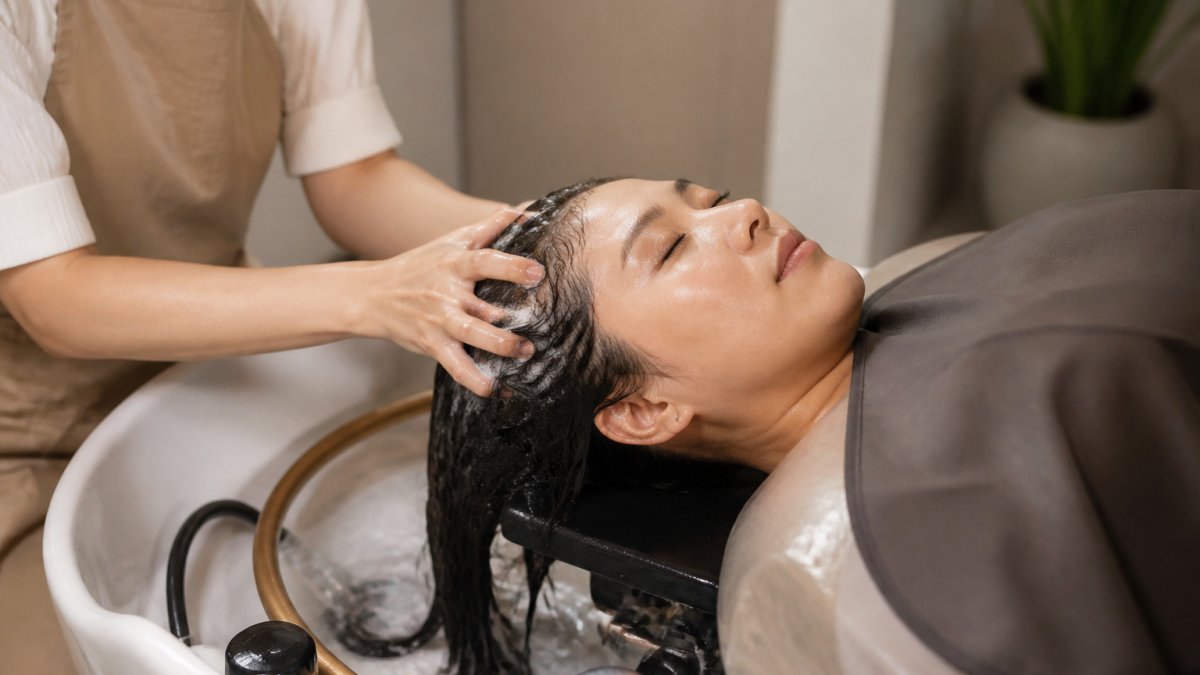
A deep cleansing head spa treatment is a multi-step scalp and hair ritual that clears buildup, balances oil, and calms the scalp using steam, exfoliation, and massage. At Camellia Scalp and Skin Lounge, we describe it as a facial for your scalp: same care, different skin. (Source: a 2026 report on the U.S. beauty services market)
Most people treat their scalp like an afterthought. Shampoo, rinse, repeat, and hope for the best. That approach leaves behind product buildup, dead skin, and excess oil, which shows up as flakes, itch, and dull hair.
Here’s what most guides get wrong: they call this a fancy shampoo. It isn’t. A real head spa treatment combines scalp analysis, exfoliation, steam, and therapeutic massage in one session. Below, we’ll walk through each step, how long it takes, and who actually benefits.
What Happens During a Session?
A session follows a set sequence: consultation, scalp analysis, exfoliation, steam, cleansing, massage, and conditioning. Each step builds on the last, so nothing gets skipped or rushed. What separates a professional ritual from a salon wash is that every step has a job, and a reason it comes when it does.
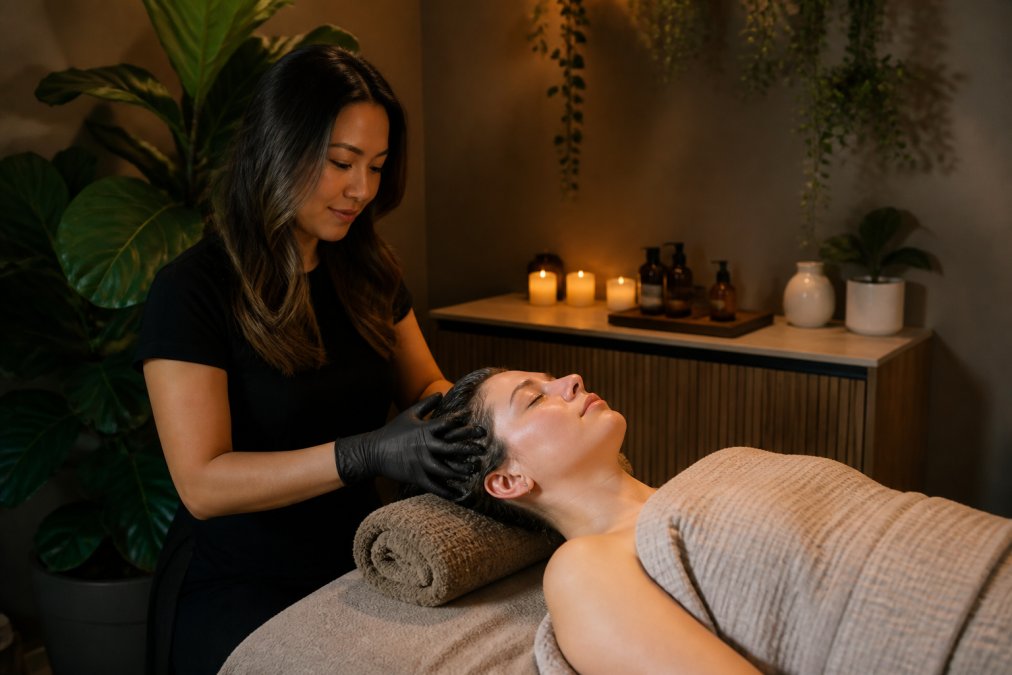
Your therapist starts by asking about your scalp history. Dryness? Oiliness? Dandruff? Recent color or chemical treatments? Medications like isotretinoin or blood thinners? That conversation shapes everything that follows, and it’s also where a good therapist screens for reasons to pause or modify the service.
Step-by-Step Treatment Process
- Consultation and scalp analysis. A trichoscope, a handheld digital camera with magnification typically in the 50x-200x range, is moved across several zones of the scalp. Your therapist is looking at follicle density, sebum pattern, redness, scaling, and whether flakes are dry (dead skin) or oily (seborrheic). The images often get saved so you can compare at your next visit.
- Dry exfoliation. Before any water touches the scalp, a fine scrub or a soft brush lifts dead skin, dried sebum, and product residue. Doing this dry matters: water makes buildup slick and harder to dislodge, so the mechanical lift happens first.
- Steam treatment. Warm steam softens the sebum plug sitting at the follicle opening and relaxes the tissue around it. Most practitioners keep the steam at a comfortable, low temperature and shield the face, the goal is softening, not heat.
- Clay wash or scalp scrub. A kaolin- or bentonite-based clay, or a sugar/salt scrub, is worked in to draw out oil and debris loosened by the steam. This is the step that most resembles a facial’s deep-clean phase.
- Deep cleansing shampoo. Applied with slow, circular movements rather than a quick lather. The pressure is deliberate, fingertips, not nails, and the shampoo is chosen for your scalp type, not your hair type.
- Therapeutic massage. Ten to twenty minutes targeting the occipital ridge, temples, and crown. The mechanical goals are microcirculation and lymphatic drainage; the felt goal is that heavy, unwound feeling clients describe afterward.
- Deep conditioning. A pH-balanced mask, typically in the 4.5-5.5 range to match the scalp’s acid mantle, is applied to hair, kept off the roots unless the scalp is dry, and left to sit.
- Rinse and finish. A cool-water seal closes the cuticle and calms any redness from exfoliation, followed by a light blow-dry or air-dry and minimal styling.
Many clients say the massage is the part they remember. It’s also the part doing quiet work on microcirculation.
Ask your therapist to show you the trichoscope images before and after. Seeing the same follicle clear of buildup is the most concrete proof the session did what it promised.
How Long Is a Head Spa Treatment?
A head spa treatment typically runs 45 to 90 minutes, depending on the service level and add-ons. A basic cleanse and massage sits at the shorter end. A full ritual with scalp analysis, steam, and deep conditioning takes closer to 90 minutes.
Here’s how the time usually breaks down:
| Phase | Time | What Happens |
|---|---|---|
| Consultation and analysis | 10 min | Trichoscope check, scalp history |
| Exfoliation and steam | 15 min | Buildup removal, follicle prep |
| Cleanse and massage | 25 min | Clay wash, therapeutic massage |
| Conditioning and rinse | 15 min | Deep conditioning, cool rinse |
First-time clients should plan for the longer end. Your therapist needs extra time to assess your scalp and adjust the products.
Book your first session on a day when you don’t have plans right after. The post-treatment calm is real, and rushing out of the chair defeats half the point.
Japanese Head Spa Benefits
Japanese head spa benefits center on scalp health first, with hair and relaxation gains following. The approach treats the scalp as living skin that needs exfoliation, hydration, and stimulation, not just shampoo.
What clients tend to notice:
- Less flaking and itchiness within a few sessions
- Softer, shinier hair from reduced buildup
- A calmer nervous system after the massage portion
- Better product absorption, since the follicle isn’t blocked
Scalp health drives hair appearance. When sebum regulation improves and the scalp microbiome settles, hair texture often follows. That’s the logic behind the ritual, and it’s why the massage isn’t decorative.
Scalp Analysis for Hair Health
Scalp analysis for hair health uses a trichoscope, a magnifying camera that shows the scalp and follicles up close. It turns guesswork into a plan.
Your therapist looks for redness, scaling, oil pattern, follicle density, and signs of inflammation. From there, they match products and pressure to what your scalp actually needs. Someone with an oily crown and dry ends gets a different routine than someone with uniform dryness.
This diagnostic step is what separates a head spa treatment from a standard salon wash. A wash cleans hair. An analysis tells you why your scalp behaves the way it does.
Skip the analysis and you risk treating the wrong problem. Using heavy oils on an oily, buildup-prone scalp can make flaking worse, not better.
Head Spa vs. Traditional Scalp Massage
A head spa treatment goes well beyond a traditional scalp massage. A massage focuses on relaxation and blood flow. A head spa adds exfoliation, steam, cleansing, and conditioning on top of it.
| Feature | Head Spa Treatment | Traditional Scalp Massage |
|---|---|---|
| Scalp analysis | Yes, with trichoscope | Rarely |
| Exfoliation | Yes | No |
| Steam treatment | Yes | No |
| Massage | Included | Main focus |
| Typical length | 45-90 min | 15-30 min |
| Goal | Scalp and hair health | Relaxation |
If your only goal is to unwind, a massage works. If you’re dealing with buildup, flakes, or dull hair, the full ritual does more.
Is a Deep Cleansing Head Spa Treatment Worth It?
For most people with an active scalp concern, yes. A deep cleansing head spa treatment is worth it when you want real change in scalp comfort and hair appearance, not just a pleasant hour. But “worth it” depends on three things most guides skip: what you’re paying, how often you’ll need to come back, and whether you’re a safe candidate in the first place.
The cost picture. In most markets, a single deep cleansing session runs somewhere in the $80-$200 range, with premium rituals and add-ons pushing higher. That’s a real number to weigh against a $15-$30 clarifying shampoo, but they aren’t solving the same problem. A shampoo addresses surface oil. A head spa addresses the scalp environment: the sebum plug, the dead-skin layer, the follicle opening. If your issue is buildup and flaking, the cheaper option often just delays the same complaint.
The maintenance math. Results aren’t permanent.
- Open wounds, cuts, or a fresh surgical site on the scalp
- Active, severe psoriasis or seborrheic dermatitis that is currently inflamed or weeping
- A recent chemical burn, relaxer burn, or scalp injury from coloring or perming
- An active fungal or bacterial scalp infection that hasn’t been treated
- A known allergy to a specific oil, clay, or fragrance used in the service
The scalp is skin. Treat it with the same exfoliation, hydration, and analysis you’d give your face, and your hair reflects the difference.
Frequently Asked Questions
Are head spas actually worth it?
A deep cleansing head spa treatment can be worth it if you deal with product buildup, dryness, or scalp tension. It goes beyond a standard shampoo by using exfoliation, steam, and therapeutic massage to support scalp health. Many people find their scalp feels cleaner and their hair looks healthier. For lasting results, regular sessions and at-home care help. Book a consultation to see if it fits your needs.
Do I wash my hair before going to a head spa?
No, you do not need to wash your hair beforehand. In fact, arriving with unwashed hair lets your therapist assess your scalp’s natural condition, including oiliness, flaking, or buildup. The treatment itself includes a thorough cleanse, so you will leave with fresh, clean hair. Just avoid heavy styling products on the day of your appointment to help the scalp analysis be more accurate.
How long does a head spa treatment typically last?
Most deep cleansing head spa treatments last between 45 and 90 minutes, depending on the specific service and any add-ons. A basic session might run about 60 minutes, while a more comprehensive ritual with extended massage and scalp analysis can take closer to 90 minutes. It is best to check with the provider when booking so you can plan your visit accordingly.
Can a deep cleansing head spa help with dry scalp or dandruff?
A deep cleansing head spa treatment can help manage dry scalp and dandruff by removing flakes, excess oil, and product buildup. Exfoliation and hydration work together to support a healthier scalp environment. However, if you have a medical condition like seborrheic dermatitis, consult a dermatologist first. Many people see improvement in comfort and flaking with regular professional treatments.
Most people wait until flaking, itch, or thinning becomes obvious before they act on scalp health. By then, buildup and inflammation have had months to settle in. Camellia Scalp and Skin Lounge offers scalp analysis, deep cleansing head spa rituals, and customized care in a calm lounge setting, with transparent pricing and same-day availability. Our licensed professionals build each session around your scalp, not a script. Book now and give your scalp the care it’s been missing.