Last Updated: November 12, 2026
Quick Summary
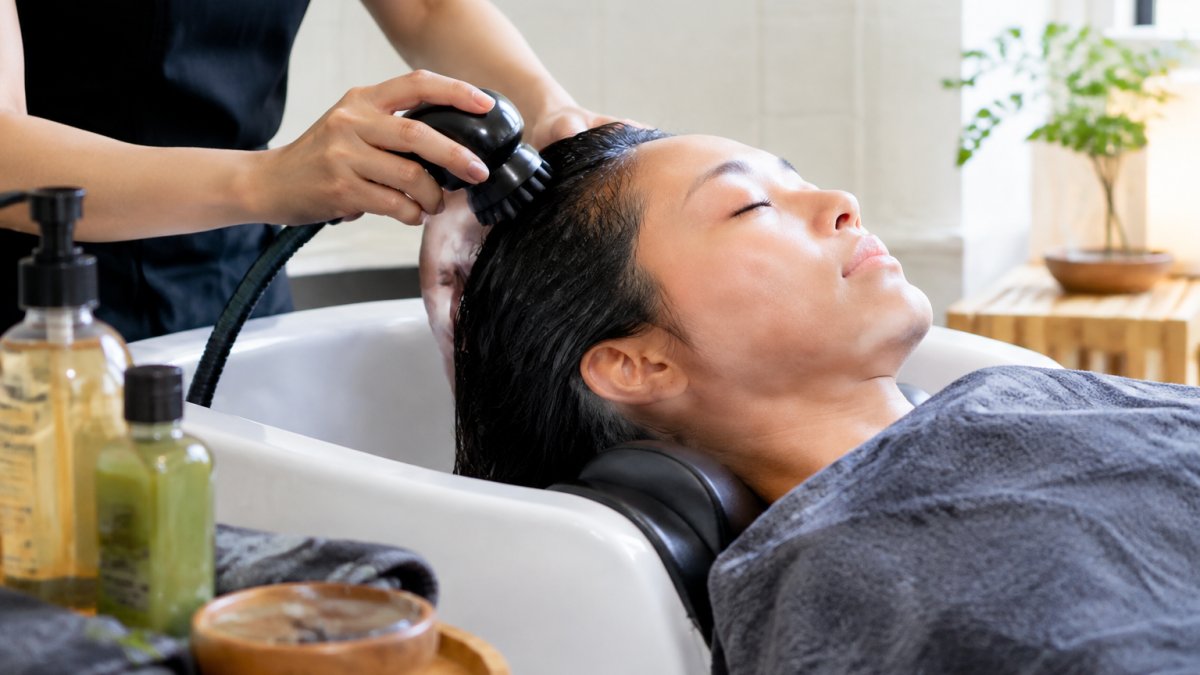
A japanese head spa is a scalp-focused ritual that combines cleansing, massage, and warm water treatment to care for the scalp and hair. It aims to remove buildup, balance oil and moisture, and leave the scalp feeling clean and relaxed. It is supportive care, not a treatment for hair loss or medical scalp conditions.
- Scalp analysis at the start personalizes the session to your needs.
- Treatments aim to remove product buildup and balance oil and moisture.
- Over-scrubbing can irritate sensitive scalps, so pressure should be adjusted to your skin.
- Head spas do not regrow hair; persistent flaking or hair loss needs a clinician’s evaluation.
- Oily scalps may start weekly to biweekly, while dry scalps often start every two to four weeks.
Table of Contents
- What a Japanese Head Spa Is and How the Treatment Works
- Japanese Head Spa Benefits for Scalp Health and Hair Loss
- Japanese Head Spa What to Expect During Your First Visit
- How Often to Get a Japanese Scalp Treatment
- Japanese Head Spa at Home: What You Can and Cannot Replicate
- Booking Your First Scalp Assessment at Camellia Scalp and Skin Lounge
- Frequently Asked Questions
What a Japanese Head Spa Is and How the Treatment Works
A Japanese head spa is a scalp-focused ritual that combines cleansing, massage, and warm water treatment to care for the scalp and hair. At Camellia Scalp and Skin Lounge in Las Vegas, the treatment includes a scalp analysis so the session can be personalized to your needs. (Source: American Academy of Dermatology)
A head spa session generally involves scalp cleansing and a relaxing scalp massage. The aim is to leave the scalp clean, comfortable, and relaxed.
What separates this from a standard salon wash is intent. A salon shampoo is designed to clean the hair shaft quickly. A head spa is designed to reach the scalp itself, where oil, dead skin cells, and product buildup collect.
Japanese Head Spa Benefits for Scalp Health and Hair Loss
Scalp treatments generally aim at three things: removing buildup, balancing oil and moisture, and improving how the scalp feels day to day. Each benefit below is easier to judge when you know what the treatment does and what it cannot promise.
Deep cleansing and product buildup removal
Dry shampoo, styling products, and daily oil production can leave residue that ordinary washing misses. A deep-cleansing step is intended to lift this material from the scalp surface and hair roots. The aim is for the roots to feel lighter and cleaner afterward, although results vary with hair type and product use.
A common mistake is assuming more cleansing is always better. Over-scrubbing can irritate a sensitive scalp, so a good provider adjusts pressure and product strength to your skin.
Oil balance, hydration, and dandruff or itchiness
Scalp oil is normal, but too much or too little can cause problems. Oily scalps may build up residue that contributes to an itchy, uncomfortable feeling, while dry scalps can flake and feel tight.
Dandruff and itchiness have many causes, and a head spa is not a medical treatment. If flaking or irritation is persistent, painful, or spreading, a dermatologist or physician should assess it before you rely on any spa service.
Circulation, stimulation, and what the evidence shows for hair growth
A scalp massage can leave you feeling relaxed in the moment. The research connecting scalp massage to hair growth is limited, and a head spa should not be expected to regrow hair.
If hair thinning is your main concern, treat a head spa as supportive care rather than a solution. Hair loss can have many causes, from genetics and hormones to medical conditions and medications, and each calls for a different approach (the American Academy of Dermatology). A clinician can help identify the cause.
Japanese Head Spa What to Expect During Your First Visit
A first visit usually runs in three phases: consultation, treatment, and aftercare. Knowing the sequence in advance makes it easier to judge whether a provider is doing a thorough job and to speak up when something does not feel right.
The consultation
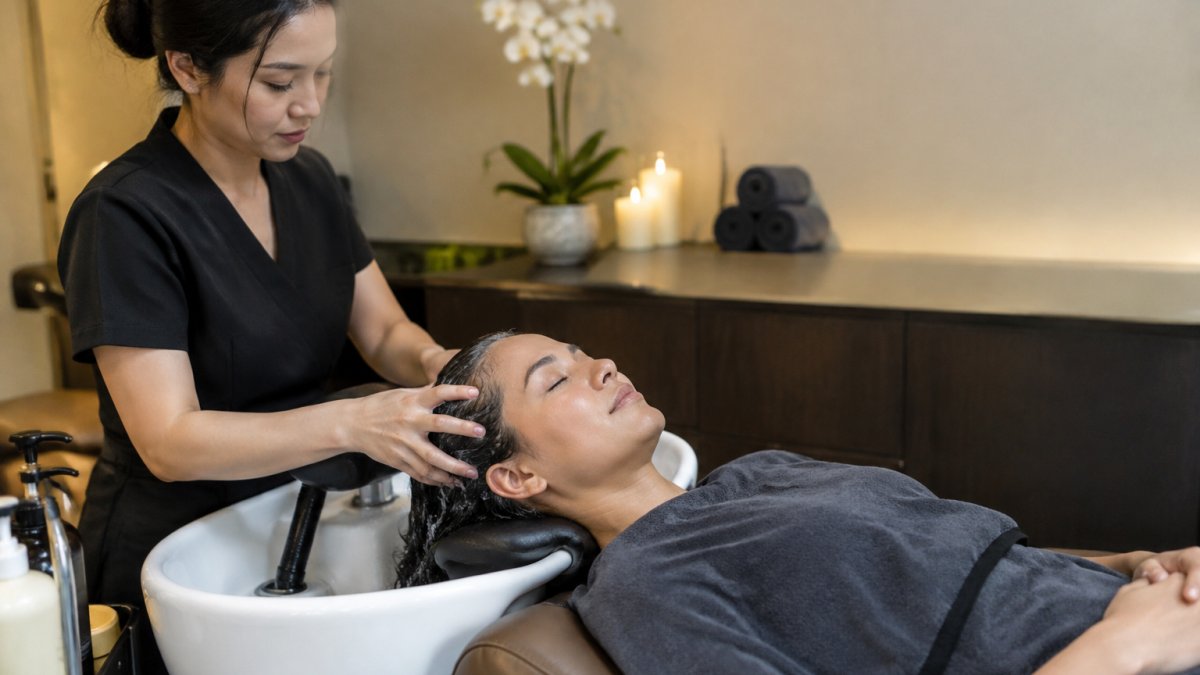
Expect the therapist to ask about your scalp concerns, sensitivities, recent color or chemical treatments, medications, and what you want from the session. A good consultation includes a hands-on or magnified look at the scalp, many providers use a scalp camera or loupe to check for flaking, redness, oiliness, and buildup at the roots. This is an observation, not a diagnosis.
Watch out: a provider who skips the consultation and moves straight to washing cannot customize pressure, water temperature, or product strength to your scalp.
The treatment sequence
While exact routines vary, a typical session follows a recognizable order:
- Dry brushing or pre-cleanse massage. A soft brush or fingertips loosen dead skin cells and product residue before water is added.
- Warm-water rinse. Water temperature is usually kept comfortably warm rather than hot, since hot water can strip oil and aggravate a dry or sensitive scalp.
- Scalp cleansing. A mild cleanser is worked into the scalp in sections rather than scrubbed into the hair shaft. Some providers use a soft silicone brush; others work entirely by hand.
- Massage. Slow fingertip and palm pressure across the whole head, including the hairline, temples, and base of the skull. This is the relaxation centerpiece and typically the longest single step.
- Rinse and finish. A thorough rinse, a light towel dry, and often a leave-in serum or scalp tonic matched to your scalp type.
Session length depends on the service you choose. Ask ahead of time what is included.
What to tell your therapist
Speak up about pressure, temperature, and anything that stings or burns. Discomfort is not a sign the treatment is working. Tell the therapist about recent chemical treatments, sunburn on the scalp, or any active skin condition before the session begins. (Source: U.S. Food and Drug Administration)
How to choose a qualified provider
Licensing requirements for hair and scalp services vary by state, so check your state’s board of cosmetology or barbering for the current rules. Beyond licensing, ask practical questions:
- Sanitation. Ask how tools and equipment are cleaned between clients.
- Product disclosure. What cleanser and tonic are being used, and can you see the ingredient list if you have sensitivities?
- Customization. Does the provider adjust the routine based on your scalp type, or does everyone get the same sequence?
- Scope of practice. Does the provider describe the service as relaxation and cleansing, or make medical-sounding claims about treating dandruff, seborrheic dermatitis, or hair loss? The latter is a red flag.
Aftercare
Expect suggestions for home care, a gentle shampoo, a rinse routine after styling products, and a massage technique you can repeat between visits. Ask what to watch for over the following weeks: less itchiness, less flaking, or roots that feel clean longer. Those are the outcomes a spa service can plausibly influence. Regrowth is not one of them.
How Often to Get a Japanese Scalp Treatment
There is no single correct schedule, but there is a useful way to decide: match frequency to your scalp type, your product load, and how your scalp responds between visits. Most providers suggest a starting rhythm and adjust from there.
A starting point by scalp type
- Oily scalp or heavy product use. Weekly to every two weeks is a common starting rhythm, especially if you use dry shampoo, pomade, or leave-in styling products regularly. The goal is to keep residue from accumulating faster than ordinary washing removes it.
- Dry or tight scalp. Every two to four weeks is a more typical starting point, paired with a milder cleanser and cooler water. Over-cleansing a dry scalp can make tightness and flaking worse.
- Sensitive or reactive scalp. Start with a single session, note how the scalp feels for the following week, and space visits further apart until you know how it responds. Patch-test any new product before a full treatment.
- Textured or tightly coiled hair. Frequency should follow your normal wash schedule rather than forcing extra washing, since frequent wetting and manipulation can stress the hair. Ask the provider to work primarily on the scalp and minimize manipulation of the hair shaft.
- Flaking or persistent itchiness. A spa service can remove surface buildup, but recurring flaking or itch that does not improve warrants a dermatologist’s evaluation rather than a more aggressive spa schedule.
Signs your schedule is working
Track a few simple markers between visits: how many days the roots feel clean, whether itchiness decreases, whether flaking lessens, and whether the scalp feels tight or comfortable. If you see improvement that fades within a few days, you may be spacing visits too far apart.
Watch out: more frequent sessions are not automatically better. Over-scrubbing and repeated strong cleansing can irritate a sensitive scalp and undermine the balance the treatment is meant to support.
Consistency beats intensity
A steady routine that fits your schedule and budget is more useful than an occasional intensive session followed by long gaps. Pick a cadence you can sustain, reassess after four to six weeks, and adjust based on what you observe rather than on a fixed rule.
When to pause and see a clinician
If you notice spreading redness, open sores, sudden patchy hair loss, or flaking that does not respond to gentle care, stop booking spa sessions and have a physician or dermatologist evaluate the scalp. A head spa is supportive care for a healthy scalp, not a treatment for a medical condition.
The right frequency depends on your scalp type, so this rough guide sets a starting point for each.
| Scalp type | Starting rhythm | Key note |
|---|---|---|
| Oily or heavy product use | Weekly to every two weeks | Keeps residue from building up faster than washing removes it |
| Dry or tight | Every two to four weeks | Use a milder cleanser and cooler water |
| Sensitive or reactive | One session, then space visits out | Patch-test new products before a full treatment |
| Textured or tightly coiled hair | Follow your normal wash schedule | Minimize manipulation of the hair shaft |
| Flaking or persistent itch | Evaluate with a dermatologist first | Recurring flaking calls for medical review, not more sessions |
Japanese Head Spa at Home: What You Can and Cannot Replicate
Some elements of a head spa can be copied at home. A gentle scalp massage with your fingertips, a thorough rinse after styling products, and choosing a mild shampoo suited to your scalp all support basic scalp care. Brushing before washing can also help loosen debris.
What you cannot easily replicate is the combination of professional technique, equipment, and a scalp analysis tailored to you. Home routines also cannot stand in for medical evaluation of hair loss or persistent scalp conditions.
Booking Your First Scalp Assessment at Camellia Scalp and Skin Lounge
If you are considering a head spa for dryness, flaking, buildup, or simply a relaxing reset, a first scalp assessment is a practical place to start. At Camellia Scalp and Skin Lounge, our licensed professionals begin with an analysis of your scalp and tailor the treatment to what they find, in a calm lounge setting at The Shops at Peace Plaza. Same-day availability can make it easier to fit a session into a busy schedule.
For current pricing and availability, check the pricing page on our website or contact the lounge directly.
Frequently Asked Questions
Is a Japanese head spa good for the scalp?
A Japanese head spa can support scalp health by removing product buildup, dead skin cells and excess oil, and by improving hydration and comfort. Results vary with scalp type and habits, so a consultation with a licensed professional helps set realistic expectations. Anyone with an existing scalp condition, irritation or open skin should check with a clinician before booking.
Can a Japanese head spa help with hair loss?
A head spa can improve the scalp environment and promote circulation, but current evidence does not show that it reverses hair loss on its own. Hair loss has many causes, including genetics, hormones, nutrition and medical conditions, and some need medical evaluation. A head spa may complement a broader plan but should not replace a diagnosis. If shedding is sudden, patchy or heavy, see a dermatologist or physician first.
How often should you get a Japanese scalp treatment?
How often to book depends on your scalp type and habits, and your provider can recommend a schedule. Frequency depends on scalp type, hair length, climate and how much styling product you use. Start with a single session, observe how your scalp responds, and adjust with your provider. Your provider can recommend a schedule that fits your needs and budget.
Is a Japanese head spa different from a regular salon shampoo?
A regular shampoo cleans the hair shaft, while a head spa focuses on the scalp itself, using scalp-focused cleansing and massage. The session is structured around scalp analysis and relaxation rather than only rinsing hair. Because the scalp is treated directly, sessions typically take longer than a standard wash. Choose a licensed provider who explains each step and adapts it to your scalp.
