Table of Contents
- What a Japanese Head Spa Actually Is (and Isn’t)
- Japanese Head Spa Cost: What You’re Paying For
- Japanese Head Spa vs Scalp Massage: Key Differences
- How Often to Get a Japanese Head Spa
- Japanese Head Spa for Hair Growth: What the Evidence Says
- Safety, Hygiene, and Who Should Skip It
- The Verdict: Is a Professional Japanese Head Spa Worth the Money?
- Frequently Asked Questions
Last Updated: October 7, 2026
What a Japanese Head Spa Actually Is (and Isn’t)
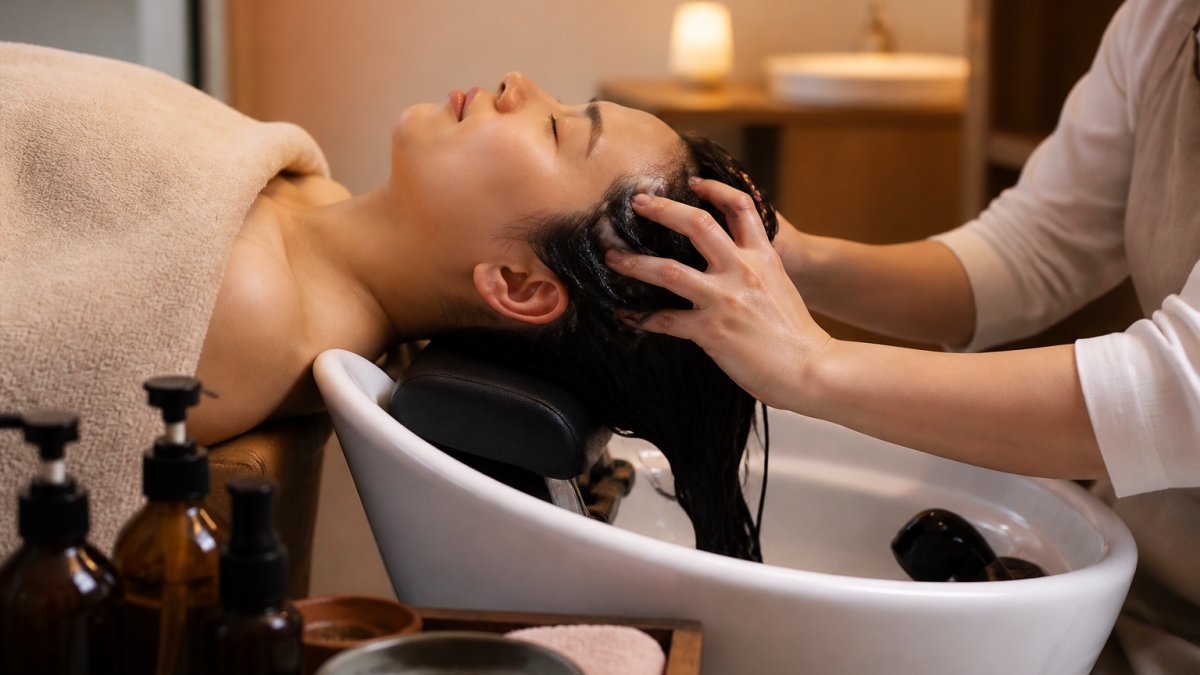
A Japanese head spa is a professional scalp treatment that combines deep cleansing, steam, and massage to address buildup, dryness, and tension at the root. At Camellia Scalp and Skin Lounge, we perform scalp analysis before treatment, then tailor each session to what your scalp actually needs.
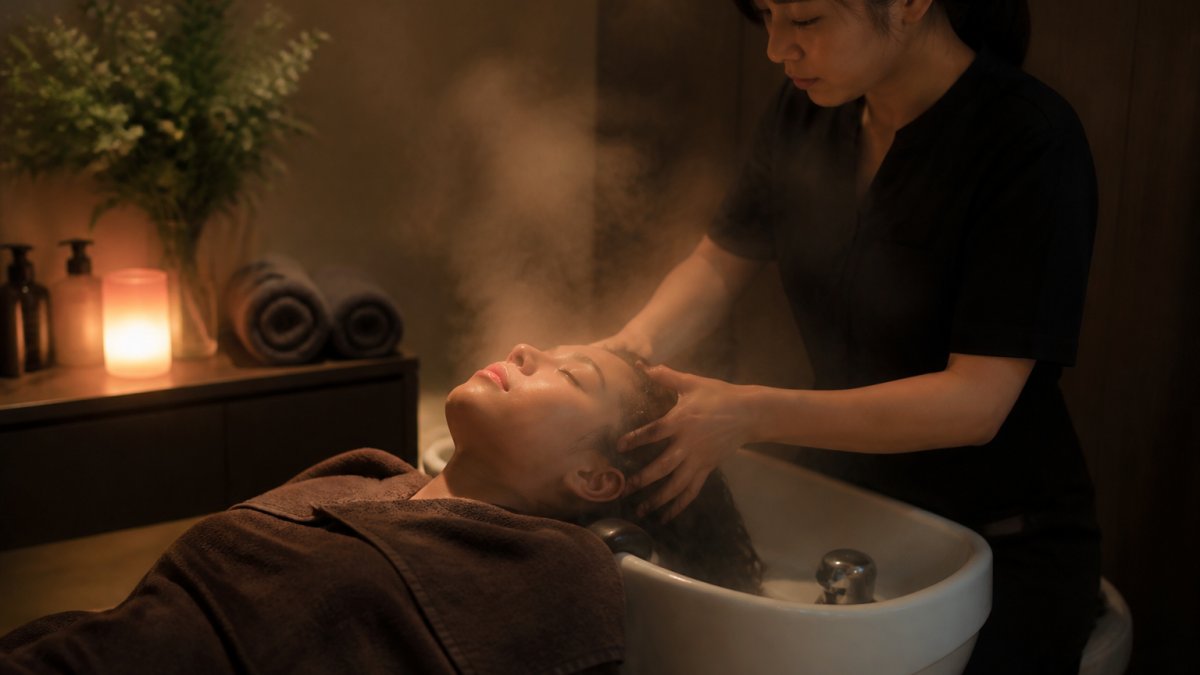
The core ritual has three phases. First, a technician examines your scalp under magnification to identify flaking, oil imbalance, or product buildup. Second, warm water and gentle exfoliation clear dead skin and residue. Third, steam and massage support hydration and blood circulation.
The Core Ritual: Cleansing, Steaming, and Massage
Cleansing removes what shampoo leaves behind. Many people use styling products, dry shampoo, or hard water that deposits minerals on the scalp over time.
Steaming opens the door to hydration. Warm steam softens the scalp surface and helps serums absorb more evenly.
Massage does more than relax you. Slow, deliberate scalp massage supports blood circulation and relieves tension in the neck and temples.
A Japanese head spa treats the scalp as skin, not just hair. That distinction explains both what it can do and what it cannot.
Japanese Head Spa Cost: What You’re Paying For
Japanese head spa cost varies by market, session length, and the products used. You are paying for trained hands, magnified scalp analysis, professional-grade cleansers, steam equipment, and time. A standard salon wash takes minutes. A head spa session typically runs 45 to 90 minutes because each phase gets attention.
Here is what separates a lower-cost session from a higher one:
| Service Tier | Typical Focus | Time Investment | What Drives the Price |
|---|---|---|---|
| Basic wash and rinse | Clean hair | Short | Convenience |
| Salon wash with scalp massage | Clean hair plus brief massage | Moderate | Staff time |
| Head spa session | Scalp analysis, exfoliation, steam, massage | Longer | Training, equipment, products |
| Head spa with treatment add-ons | Everything above plus targeted serums | Longest | Specialized products, expertise |
What Actually Justifies a Premium Price
Not every upcharge is worth it. These are the line items that genuinely change your outcome:
- Magnified scalp analysis. A camera-based look at your scalp before treatment is the difference between a tailored session and a generic one. If a studio skips this, you are paying premium prices for a standard wash.
- Steam. Steam softens the scalp surface and helps serums absorb more evenly. It is equipment-intensive, which is part of why it costs more, and part of why it matters.
- Session length. A 90-minute session is not just a longer 45-minute session. The extra time usually goes into massage and a slower exfoliation phase, both of which drive the perceived and actual benefit.
- Product tier. Professional-grade cleansers and serums cost more per application than retail shampoo. Ask what is being used on your scalp and why.
Cost-Per-Benefit: How a Head Spa Compares
A head spa is one option among several. Here is how the alternatives stack up on cost, time, and likely outcome:
- Standard salon wash and style. Lowest cost, shortest time. Cleans hair, does not address scalp buildup, flaking, or tension. Reasonable if your scalp is already comfortable.
- At-home scalp care. A gentle scalp scrub once a week plus a hydrating serum after washing costs a fraction of a session and handles mild buildup. It does not replicate steam, magnified analysis, or professional massage.
- Dermatologist visit. Higher cost per visit, often with insurance coverage for diagnosed conditions. The right choice if you have persistent flaking, pain, or hair loss, a head spa cannot diagnose or treat a medical condition.
- Head spa session. Mid-to-high cost, 45 to 90 minutes. Best value when your goal is deep cleansing, hydration, and relaxation, and when you want a trained eye on your scalp.
The Long-Term Math
A single session is a reset, not a permanent fix. Most people who see ongoing benefit book every four to six weeks.
If a quote seems unusually low, ask what is included. Some listings advertise a scalp massage but skip analysis and steam.
Pricing depends on your specific concerns, session length, and add-ons, so we publish our full menu rather than quoting a single number.
Do not book based on price alone. A cheap session that skips scalp analysis and steam is a salon wash with a nicer name. You will pay less and get less.
Japanese Head Spa vs Scalp Massage: Key Differences
A scalp massage focuses on relaxation and circulation through touch alone. A Japanese head spa includes massage but adds cleansing, exfoliation, steaming, and often scalp analysis.
Think of it this way. A scalp massage soothes. A head spa diagnoses and treats. If your main complaint is tension, a massage may be enough.
The difference shows up in results. Massage leaves you relaxed.
How Often to Get a Japanese Head Spa
Most people do well with a session every four to six weeks. That rhythm matches how quickly scalp buildup returns for average product use and water quality.
Your scalp type matters more than a fixed schedule. Oily scalps tend to need more regular cleansing.
Watch for these signs it is time to rebook:
- Roots feel heavy or coated within a few days of washing
- Flaking returns despite consistent at-home care
- Your scalp feels tight or itchy after normal shampooing
- Styling products stop performing the way they used to
At-home scalp care between visits keeps results steady. A gentle scalp scrub once a week and a hydrating serum after washing go a long way.
Japanese Head Spa for Hair Growth: What the Evidence Says
A Japanese head spa can support a healthier scalp environment, but it is not a hair loss treatment. This is where marketing often outruns evidence, and it is worth being precise about what the research actually supports.
What the Evidence Supports
- Cleansing and exfoliation. Removing dead skin, oil, and product residue is a documented, mechanical effect. You can see it under magnification before and after.
- Hydration. Steam and leave-on serums improve the scalp surface’s moisture balance in the short term. This is a comfort and texture benefit, not a regrowth one.
- Relaxation and circulation. Slow scalp massage feels good and may support blood flow to the scalp. Whether that translates into measurable hair changes is not established by strong evidence.
What the Evidence Does Not Support
- Regrowing hair lost to genetics. Androgenetic alopecia is driven by hormones and genetics (Androgenetic Alopecia: An Update on Pathogenesis and Pharmacological Treatment). No scalp treatment reverses it. If a studio promises regrowth, that is a marketing claim, not a medical one.
- Treating diagnosed scalp conditions. Seborrheic dermatitis, psoriasis, and fungal infections need medical diagnosis and treatment. A head spa can complement care but cannot replace it.
- Permanent reduction in shedding. Shedding has many drivers, hormones, nutrition, stress, medication, thyroid function. A cleaner scalp does not address any of them.
How to Tell Relaxation Claims From Medical Claims
A useful rule: if a claim describes how your scalp feels or looks, it is probably within a head spa’s scope. If a claim describes a change in hair count, thickness, or growth rate, it is a medical claim and should be backed by clinical evidence, which a spa visit is not.
What a head spa can reasonably do:
- Reduce buildup that can weigh down fine hair
- Improve scalp comfort so you are less likely to scratch and irritate
- Support hydration and oil balance
- Complement, not replace, medical treatment for diagnosed conditions
If Hair Loss Is Your Concern
If you are noticing more shedding or thinning, the honest answer is that a head spa may help with scalp health while you address the underlying cause with a medical professional.
We tell clients the same thing every time: if your goal is relaxation and scalp comfort, a head spa delivers. If your goal is regrowing hair, talk to a doctor first.
A head spa can make your scalp healthier and your hair feel lighter. It cannot change the biology of hair loss. Knowing which claim you are buying is the difference between a good experience and a disappointing one.
Safety, Hygiene, and Who Should Skip It
A professional head spa is generally well tolerated, but it is not right for everyone. Skip it, or get medical clearance first, if you have an active scalp infection, open cuts or sores, a recent chemical burn, or a diagnosed skin condition that is currently flaring.
Hygiene is non-negotiable. Ask how tools are sanitized between clients, whether single-use items are used where appropriate, and how often equipment is replaced. A legitimate studio answers these questions without hesitation.
Ask about patch testing if you have sensitive skin or known product allergies. A short consultation before your first session costs you a few minutes and prevents a reaction you would rather avoid.
Also flag any of the following during your consultation:
- Recent scalp treatments or chemical services
- Prescription scalp medications
- Known allergies to fragrances or specific ingredients
- Pregnancy, since some products and positions may need adjustment
The Verdict: Is a Professional Japanese Head Spa Worth the Money?
For most people dealing with buildup, dryness, or stress, yes. A professional Japanese head spa is worth the money when your goal is a cleaner, more comfortable scalp and genuine relaxation.
Here is how we would decide:
- Book a session if you have persistent flaking, heavy buildup, or tension you cannot shake.
- Skip it if you are looking for a hair regrowth treatment. See a doctor instead.
- Compare tiers carefully. Pay for analysis, exfoliation, and steam, not just a longer wash.
At Camellia Scalp and Skin Lounge, we start every visit with a scalp analysis so the treatment matches your actual condition. Our menu includes scalp treatments, customized facials, and HydraFacial services, with transparent pricing and same-day availability options.
Frequently Asked Questions
How often should I get a Japanese head spa treatment?
Most people benefit from a session every 4 to 6 weeks, aligning with the natural scalp renewal cycle. If you have significant buildup, oily roots, or flaking, a technician may suggest starting with sessions every 2 to 3 weeks until the scalp stabilizes, then spacing them out. Those with dry scalp or sensitive skin might do well with monthly visits. The right frequency depends on your scalp condition, lifestyle, and how your hair responds. A professional scalp analysis can help tailor a schedule.
Is a Japanese head spa good for hair growth?
A Japanese head spa supports scalp health by removing buildup, improving blood circulation through massage, and hydrating the scalp. These factors create a healthier environment for hair to grow, but no spa treatment directly causes new hair growth. If you have thinning hair or hair loss, a head spa can complement other treatments but should not replace medical evaluation. Realistic expectations: you may see improved texture, shine, and less shedding, but not a full reversal of genetic hair loss.
What happens during a professional Japanese head spa treatment?
A typical session lasts 60 to 90 minutes. It starts with a scalp analysis using a magnifying camera to assess buildup, oiliness, and sensitivity. Then comes a warm water rinse, exfoliating scalp scrub, steam treatment to open pores, and a gentle massage to stimulate circulation. Some treatments include a serum or mask. You’ll end with a cool rinse and sometimes a blow-dry. The focus is on deep cleansing, hydration, and relaxation, not haircutting or styling.
Who should avoid a Japanese head spa?
Avoid a head spa if you have an active scalp infection, open wounds, severe dermatitis, or a recent chemical burn. If you’re pregnant or have a medical condition, consult your doctor first. Those with very sensitive skin should patch-test products. Also, if you have a history of allergic reactions to essential oils or certain ingredients, inform your technician. A reputable spa will screen for contraindications during consultation. Always disclose your health history before booking.
How much does a Japanese head spa cost?
Costs vary by location, service length, and inclusions. Some salons offer packages or memberships that lower the per-session price. Because pricing depends on the specific menu, check the spa’s website or call ahead for current rates. At Camellia Scalp and Skin Lounge, transparent pricing is available on our website, and we offer same-day availability options.
If your scalp feels heavy, itchy, or just tired of the same routine, the right treatment can change how you feel day to day. Camellia Scalp and Skin Lounge offers scalp analysis, Japanese-inspired head spa rituals, and customized facial treatments in a calm, refined setting. Our licensed professionals build each session around your scalp, not a script. Get started with Camellia Scalp and Skin Lounge and give your scalp the reset it has been asking for.