Last Updated: November 4, 2026
Quick Summary
To moisturize scalp without making hair greasy, apply a lightweight water-based humectant serum directly to the scalp in row-by-row sections, not to the hair strands. Leave it on for at least an hour or overnight, then blot any shine at the roots instead of rubbing it in.
- Part hair into four quadrants, then rows about one inch apart before applying serum.
- Massage with fingertips, not nails, in small circles for one to two minutes.
- Fine hair needs just one drop of water-based serum per exposed row, applied at night.
- Lead with humectants like glycerin and use occlusives sparingly, on ends only.
- Expect a two-to-four-week adjustment period of rebound oiliness when switching to gentler washing.
Table of Contents
- Why Your Scalp Feels Dry While Your Hair Looks Greasy
- What You’ll Need Before You Start
- Step-by-Step: How to Moisturize Scalp Without Washing Hair
- Humectants vs. Occlusives: The Ingredient Science That Decides Greasy or Hydrated
- How to Moisturize Dry Scalp Naturally
- Finding the Best Moisturizer for Dry Scalp
- Troubleshooting Rebound Oiliness and Common Mistakes
- Book a Scalp Analysis Before You Buy Another Product
- Frequently Asked Questions
Why Your Scalp Feels Dry While Your Hair Looks Greasy
Your scalp feels tight and itchy, yet your roots look slick by noon. The scalp is dehydrated while the hair shaft is coated in product and sebum. (Source: a study on the skin barrier function)
The two problems have separate causes, so a single heavy cream cannot fix both. Moisture balance is a scalp issue. Greasiness is a residue and sebum issue.
Scalp vs. Hair Moisture Needs
The scalp is skin. It needs water, a healthy barrier, and a balanced microbiome. Hair is dead protein. It needs lubrication and protection, not hydration in the same sense.
Here is the split that most guides miss:
- Scalp: wants lightweight hydration and humectants that pull water in
- Hair strands: want emollients and occlusives that seal the surface
- The overlap: the root area, where heavy products cause buildup and clogged follicles
Apply a rich conditioner to your scalp and you feed the hair, not the skin. That is how oily roots start.
What You’ll Need Before You Start
Gather the right tools first, because the wrong ones guarantee residue. You do not need much.
- A sulfate-free shampoo for your regular wash
- A lightweight, water-based scalp serum
- A clean dropper or applicator tip
Skip anything labeled heavy, waxy, or “nourishing butter” for the root area. Those belong on ends, not skin. Watch out: applying a thick oil directly to the scalp is the fastest route to greasy roots and buildup.
Step-by-Step: How to Moisturize Scalp Without Washing Hair
You can hydrate a dry scalp between washes without soaking your hair. The method matters more than the product, because the same serum that quenches skin can slick your roots if it lands on strands instead of scalp.
- Start on dry or barely damp hair, not wet hair. Water on the scalp dilutes a water-based serum and pushes it down the strand. Dry hair keeps the product where you place it.
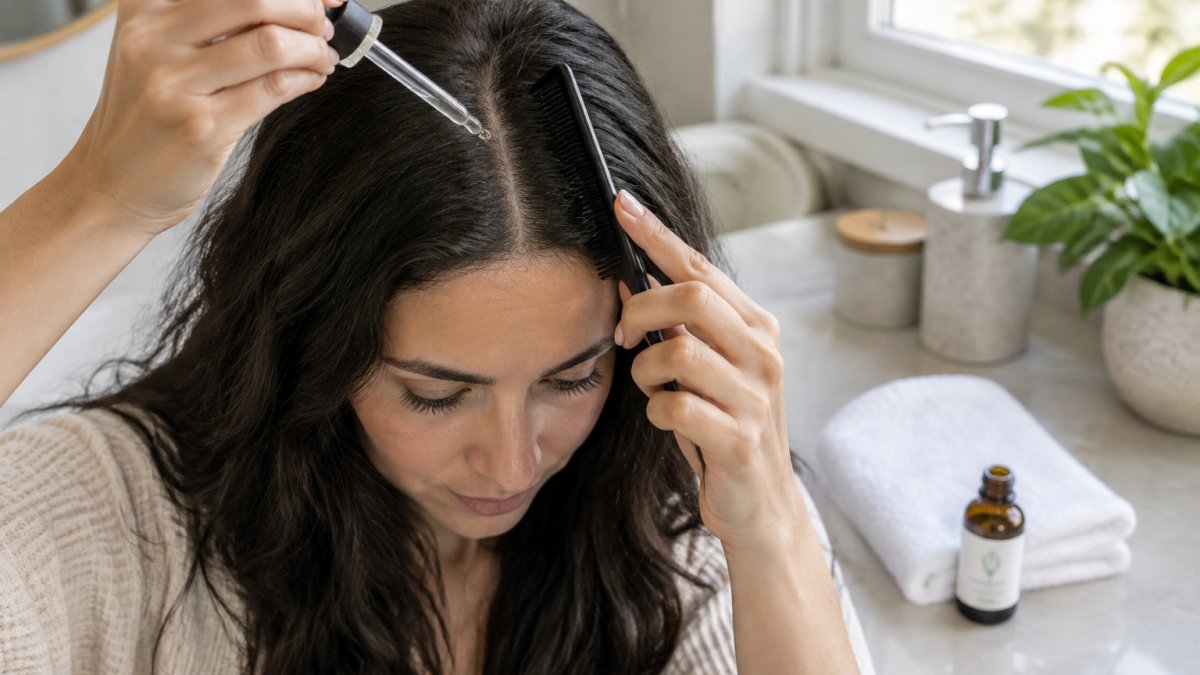
- Part in clean, deliberate sections. Use a wide-tooth comb to draw a straight line from forehead to nape, then cross-part to create four quadrants. Within each quadrant, part in rows about one inch apart.
- Load the applicator, not your palm. A dropper or precision tip lets you deposit product on skin. If you pour serum into your hand first, most of it ends up on the hair you touch on the way in.
- Apply a measured amount per row. Touch the tip to the scalp and move it along the part line rather than dabbing in one spot.
- Massage with fingertips, not nails, for one to two minutes. Small circles across the whole scalp boost circulation and help the serum spread across skin instead of pooling. This is also when you will feel whether you have over-applied.
- Leave it on for at least an hour before bed, or overnight if your hair tolerates it. A water-based humectant serum needs contact time to pull moisture into the stratum corneum. Rinsing after ten minutes wastes the application.
- Blot, do not rub, any shine at the roots. Press a soft towel or a dry microfiber cloth against the part lines. Rubbing drags product down the hair shaft.
- Style as usual the next morning. If roots look heavy, you used too much or applied too low on the strand, not because the serum itself is wrong for you.
The woman is American.
Watch out: applying serum to the hairline and temples last, after your hands are already coated, is one of the most common causes of a greasy front hairline within a few hours.
Application Techniques for Different Hair Densities
Fine hair needs a lighter hand than thick hair. This is where most people overdo it, and it is the part generic guides skip.
- Fine or thin hair: use a water-based serum, one drop per exposed row, and apply only at night so any residual shine settles while you sleep. Skip carrier oils at the root entirely.
- Medium hair: two to three drops per row works well. Keep the application on the scalp line and stop the dropper before it touches strands.
- Thick or coarse hair: you can use slightly more per row because more scalp is hidden under density, but still apply row by row rather than in a single pass. Add a carrier oil to the ends only.
A common mistake is treating every hair type the same. Density changes how much product reaches the skin versus how much coats the strand, and the row-by-row method is what keeps the dose consistent regardless of how much hair sits on top of the scalp.
Here is the leave-on routine, step by step, with the timing each stage needs.
| Step | What to do | Time or frequency |
|---|---|---|
| 1 | Start on dry or barely damp hair, not wet hair | Before each application |
| 2 | Part in four quadrants, then rows about one inch apart | Before each application |
| 3 | Load a dropper or applicator tip, not your palm | Before each application |
| 4 | Apply a measured amount along each part line | Per row |
| 5 | Massage with fingertips, not nails, in small circles | One to two minutes |
| 6 | Leave the serum on before bed or overnight | At least an hour |
| 7 | Blot shine at the roots with a soft towel, do not rub | After application |
| 8 | Style as usual the next morning | Next morning |
Humectants vs. Occlusives: The Ingredient Science That Decides Greasy or Hydrated
The greasy-versus-hydrated outcome comes down to two ingredient families. Understanding them is the difference between a scalp that feels quenched and one that looks oily by lunch.
- Humectants pull water toward the skin. Examples include glycerin and hyaluronic acid. They hydrate without heaviness.
- Occlusives form a seal to stop water loss. Examples include heavier oils and waxes. They protect but can trap sebum at the roots.
- Emollients soften and smooth. They sit between the two.
For an oily-root, dry-scalp situation, lead with humectants and use occlusives sparingly, on ends only. This is the ingredient science most guides skip, and it is the whole game.
How to Moisturize Dry Scalp Naturally
If you prefer to moisturize dry scalp naturally, plant-based options work well when you match the ingredient to the job.
- Jojoba is a liquid wax ester commonly used in scalp and skin products. Use it as a pre-wash treatment rather than a leave-in if your roots grease quickly.
- Argan is a lightweight plant oil. A few drops warmed between fingertips and pressed onto the scalp line is enough.
- Rosemary is an essential oil, not a carrier, and it must be diluted in a carrier oil before it touches skin.
- Aloe vera is a water-based ingredient often used in leave-on products.
Apply a thin layer, massage in, and keep heavy oils off the root zone. A weekly scalp massage with a light carrier oil supports moisture balance without coating the hair.
Watch out: essential oils such as rosemary, peppermint, and tea tree are not moisturizers and can irritate skin if used undiluted.
Nighttime vs. Daytime Application Protocols
Natural treatments behave differently depending on when you apply them, and this is the distinction most guides miss.
- Overnight treatments suit jojoba, squalane, and other carrier oils because contact time lets them absorb while you sleep. Apply to the scalp in rows, cover with a soft bonnet or towel if you are a restless sleeper, and wash out in the morning with a sulfate-free shampoo.
- Daytime leave-on serums should be water-based or aloe-based so they disappear into the skin before you style. Oils applied in the morning sit on the surface, catch lint, and read as greasy under office lighting.
- Pre-wash treatments are the compromise for oily-root types who still want oil: apply thirty to sixty minutes before washing, massage in, and shampoo out. You get the conditioning benefit without a full day of residue.
If you are switching from a harsh daily wash to a gentler routine, expect a two-to-four-week adjustment period when the scalp may still overproduce oil. That is rebound oiliness, not a sign the natural approach is failing, and it usually settles once the barrier recovers.
Finding the Best Moisturizer for Dry Scalp
The best moisturizer for dry scalp is water-based, non-comedogenic, and light enough to absorb before it spreads down the strands. Read the label before you buy.
Look for:
- Water or aloe as a first ingredient
- Humectants near the top of the list
- No heavy waxes or butters for root use
- A gentle, low-pH formula that respects pH balance
Skip anything that promises deep repair through thick oils at the scalp. That is how rebound oiliness begins.
Troubleshooting Rebound Oiliness and Common Mistakes
Rebound oiliness happens when you strip the scalp and it overproduces sebum to compensate. Over-washing is the usual culprit. The scalp barrier gets disrupted, sebum production ramps up, and your roots look greasy again within hours.
Common mistakes to avoid:
- Washing daily with harsh sulfates
- Applying conditioner to the roots
- Layering multiple oils at once
- Skipping exfoliation, so buildup traps product
A clarifying shampoo once a week helps clear residue. Gentle scalp exfoliation removes dead skin and buildup so your leave-on treatment can actually reach the skin.
Book a Scalp Analysis Before You Buy Another Product
Guessing at products gets expensive. A professional scalp analysis shows you what your skin actually needs, so you stop buying the wrong bottles.
At Camellia Scalp and Skin Lounge, our Japanese-inspired head spa rituals focus on scalp cleansing, hydration, and relaxation. Our licensed professionals assess your scalp, clear buildup, and support a healthier moisture balance.
If dry, flaky, or oily roots have frustrated you for months, a proper analysis beats another drugstore gamble.
Frequently Asked Questions
How do you moisturize your scalp without making your hair greasy?
Apply a water-based, non-comedogenic scalp serum or light lotion directly to the scalp in thin rows along your part, not to the hair strands. Use a dropper or nozzle tip so the product lands on skin, then massage it in with fingertips for about 60 seconds. Keep leave-on oils limited to the scalp only and never coat the mid-lengths or ends. If your roots still look flat, use the product at night and rinse or refresh in the morning.
Can I use oils on my scalp if I have fine hair?
Yes, but choose the right ones and apply sparingly. Jojoba and squalane are lightweight options often chosen for fine hair. Use two to three drops maximum, warm them between fingertips, and press them onto the scalp rather than pouring. If your hair is very fine, a water-based humectant serum is often easier to wear without visible residue.
How often should you moisturize your scalp?
How often to apply depends on how your scalp feels between washes. A dry, tight scalp may need daily lightweight hydration, while an oily scalp may only need it after clarifying washes. Watch for buildup: if roots feel coated or hair loses volume, cut back frequency or switch to a lighter water-based formula.
Why is my scalp dry but my hair is greasy?
This usually comes down to a compromised scalp barrier and over-washing. When the scalp loses moisture, sebum production can increase to compensate, while harsh sulfates strip the surface further. Heavy conditioners applied at the roots add to the greasy look without hydrating the skin underneath. Switching to a sulfate-free shampoo, keeping conditioner off the roots, and adding a lightweight leave-on scalp treatment helps rebalance moisture without adding weight.
Your scalp deserves better than trial and error. Book a scalp analysis with Camellia Scalp and Skin Lounge and get a plan built around your skin, not a generic label. Our head spa treatments combine deep cleansing, hydration support, and a calm setting designed to help you reset. Get started with Camellia Scalp and Skin Lounge and give your scalp the care it has been missing.
