Table of Contents
- What Is a Deep Pore Facial?
- How Long Does a Deep Pore Facial Take?
- Benefits of Deep Pore Cleansing for Your Skin
- Who Benefits Most From Deep Pore Facials?
- The Professional Skin Extraction Process Explained
- Post-Facial Skincare Routine for Best Results
- How Often Should You Get a Deep Pore Facial?
- Is a Deep Pore Facial Right for You?
- Frequently Asked Questions
Last Updated: September 26, 2026
What Is a Deep Pore Facial?
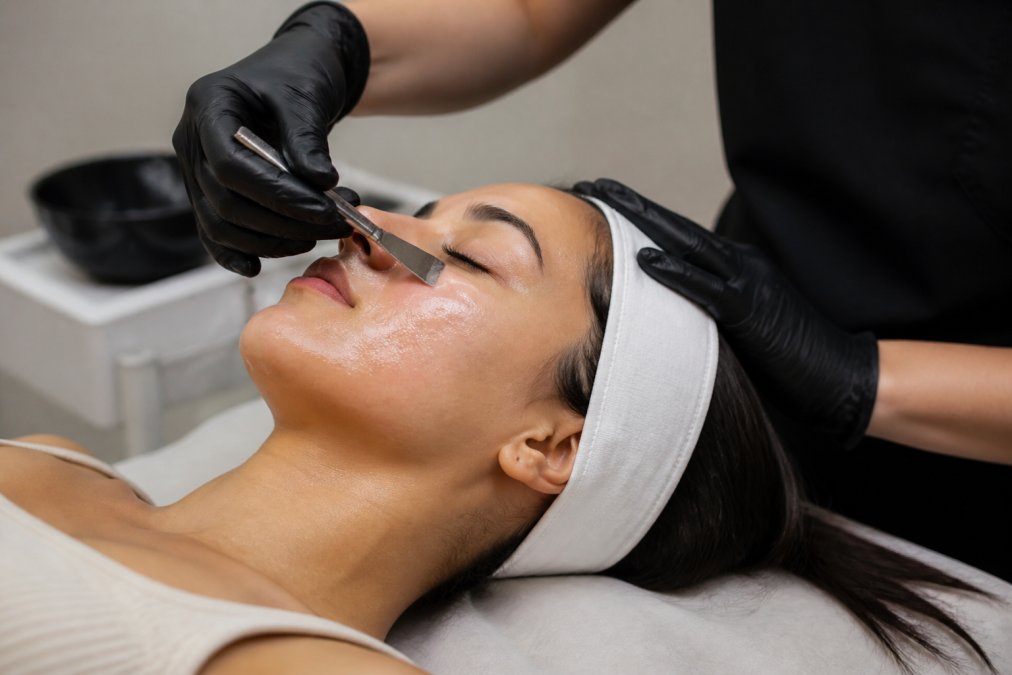
A deep pore facial is a professional skincare treatment that combines exfoliation, manual extraction, and hydration to remove built-up impurities, dead skin cells, and excess sebum from deep within the pores.
How Long Does a Deep Pore Facial Take?
A typical deep pore facial lasts 60-90 minutes, depending on skin condition, congestion level, extractions needed, and sensitivity. Adequate time ensures thorough results without irritation.
Benefits of Deep Pore Cleansing for Your Skin
Deep pore cleansing delivers a cleaner, clearer complexion with reduced breakouts and congestion.
Clearing Blackheads and Whiteheads
Manual extraction removes blackheads and whiteheads that topical treatments cannot address. Professional extraction is safer than at-home picking, which causes scarring and infection. An esthetician uses proper techniques and sterilized tools to remove impurities without damage, leaving pores smaller and complexion clearer.
The key to lasting results is consistent post-treatment skincare. Using a gentle cleanser and non-comedogenic moisturizer prevents new blackheads and whiteheads from forming as quickly.
Improving Skin Texture and Tone
Exfoliation removes dead skin cells, revealing fresher, smoother skin. Regular deep pore facials smooth uneven patches, reduce pore appearance, even skin tone, and enhance radiance. Results are visible immediately and improve with consistency.
Who Benefits Most From Deep Pore Facials?
Deep pore facials work best for specific skin types. Understanding whether this treatment suits your skin is essential before booking.
Best candidates include:
- People with oily skin prone to congestion
- Those dealing with acne-prone skin and breakouts
- Anyone with visible blackheads or whiteheads
- Individuals with dull, uneven skin tone
- People preparing for important events who want radiant skin
- Those seeking rejuvenation and improved complexion clarity
Avoid deep pore facials if you have:
- Active, severe cystic acne requiring dermatology care
- Rosacea or conditions that worsen with extraction
- Recent chemical peels or laser treatments (wait 1-2 weeks minimum)
- Very sensitive skin or active inflammation
- Eczema, psoriasis, or other inflammatory skin conditions
- Open wounds, active cold sores, or skin infections
Medical contraindications, consult your dermatologist before booking:
- Accutane (isotretinoin) use or recent discontinuation: Skin is extremely fragile during and for 6-12 months after Accutane therapy. Manual extraction can cause severe scarring and prolonged healing.
- Oral retinoids (tretinoin, adapalene): These medications thin the skin and increase sensitivity. Extraction during retinoid use increases bruising, irritation, and post-inflammatory hyperpigmentation.
- Topical retinoids (Retin-A, retinol): Pause use 3-5 days before your facial and resume 3-5 days after to minimize irritation.
- Immunosuppressant medications: Conditions like lupus or medications that suppress immune function slow healing and increase infection risk.
- Blood thinners (warfarin, aspirin, NSAIDs): These increase bruising and bleeding during extraction. Discuss timing with your physician.
- Photosensitizing medications: Certain antibiotics (doxycycline, tetracycline) and other drugs increase sun sensitivity post-facial (Checking your browser).
- Uncontrolled diabetes: High blood sugar impairs wound healing and increases infection risk after extraction.
Skin conditions requiring professional assessment:
- Hormonal acne: Deep pore facials help temporarily, but hormonal acne requires dermatology treatment for lasting results.
- Fungal acne (Malassezia folliculitis): Manual extraction can spread fungal infection. A dermatologist must confirm the diagnosis first.
- Perioral dermatitis: Extraction can trigger flare-ups; dermatology consultation is necessary.
If you take any prescription medications, use prescription-strength skincare, or have a diagnosed skin condition, inform your esthetician and consult your dermatologist before booking. Some combinations of treatments and medications make deep pore facials unsafe.
The best candidate for a deep pore facial is someone with oily or acne-prone skin, no active inflammation or infections, no recent prescription retinoid use, and no medical contraindications. When in doubt, a brief dermatology consultation ensures safety and optimal results.
The Professional Skin Extraction Process Explained
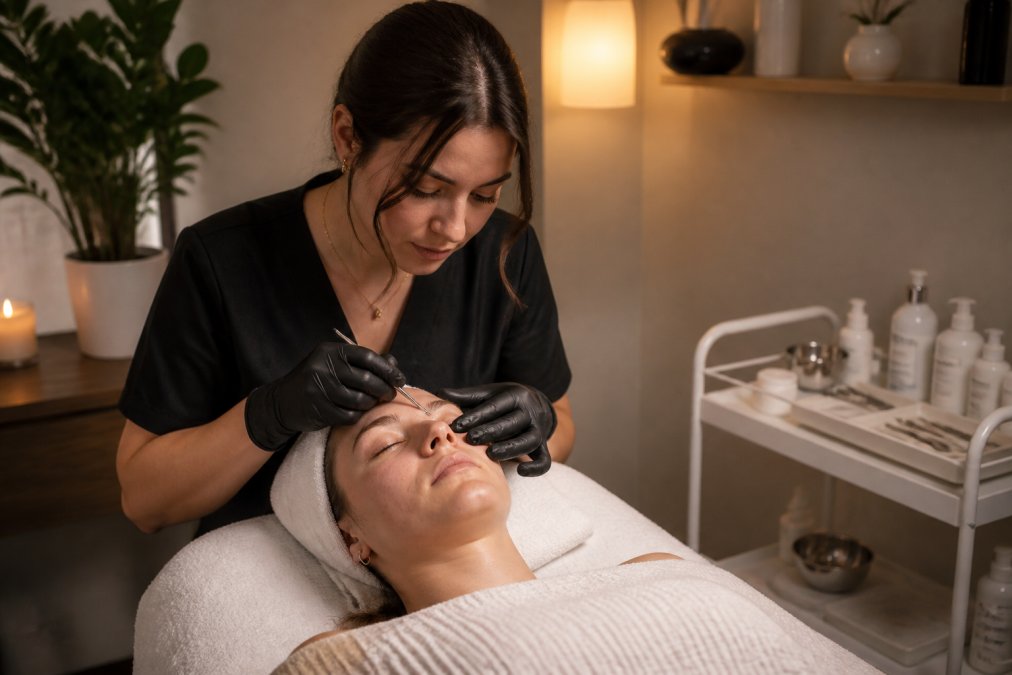
Professional skin extraction is a carefully controlled process that differs significantly from at-home attempts. A trained esthetician uses proper technique, sterilized tools, and appropriate timing to safely remove impurities without causing damage.
Preparation and Exfoliation
Your esthetician cleanses your skin, then exfoliates using physical scrubs, chemical peels, or steam to soften skin and open pores. This preparation reduces irritation during extraction.
Manual Extraction and Purifying
Your esthetician carefully extracts blackheads and whiteheads using controlled pressure and sterilized tools, preventing scarring and infection. Purifying masks and serums then draw out remaining impurities and prepare skin for hydration.
Never attempt aggressive extractions at home. Improper technique causes scarring, infection, and can worsen acne. Professional extraction uses the right pressure, angle, and tools to safely remove impurities.
Hydration and Protection
Your esthetician applies hydrating serums, nourishing masks, and protective moisturizers to soothe skin, reduce inflammation, and strengthen your skin barrier against future congestion.
Post-Facial Skincare Routine for Best Results
Post-facial skincare determines how long results last. A proper routine extends benefits and prevents new congestion from forming.
Long-term maintenance routine for acne-prone skin (weeks 4 onward):
Daily cleansing:
- Morning: Gentle cleanser + hydrating toner + lightweight moisturizer + SPF 30+
- Evening: Gentle cleanser + hydrating toner + lightweight moisturizer
Weekly treatments (rotate or combine based on skin response):
- 1-2x weekly: Gentle chemical exfoliant containing salicylic acid (BHA) at 0.5-2% concentration to keep pores clear
- 1x weekly: Purifying clay or charcoal mask to draw out sebum and impurities
- Optional: Niacinamide serum (4-5%) to regulate sebum production and strengthen skin barrier
Active ingredients for acne-prone skin between facials:
- Salicylic acid (BHA): Use 2-3x weekly at 0.5-2% to dissolve sebum inside pores and prevent blackheads. Start low and increase frequency as tolerated.
- Azelaic acid: Use 1-2x weekly at 10-20% to reduce inflammation and prevent post-inflammatory hyperpigmentation from acne.
- Niacinamide: Use daily at 4-5% to regulate sebum, strengthen barrier, and reduce pore appearance.
- Retinoids (if not recently used before facial): Introduce after 1 week post-facial at low strength (0.025% retinol or equivalent) 2-3x weekly to increase cell turnover and prevent congestion.
What NOT to do between facials:
- Do not pick, squeeze, or manually extract at home, this causes scarring and infection
- Do not use multiple active ingredients simultaneously (e.g., retinoid + BHA + vitamin C daily)
- Do not over-exfoliate; this damages the skin barrier and increases sensitivity
- Do not use heavy, occlusive moisturizers if you have oily, acne-prone skin
- Do not skip SPF; sun exposure darkens post-inflammatory hyperpigmentation from acne
Consistency matters more than complexity. A simple routine with the right products prevents congestion better than complicated multi-step routines with products that irritate your skin. Stick with one routine for at least 4-6 weeks before assessing results.
Adjusting frequency based on results:
- If your skin stays clear for 6-8 weeks, you can extend the interval between professional facials to every 8-10 weeks.
- If congestion returns within 3-4 weeks, schedule facials every 4 weeks and increase at-home BHA use to 3-4x weekly.
- If your skin becomes irritated or sensitive, reduce active ingredient frequency and focus on hydration and barrier repair.
The goal of post-facial skincare is to maintain pore clarity without over-treating. Use gentle daily cleansing, weekly exfoliation with BHA, and consistent hydration. This foundation prevents congestion from returning quickly and extends the results of your professional deep pore facial.
How Often Should You Get a Deep Pore Facial?
Frequency depends on your skin type, congestion level, and treatment goals. There’s no one-size-fits-all answer, but guidelines help you determine the right schedule.
For oily, congestion-prone skin:
- Start with monthly facials to establish clarity
- Maintain with facials every 4-6 weeks once results are achieved
- Some people benefit from every 2-3 weeks initially
For combination or normal skin:
- Every 6-8 weeks is typically sufficient
- Adjust based on how quickly congestion returns
- Seasonal changes may require more frequent treatments
For sensitive skin:
- Every 8-12 weeks to avoid over-treating
- Monitor how your skin responds between treatments
- Space out facials if irritation or sensitivity increases
Is a Deep Pore Facial Right for You?
Deciding whether to try a deep pore facial depends on your skin concerns, type, and goals. This treatment isn’t right for everyone, but it’s highly effective for the right candidate.
Choose a deep pore facial if:
- You struggle with blackheads, whiteheads, or visible congestion
- Your skin feels rough or uneven in texture
- You want to improve skin clarity and radiance
- You have oily or acne-prone skin
- You’re preparing for an event and want glowing skin
- Topical treatments haven’t resolved your congestion
Consider other options if:
- You have active, severe acne requiring dermatology care
- Your skin is extremely sensitive or reactive
- You have rosacea, eczema, or similar conditions
- You’ve had recent chemical peels or laser treatments
- You’re uncomfortable with extraction procedures
| Aspect | Details |
|---|---|
| Treatment Duration | 60-90 minutes |
| Best For | Oily, acne-prone, congested skin |
| Recommended Frequency | Monthly to every 6-8 weeks |
| Immediate Results | Clearer pores, smoother texture, radiant glow |
| Recovery Time | Minimal; avoid makeup for 24 hours |
| Cost | Pricing available on Camellia Scalp and Skin Lounge website |
Frequently Asked Questions
What is a deep pore facial and how does it differ from a standard facial?
A deep pore facial is a specialized treatment designed to thoroughly cleanse congested skin by removing impurities, sebum, blackheads, and whiteheads from pores. Unlike a standard facial that focuses on surface hydration and mild exfoliation, a deep pore facial combines manual extraction, enzyme peels, and steam to access buildup deep within pores. Professional estheticians use specialized techniques to purify the skin without causing unnecessary inflammation or damage to the skin barrier.
How long does a deep pore facial take, and what should I expect during my appointment?
A typical deep pore facial appointment lasts 60 to 90 minutes. The process begins with cleansing and exfoliation to prepare the skin, followed by steam to soften pores and loosen impurities. Your esthetician will then perform manual extractions on congested areas, apply purifying masks or enzyme peels, and finish with hydration and protection products. The exact timeline depends on your skin’s condition and the specific techniques your provider uses.
What should my post-facial skincare routine include after a deep pore facial?
Your post-facial skincare routine should prioritize hydration and gentle care for 24 to 48 hours after treatment. Use a fragrance-free cleanser, apply a hydrating serum or moisturizer to support your skin barrier, and wear SPF 30 or higher daily. Avoid active ingredients like retinol or vitamin C for at least 3 days, skip exfoliating products, and don’t pick at any minor redness or sensitivity. Keep your skin cool and avoid heat exposure, heavy sweating, and direct sunlight during the healing period.
Are deep pore facials safe for acne-prone or sensitive skin?
Deep pore facials can be beneficial for acne-prone skin when performed by a qualified professional, as they remove comedones and reduce bacterial buildup. However, if you have very sensitive skin or active severe acne, discuss this with your esthetician first. They can adjust the intensity of extractions and choose gentler techniques or medical-grade products suited to your skin type. Some skin conditions may require a dermatologist’s approval before treatment. Your provider should always assess your skin and discuss any contraindications before proceeding.