Table of Contents
- Quick Comparison: Best Scalp Treatments for Women Over 40
- Why Scalp Health Changes After 40
- How to Fix Dry Itchy Scalp at Home
- Scalp Exfoliation for Thinning Hair
- Professional Head Spa Benefits: What to Expect
- Top 7 Scalp Treatments for Women Over 40
- 1. Camellia Scalp and Skin Lounge, Best Overall for Professional Care
- 2. Moroccanoil Revitalizing Scalp Tonic, Best Daily Maintenance
- 3. Ro Hair Solution Rx, Best for Clinician-Supported Hair Loss
- 4. Nioxin Hair Fall Defense Serum, Best for Density Support
- 5. Nizoral Anti-Dandruff Shampoo, Best for Persistent Flaking
- 6. Nécessaire The Rosemary Shampoo, Best for Buildup Removal
- 7. Remedy Skin Medicated Dandruff Shampoo, Best for Sensitive Scalps
- Hormonal Shifts, Scalp Microbiome, and Ingredient Safety
- Conclusion: Building Your Scalp Care Routine
- Frequently Asked Questions
Last Updated: September 30, 2026
Quick Comparison: Best Scalp Treatments for Women Over 40
Scalp treatment for women over 40 looks different than it did in your twenties, and the right scalp treatment for women changes with it. Hormonal shifts, years of styling, and slower cell turnover change what your scalp needs. This guide from Camellia Scalp and Skin Lounge breaks down seven options, from drugstore fixes to in-lounge rituals.
Here’s the short version before the detail:
| Treatment | Best For | Where It Fits |
|---|---|---|
| Medicated shampoo (ketoconazole) | Flaking, itching, fungal irritation | At-home, first line |
| Leave-in scalp tonic | Daily maintenance, mild dryness | At-home, daily |
| Rosemary clarifying shampoo | Product buildup, dull roots | At-home, weekly |
| Hair fall defense serum | Early thinning, density support | At-home, daily |
| Prescription topical | Confirmed hair loss | Via a clinician |
| Professional head spa ritual | Buildup, dryness, relaxation | In-lounge, monthly |
| Exfoliating scalp treatment | Clogged follicles, heavy buildup | In-lounge, monthly |
Why Scalp Health Changes After 40
The scalp you have at 45 is not the scalp you had at 25. Sebum production slows, cell turnover drops, and hormonal shifts during perimenopause and menopause change how follicles behave, often showing up as more shedding, a drier or itchier scalp, and slower regrowth at once.
Scalp changes after 40 are usually hormonal and microbial, not just cosmetic. Treat the scalp, not only the hair, and you address both.
How to Fix Dry Itchy Scalp at Home
Start with the simplest change: stop over-washing with harsh sulfates and stop under-rinsing. A dry, itchy scalp is often a barrier problem, not a dirt problem. Stripping it further makes it worse.
- Barrier dryness. Tight, rough, small white flakes, worse in winter and after hot showers. Cause: depleted lipids and a compromised barrier from sulfates, hot water, and over-washing.
- Seborrheic dermatitis. Greasy yellow-white scale, redness along the hairline and behind the ears, itching that flares with stress. Cause: Malassezia yeast overgrowth plus inflammation, a microbiome problem, not a moisture problem.
- Contact irritation. Itching and burning within a day or two of a new product, sometimes with a rash at the hairline or neck. Cause: a reaction to fragrance, preservatives, or a strong active.
- Hormonal dryness. Diffuse itching and thinning with no visible scale, tracking with perimenopause. Cause: declining estrogen reduces sebum and skin thickness.
- Wash two to three times a week with a gentle, pH-balanced shampoo, around pH 4.5 to 5.5, close to the scalp’s natural acid mantle. Sulfate-free formulas are the safer default for a dry or reactive scalp.
- Rinse with lukewarm water, not hot, for a full 30 seconds longer than feels necessary. Residue at the roots commonly triggers itch a day after washing.
- Apply a leave-in scalp tonic to damp skin, not hair, and massage it in with fingertips. Niacinamide, panthenol, glycerin, and ceramides support the barrier; hyaluronic acid serums hydrate without adding oil.
- Skip heavy oils near the roots if you’re prone to buildup. Oils can feed Malassezia, so if your flaking is greasy rather than dry, oil likely makes it worse.
- If flaking persists after two weeks, switch to a medicated shampoo with ketoconazole (1% over the counter) or zinc pyrithione, two to three times a week. If it clears, drop to once weekly for maintenance.
Two more things most guides skip:
- Ingredient safety. With sensitive skin, eczema, or allergies, avoid fragrance and essential oils in leave-on scalp products, and patch-test anything new behind the ear for 48 hours. If pregnant or nursing, check with a clinician before prescription topicals or high-percentage actives.
- When to escalate. See a dermatologist for open sores, oozing, patchy hair loss, or flaking that hasn’t improved after four to six weeks of consistent treatment. Persistent seborrheic dermatitis often needs a prescription-strength antifungal or a short course of a topical corticosteroid.
Mayo Clinic overview of dandruff causes and treatment
Dry and itchy are symptoms, not a diagnosis. Identify whether the cause is barrier dryness, yeast overgrowth, contact irritation, or hormonal change before you buy, the wrong treatment makes each one worse.
Scalp Exfoliation for Thinning Hair
Scalp exfoliation for thinning hair clears dead skin, oil, and styling residue that clog follicles and dull regrowth. It doesn’t create new hair, it removes what’s blocking the follicles you still have. For women over 40, the goal is protecting existing density.
Two ways to do it:
- Physical exfoliation: a silicone scalp brush used gently during washing, once or twice a week. Use light, circular pressure for 60 to 90 seconds, no scrubbing. Soft bristles are fine for most scalps; stiff bristles and metal tools are not.
- Chemical exfoliation: a salicylic acid or enzyme-based scalp treatment, applied and rinsed. Salicylic acid is oil-soluble, so it penetrates sebum and suits oily, flaky, or buildup-prone scalps; over-the-counter scalp concentrations run around 1% to 3%. For drier or sensitive scalps, lactic acid or a fruit-enzyme (papain, bromelain) treatment is gentler. Apply to a dry scalp before washing and rinse thoroughly.
Frequency depends on your scalp type:
- Oily or buildup-prone: chemical exfoliation once a week, physical exfoliation once a week on a different day.
- Normal: once a week, alternating methods week to week.
- Dry or sensitive: every 10 to 14 days, chemical only, at the lowest effective concentration.
- Actively inflamed, raw, or flaking: skip exfoliation until the scalp calms down. Exfoliating irritated skin makes it worse and can open the barrier to infection.
A few cautions before you start:
- Don’t stack exfoliation with other actives. If you use a medicated shampoo, prescription topical, or scalp retinoid, exfoliating within the same 24 hours can trigger irritation that mimics the original problem.
- Avoid exfoliating over broken skin, sunburn, or a fresh chemical service. Wait at least a week after coloring, relaxing, or a keratin treatment.
- Check ingredients if you’re sensitive. Some exfoliating scalp products include fragrance, menthol, or essential oils like peppermint and tea tree, which can sting on a compromised scalp. Patch-test first.
- Exfoliation is not a substitute for treatment. If your part is widening or you’re shedding more than usual, exfoliation supports the scalp but won’t address a hormonal or medical cause.
Exfoliate the night before you plan to use a leave-in scalp tonic or serum. A clear follicle opening means more of the active actually reaches the skin instead of sitting on top of dead cells.
Professional Head Spa Benefits: What to Expect
A professional head spa is a multi-step scalp and hair treatment by a trained specialist, typically combining scalp analysis, deep cleansing, exfoliation, massage, and hydration. It targets buildup and circulation in ways at-home washing can’t reach.
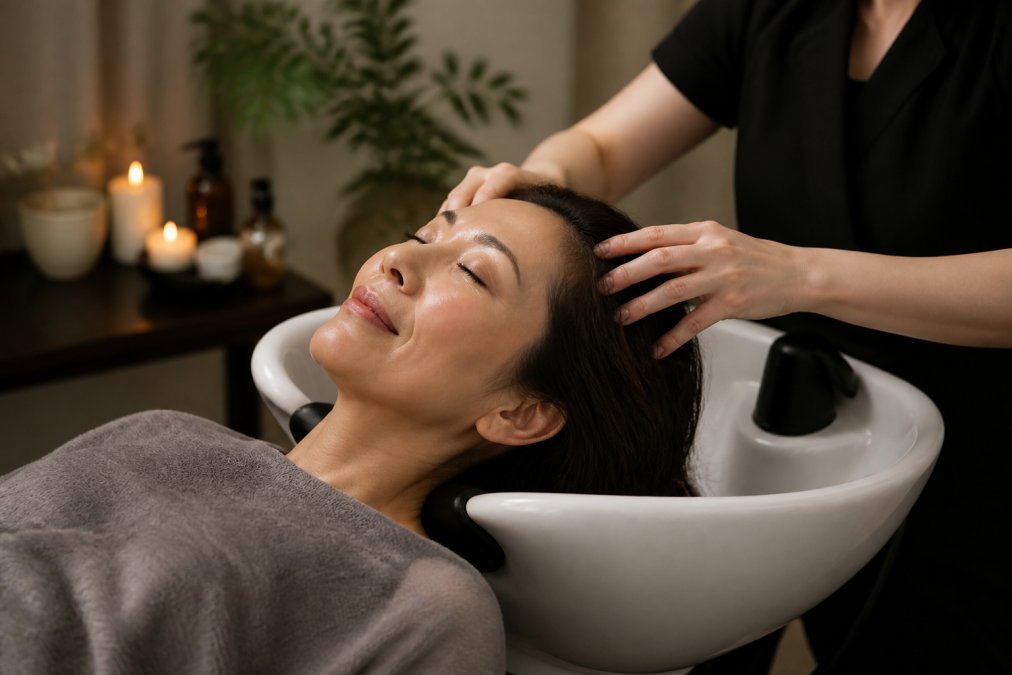
A session usually involves:
- Scalp analysis under magnification to identify dryness, buildup, or irritation
- Deep cleansing to lift oil, product residue, and dead skin
- Exfoliation to unclog follicles
- Massage to support scalp circulation and relaxation
- Hydration with a serum or tonic matched to your scalp type
Book your first head spa session when your scalp is at its worst, not its best. The analysis is far more useful when the specialist can see the real problem.
Top 7 Scalp Treatments for Women Over 40
1. Camellia Scalp and Skin Lounge, Best Overall for Professional Care
For persistent flaking, buildup, or thinning, a professional scalp treatment beats guessing at products. Camellia Scalp and Skin Lounge offers Japanese-inspired head spa rituals built around scalp cleansing, analysis, and massage, plus customized facials and HydraFacial treatments.
2. Moroccanoil Revitalizing Scalp Tonic, Best Daily Maintenance
A lightweight leave-in tonic for daily upkeep, mess-free and easy to work into a morning routine. Best for mild dryness rather than active flaking. The catch: it needs consistent daily use to show anything.
3. Ro Hair Solution Rx, Best for Clinician-Supported Hair Loss
A prescription-grade topical for hair loss and scalp health, delivered by subscription with ongoing medical support. It requires a consultation to access, which is the point. If your shedding is significant, discuss this category with a clinician rather than self-treating.
4. Nioxin Hair Fall Defense Serum, Best for Density Support
A leave-in spray that targets hair fall at the root and gives hair a fuller look. Easy to apply and visibly thickening. On some hair types it can feel slightly tacky, so apply sparingly.
5. Nizoral Anti-Dandruff Shampoo, Best for Persistent Flaking
A medicated shampoo with 1% ketoconazole that controls flaking and itching. Highly effective for fungal-related scalp issues and widely available. Used too often, it can dry the scalp, so follow the label rather than washing daily.
6. Nécessaire The Rosemary Shampoo, Best for Buildup Removal
A clarifying, pH-balanced shampoo infused with rosemary. It gently removes product residue and supports a healthy scalp microbiome. You’ll likely need a separate conditioner, since clarifying formulas don’t add much moisture.
7. Remedy Skin Medicated Dandruff Shampoo, Best for Sensitive Scalps
A medicated shampoo for severe dryness and irritation, including eczema-prone skin. Soothing and dermatologist-tested. The medicinal scent is noticeable, the trade-off for how calming it is.
Hormonal Shifts, Scalp Microbiome, and Ingredient Safety
Three things most scalp guides skip, and all three change what you should do.
Don’t stack multiple active treatments at once. Combining a medicated shampoo, an exfoliant, and a prescription topical in the same week often triggers irritation that looks like the original problem getting worse.
Conclusion: Building Your Scalp Care Routine
The hardest part isn’t finding a treatment. It’s matching it to what your scalp is actually doing, and most women over 40 are guessing. Start with a gentle at-home routine, add exfoliation once a week, and bring in professional help when flaking, buildup, or thinning persists.
Frequently Asked Questions
What is the best treatment for aging scalp?
The best approach combines daily care with periodic professional treatments. For home use, a gentle exfoliating scrub and a hydrating serum can help maintain scalp health. Professional options provide deeper cleansing and stimulation. Women over 40 often benefit from a customized plan that addresses hormonal changes, reduced oil production, and thinning hair. Consulting a dermatologist or licensed esthetician can help determine which treatments suit your specific needs.
Is it possible to regrow hair after 40?
Hair regrowth after 40 is possible, though results vary based on the cause of thinning. Treatments can stimulate follicles and improve density. However, if a follicle is no longer active, regrowth may be limited. A proper diagnosis from a dermatologist is essential to identify whether the hair loss is hormonal, genetic, or due to nutritional deficiencies. Early intervention often yields the best outcomes.
How often should women over 40 get a professional scalp facial?
Most women over 40 benefit from a professional scalp facial every 4 to 6 weeks, aligning with the hair growth cycle. This frequency helps manage buildup, improve circulation, and support a healthy scalp environment. If you have specific concerns like dandruff or excessive shedding, a specialist may recommend more frequent sessions initially. Many head spas offer customized treatment plans, so it’s best to consult with a professional to determine the ideal schedule for your scalp condition.
Can scalp treatments help with menopausal hair thinning?
Yes, scalp treatments can help manage menopausal hair thinning by addressing inflammation, improving blood flow, and removing follicle-clogging buildup. Hormonal shifts during menopause can shrink hair follicles and reduce density. Treatments may support follicle health. Additionally, certain ingredients can reduce inflammation. For best results, combine in-office treatments with at-home care and consult a healthcare provider about hormonal therapies.
What ingredients should I avoid if I have a sensitive scalp?
If you have a sensitive scalp, avoid harsh sulfates (like sodium lauryl sulfate), parabens, and synthetic fragrances, which can trigger irritation. Also steer clear of high concentrations of alcohol, which can dry out the scalp. Instead, look for gentle surfactants, soothing agents like aloe vera or chamomile, and pH-balanced formulas. For medicated shampoos, use only as directed; overuse can cause dryness. Always patch-test new products and consult a dermatologist if you have a diagnosed condition like eczema or psoriasis.