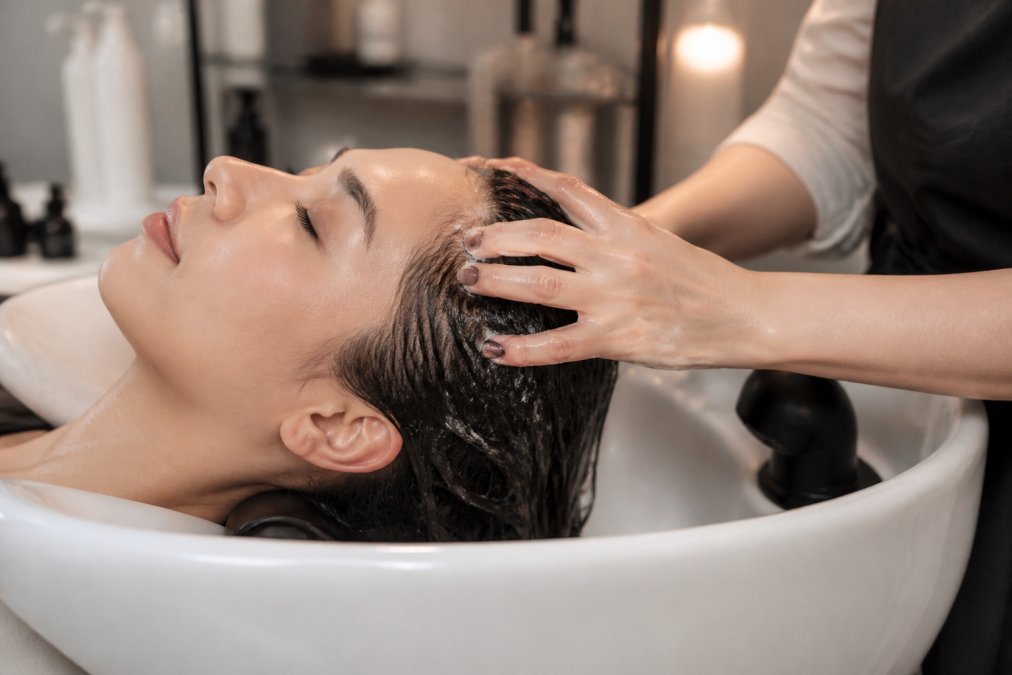
Table of Contents
- What Is a Scalp Facial Treatment?
- Scalp Detox Benefits: Buildup, Oil, and Follicle Health
- What Happens During a Professional Head Spa Treatment
- HydraFacial Scalp Treatment: How It Supports Hair and Scalp Health
- DIY vs. Professional Scalp Treatments: What You Can and Can’t Replicate at Home
- Contraindications, Safety, and When to See a Dermatologist
- Long-Term Maintenance: How Often Should You Get a Scalp Facial Treatment?
- Frequently Asked Questions
Last Updated: September 27, 2026
What Is a Scalp Facial Treatment?
A scalp facial treatment is a professional service that cleanses, exfoliates, and hydrates the scalp while supporting follicle health, much like a facial does for your face. At Camellia Scalp and Skin Lounge, clients often seek professional help after at-home remedies have not resolved their scalp concerns. The reason is simple: those products treat the hair, not the skin underneath it.
How It Differs from a Standard Salon Shampoo
A salon shampoo cleans your hair. A scalp facial treatment addresses the skin beneath it. The difference comes down to three things: scalp analysis, targeted exfoliation, and time.
Scalp Detox Benefits: Buildup, Oil, and Follicle Health
The core scalp detox benefits come down to one mechanism: removing what shouldn’t be there so the follicle can function. When sebum, dead skin cells, and styling residue sit on the scalp, they contribute to flaking, itching, and a scalp that never quite feels clean.
A proper detox does several things at once:
- Loosens and lifts product buildup that regular shampoo leaves behind
- Supports sebum regulation so oil production settles into a more comfortable range
- Removes dead skin cells that contribute to visible flaking
- Improves scalp hydration after deep cleansing, which many people skip
- Supports follicle health by keeping the opening clear
Skipping the hydration phase after exfoliation is one of the most common mistakes in at-home scalp care. Over-cleansing without restoring moisture can leave the scalp barrier compromised and produce more flaking, not less.
Who Benefits Most from a Scalp Detox
Not everyone needs the same frequency or intensity. Those who notice the biggest difference: people with persistent flaking or an itchy scalp that hasn’t responded to shampoo changes, heavy styling-product users, and anyone concerned about hair thinning who wants to support follicle health before advanced options.
What Happens During a Professional Head Spa Treatment
A professional head spa treatment follows a predictable arc: consultation and scalp analysis, deep cleansing, exfoliation, therapeutic massage, and a hydrating finish. The exact sequence varies, but the structure is consistent enough that you should know what you’re walking into.
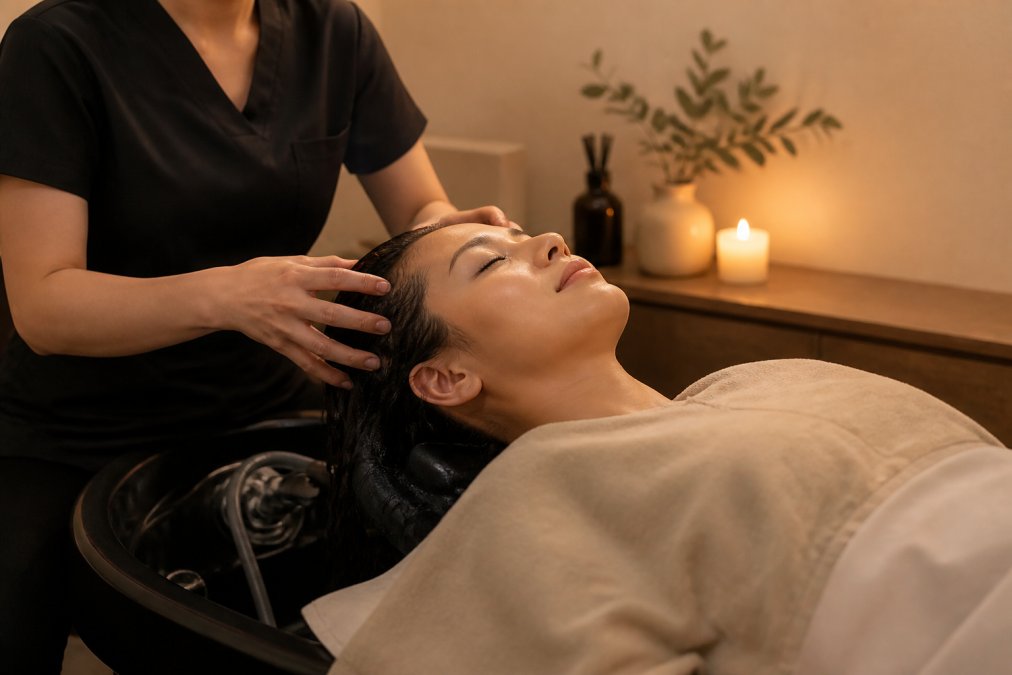
Here’s the typical flow:
- Scalp analysis. A magnified camera or visual assessment identifies buildup, dryness, or irritation.
- Deep cleansing. A clarifying cleanse removes surface oil and residue.
- Exfoliation. A physical or chemical exfoliant lifts dead skin cells and scalp scaling.
- Massage. Therapeutic massage supports micro-circulation and relaxation.
- Treatment and hydration. Serums, peptides, or growth factors are applied, followed by a hydrating finish.
The Role of Scalp Massage and Micro-Circulation
Scalp massage does more than feel good. The mechanical action supports micro-circulation, the blood flow delivering nutrients to the follicle. Many people find the massage turns a clinical treatment into something restorative, and the ASMR-adjacent quality of a slow, deliberate head massage is part of why head spa rituals have grown in popularity.
HydraFacial Scalp Treatment: How It Supports Hair and Scalp Health
A HydraFacial scalp treatment uses a vortex-based handpiece to loosen debris, suction it away, and deliver a serum in the same pass. That three-in-one action is the core difference from a manual scalp facial, where exfoliation and serum application are separate hand-performed steps.
What the Device Actually Does at Each Step
Most HydraFacial scalp protocols follow a similar sequence:
- Cleanse and peel. A glycolic-and-salicylic blend loosens the bonds holding dead skin cells to the scalp surface. Salicylic acid is oil-soluble, which is why it is favored for scalps with heavy sebum or product buildup.
- Extract and hydrate. The vortex tip suctions loosened debris while a serum containing hyaluronic acid and botanical extracts is delivered to the freshly cleared surface.
- Fuse and protect. A final pass applies peptides, antioxidants, or growth-factor serums. This is the step where marketing claims tend to outrun the evidence.
Peptides vs. Growth Factors: What the Science Actually Supports
This is where most spa content stops being useful. Peptides and growth factors are not interchangeable, and the evidence behind them is not equal.
Ask what serum is being used and whether the provider can explain the mechanism, not just the ingredient name. A practitioner who can tell you why salicylic acid is used for oil control but not for a dry, tight scalp is a better signal of expertise than a menu of branded serums.
Who It Suits, and Who Should Skip It
A HydraFacial scalp treatment suits people with heavy product buildup, an oily scalp that resists regular clarifying, or anyone wanting more standardized exfoliation than a manual treatment provides. It is generally not the right first choice for a dry, reactive scalp, active seborrheic dermatitis, or open lesions, the suction and acid step can aggravate compromised skin.
DIY vs. Professional Scalp Treatments: What You Can and Can’t Replicate at Home
Most guides frame this as a binary, book a service or scrub at home. The useful question is which problems home care can solve, which it cannot, and how to tell before spending money on the wrong one.
The Decision Framework
Work through these three questions in order:
1. Is your concern cosmetic or clinical?
Cosmetic concerns, mild flaking, product buildup, a scalp that feels less clean than you’d like, respond well to consistent home care. Clinical concerns, persistent redness, patches that bleed or crust, noticeable hair shedding changes, itching that disrupts sleep, need a dermatologist, not a spa. A scalp facial is not a diagnostic tool, and no amount of professional exfoliation resolves a condition requiring medical treatment.
What Home Care Genuinely Handles
- Maintenance exfoliation. A gentle scalp scrub or a salicylic-acid serum once a week keeps dead skin cells from accumulating. More than once a week is usually counterproductive.
- Buildup management. A clarifying rinse every two to three weeks removes residue from dry shampoo, leave-in products, and hard water minerals.
- Circulation support. Five minutes of deliberate fingertip or tool-assisted massage a few times a week is a reasonable approximation of the massage portion of a professional treatment.
- Consistent cleansing. A gentle, sulfate-free shampoo used regularly does more for scalp health than an aggressive shampoo used occasionally.
What You Cannot Replicate, and Why
- Magnified analysis. A trichoscope or scalp camera reveals buildup patterns, follicular condition, and early signs of concern that are invisible to the naked eye. This is the single biggest gap between home and professional care.
- Calibrated exfoliation. Professional exfoliants are selected and dosed based on what the analysis shows. At home, you are guessing, and over-exfoliating a dry scalp is a common way to make flaking worse.
- Device-based treatments. Vortex extraction, LED, and microneedling require equipment and training. There is no safe at-home equivalent.
- Targeted serum selection. Matching a serum to a diagnosed concern is a judgment call, not a product category.
| Approach | Best For | Frequency | Real Limitation |
|---|---|---|---|
| At-home exfoliation | Mild buildup, maintenance between visits | Weekly | No analysis; easy to overdo and irritate |
| Professional scalp facial | Persistent flaking, buildup, oil control, unknown cause | Every 4-6 weeks | Requires booking; results depend on practitioner skill |
| Device-based treatment | Advanced cleansing, hydration, follicle support | Every 4-6 weeks | Higher cost per session; not a hair loss solution |
How to Vet a Professional Before You Book
Ask three questions during the consultation:
- Will you show me the scalp analysis? A provider who walks you through what the camera shows is treating you as a patient, not a customer.
- What are you using, and why? The answer should reference your scalp condition, not a menu tier.
- What should I do between visits? If the answer is ‘nothing’ or ‘buy our product line,’ that is a signal.
Home care and professional treatment are not substitutes. Home care keeps a healthy scalp stable; professional treatment identifies and addresses what home care cannot see. The mistake is using one to replace the other, scrubbing harder at home when you need an assessment, or booking monthly sessions when a simple routine would have solved the problem.
Contraindications, Safety, and When to See a Dermatologist
Persistent flaking, itching, or hair thinning that hasn’t improved with consistent scalp care deserves a dermatologist’s evaluation, not more treatments. A scalp facial supports scalp health; it doesn’t diagnose or treat medical conditions.
If you’re unsure whether you’re a candidate, ask during your consultation. A licensed professional should tell you whether treatment is appropriate or whether to see a medical provider first, that honesty is a sign you’re in good hands.
Long-Term Maintenance: How Often Should You Get a Scalp Facial Treatment?
Most people see the best results with a scalp facial treatment every four to six weeks, aligning with the scalp’s natural renewal cycle. For active buildup or flaking, a provider may suggest every three to four weeks until the scalp stabilizes, then spacing sessions out.
Long-term maintenance looks different depending on your goal:
- Maintenance: every six to eight weeks for a scalp that’s generally healthy
- Corrective: every four weeks until concerns resolve, then reassess
- Supportive (hair thinning concerns): consistent monthly sessions alongside a dermatologist’s guidance
Frequently Asked Questions
What is a scalp facial treatment?
A scalp facial treatment is a professional service that cleanses, exfoliates, and hydrates the scalp using techniques similar to a facial for your skin. It typically includes scalp analysis, exfoliation to remove product buildup and dead skin cells, massage to stimulate micro-circulation, and hydration to support the scalp barrier. Unlike a standard shampoo, it targets follicle health and sebum regulation, not just hair cleanliness.
How long does a scalp facial last, and how often should you get one?
Professional scalp facial treatments vary in duration depending on the service and any add-ons. For ongoing scalp health, many providers suggest a series of treatments spaced a few weeks apart, then monthly maintenance. If you have specific concerns like flaking, oil control, or hair thinning, a consultation can help determine a schedule that fits your needs.
Can a scalp facial treatment help with hair growth?
A scalp facial can support healthier hair by removing buildup that may clog follicles, improving micro-circulation through massage, and hydrating the scalp barrier. Ingredients like peptides and growth factors are sometimes used to support follicle health. However, it is not a medical treatment for hair loss. If you notice sudden or significant thinning, see a dermatologist to rule out underlying conditions.
Is a professional head spa treatment worth it compared to doing it at home?
At-home scalp care can help with surface exfoliation and hydration, but a professional head spa treatment offers deeper cleansing, customized product selection, and techniques like therapeutic massage and steam that are hard to replicate. A licensed provider can also assess your scalp condition, identify issues like flaking or oil imbalance, and adjust the treatment accordingly, which makes it worth it for those with persistent concerns.
Persistent scalp concerns rarely resolve with a single product or a one-time visit. Camellia Scalp and Skin Lounge offers Japanese-inspired head spa rituals, scalp analysis, therapeutic massage, and authentic HydraFacial treatments in a calm lounge setting, with transparent pricing and same-day availability options so you can start without a long wait. Get started with Camellia Scalp and Skin Lounge and build a scalp care routine that actually holds up between visits.