Tag: scalp analysis

  • 7 Ways to Prevent Dry Scalp in Desert Climate

    7 Ways to Prevent Dry Scalp in Desert Climate

    Last Updated: November 10, 2026

    Quick Summary

    To prevent dry scalp in a desert climate, wash every two to three days with a sulfate-free gentle cleanser, then layer a water-based hydrating serum under a light oil to seal moisture in. Add a bedroom humidifier, protect your scalp from UV and heat, and filter hard water to slow water loss.

    • In desert air, transepidermal water loss speeds up and your scalp has fewer oil glands than your face.
    • Get a scalp analysis first, because dry flakes, buildup, and seborrheic-type flaking each need different care.
    • Rinse with lukewarm water and finish with a 30-second cold water rinse to help seal the cuticle.
    • Apply a water-based hydrating serum first, then a light oil on top, never the reverse.
    • Set a room humidifier to 40-50% relative humidity and keep AC vents off your head overnight.
    Scalp still flaky despite your routine?We analyze your scalp and build a hydration plan that fits desert living.

    Book a Scalp Treatment

    Table of Contents

    Why Dry Scalp Happens Faster in a Desert Climate

    Dry scalp in a desert climate is not the same problem as dry scalp in a humid one. The air pulls water out of your skin all day, so the fix has to be built differently. This guide explains how to prevent dry scalp in desert climate conditions, step by step.

    Many guides focus on moisturizing shampoo alone. In low humidity, that approach barely holds. You need to slow water loss, not just add water.

    Low Humidity and Transepidermal Water Loss

    Transepidermal water loss is the amount of water that escapes through the outer layer of your skin (Transepidermal water loss (TEWL): Environment and pollution, A systematic review). In dry air, that loss speeds up. Your scalp has fewer oil glands than your face, so it dries out faster than you expect.

    The result is tightness, itch, and fine white flakes that look like dandruff but are not.

    UV Exposure, Heat, and Sebum Production

    Sun and heat do two things at once. They damage the moisture barrier, and they push sebum production into odd patterns: oily at the roots, tight and flaky at the hairline.

    That mix is why so many desert residents misread their own scalp. It is not simply “dry” or “oily.” It is both, in different zones.

    Start With a Scalp Analysis Before You Change Products

    A scalp analysis is a close look at your scalp under magnification to see flaking, redness, buildup, and pore condition.

    We recommend this as step one for a simple reason: dry flakes, product buildup, and seborrheic-type flaking need different care. Treating the wrong one makes it worse.

    A professional scalp analysis can take the guesswork out of it, and a qualified professional can check your scalp condition and hair porosity before recommending a plan.

    If you would rather start at home, use these checks:

    • Does flaking sit mostly at the hairline and crown?
    • Is there greasy buildup near the roots?
    • Does your scalp feel tight within a day of washing?
    • Has your water source changed recently?

    Adjust Your Wash Frequency and Use a Gentle Cleanser

    Wash less often, but cleanse well when you do. In a desert climate, most people do best washing every two to three days with a sulfate-free shampoo. The reason is mechanical, not marketing: harsh surfactants strip the lipid layer that holds moisture in, and once that layer is thin, water leaves faster and flaking starts.

    Why Sulfates Backfire in Dry Air

    Sulfates like sodium lauryl sulfate (SLS) and sodium laureth sulfate (SLES) are effective at lifting oil because they lower surface tension aggressively. In humid climates, the air replaces some of that lost moisture.

    A gentle cleanser with a balanced pH (many scalp-friendly formulas sit between 4.5 and 5.5) can remove buildup with less stripping. Look for labels that say “sulfate-free” and list milder surfactants such as cocamidopropyl betaine or sodium cocoyl isethionate.

    How Often Should You Actually Wash?

    There is no single number, but a common pattern in desert climates looks like this:

    • Oily roots, dry ends: wash every two days with a gentle cleanser, and pre-treat the ends with a light oil before shampooing
    • Dry throughout: wash every three days, and use a co-wash or cleansing conditioner on the off days
    • Active/sweaty: rinse with water only on non-wash days, then cleanse every other day

    Watch out: over-washing is a common mistake. It feels clean for a few hours, then the tightness and flakes come back stronger. If your scalp feels tight within a day of washing, you are likely washing too often or using a cleanser that is too harsh.

    Application Habits That Change the Outcome

    How you wash matters as much as what you wash with:

    • Focus shampoo on the scalp, not the ends. The ends do not produce oil and do not need cleansing.
    • Rinse with lukewarm water, not hot. Hot water accelerates lipid loss.
    • Finish with a cold water rinse for 30 seconds to help seal the cuticle.
    • Skip daily washing unless you sweat heavily or work outdoors.
    • If you use dry shampoo, apply it at night so it absorbs oil while you sleep, then brush it out in the morning.

    When to Adjust Your Routine

    If you recently moved to a desert climate, your scalp may overproduce oil for the first two to three weeks as it adjusts to the drier air. Resist the urge to wash more often during that window. Instead, use a gentle cleanser and give your scalp time to recalibrate. Most people find their wash frequency stabilizes within a month.

    How Hard Water Hair Damage Makes Flaking Worse

    Hard water hair damage happens when minerals in tap water, mainly calcium and magnesium, cling to your scalp and hair.

    Desert regions can have harder water than humid ones, so this problem can add to the effects of dry air.

    Signs you may have hard water:

    • A chalky film on shower glass
    • Hair that feels coated after washing
    • Shampoo that will not lather well
    • More flaking despite good products

    A shower filter can help. So can a clarifying rinse once or twice a month. If your scalp still feels coated, a consultation with a qualified professional can help you decide on next steps.

    Choose Hydrating Scalp Treatments That Actually Hold Moisture

    Hydrating scalp treatments work best when they combine water-binding and water-sealing ingredients. One without the other is a half fix.
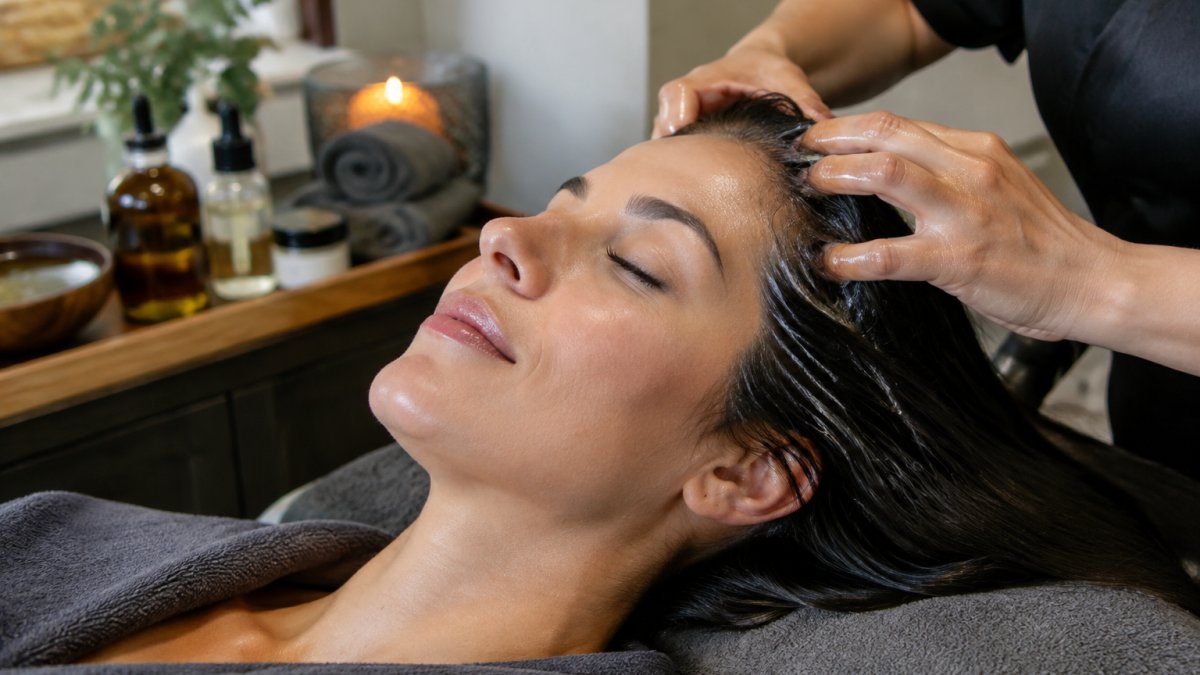
    Woman enjoying a soothing oil massage to treat a dry scalp in a calm, dimly lit spa room.
    Woman enjoying a soothing oil massage to treat a dry scalp in a calm, dimly lit spa room.

    Humectants, Occlusives, and Lipid Replenishment

    Humectants pull water toward the skin. Occlusives seal it in. Lipid replenishment restores the fats your barrier needs to stay intact.

    Look for these ingredients:

    Ingredient Role Best For
    Hyaluronic acid Humectant Pulling water into the scalp
    Squalane Occlusive, lightweight Sealing moisture without grease
    Jojoba oil Lipid balance Scalp microbiome support
    Argan oil Lipid replenishment Dry, brittle hair
    Aloe Soothing humectant Irritated, itchy scalp

    Product layering strategy matters here. Apply a water-based hydrating serum first, then a light oil on top to seal it. Reversing that order blocks the water from getting in at all.

    Protect Your Scalp From Heat, UV, and Indoor Air

    Treat your scalp like skin you cannot see. Ultraviolet exposure damages the barrier just as it damages your face, and heat styling pulls moisture out fast.

    Using a thermal protectant before any hot tool is a sensible habit. So is a hat or a scalp-safe SPF when you are outside for long stretches.

    Indoor air matters too. Air conditioning and heating both drop indoor humidity.

    Build a Nighttime Routine and Layer Products in the Right Order

    Night is when your scalp repairs itself, so a short evening routine pays off. This is one of the angles most guides skip, and it is where real progress happens in a desert climate. The air is driest overnight, and if you sleep with air conditioning running, you are losing moisture for eight hours straight.

    The Order of Operations

    Product layering strategy matters here. Apply a water-based hydrating serum first, then a light oil on top to seal it. Reversing that order blocks the water from getting in at all.

    Follow this order:

    1. Cleanse on wash night with a gentle cleanser
    2. Treat with a hydrating scalp serum on damp scalp
    3. Seal with a light oil, such as squalane or jojoba
    4. Massage for two to three minutes to boost circulation
    5. Humidify the bedroom overnight

    Scalp massage is not just relaxation. It supports blood flow and helps products spread evenly. Keep it gentle and use fingertips, not nails.

    Optimize Your Sleep Environment

    The surface you sleep on matters more than most people realize. Cotton pillowcases absorb moisture from your scalp and hair overnight. A silk pillowcase reduces friction and does not pull moisture away as aggressively.

    Airflow is the other variable. If you sleep with AC blowing directly on your head, you are accelerating water loss from your scalp. Redirect the vent or use a ceiling fan on low instead.

    Overnight Masks and Leave-In Treatments

    An overnight scalp mask is a concentrated treatment you apply before bed and rinse out in the morning. Look for formulas with hyaluronic acid, glycerin, or aloe as the first ingredients.

    Watch out: do not apply a heavy oil or occlusive mask more than once a week. In dry air, the temptation is to layer more product, but buildup can block moisture from getting in and trigger flaking that looks like dryness but is actually congestion.

    Transitioning From a Humid Climate

    If you are transitioning from a humid climate, expect an adjustment period. Your scalp may overproduce oil at first, then swing dry. Give any new routine a few weeks before judging it. A common pattern is a two- to four-week recalibration window. During that time, keep your routine simple: gentle cleanse, hydrating serum, light seal, humidifier. Add exfoliants or clarifying treatments only after your scalp has stabilized.

    Book a Professional Scalp Treatment at Camellia Scalp and Skin Lounge

    Some scalp problems need more than a better shelf of products. Mineral film, stubborn buildup, and barrier damage can sometimes benefit from professional guidance.

    If flaking, itch, or buildup keeps coming back, consider a consultation with a qualified professional who can look at your scalp and suggest a routine you can keep up at home.


    Desert air will keep pulling moisture from your scalp no matter what you buy. The fix is a routine that slows water loss and a professional reset when home care stalls.

    Frequently Asked Questions

    How often should you wash your hair in a dry climate?

    Most people in a desert climate do better washing two to three times a week rather than daily. Over-washing strips sebum before the scalp can rebuild its moisture barrier, which increases transepidermal water loss and flaking. If you sweat heavily or use styling products, a gentle sulfate-free cleanser on wash days and a cold water rinse on off days keeps buildup down without drying the scalp further. Adjust based on how your scalp feels, not a fixed schedule.

    Can hard water in the desert contribute to scalp dryness?

    Yes. Hard water contains dissolved minerals like calcium and magnesium that leave a film on the scalp and hair, which interferes with moisture retention and can worsen hard water hair damage over time. That film also makes cleansers less effective, so sebum and product buildup linger. A shower filter, a chelating shampoo used occasionally, and periodic professional scalp cleansing can reduce the effect. A scalp analysis can show whether mineral buildup is part of your flaking.

    What ingredients should I look for in scalp care products for dry climates?

    Look for humectants such as hyaluronic acid and glycerin to pull water into the scalp, occlusives like squalane and jojoba oil to slow moisture loss, and lipid-rich ingredients such as argan oil to support the moisture barrier. Choose sulfate-free, pH-balanced formulas to avoid stripping sebum. For flaky scalp with itching, a gentle exfoliating treatment used weekly helps clear buildup. Avoid heavy fragrances and drying alcohols, which add to environmental stressors in arid conditions.

    What vitamin am I lacking if my scalp is dry?

    Dry scalp is more often caused by external factors like low indoor humidity, hot showers, and harsh cleansers than by a single vitamin deficiency. That said, low intake of vitamins A, D, E, and B vitamins, along with omega-3 fats, can affect skin and scalp health. Do not self-diagnose a deficiency. Ask a healthcare provider about testing before adding supplements, and focus first on moisture barrier care, wash frequency, and hydration from the inside out.

  • Scalp Massage Near Me: Costs, Benefits & Booking Guide

    Scalp Massage Near Me: Costs, Benefits & Booking Guide

    Table of Contents

    Last Updated: October 16, 2026

    Scalp Massage Near Me: What to Expect and How to Choose

    Searching for a scalp massage near me usually means one of two things: your scalp feels tight, flaky, or itchy and you want it fixed, or you want an hour where nothing is demanded of you. A scalp massage is a hands-on treatment that uses kneading, pressure-point work, and rhythmic strokes across the scalp, neck, and shoulders to release tension and support circulation. At Camellia Scalp and Skin Lounge, we built our service menu around that exact intersection of scalp health and genuine relaxation.

    Here is the honest version of what most guides skip: a single treatment will not permanently cure a long-standing scalp condition. What a professional session does well is reset your scalp, remove buildup, and give you a clear picture of what is actually going on up there. Below, we break down what treatments cost, what happens in the chair, and how to pick a provider without wasting money.

    Why Local Scalp Massage Beats Generic Salon Shampoos

    A salon shampoo is a rinse and a towel dry. A scalp treatment is a diagnostic and therapeutic appointment, and the difference shows in the details.

    At a dedicated studio, the visit typically includes a scalp analysis, warm-water cleansing, exfoliation, and pressure-point therapy rather than a quick lather. Many people find that product buildup, hard water residue, and dead skin are the real culprits behind persistent flaking, and none of those resolve with a different bottle of shampoo. A trained provider can see the difference between dryness and buildup and adjust the treatment accordingly.

    The trade-off is time and money. A proper session runs longer and costs more than a blowout appointment. If you only want clean hair, book the salon. If you want your scalp examined and treated, book the studio.

    Scalp Massage Near Me Prices: What Affects the Cost

    Pricing for a scalp massage near me prices out across a wide range because you are paying for time, technique, and what is included. The problem is that a headline number tells you almost nothing until you know what sits inside it.

    Here is what actually moves the number:

    Factor Lower Cost Higher Cost
    Session length 30 minutes 60-90 minutes
    Treatment type Basic head massage Full head spa ritual
    Add-ons None Steam eye mask, LED therapy, jelly mask
    Extras included Scalp massage only Blowout, hand massage, facial treatment
    Provider type General salon Specialized head spa studio

    What a Quote Should Actually Tell You

    A useful quote breaks into four lines, not one. Ask for each:

    • Base service: the massage, cleansing, and exfoliation that come standard.
    • Add-ons: steam, LED, jelly mask, water halo, or an extended neck and shoulder segment.
    • Finishing: blowout, dry-off, or leave-in styling. Many studios bill this separately, and skipping it can save real money if you are heading straight home.
    • Consultation: scalp analysis under magnification. At a dedicated studio this is usually folded into the base price; at a general salon it is often not offered at all.

    Ask for the all-in number before you book, not after.

    Packages, Memberships, and Frequency

    Packages and memberships bring the per-visit cost down if you plan to go monthly. Before you commit, ask three questions:

    1. Does the package expire, and how long do you have to use it?
    2. Is the discounted rate locked in, or does it reset at renewal?
    3. Can you transfer a session to a different service if your scalp needs change?

    Red Flags in Pricing

    Be wary of any provider who will not quote you before your appointment. Transparent pricing is a fair thing to expect. Also watch for:

    • A price that only appears after the consultation, with no published menu.
    • Add-ons presented as required rather than optional.
    • A membership with no stated cancellation terms.

    At Camellia Scalp and Skin Lounge every service is listed clearly on our pricing page so you know the number before you sit down.

    Pro Tip
    When comparing quotes, ask what the price includes: scalp analysis, cleansing, exfoliation, and a blowout are often billed separately. Two studios quoting the same headline figure can differ substantially once add-ons are counted. Get the all-in number in writing before you book.
    Key Takeaway
    Compare studios on the all-in price for the same session length and the same inclusions. A lower headline rate with three required add-ons is not a lower price.

    Japanese Head Spa: The Ritual Behind the Relaxation

    A Japanese-style head spa is a multi-step scalp and hair treatment that combines deep cleansing, exfoliation, massage, and often steam or water therapy in one session. It is closer to a facial for your scalp than to a shampoo.

    The sequence usually moves through a consultation, warm-water cleansing, exfoliation with a special brush, pressure-point therapy across the scalp and neck, and a finishing mask or treatment. Some studios add a steam eye mask or LED therapy. The point of the ritual is that each step builds on the last: cleansing opens the scalp, exfoliation clears buildup, and massage supports circulation and relaxation.

    What most people notice first is not their hair. It is their neck and shoulders. The head, neck, and shoulder tension that accumulates from screens and stress tends to release during the pressure-point portion, and that is often the part clients describe as the reason they rebook.

    Scalp Cleansing Treatment: What Happens During a Session

    A scalp cleansing treatment is a professional deep-clean of the scalp that removes oil, dead skin, and product residue, then rehydrates the skin underneath. It is the step that addresses flaking and itchiness at the source rather than masking it.

    Book Now →

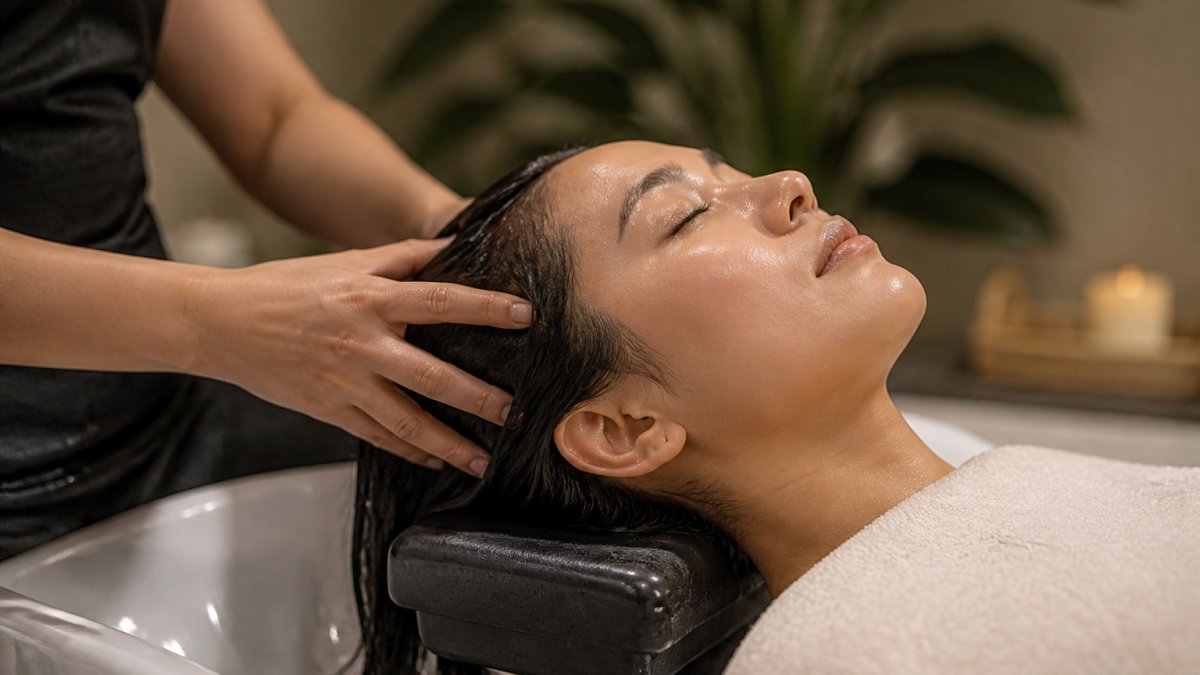
    A licensed therapist performing a scalp cleansing treatment on a relaxed client in a calm, softly lit spa room with warm towels and a special brush on a tray nearby
    A licensed therapist performing a scalp cleansing treatment on a relaxed client in a calm, softly lit spa room with warm towels and a special brush on a tray nearby

    A typical session runs through a predictable arc. Your provider starts with a scalp and hair consultation, then moves into warm-water cleansing and gentle exfoliation. Massage follows, often with a scalp and hair treatment mask, and many studios finish with a blowout so you leave presentable.

    One thing worth knowing: if you have a scalp condition like psoriasis, seborrheic dermatitis, or an active infection, a spa treatment is not a substitute for medical care. Tell your provider about any diagnosis before the session, and see a dermatologist for anything that is painful, bleeding, or spreading. A good studio will turn you away and refer you rather than treat something outside its scope.

    Scalp Analysis: Personalizing Your Treatment for Hair Type and Concerns

    Scalp analysis is the consultation step where a provider examines your scalp under magnification to identify dryness, oiliness, buildup, or irritation, then builds the treatment around what they find. It is the difference between a generic massage and a targeted one.

    Personalization matters more than most people expect. Fine or thinning hair needs gentle handling and lighter products. Oily scalps need more thorough cleansing and less heavy conditioning at the root. Dry, flaky scalps benefit from exfoliation and hydration. If hair thinning is your concern, be realistic: scalp treatments support a healthy environment for hair, but they are not a hair-loss cure, and any provider who claims otherwise is not being straight with you. For advanced concerns, ask about options like the HydraFacial Keravive treatment, which is designed to support scalp and hair health, and discuss whether it fits your situation.

    Watch Out
    Do not book a scalp treatment to self-treat a painful, bleeding, or rapidly spreading scalp condition. Spa treatments address cosmetic and comfort concerns; a dermatologist addresses medical ones. Skipping that step can delay a diagnosis.

    At-Home Scalp Massage Techniques and Safety Tips

    You can get real benefit between appointments with a five-minute at-home routine. It will not replace a professional scalp cleansing treatment, but it keeps your scalp comfortable and your hair looking healthier. Here is the version that actually accounts for your hair type, your products, and your safety.

    The Five-Minute Sequence

    Try this two to three times a week:

    • Warm up: Spend one minute pressing your fingertips across your whole scalp, no pressure yet.
    • Circle: Move your fingertips in small circles from your hairline to your crown, two minutes.
    • Press: Hold steady pressure on the base of your skull and behind your ears for five seconds each, one minute.
    • Sweep: Drag your fingers from your forehead back to your nape, one minute.
    • Finish: Massage your neck and shoulders for one minute.

    Personalize It for Your Hair Type

    Pressure and technique should change with your hair, not just your mood.

    • Fine or thinning hair: Use light pressure and flat fingertips rather than digging in. Skip heavy oils at the root, which can weigh down fine strands and flatten volume.
    • Thick or coarse hair: You can use firmer pressure and work in sections so you actually reach the scalp instead of just moving the surface hair.
    • Curly and coily hair: Never massage dry. Work on damp, conditioned hair and use your fingertips along the scalp in the direction of the curl pattern to avoid disrupting definition or causing frizz.
    • Oily scalp: Massage before washing, not after, so you are not pushing oil through clean hair. Keep products off the root.
    • Dry or flaky scalp: A light oil or serum applied to the scalp before massage can help, but keep it light so it does not clog the follicles you are trying to help.
    • Sensitive scalp: Reduce pressure, shorten the session, and stop at the first sign of stinging or burning.

    Product Guidance

    If you use oil, choose one that rinses cleanly and apply it to the scalp, not the lengths. A common pattern is that people over-apply, then blame the oil for buildup. A few drops warmed between your palms is usually enough for the whole scalp. If you use a scalp serum, follow the label’s frequency rather than layering it on daily.

    Safety Basics and When to Stop

    Use fingertips, never nails, and keep the pressure firm but never sharp. Skip massage over any cut, rash, or tender spot. If you have a scalp condition or recent scalp procedure, check with your doctor first.

    Stop and seek medical advice if you notice:

    • Pain, bleeding, or an open sore on the scalp.
    • A rash that is spreading or not improving.
    • Sudden or patchy hair loss.
    • Scalp tenderness that was not there before.

    If you want the full ritual without the guesswork, that is what we do. Camellia Scalp and Skin Lounge offers Japanese-inspired head spa treatments, scalp analysis, and relaxing scalp massage in a calm lounge setting, with same-day availability options and clear pricing. Our licensed professionals build each session around your scalp and hair, not a script.

    Frequently Asked Questions

    How much should a scalp massage cost?

    Costs vary based on the provider, treatment length, and add-ons like scalp analysis or LED therapy. Camellia Scalp and Skin Lounge lists transparent pricing on its website, so you can see exact rates before booking. Always confirm what is included in the service menu to avoid surprises.

    Are scalp massages good for hair?

    Scalp massage can support hair and scalp care by improving circulation and reducing tension. A scalp cleansing treatment removes buildup that can clog follicles, and regular relaxing massage may help create a healthier environment for hair growth. However, massage alone does not treat medical hair loss conditions. If you notice sudden or excessive shedding, consult a dermatologist or healthcare provider for an evaluation.

    What should I expect during a scalp massage?

    A typical session begins with a scalp analysis or consultation to assess your scalp condition and hair type. The therapist then performs warm-water cleansing, exfoliation, and pressure-point therapy using a special brush or hands. Many Japanese head spa rituals include a neck and shoulder massage, steam eye mask, and sometimes LED therapy. Session duration depends on the treatment package you choose.

    Should I wash my hair before a scalp massage?

    You do not need to wash your hair before a scalp massage. In fact, arriving with unwashed hair allows the therapist to assess your scalp’s natural condition, including oil levels and buildup. The treatment itself includes scalp cleansing and warm-water rinsing. If you have product buildup, the exfoliation step will address it. Just avoid heavy styling products on the day of your appointment.