
Last Updated: November 14, 2026
Quick Summary
Essential nutrients for healthy scalp and hair include protein and amino acids for keratin structure, iron, zinc and selenium for shedding and scalp health, plus biotin, B vitamins, vitamin D, vitamins A, C and E, and omega-3 fatty acids. Build meals around a protein anchor, colorful vegetables, healthy fats and whole grains, and test before supplementing.
- Spread protein across meals, since your body cannot store amino acids for later use.
- Ask your doctor for a ferritin test before supplementing iron, which can harm organs in excess.
- Long-term zinc intake above the tolerable upper level can interfere with copper absorption.
- Biotin supplements can interfere with thyroid and cardiac lab tests, producing misleading results.
- Chronic high vitamin A intake causes hair loss rather than preventing it.
Table of Contents
- Why Nutrition Shows Up on Your Scalp and Hair
- Protein and Amino Acids: The Building Blocks of Hair Structure
- Iron, Zinc, and Selenium: Minerals That Affect Shedding and Scalp Health
- Vitamins for Hair Growth and Thickness: Biotin, B Vitamins, and Vitamin D
- Vitamins A, C, and E Plus Omega-3s: Antioxidants and Healthy Fats
- Food for Hair Growth and Thickness: What to Put on Your Plate
- Top 10 Hair Growth Foods Worth Adding to Your Diet
- How to Grow Hair Faster Naturally in a Week: Realistic Steps
- Frequently Asked Questions
Why Nutrition Shows Up on Your Scalp and Hair
Your hair is one of the most metabolically active tissues in your body, and it depends on a steady supply of essential nutrients for healthy scalp and hair. When that supply falls short, the scalp often shows it first: dryness, flaking, irritation, and slower regrowth. (Source: National Institutes of Health Office of Dietary Supplements)
Here is the part most guides skip: nutrition is necessary but rarely sufficient on its own. Genetics, hormones, stress, thyroid function, and styling habits all shape what grows out of your follicles. Food and micronutrients give your body the raw material. They cannot override a medical cause.
Scalp Health vs. Hair Shaft: Two Different Outcomes
Scalp health refers to the condition of the skin on your head, including oil balance, barrier function, and inflammation. Hair shaft health refers to the visible strand itself: its strength, shine, and resistance to breakage.
These are separate outcomes, and they respond to different inputs. A nutrient deficiency can cause shedding at the follicle level while the visible strands still look normal, or it can leave strands brittle and dull while the scalp stays calm.
Protein and Amino Acids: The Building Blocks of Hair Structure
Hair is roughly made of keratin, a protein, which is why protein intake matters more than most people realize.
Amino acids, especially cysteine, methionine, and lysine, are the raw materials your body uses to build keratin. A common mistake is cutting protein too aggressively while dieting.
Good sources include eggs, Greek yogurt, chicken, fish, lentils, and tofu. Aim to spread protein across meals rather than loading it all at dinner, since your body cannot store amino acids for later use.
Iron, Zinc, and Selenium: Minerals That Affect Shedding and Scalp Health
Three trace minerals do most of the heavy lifting here, and each has a different job. Iron supports oxygen delivery to follicles, zinc supports scalp tissue repair and oil regulation, and selenium contributes to antioxidant defense. The part most guides leave out is that these three are also the minerals where guessing wrong does the most damage, so the useful question is not “should I take more” but “am I actually low, and how would I know?”
Iron and Hair Shedding
Low iron stores are one of the most frequently identified contributors to diffuse shedding, particularly in menstruating women.
Do not supplement iron on a guess. Excess iron accumulates in organs and causes real harm, and the people most likely to self-prescribe it are the ones least likely to need it.
Watch out: iron supplements are a leading cause of accidental poisoning in young children, so store them out of reach if there are kids in the house.
Zinc and Scalp Health
Zinc supports the skin barrier and helps regulate sebum. A deficiency can show up as a dry, flaky scalp or slow wound healing, and it is more common than most people assume in people who eat little meat, take certain acid-reducing medications, or have digestive conditions that impair absorption.
Zinc is also a mineral that can be overdone. Long-term intake above the tolerable upper intake level for adults can interfere with copper absorption and cause health problems.
Selenium: Small Need, Real Risk
Selenium is the third mineral discussed here, and excess intake carries its own risks. It supports antioxidant enzymes, and Brazil nuts are the standout food source, but the margin between enough and too much is narrow. A single Brazil nut can supply a meaningful share of a day’s selenium, and eating several daily over months is enough to exceed the upper limit.
How to Approach Minerals Without Guessing
The practical sequence is the same for all three: get a clinician-directed panel before supplementing, treat food as the default and supplements as a correction for a documented shortfall, and recheck rather than staying on a dose indefinitely. A combined ferritin, zinc, and thyroid panel can give a clearer picture than any single test, because the symptoms of these conditions overlap.
Vitamins for Hair Growth and Thickness: Biotin, B Vitamins, and Vitamin D
Biotin is often promoted for hair, but its benefit is most relevant when a true deficiency exists, which is uncommon in people eating a varied diet. The NIH Office of Dietary Supplements biotin fact sheet notes that true deficiency is rare.
Biotin and Other B Vitamins
B vitamins support cell division and energy metabolism, and hair follicles are fast-dividing tissue. That said, biotin supplements can interfere with certain lab tests, including thyroid and cardiac markers, producing misleading results. Tell your doctor if you take them.
Vitamin D and Hair Follicles
Vitamin D receptors are present in hair follicles, and low vitamin D levels have been associated with shedding in some people. Sunlight, fatty fish, and fortified dairy are the main sources. Testing is straightforward and worth doing before supplementing, since vitamin D is fat-soluble and accumulates. (Source: National Library of Medicine study on iron deficiency)
Vitamins A, C, and E Plus Omega-3s: Antioxidants and Healthy Fats
This group works on inflammation and circulation rather than structure. Vitamin C plays a role in collagen production and iron absorption. Vitamin E and vitamin A act as antioxidants.
One caution: vitamin A is the nutrient most likely to backfire. Chronic high intake causes hair loss rather than preventing it, so avoid stacking a multivitamin with a separate high-dose vitamin A supplement.
Food for Hair Growth and Thickness: What to Put on Your Plate
The most effective approach is a plate pattern, not a supplement stack. Build meals around a protein anchor, a colorful vegetable, a healthy fat, and a whole-grain carbohydrate.
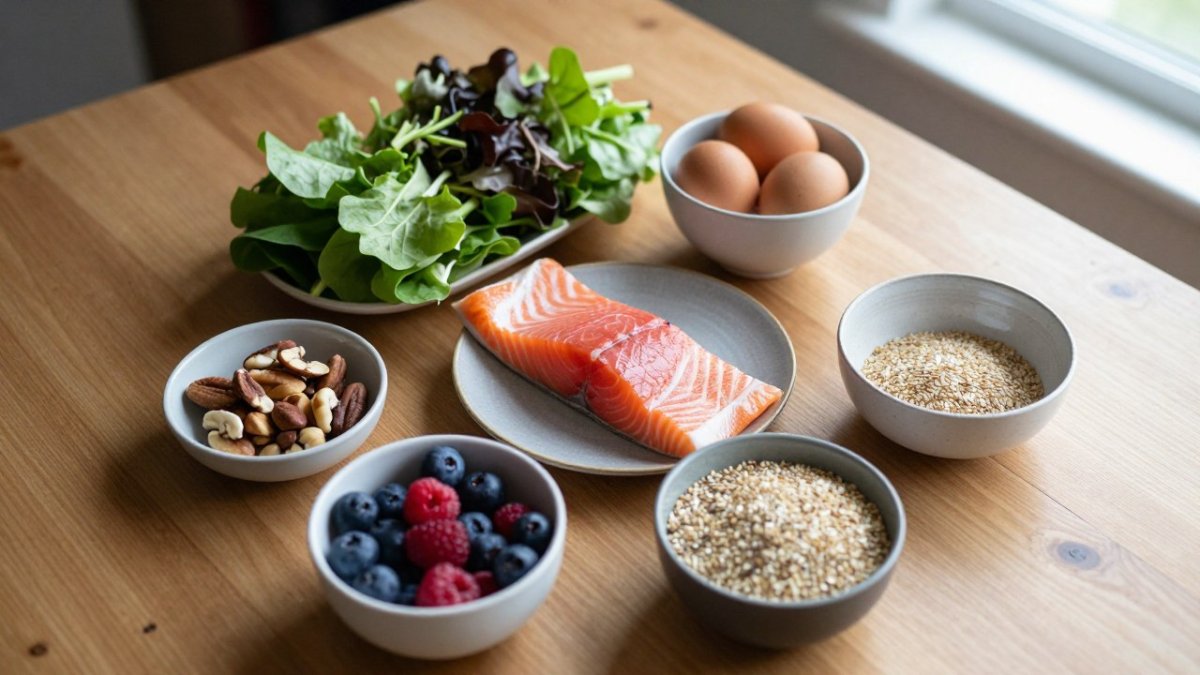
| Nutrient | Role | Food Sources |
|---|---|---|
| Protein | Builds keratin structure | Eggs, fish, poultry, lentils |
| Iron | Oxygen delivery to follicles | Beef, spinach, lentils |
| Zinc | Scalp barrier and oil balance | Oysters, pumpkin seeds, chickpeas |
| Biotin and B vitamins | Cell division | Eggs, whole grains, legumes |
| Vitamin D | Follicle function | Salmon, fortified dairy, sunlight |
| Omega-3s | Skin barrier support | Salmon, walnuts, flaxseed |
Top 10 Hair Growth Foods Worth Adding to Your Diet
These are the foods we would prioritize because each one covers multiple nutrients at once:
- Salmon: omega-3s plus vitamin D
- Eggs: complete protein plus biotin
- Spinach: iron plus vitamin C
- Lentils: protein, iron, and zinc
- Greek yogurt: protein plus B vitamins
- Pumpkin seeds: zinc and healthy fats
- Berries: antioxidants and vitamin C
- Oysters: the strongest zinc source available
- Walnuts: omega-3s and vitamin E
- Sweet potatoes: beta-carotene and fiber
No single food fixes shedding. The pattern across weeks matters far more than any one meal.
How to Grow Hair Faster Naturally in a Week: Realistic Steps
A week is not enough time to change hair growth, and any source promising otherwise is selling something. Hair grows slowly, and shedding resolves on a scale of months, not days. What you can do in seven days is remove the obstacles and get a clearer read on whether nutrition is even the right lever.
- Book a blood panel with your doctor covering ferritin, vitamin D, and thyroid function
- Add a protein source to breakfast every day
- Replace one refined snack with nuts or seeds
- Stop any high-dose supplement you started without testing
- Reduce heat styling and tight styles for the week
Buildup, flaking, and irritation can affect the appearance of thinning, and diet alone does not address scalp cleansing needs.
When Shedding Is Not a Nutrition Problem
This is the part the nutrient guides skip. A large share of shedding has nothing to do with diet, and no amount of salmon or pumpkin seeds will correct it. The most common non-nutritional causes fall into a few groups:
- Thyroid dysfunction. Both an underactive and an overactive thyroid can cause diffuse shedding, and the pattern often lags the hormone change by weeks to months. A thyroid-stimulating hormone test is a standard first step.
- Hormonal shifts. Postpartum shedding, menopause-related changes, and conditions such as polycystic ovary syndrome can all alter the growth cycle. So can starting or stopping hormonal birth control.
- Medication effects. Certain blood thinners, antidepressants, acne medications, and blood pressure drugs are associated with shedding in some people. Do not stop a prescribed medication on your own; raise the question with the prescriber.
- Illness, surgery, and significant stress. A high fever, a major surgery, or a period of intense physical or emotional stress can push a large number of follicles into the resting phase at once, with shedding appearing roughly two to three months later.
- Traction and chemical damage. Tight braids, ponytails, weaves, and repeated chemical processing can cause breakage and, over time, permanent follicle damage in the affected areas.
- Scarring scalp conditions. Some forms of inflammation leave permanent hair loss and need dermatologic treatment, not diet changes.
Red Flags That Warrant a Clinician, Not a Diet Change
The following patterns deserve medical assessment rather than a nutrition experiment: shedding that is sudden and heavy rather than gradual, patches of complete hair loss, scalp pain, itching, or visible redness, shedding accompanied by fatigue, weight change, or irregular periods, and hair loss that continues for more than a few months despite a reasonable diet.
Watch out: the most common mistake is spending months on supplements while a treatable thyroid or hormonal issue goes unaddressed, which delays the correction that would actually help.
What a Week Can Realistically Do
In seven days you can stop making things worse: pause high-dose supplements you started without testing, ease off tight styles and heat tools, add protein to breakfast, and book the appointments that will tell you what is actually happening. You cannot speed up hair growth in a week, but you can stop losing ground while you find the real cause. If shedding is sudden, patchy, or accompanied by scalp pain, see a dermatologist rather than adjusting your diet.
Frequently Asked Questions
What are the best nutrients for hair and scalp health?
Protein and amino acids build the hair shaft, while iron, zinc, and selenium support follicle function and scalp health. B vitamins including biotin, vitamin D, and vitamins A, C, and E contribute to normal hair growth and protect against oxidative stress. Omega-3 fatty acids support scalp moisture. A varied diet covering these essential nutrients for healthy scalp and hair is more reliable than focusing on any single nutrient.
Can a vitamin deficiency cause hair loss?
Yes. Deficiencies in iron, zinc, vitamin D, and certain B vitamins have been linked to increased shedding and poor hair quality. The key word is deficiency: if your levels are already normal, adding more of a nutrient usually does not speed growth. A blood test ordered by a healthcare professional is the only reliable way to confirm a deficiency before you supplement.
Do hair growth supplements work if I already eat a balanced diet?
For most people eating a varied diet, evidence that extra vitamins for hair growth and thickness make a difference is limited. Supplements help mainly when a confirmed deficiency exists. Some nutrients interact with each other or cause side effects in high doses, so testing first and consulting a professional is safer than stacking multiple products.
How long does it take to see results from nutrition changes?
Hair grows roughly half an inch per month, so changes in diet or corrected deficiencies typically take several months to show visibly. Anyone promising how to grow hair faster naturally in a week is overselling: in seven days you can improve scalp cleansing, hydration, and stress habits, but measurable hair density changes take longer.
