Table of Contents
- Why Look Beyond Chemical Scalp Exfoliation Treatments
- Natural Scalp Exfoliation Methods That Work Without Acids
- Using a Scalp Brush for Buildup Removal
- Scalp Exfoliation for Sensitive Skin: What to Try Instead
- How a Professional Scalp Facial Treatment Compares
- Choosing the Right Alternative for Your Scalp Condition
- Risks and Realistic Expectations for Non-Chemical Options
- Frequently Asked Questions
Last Updated: October 13, 2026
Why Look Beyond Chemical Scalp Exfoliation Treatments
If your scalp stings, flakes, or feels tight after using an acid-based scrub, you are not imagining it. At Camellia Scalp and Skin Lounge, we understand that many individuals try at-home solutions first and then seek professional alternatives.
This guide covers the alternatives to chemical scalp exfoliation treatments that actually work, from physical scrubs to professional scalp facial treatment options. We will show you which method fits which scalp condition, and where the risks lie.
The core problem is that acid-based exfoliants do not distinguish between dead skin and healthy skin.
Who Should Avoid Acid-Based Exfoliants
Anyone with a diagnosed scalp condition, open sores, or recent chemical treatments should talk to a dermatologist before using exfoliating acids. The same goes for people with a sensitive scalp, those who have just had hair color or a relaxer, and anyone using prescription scalp medication. According to the American Academy of Dermatology guidance on scalp care, harsh exfoliation can worsen irritation on an already inflamed scalp.
Natural Scalp Exfoliation Methods That Work Without Acids
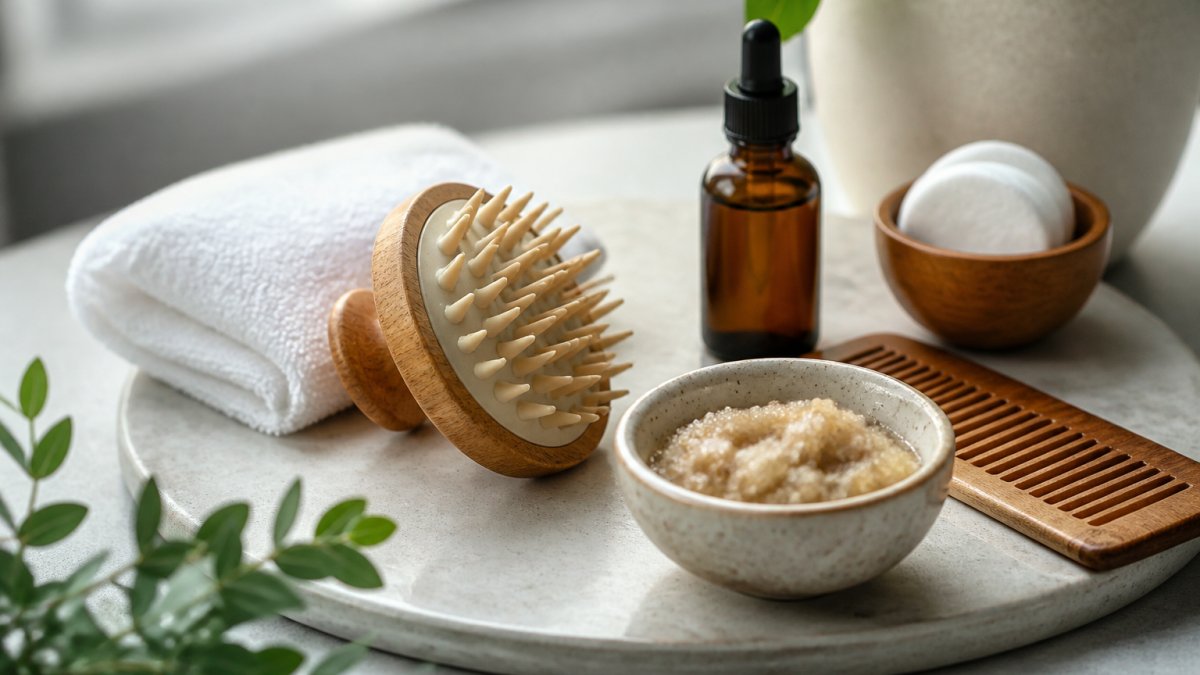
Natural scalp exfoliation means using physical or gentle cleansing methods instead of acids to lift dead skin cells, flakes, and oil buildup. The most common options are sugar or salt scrubs, enzyme-based cleansers, and simple mechanical tools.
A few methods worth trying:
- Sugar or salt scrubs with fine granules, massaged gently and rinsed thoroughly
- Enzyme cleansers that break down oil and dead skin cells without acid
- Clarifying shampoo used once a week to remove product buildup
The trade-off is real. Physical exfoliants can be abrasive if you press too hard, and they do not reach into the follicle the way a chemical exfoliant can.
Using a Scalp Brush for Buildup Removal
A scalp brush for buildup removal is the lowest-risk alternative on this list, and it is the one we recommend most often to first-timers.
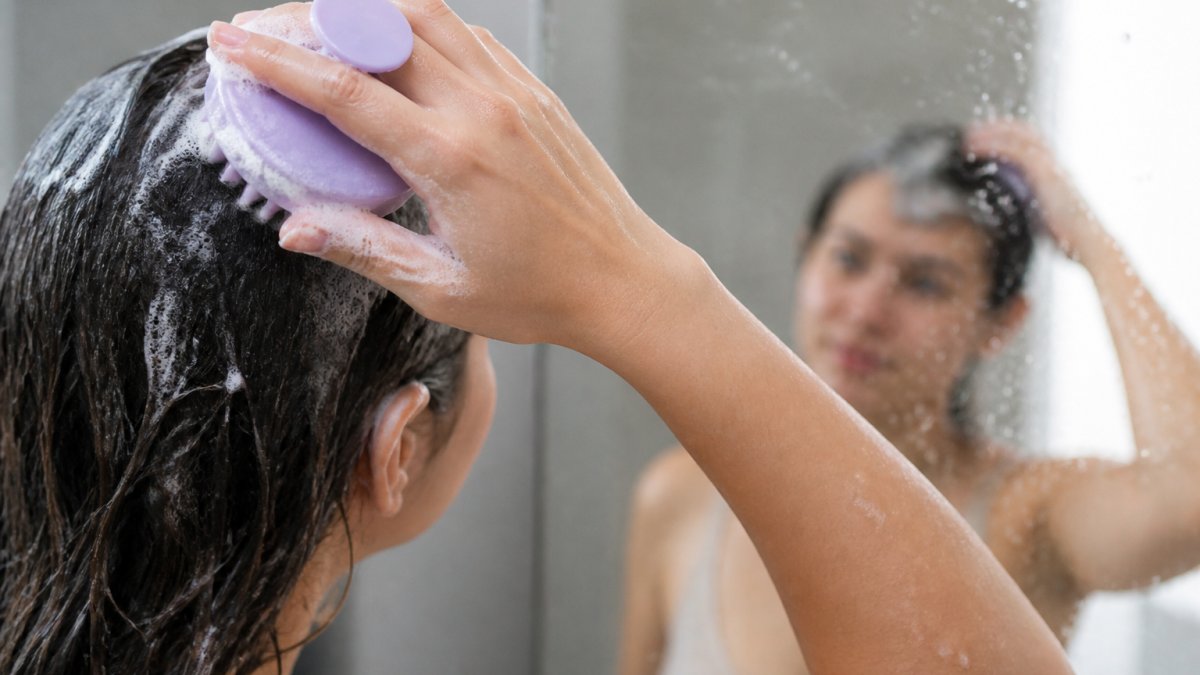
How to use one properly:
- Wet your hair and apply shampoo as normal
- Place the brush flat against the scalp, not the hair
- Move it in small circles for 60 to 90 seconds across the whole head
- Rinse thoroughly and follow with conditioner on the ends only
- Clean the brush weekly so it does not harbor residue
A common mistake is scrubbing hard enough to scratch the scalp. That defeats the purpose. Light, consistent pressure over a minute does more than aggressive scrubbing for ten seconds.
Use your scalp brush on dry, product-free hair first to feel where buildup actually sits. Most people find it concentrates at the crown and behind the ears, not evenly across the head.
Scalp Exfoliation for Sensitive Skin: What to Try Instead
Scalp exfoliation for sensitive skin should skip acids and grit entirely. The safest route is a gentle cleansing routine paired with moisturizing ingredients like aloe vera or coconut oil, plus a professional scalp treatment if flaking persists.
What tends to help:
- Fragrance-free, sulfate-free shampoo
- Aloe vera or coconut oil applied before washing to soothe irritation
- Lukewarm water instead of hot
If your scalp itches constantly or you see redness that does not fade, that is a signal to see a dermatologist rather than experiment further.
How a Professional Scalp Facial Treatment Compares
A professional scalp facial treatment does what at-home methods cannot: it combines scalp analysis, deep cleansing, and hydration in one session, tailored to what your scalp actually needs.
Compared with a drugstore scrub, a professional treatment is less about intensity and more about precision. We use gentle cleansing, relaxing scalp massage, and moisturizing steps rather than aggressive acid peels. For clients with thinning hair or concerns about hair growth, the goal is a clean, hydrated scalp environment that supports healthier-looking hair.
The biggest difference between a professional scalp facial and an at-home scrub is diagnosis. You cannot treat a scalp condition you have not identified, and most people guess wrong about what is causing their flakes.
Choosing the Right Alternative for Your Scalp Condition
Most guides tell you to “match the method to your scalp type.” That advice is too vague to act on, because two people with flaking scalps can need opposite approaches.
Start by reading your own scalp the way a practitioner would: where is the problem, what does it look like, and what makes it better or worse?
| What You Notice | Most Likely Cause | Best Non-Acid Alternative | What to Avoid |
|---|---|---|---|
| Fine white flakes, tight feeling, worse in winter | Dry scalp | Moisturizing pre-wash oil, fragrance-free gentle cleanser, lukewarm water | Salt and sugar scrubs, clarifying shampoo used often |
| Yellowish or greasy flakes, often at the hairline and behind the ears | Seborrheic dermatitis pattern | Anti-dandruff active (zinc pyrithione, ketoconazole, or selenium sulfide shampoo) used on a schedule | Heavy oils and butters, which can feed the yeast involved |
| Thick silvery plaques extending past the hairline | Psoriasis pattern | Clinical assessment first; gentle cleansing and moisturizing in the meantime | Abrasive scrubs, which can trigger Koebner-type irritation |
| Itchy, red, tender patches with no obvious flakes | Irritation or contact reaction | Stop the new product, switch to fragrance-free cleansing, patch test anything new | Acids, essential oils, anything with a strong scent |
| Oily roots within a day, dull hair, heavy product use | Buildup from oil, dead skin cells, and styling products | Scalp brush with a gentle shampoo, weekly clarifying wash | Daily harsh scrubbing, occlusive oils on the roots |
| Sparse areas, visible scalp, no itch or flakes | Thinning hair concern | Professional scalp analysis before any exfoliation | Aggressive physical or chemical exfoliation |
A few patterns are worth calling out because they are easy to misread:
- Dry scalp and dandruff are not the same thing. Dry scalp is a moisture problem and usually improves with gentler washing and hydration. Dandruff is driven by a yeast on the scalp and responds to anti-dandruff actives, not to more scrubbing. Treating dandruff with a moisturizing oil can make it worse; treating dry scalp with an anti-dandruff shampoo can leave it tighter and flakier.
- Buildup is mechanical, not medical. If your flakes appear mainly where you apply dry shampoo, gel, or leave-in product, a scalp brush plus a weekly clarifying wash will do more than any acid. You are removing residue, not treating a condition.
- Inflammatory conditions need a diagnosis, not a product. If you see redness that does not fade, tenderness, or plaques that extend beyond the hairline, that is a signal to get a professional assessment rather than to escalate your at-home routine.
Once you have a working guess at the cause, trial one change at a time.
Take a photo of your scalp in the same lighting once a week. Flaking and redness change slowly, and a photo log is far more reliable than memory when you are deciding whether an approach is working.
If you are unsure where you fit, start with the gentlest option, a fragrance-free cleanser and a soft silicone brush, and add intensity only if your scalp tolerates it. Many individuals tend to over-treat rather than under-treat, and a consistent, gentle approach often leads to a calmer scalp.
Risks and Realistic Expectations for Non-Chemical Options
Non-chemical exfoliation is gentler than acids, but “gentler” is not the same as “risk-free,” and it is not instant. The two things most guides skip are when to avoid exfoliation entirely and how to tell whether it is working. Both matter more than product choice.
When to Skip Exfoliation Altogether
Even physical and cleansing-based approaches can worsen certain situations. Hold off, and get a professional assessment instead, if any of the following apply:
- Broken or irritated skin. Cuts, scratches, active sores, or freshly picked areas on the scalp. Friction and cleansing agents can delay healing and introduce irritation.
- A recent chemical service. Color, bleach, relaxers, and perms leave the scalp more reactive for days to weeks. Exfoliating during that window is a common cause of stinging and flaking that people then try to scrub away.
- An active flare of a diagnosed condition. Psoriasis, seborrheic dermatitis, and eczema flares are not the time to add mechanical exfoliation. Gentle cleansing and whatever your clinician has prescribed come first.
If you are unsure which category you fall into, a professional scalp analysis is a safer starting point than trial and error at home.
Frequency: The Variable That Matters Most
What most guides miss is that how often you exfoliate matters more than which product you use. A common pattern is:
- Once or twice a week is enough for most people using a scalp brush or a gentle scrub.
- Daily scrubbing, even with a soft tool, tends to leave the scalp tender and can increase flaking rather than reduce it.
- Clarifying shampoo is usually a once-a-week product, not a daily one. Using it more often strips the scalp and can trigger the oil rebound people are trying to fix.
How to Measure Whether It Is Working
“My scalp feels better” is not a reliable measure, because it changes day to day. Track four things instead, and check them weekly:
- Itch frequency, how many times a day you catch yourself scratching.
- Visible flakes, check the same two or three spots (hairline, crown, behind the ears) in the same lighting.
- Oiliness timing, how many hours after washing your roots start to look greasy.
- Residue, whether you can feel product on the scalp when you run a fingertip along the hairline.
Expect gradual improvement over two to four weeks, not a single-session fix. If nothing has changed after a month of consistent use, the approach is probably wrong for your cause, not under-powered.
Skipping a patch test before trying a new scrub or oil can trigger a reaction that takes weeks to settle. Test on a small area behind the ear first and wait 24 hours before applying it across the scalp.
For anyone dealing with persistent flaking, itching, or hair thinning, a professional evaluation is worth more than another product. A qualified provider can tell you whether your scalp needs exfoliation at all, or whether it needs hydration, medicated treatment, or a referral.
Frequently Asked Questions
What can I use to exfoliate my scalp naturally?
Natural scalp exfoliation often uses fine granules like sea salt, sugar, or apricot seeds in a rinse-off scrub. A silicone scalp brush paired with a clarifying shampoo can also loosen dead skin cells and product buildup without acids. For a gentler approach, massage the scalp with coconut oil or aloe vera to soften flakes before washing. These methods physically dislodge buildup rather than dissolving it chemically, making them suitable for those who want to avoid exfoliating acids like salicylic or glycolic acid.
Can a scalp brush remove buildup without chemical exfoliants?
Yes. A scalp brush for buildup uses flexible silicone bristles to manually lift flakes, oil buildup, and dead skin cells from the scalp surface. Used during shampooing with a clarifying shampoo, it can improve scalp cleansing without any chemical exfoliant. For best results, use gentle circular motions for one to two minutes, focusing on areas with visible flaking or oiliness. This method is especially helpful for sensitive scalp types that react to acids or scrubs with irritation.
Is a scalp facial a good alternative to at-home exfoliation?
A professional scalp facial treatment offers a deeper, more customized cleanse than most at-home options. Licensed providers use scalp analysis, steam, massage, and gentle cleansing agents to remove buildup and hydrate the scalp. For those with sensitive skin or conditions like seborrheic dermatitis, a scalp facial can be tailored to avoid harsh exfoliants while still supporting scalp health. Frequency depends on your scalp condition, but many people benefit from a professional treatment every four to six weeks.
How often should I exfoliate my scalp if I avoid chemical exfoliants?
For non-chemical methods like scalp brushes or natural scrubs, once a week is generally enough for most people. If you have an oily scalp or heavy product buildup, you might exfoliate twice weekly. Those with a dry or sensitive scalp should start with once every two weeks and adjust based on how their scalp responds. Over-exfoliating, even with gentle methods, can strip natural oils and cause irritation, so monitor for redness, itching, or increased flaking.
Do dermatologists recommend scalp scrubs?
Dermatologists often recommend scalp scrubs for specific concerns like product buildup or flaking, but they caution against using them on inflamed or broken skin. For sensitive scalp exfoliation, many suggest alternatives such as a scalp brush or a gentle cleansing routine instead of harsh scrubs. If you have a diagnosed scalp condition like psoriasis or eczema, consult a dermatologist before trying any exfoliation method, as some ingredients can worsen irritation.