Tag: scalp exfoliation

  • Scalp Exfoliation for Dry Flaky Skin: A Practical Guide

    Scalp Exfoliation for Dry Flaky Skin: A Practical Guide

    Quick Summary

    Scalp exfoliation removes dead skin cells, excess oil and styling product buildup from the scalp surface, which can ease flaking when done gently. For a dry, flaky scalp, a mild chemical exfoliant used once a week or every 10 to 14 days is a safer starting point than harsh scrubbing.

    • Start with a mild chemical exfoliant, used once or twice a week on a dry scalp.
    • Use a quarter-size amount per section for liquid exfoliant and a dime to nickel for scrub.
    • Leave chemical exfoliants on for three to five minutes, or as the label directs.
    • Rinse with lukewarm water, since hot water worsens the tightness dry scalps feel.
    • Stop exfoliating and rest the scalp for one to two weeks if over-exfoliation signs appear.

    Table of Contents

    What Scalp Exfoliation Does and Why Dry Scalps Flake

    Last Updated: November 17, 2026

    Scalp exfoliation removes the buildup of dead skin cells, excess oil, and styling product that sits on the scalp surface. Regular, gentle scalp exfoliation helps keep that surface balanced. Camellia Scalp and Skin Lounge, a head spa and skincare studio in Las Vegas, Nevada, offers scalp treatments, and the information below is general guidance.

    Your skin cycles through cells constantly. On the scalp, dead cells normally lift away in tiny pieces that go unnoticed. When that process slows or gets disrupted, cells clump together and show up as visible flakes.

    Buildup is the other half of the problem. Dry shampoo, leave-in conditioners, styling gels, and oils can settle on the scalp and mix with dead skin.

    A common mistake is assuming all flakes mean the scalp needs more moisture. Sometimes the scalp is oily and flaky at once, and a rich conditioner only adds to the buildup. Exfoliation addresses the surface layer so moisturizing products can absorb properly.

    Dry Scalp, Dandruff, or Seborrheic Dermatitis: How to Tell the Difference

    Flaking has several possible causes, and they respond to different care. A dry scalp usually produces fine, white, powdery flakes that appear without much redness. Dandruff tends to produce larger, oilier flakes, often with itching. Seborrheic dermatitis can involve redness, greasy scale, and irritation along the hairline, eyebrows, or behind the ears.

    These distinctions matter because a scrub that helps one condition can irritate another. Persistent redness, bleeding, pain, hair loss, or flakes that do not improve with basic care are reasons to see a dermatologist. A licensed professional can examine the scalp and recommend appropriate treatment. This guide offers general information, not a diagnosis.

    Physical Versus Chemical Exfoliation for a Flaky Scalp

    Physical exfoliation uses fine particles, such as sea salt or sugar, or a silicone massage brush to lift dead cells off the surface. It gives immediate tactile results, but aggressive scrubbing can cause micro-tears and irritation, especially on a sensitive or already-dry scalp.

    Chemical exfoliation uses acids to loosen the bonds between dead cells. Salicylic acid is often used for oily, buildup-prone scalps because it can penetrate oil. Glycolic acid works on the surface layer and can suit drier scalps when used at low concentrations.

    For most people with dry, flaky skin, a mild chemical exfoliant used once or twice a week is the safer starting point. Physical scrubs can work too, but use light pressure and a fine particle size.

    Choosing the Best Scalp Exfoliation for Dry Flaky Skin

    Look for products labeled for scalp use and check the ingredient list before buying. Gentle formulas with hydrating ingredients, such as glycerin or aloe, help offset the drying effect of exfoliation. Avoid products with high concentrations of alcohol or harsh sulfates if your scalp already feels tight.

    Consider these factors when comparing options:

    • Scalp sensitivity: Choose chemical exfoliants at low strength, or fine-particle scrubs, if irritation is common.
    • Hair type and styling habits: Heavy product users may need a stronger clarifying step than someone with minimal product use.
    • Presence of redness or itching: Skip exfoliants entirely until the scalp calms down.
    • Price and availability: Scalp products vary in cost. Check the listed price, since it depends on size and retailer.

    Ingredient selection matters most for sensitive scalps. Fragrance-free formulas reduce the chance of reaction.

    How to Exfoliate Scalp Naturally at Home, Step by Step

    A dry, flaky scalp needs a gentler sequence than an oily one. The goal is to lift dead cells without stripping the barrier that is already struggling to hold moisture.
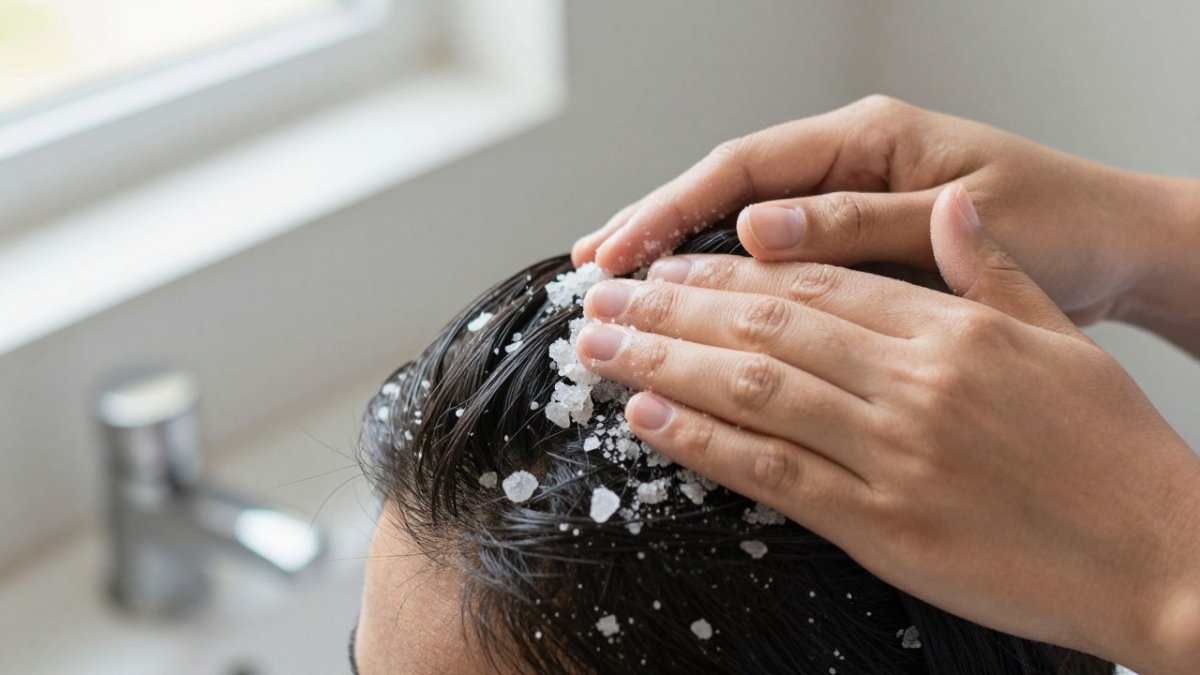
    Fingertips gently massaging a natural sea salt scrub into the hair for effective scalp exfoliation at home
    Fingertips gently massaging a natural sea salt scrub into the hair for effective scalp exfoliation at home

    Before you start: Do a patch test on the inner forearm 24 hours ahead if you have reacted to products before. Detangle hair first, pulling a brush through crusted flakes after exfoliation is a common cause of irritation.

    1. Begin on dry or barely damp hair. Part hair into four to six sections with a wide-tooth comb so the product reaches the scalp rather than sitting on the hair. Water dilutes some acid formulas and makes physical scrubs harder to control.
    2. Measure a small amount. For a liquid or serum exfoliant, a common starting point is about a quarter-size pool per section, or roughly a teaspoon total for shoulder-length hair; for a scrub, a dime- to nickel-sized scoop per section. More product does not mean more exfoliation, it usually means more residue.
    3. Apply directly to the scalp, not the hair. Use the applicator tip or fingertips to place product along each part line, then press and lift with the pads of your fingers. Do not use fingernails, and do not scrub in fast circles; slow, small circular motions for one to two minutes are enough.
    4. Respect the contact time. Chemical exfoliants typically need three to five minutes on the scalp, but follow the label, some leave-on formulas are designed for longer, and some rinse-off formulas for less. Physical scrubs should be massaged for one to two minutes and rinsed immediately. Leaving an acid on longer than directed is one of the most common routes to a red, tight scalp.
    5. Rinse with lukewarm water, not hot. Hot water strips lipids and worsens the tightness that dry scalps already feel. Rinse until the water runs clear and no grit remains at the hairline or behind the ears, where particles collect.
    6. Shampoo once, gently. Use a sulfate-free or gentle shampoo and focus on the scalp, letting the lather run through the lengths. If you used a physical scrub, this step removes leftover particles that can otherwise cause itching later.
    7. Condition the lengths, not the scalp. Keep conditioner and leave-in products off the scalp if buildup is part of your problem. If your scalp is genuinely dry rather than buildup-prone, a lightweight, fragrance-free scalp moisturizer or a few drops of squalane applied after towel-drying can help, but wait until the scalp is fully dry to judge whether it needs it.
    8. Let the scalp rest. Avoid heat styling, tight hats, and additional chemical treatments for 24 hours after exfoliation. The barrier is temporarily more permeable, and this is when stinging and redness most often appear.

    Watch out: If you feel stinging during application rather than a mild tingle, rinse immediately rather than waiting out the contact time. Stinging is a signal to stop, not a sign the product is working.

    The steps below summarise the at-home routine, with the timing and product amounts the article gives for each stage.

    Step What to do Time or amount
    Begin Part hair into four to six sections on dry or barely damp hair Four to six sections
    Measure Apply a small amount of exfoliant Quarter-size per section (liquid); dime to nickel (scrub)
    Apply Place product along part lines and lift gently, no fingernails One to two minutes of massage (scrub)
    Contact time Leave chemical exfoliant on per label Three to five minutes
    Rinse Use lukewarm water until no grit remains Until water runs clear
    Shampoo Use a gentle shampoo focused on the scalp Once
    Rest Avoid heat styling, tight hats and chemical treatments 24 hours

    Scalp Exfoliation at Home: Frequency, Signs of Overdoing It, and Who Should Skip It

    Frequency is where most dry, flaky scalps get into trouble, not because exfoliation is wrong, but because it is easy to do too much when flakes persist. Flaking often worsens for a few days after exfoliation before it improves, and treating that temporary flare with more exfoliation starts a cycle.

    A practical starting schedule:

    • Dry or sensitive scalp: once every 10 to 14 days. Start at the longer end and only shorten the interval if the scalp stays calm.
    • Dry scalp with noticeable buildup: once a week, using a mild chemical exfoliant rather than a scrub.
    • Oily or buildup-prone scalp: up to twice a week, but only if the scalp tolerates it without tightness.
    • During a flare of redness or itching: pause entirely until the scalp is calm for at least a week.

    Consistency tends to matter more than intensity, so a gentle exfoliation every other week, paired with a fragrance-free moisturizing routine, is a reasonable approach to test.

    Signs you are over-exfoliating:

    • Flaking increases rather than decreases after a session
    • Tightness or a dry, papery feeling that persists for days
    • Burning or stinging that lasts beyond the rinse
    • New redness, especially along the hairline and part lines
    • Tenderness to the touch or when brushing
    • Small scabs, crusts, or weeping spots
    • Increased shedding of hair in the days after exfoliation

    If two or more of these appear, stop exfoliating for one to two weeks and switch to gentle cleansing and a fragrance-free scalp moisturizer. The barrier typically needs that long to recover. If symptoms do not settle after two weeks of rest, that is a reason to see a dermatologist rather than to try a different scrub.

    Who should skip exfoliation or get clearance first:

    • Anyone with open sores, cuts, or a sunburned scalp
    • Active scalp infections, including bacterial or fungal infections under treatment
    • Psoriasis or seborrheic dermatitis during a flare, exfoliating inflamed plaques can worsen them
    • A recent chemical service, such as a relaxer, bleach, or color, within the past week
    • Known allergy to salicylic acid, glycolic acid, fragrance, or scrub particles
    • A diagnosed skin condition of any kind, check with a dermatologist before adding an exfoliant

    Watch out: If flaking is accompanied by pain, bleeding, spreading redness, or hair loss, stop home care and seek a medical evaluation. Those signs point to something that exfoliation will not fix and may aggravate.

    Booking a Professional Scalp Treatment in Las Vegas if Flaking Persists

    If flaking continues after several weeks of careful home care, a professional treatment can help. Camellia Scalp and Skin Lounge offers head spa services that include scalp cleansing, scalp analysis, and relaxing scalp massage, all delivered in a calm setting at The Shops at Peace Plaza. A licensed professional can assess the scalp and tailor treatment to your needs.

    Professional care does not replace a medical evaluation. If your flaking is accompanied by pain, bleeding, hair loss, or spreading redness, see a dermatologist. For current pricing and availability, visit the Camellia Scalp and Skin Lounge website or contact the studio directly.

    Frequently Asked Questions

    How do you exfoliate a dry, flaky scalp at home?

    Apply a gentle scalp scrub or a scalp-safe exfoliating product to dry hair, parted into sections so it reaches the skin. Use your fingertips in small circular motions for a minute or two, never your nails, then rinse thoroughly and shampoo. Follow with a hydrating conditioner on the lengths. Start with a lighter product and a short massage, and stop if you notice stinging, redness or soreness.

    How often should you exfoliate a dry scalp?

    A common approach for dry, flaky scalps is scalp exfoliation once every one to two weeks, adjusted to how the scalp responds. Oilier or buildup-prone scalps may tolerate more often, while sensitive or irritated scalps should go less frequently. If flaking, itchiness or redness increases after exfoliating, reduce the frequency or pause. Signs of over-exfoliation include burning, tenderness, and flakes that seem to worsen rather than improve.

    Can scalp scrubs make dryness or irritation worse?

    Yes. Harsh physical scrubs with coarse particles, or strong chemical exfoliants used too often, can cause micro-tears, irritation and further dryness. People with a sensitive scalp, active eczema, psoriasis or open sores should avoid exfoliating until a healthcare professional has evaluated the scalp. Choosing a fine, gentle formula and testing a small area first reduces the risk.

    When should you see a dermatologist about a flaky scalp?

    See a dermatologist if flaking persists for several weeks despite gentle care, if the scalp is painful, bleeding, oozing or spreading, or if you notice hair loss. Scalp conditions such as seborrheic dermatitis or psoriasis can look similar to simple dryness and often need prescription treatment. A professional can confirm the cause before you rely on exfoliation alone.

  • Alternatives to Chemical Scalp Exfoliation Treatments

    Alternatives to Chemical Scalp Exfoliation Treatments

    Table of Contents

    Last Updated: October 13, 2026

    Why Look Beyond Chemical Scalp Exfoliation Treatments

    If your scalp stings, flakes, or feels tight after using an acid-based scrub, you are not imagining it. At Camellia Scalp and Skin Lounge, we understand that many individuals try at-home solutions first and then seek professional alternatives.

    This guide covers the alternatives to chemical scalp exfoliation treatments that actually work, from physical scrubs to professional scalp facial treatment options. We will show you which method fits which scalp condition, and where the risks lie.

    The core problem is that acid-based exfoliants do not distinguish between dead skin and healthy skin.

    Who Should Avoid Acid-Based Exfoliants

    Anyone with a diagnosed scalp condition, open sores, or recent chemical treatments should talk to a dermatologist before using exfoliating acids. The same goes for people with a sensitive scalp, those who have just had hair color or a relaxer, and anyone using prescription scalp medication. According to the American Academy of Dermatology guidance on scalp care, harsh exfoliation can worsen irritation on an already inflamed scalp.

    Natural Scalp Exfoliation Methods That Work Without Acids

    Natural scalp exfoliation means using physical or gentle cleansing methods instead of acids to lift dead skin cells, flakes, and oil buildup. The most common options are sugar or salt scrubs, enzyme-based cleansers, and simple mechanical tools.

    A few methods worth trying:

    • Sugar or salt scrubs with fine granules, massaged gently and rinsed thoroughly
    • Enzyme cleansers that break down oil and dead skin cells without acid
    • Clarifying shampoo used once a week to remove product buildup

    The trade-off is real. Physical exfoliants can be abrasive if you press too hard, and they do not reach into the follicle the way a chemical exfoliant can.

    Using a Scalp Brush for Buildup Removal

    A scalp brush for buildup removal is the lowest-risk alternative on this list, and it is the one we recommend most often to first-timers.

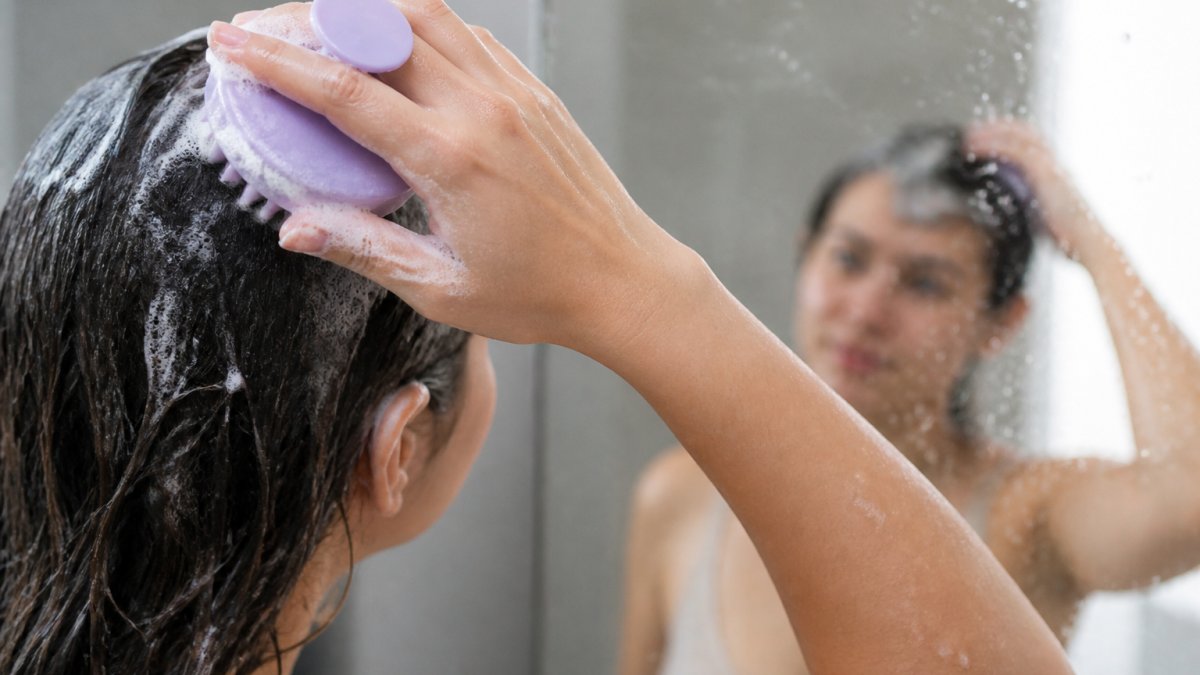
    Close-up of a person using a soft silicone scalp brush with white shampoo lather on wet hair in a bright bathroom, water droplets on the mirror, calm and clean aesthetic
    Close-up of a person using a soft silicone scalp brush with white shampoo lather on wet hair in a bright bathroom, water droplets on the mirror, calm and clean aesthetic

    How to use one properly:

    1. Wet your hair and apply shampoo as normal
    2. Place the brush flat against the scalp, not the hair
    3. Move it in small circles for 60 to 90 seconds across the whole head
    4. Rinse thoroughly and follow with conditioner on the ends only
    5. Clean the brush weekly so it does not harbor residue

    A common mistake is scrubbing hard enough to scratch the scalp. That defeats the purpose. Light, consistent pressure over a minute does more than aggressive scrubbing for ten seconds.

    Pro Tip
    Use your scalp brush on dry, product-free hair first to feel where buildup actually sits. Most people find it concentrates at the crown and behind the ears, not evenly across the head.

    Scalp Exfoliation for Sensitive Skin: What to Try Instead

    Scalp exfoliation for sensitive skin should skip acids and grit entirely. The safest route is a gentle cleansing routine paired with moisturizing ingredients like aloe vera or coconut oil, plus a professional scalp treatment if flaking persists.

    What tends to help:

    • Fragrance-free, sulfate-free shampoo
    • Aloe vera or coconut oil applied before washing to soothe irritation
    • Lukewarm water instead of hot

    If your scalp itches constantly or you see redness that does not fade, that is a signal to see a dermatologist rather than experiment further.

    How a Professional Scalp Facial Treatment Compares

    A professional scalp facial treatment does what at-home methods cannot: it combines scalp analysis, deep cleansing, and hydration in one session, tailored to what your scalp actually needs.

    Compared with a drugstore scrub, a professional treatment is less about intensity and more about precision. We use gentle cleansing, relaxing scalp massage, and moisturizing steps rather than aggressive acid peels. For clients with thinning hair or concerns about hair growth, the goal is a clean, hydrated scalp environment that supports healthier-looking hair.

    Key Takeaway
    The biggest difference between a professional scalp facial and an at-home scrub is diagnosis. You cannot treat a scalp condition you have not identified, and most people guess wrong about what is causing their flakes.

    Choosing the Right Alternative for Your Scalp Condition

    Most guides tell you to “match the method to your scalp type.” That advice is too vague to act on, because two people with flaking scalps can need opposite approaches.

    Book Now →

    Start by reading your own scalp the way a practitioner would: where is the problem, what does it look like, and what makes it better or worse?

    What You Notice Most Likely Cause Best Non-Acid Alternative What to Avoid
    Fine white flakes, tight feeling, worse in winter Dry scalp Moisturizing pre-wash oil, fragrance-free gentle cleanser, lukewarm water Salt and sugar scrubs, clarifying shampoo used often
    Yellowish or greasy flakes, often at the hairline and behind the ears Seborrheic dermatitis pattern Anti-dandruff active (zinc pyrithione, ketoconazole, or selenium sulfide shampoo) used on a schedule Heavy oils and butters, which can feed the yeast involved
    Thick silvery plaques extending past the hairline Psoriasis pattern Clinical assessment first; gentle cleansing and moisturizing in the meantime Abrasive scrubs, which can trigger Koebner-type irritation
    Itchy, red, tender patches with no obvious flakes Irritation or contact reaction Stop the new product, switch to fragrance-free cleansing, patch test anything new Acids, essential oils, anything with a strong scent
    Oily roots within a day, dull hair, heavy product use Buildup from oil, dead skin cells, and styling products Scalp brush with a gentle shampoo, weekly clarifying wash Daily harsh scrubbing, occlusive oils on the roots
    Sparse areas, visible scalp, no itch or flakes Thinning hair concern Professional scalp analysis before any exfoliation Aggressive physical or chemical exfoliation

    A few patterns are worth calling out because they are easy to misread:

    • Dry scalp and dandruff are not the same thing. Dry scalp is a moisture problem and usually improves with gentler washing and hydration. Dandruff is driven by a yeast on the scalp and responds to anti-dandruff actives, not to more scrubbing. Treating dandruff with a moisturizing oil can make it worse; treating dry scalp with an anti-dandruff shampoo can leave it tighter and flakier.
    • Buildup is mechanical, not medical. If your flakes appear mainly where you apply dry shampoo, gel, or leave-in product, a scalp brush plus a weekly clarifying wash will do more than any acid. You are removing residue, not treating a condition.
    • Inflammatory conditions need a diagnosis, not a product. If you see redness that does not fade, tenderness, or plaques that extend beyond the hairline, that is a signal to get a professional assessment rather than to escalate your at-home routine.

    Once you have a working guess at the cause, trial one change at a time.

    Pro Tip
    Take a photo of your scalp in the same lighting once a week. Flaking and redness change slowly, and a photo log is far more reliable than memory when you are deciding whether an approach is working.

    If you are unsure where you fit, start with the gentlest option, a fragrance-free cleanser and a soft silicone brush, and add intensity only if your scalp tolerates it. Many individuals tend to over-treat rather than under-treat, and a consistent, gentle approach often leads to a calmer scalp.

    Risks and Realistic Expectations for Non-Chemical Options

    Non-chemical exfoliation is gentler than acids, but “gentler” is not the same as “risk-free,” and it is not instant. The two things most guides skip are when to avoid exfoliation entirely and how to tell whether it is working. Both matter more than product choice.

    When to Skip Exfoliation Altogether

    Even physical and cleansing-based approaches can worsen certain situations. Hold off, and get a professional assessment instead, if any of the following apply:

    • Broken or irritated skin. Cuts, scratches, active sores, or freshly picked areas on the scalp. Friction and cleansing agents can delay healing and introduce irritation.
    • A recent chemical service. Color, bleach, relaxers, and perms leave the scalp more reactive for days to weeks. Exfoliating during that window is a common cause of stinging and flaking that people then try to scrub away.
    • An active flare of a diagnosed condition. Psoriasis, seborrheic dermatitis, and eczema flares are not the time to add mechanical exfoliation. Gentle cleansing and whatever your clinician has prescribed come first.

    If you are unsure which category you fall into, a professional scalp analysis is a safer starting point than trial and error at home.

    Frequency: The Variable That Matters Most

    What most guides miss is that how often you exfoliate matters more than which product you use. A common pattern is:

    • Once or twice a week is enough for most people using a scalp brush or a gentle scrub.
    • Daily scrubbing, even with a soft tool, tends to leave the scalp tender and can increase flaking rather than reduce it.
    • Clarifying shampoo is usually a once-a-week product, not a daily one. Using it more often strips the scalp and can trigger the oil rebound people are trying to fix.

    How to Measure Whether It Is Working

    “My scalp feels better” is not a reliable measure, because it changes day to day. Track four things instead, and check them weekly:

    1. Itch frequency, how many times a day you catch yourself scratching.
    2. Visible flakes, check the same two or three spots (hairline, crown, behind the ears) in the same lighting.
    3. Oiliness timing, how many hours after washing your roots start to look greasy.
    4. Residue, whether you can feel product on the scalp when you run a fingertip along the hairline.

    Expect gradual improvement over two to four weeks, not a single-session fix. If nothing has changed after a month of consistent use, the approach is probably wrong for your cause, not under-powered.

    Watch Out
    Skipping a patch test before trying a new scrub or oil can trigger a reaction that takes weeks to settle. Test on a small area behind the ear first and wait 24 hours before applying it across the scalp.

    For anyone dealing with persistent flaking, itching, or hair thinning, a professional evaluation is worth more than another product. A qualified provider can tell you whether your scalp needs exfoliation at all, or whether it needs hydration, medicated treatment, or a referral.

    Frequently Asked Questions

    What can I use to exfoliate my scalp naturally?

    Natural scalp exfoliation often uses fine granules like sea salt, sugar, or apricot seeds in a rinse-off scrub. A silicone scalp brush paired with a clarifying shampoo can also loosen dead skin cells and product buildup without acids. For a gentler approach, massage the scalp with coconut oil or aloe vera to soften flakes before washing. These methods physically dislodge buildup rather than dissolving it chemically, making them suitable for those who want to avoid exfoliating acids like salicylic or glycolic acid.

    Can a scalp brush remove buildup without chemical exfoliants?

    Yes. A scalp brush for buildup uses flexible silicone bristles to manually lift flakes, oil buildup, and dead skin cells from the scalp surface. Used during shampooing with a clarifying shampoo, it can improve scalp cleansing without any chemical exfoliant. For best results, use gentle circular motions for one to two minutes, focusing on areas with visible flaking or oiliness. This method is especially helpful for sensitive scalp types that react to acids or scrubs with irritation.

    Is a scalp facial a good alternative to at-home exfoliation?

    A professional scalp facial treatment offers a deeper, more customized cleanse than most at-home options. Licensed providers use scalp analysis, steam, massage, and gentle cleansing agents to remove buildup and hydrate the scalp. For those with sensitive skin or conditions like seborrheic dermatitis, a scalp facial can be tailored to avoid harsh exfoliants while still supporting scalp health. Frequency depends on your scalp condition, but many people benefit from a professional treatment every four to six weeks.

    How often should I exfoliate my scalp if I avoid chemical exfoliants?

    For non-chemical methods like scalp brushes or natural scrubs, once a week is generally enough for most people. If you have an oily scalp or heavy product buildup, you might exfoliate twice weekly. Those with a dry or sensitive scalp should start with once every two weeks and adjust based on how their scalp responds. Over-exfoliating, even with gentle methods, can strip natural oils and cause irritation, so monitor for redness, itching, or increased flaking.

    Do dermatologists recommend scalp scrubs?

    Dermatologists often recommend scalp scrubs for specific concerns like product buildup or flaking, but they caution against using them on inflamed or broken skin. For sensitive scalp exfoliation, many suggest alternatives such as a scalp brush or a gentle cleansing routine instead of harsh scrubs. If you have a diagnosed scalp condition like psoriasis or eczema, consult a dermatologist before trying any exfoliation method, as some ingredients can worsen irritation.