Table of Contents
- What Is Scalp Buildup and Why It Causes Hair Thinning
- 9 Best Scalp Buildup Solutions: Comparison Table
- 1. Camellia Scalp and Skin Lounge: Professional Head Spa for Deep Scalp Cleansing
- 2. K18 Peptide Prep Detox Shampoo: Salicylic Acid for Deep Cleansing
- 3. Biolage Scalp Sync Clarifying Shampoo: Balance Without Over-Drying
- 4. Neutrogena Hair Restore Triple Action Scalp Detox: Budget-Friendly Buildup Removal
- 5. LolaVie Exfoliate & Detox Scalp Shampoo: Physical Exfoliation for Flaky Scalps
- 6. Aavrani Scalp Detox Jelly Cleanser: Chemical Exfoliation With AHAs
- 7. Kérastase Initialiste Scalp & Hair Serum: Premium Support for Thinning Hair
- 8. OGX ProGrowth + Peptide Shampoo: Entry-Level Growth Support
- 9. Bentonite Clay Powder (DIY Detox): Natural Mineral Cleansing
- Scalp Analysis for Hair Thinning: Identifying Your Buildup Type
- Chemical vs. Physical Scalp Exfoliators: Which Works Better
- How to Perform a Scalp Detox at Home
- The Role of Salicylic Acid in Scalp Health
- Best Ingredients for Removing Product Residue
- Benefits of Deep Scalp Cleansing for Hair Thinning
- How Professional Head Spa Treatments Support Scalp Wellness
- Hard Water vs. Product Buildup: Understanding the Difference
- Scalp Microbiome Science and Hair Thinning
- Age-Specific Scalp Thinning Protocols
- When to Seek Professional Scalp Treatment
- Maintaining Results After Scalp Cleansing
- Frequently Asked Questions
Last Updated: October 2, 2026
What Is Scalp Buildup and Why It Causes Hair Thinning
Scalp buildup, dead skin cells, sebum, product residue, and environmental pollutants, clogs hair follicles and restricts blood circulation, making it a primary cause of hair thinning and loss, though effective scalp buildup solutions can reverse this damage. Many people address it with products alone rather than professional intervention.
How Product Residue and Sebum Block Hair Follicles
Silicones, waxes, and conditioning agents coat the scalp, trapping moisture and bacteria. Sebum oxidizes and hardens into waxy plugs inside follicles. Hard water minerals bind to this residue, creating stubborn buildup that regular shampooing can’t remove, starving hair roots of oxygen and nutrients.
The Connection Between Follicle Congestion and Hair Density Loss
Congested follicles shorten the growth phase, reducing hair density and volume over months. Buildup disrupts the scalp microbiome, allowing harmful bacteria to thrive and triggering inflammation that accelerates hair loss. Professional scalp cleansing restores microbial balance and removes this inflammation trigger.
9 Best Scalp Buildup Solutions: Comparison Table
| Product/Service | Type | Best For | Key Benefit |
|---|---|---|---|
| Camellia Scalp and Skin Lounge | Professional treatment | Comprehensive scalp wellness | Deep cleansing + personalized analysis |
| K18 Peptide Prep Detox Shampoo | Chemical exfoliant | Heavy product buildup | Salicylic acid penetrates follicles |
| Biolage Scalp Sync Clarifying Shampoo | Professional-grade cleanser | Balanced deep clean | Mint cooling + oil control |
| Neutrogena Hair Restore Triple Action | Budget option | Weekly maintenance | Affordable, accessible |
| LolaVie Exfoliate & Detox Scalp Shampoo | Physical exfoliant | Flaky, itchy scalps | Dual exfoliation + detox |
| Aavrani Scalp Detox Jelly Cleanser | Chemical exfoliant (AHA) | Gentle chemical exfoliation | Unique jelly texture |
| Kérastase Initialiste Scalp & Hair Serum | Treatment serum | Hair thinning support | Peptide-rich formula |
| OGX ProGrowth + Peptide Shampoo | Growth-focused cleanser | Entry-level thinning | Peptides + affordability |
| Bentonite Clay Powder (DIY) | Natural mineral mask | Cost-conscious DIY users | Customizable, mineral-rich |
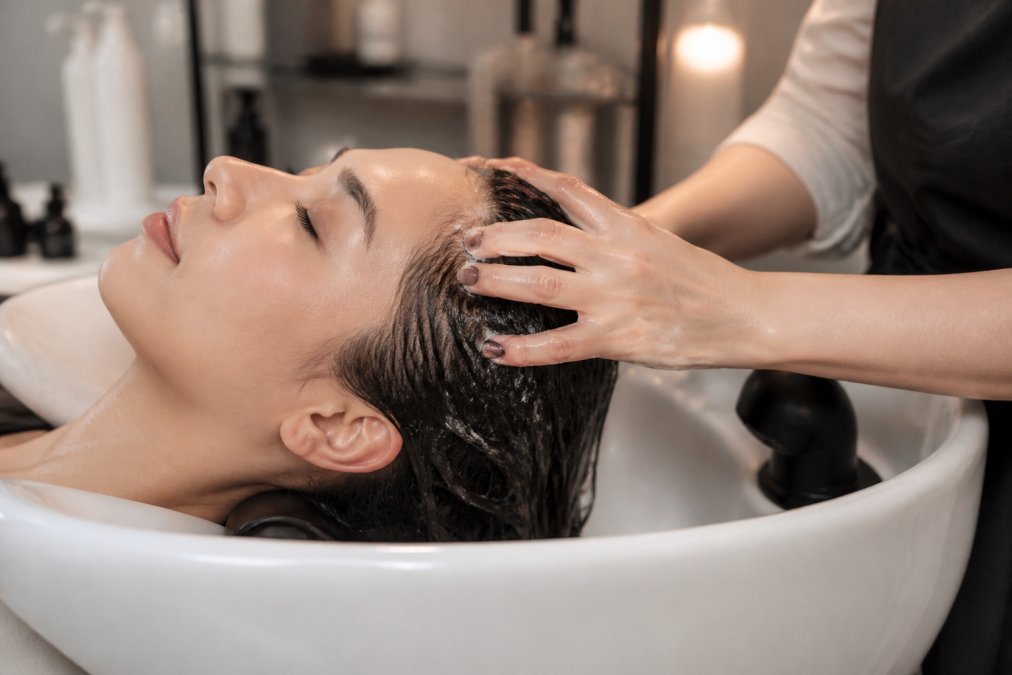
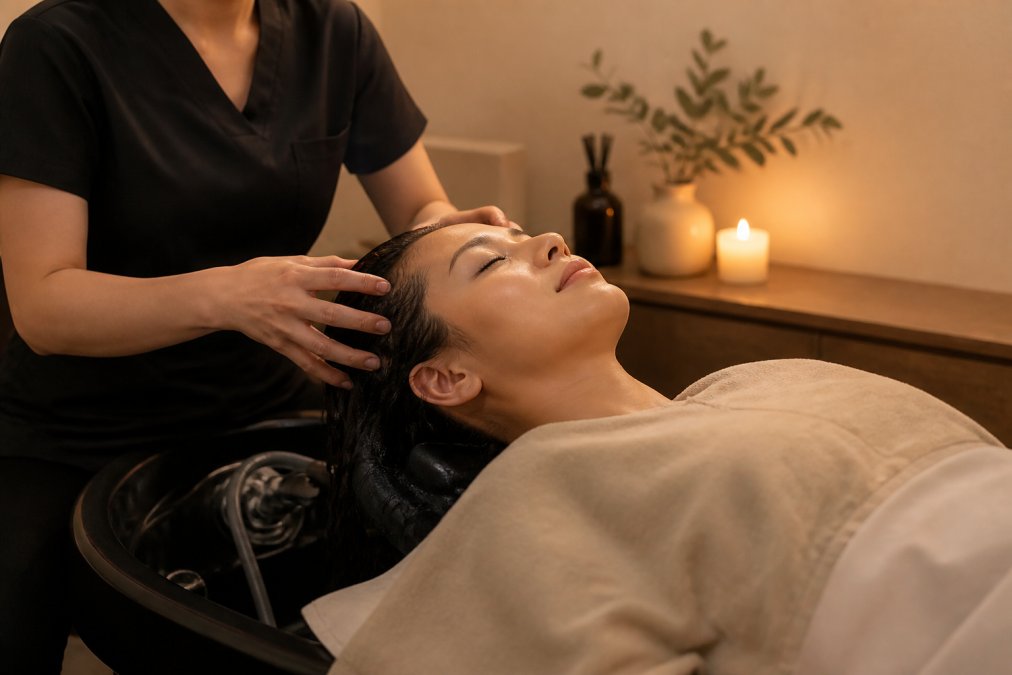
1. Camellia Scalp and Skin Lounge: Professional Head Spa for Deep Scalp Cleansing
Professional scalp treatments work best as part of a routine. Monthly or bi-monthly sessions maintain follicle health and prevent buildup from returning to problematic levels. Between treatments, use a clarifying shampoo to extend results.
Best for: Anyone serious about addressing hair thinning at the root. Ideal for those who’ve tried products without lasting results or who want personalized, professional-grade care in a calm, spa-like environment.
2. K18 Peptide Prep Detox Shampoo: Salicylic Acid for Deep Cleansing
K18 uses salicylic acid to dissolve sebum buildup and product residue from inside the follicle. It’s color-safe, removes heavy metals, and uses a pH-optimized formula that prevents over-drying.
Pros: Effectively clears follicle congestion. Color-safe. Non-stripping formula.
3. Biolage Scalp Sync Clarifying Shampoo: Balance Without Over-Drying
Biolage deeply cleanses while maintaining moisture balance, with mint leaf infusion providing a cooling sensation. Formulated for fine and thinning hair, it removes buildup without weakening delicate strands.
4. Neutrogena Hair Restore Triple Action Scalp Detox: Budget-Friendly Buildup Removal
This product works best for weekly maintenance, not daily cleansing. Overuse can irritate sensitive scalps. Stick to once-weekly application for best results.
Pros: Highly affordable. Widely available. Effective at removing heavy residue.
5. LolaVie Exfoliate & Detox Scalp Shampoo: Physical Exfoliation for Flaky Scalps
LolaVie combines physical and chemical exfoliation to address dead skin cells and sebum. The dual approach provides faster relief for flaky, itchy scalps with gentle particles safe for regular use.
6. Aavrani Scalp Detox Jelly Cleanser: Chemical Exfoliation With AHAs
Aavrani’s jelly texture applies easily and distributes evenly. AHAs dissolve bonds between dead skin cells for gentle but deep exfoliation. The formula includes antioxidants that nourish while cleansing and rinses cleanly without residue.
7. Kérastase Initialiste Scalp & Hair Serum: Premium Support for Thinning Hair
Use Kérastase alongside a clarifying shampoo for complete care: remove buildup with K18 or Biolage, then strengthen hair fiber with Initialiste.
Pros: High-end, scientifically-backed ingredients. Improves hair texture and resilience. Lightweight formula.
Cons: Premium pricing. Requires consistent use to see results.
8. OGX ProGrowth + Peptide Shampoo: Entry-Level Growth Support
OGX makes peptide-based hair care accessible at drugstore prices and supports scalp environment for healthier growth. Use it as your daily shampoo paired with weekly clarifying treatments.
Pros: Very affordable. Easy to find. Peptide support included.
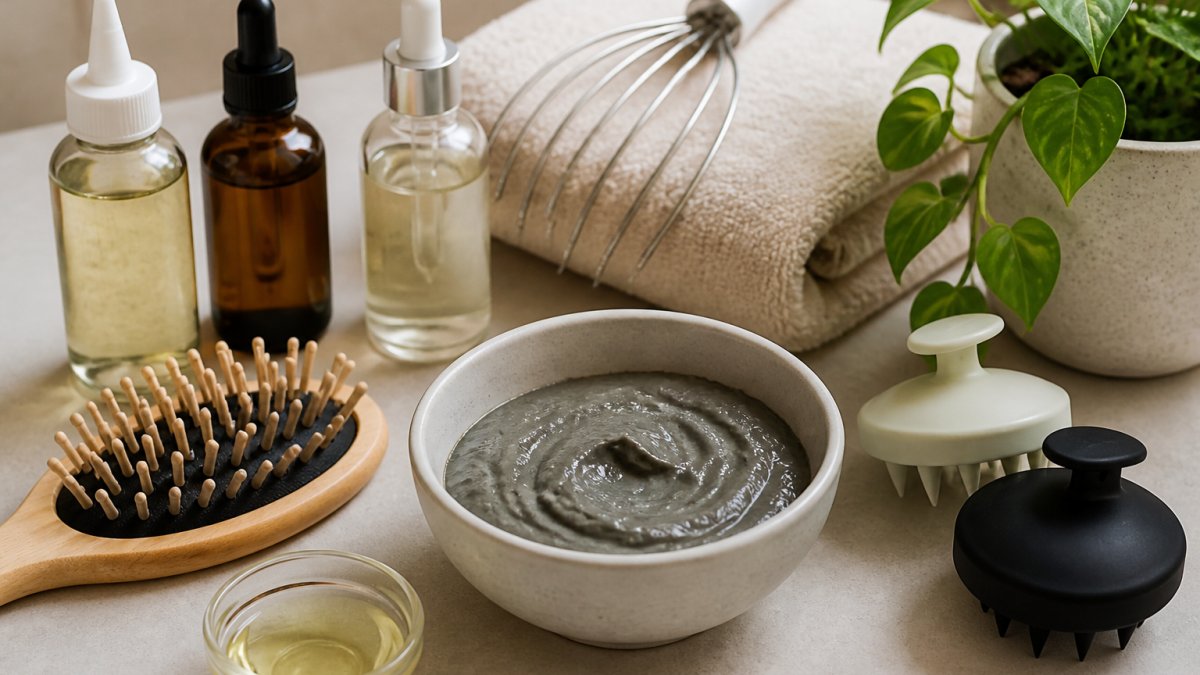
9. Bentonite Clay Powder (DIY Detox): Natural Mineral Cleansing
Bentonite clay is mineral-rich with natural absorbent properties that draw out scalp impurities. Mix with water or apple cider vinegar to create a customizable paste, though application is messy and results less consistent than formulated products.
Pros: Extremely cost-effective. Fully customizable. Natural, chemical-free option.
Scalp Analysis for Hair Thinning: Identifying Your Buildup Type
Chemical vs. Physical Scalp Exfoliators: Which Works Better
Chemical exfoliants (salicylic acid, AHAs, BHAs) dissolve bonds holding dead skin cells and sebum, penetrating deep follicle congestion. Physical exfoliants remove surface buildup but can’t reach deep congestion. The best approach combines both: use chemical exfoliants weekly, then gentle physical exfoliants if flaking persists.
How to Perform a Scalp Detox at Home
Perform a scalp detox weekly if you use styling products regularly, or bi-weekly for lighter product use. More frequent detoxing can strip your scalp’s natural protective oils.
Follow detox with lightweight conditioner on hair ends only; avoid conditioning the scalp itself, which can reintroduce buildup.
The Role of Salicylic Acid in Scalp Health
Salicylic acid dissolves in sebum, penetrating follicles to remove waxy plugs that restrict growth. Products with 0.5-2% are effective for weekly use; higher concentrations (2-5%) work for intensive treatments but shouldn’t exceed once weekly. Weekly use for 6-8 weeks shows meaningful improvement; monthly maintenance thereafter prevents buildup return.
Best Ingredients for Removing Product Residue
Key ingredients: Chelating agents (EDTA, citric acid) bind mineral deposits. Surfactants (decyl glucoside, cocamidopropyl betaine) lift oils gently. Exfoliating acids (salicylic, glycolic, lactic) dissolve buildup. Antioxidants (green tea, vitamin E) reduce inflammation. Protein-based ingredients (keratin, wheat protein) strengthen weakened fibers. Products listing exfoliating acids in the first five ingredients are more effective.
Benefits of Deep Scalp Cleansing for Hair Thinning
Deep cleansing removes follicle congestion, allowing stronger, healthier hair growth. Massage and exfoliation increase blood flow, delivering oxygen and nutrients to roots. Scalp barrier restoration maintains pH balance and supports the beneficial microbiome that protects against inflammation.
How Professional Head Spa Treatments Support Scalp Wellness
Professional head spa treatments use specialized techniques to cleanse deeply while stimulating follicle health through targeted massage. Professionals customize treatment based on your specific buildup type. Monthly or bi-monthly sessions maintain scalp wellness long-term.
Hard Water vs. Product Buildup: Understanding the Difference
Hard water minerals bind to sebum and product residue, creating stubborn deposits. Signs include stiff, dull hair and chalky scalp feeling. Chelating shampoos target mineral deposits; use weekly for hard water, monthly for soft water with heavy products. A shower filter reduces mineral exposure at the source.
Scalp Microbiome Science and Hair Thinning
Your scalp’s microbiome protects against inflammation when balanced. Buildup reduces oxygen, favoring anaerobic bacteria that trigger inflammation and accelerate hair loss. Deep cleansing removes buildup, allowing beneficial microbes to reestablish and reduce inflammation. Weekly clarification is ideal. Some newer products include prebiotics that feed beneficial bacteria, supporting microbiome rebalancing while cleansing.
Age-Specific Scalp Thinning Protocols
Hair thinning patterns differ by age. Younger adults (20s-30s) experience thinning from product buildup and stress; establish weekly clarifying routines early. Middle-aged adults combine deep cleansing with follicle-stimulating treatments as natural density declines. Older adults need gentler exfoliants and barrier protection as scalps become more sensitive.
When to Seek Professional Scalp Treatment
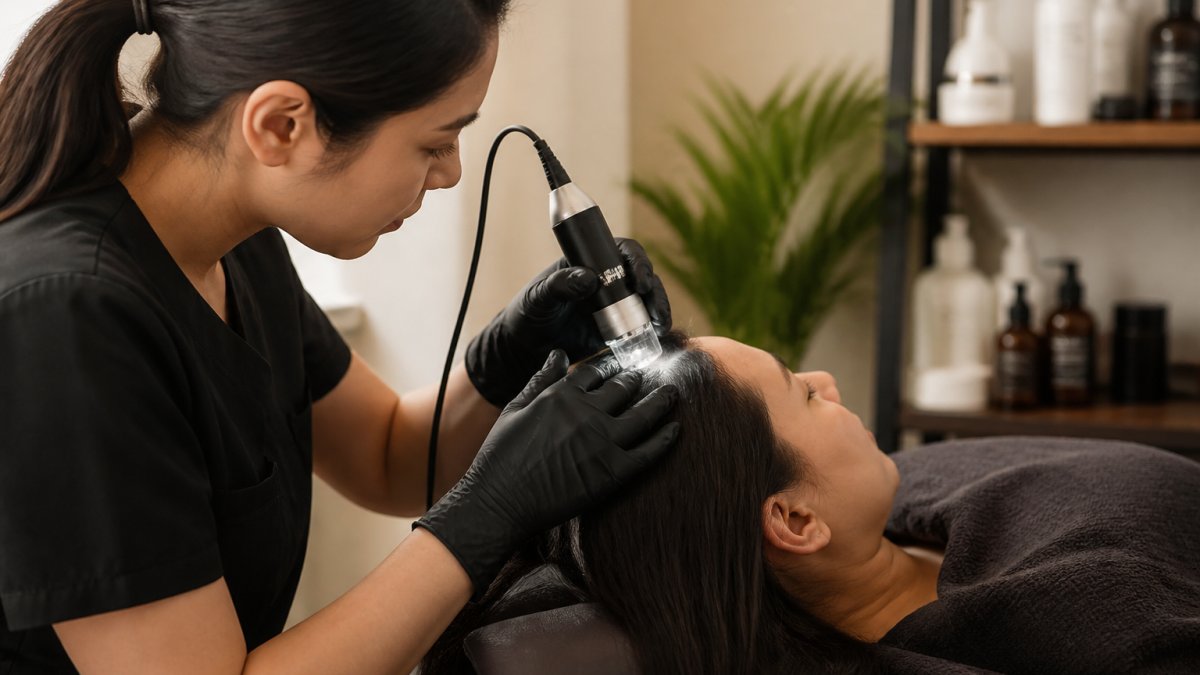
Seek professional treatment when buildup persists despite weekly clarifying shampoos for 6+ weeks, scalp feels itchy or inflamed, hair thinning accelerates, or you’re unsure of your buildup type. Professional scalp analysis reveals problems at-home assessment can’t detect.
Maintaining Results After Scalp Cleansing
Maintain results with: Weekly maintenance using clarifying shampoo once weekly. Monthly intensive treatment with potent clarifying formula or professional care. Daily gentle care using sulfate-free shampoo. Product selection reducing heavy styling products. Consistency matters more than intensity; sustainable weekly routines deliver better long-term results.
Frequently Asked Questions
How do I detox my scalp from buildup to support hair growth?
Scalp detox starts with a clarifying shampoo containing salicylic acid or AHAs to remove dead skin cells, product residue, and sebum buildup. Use a detox treatment once weekly for 4-6 weeks. Follow with a gentle conditioner to maintain scalp barrier health. For stubborn buildup, consider professional scalp cleansing treatments that use advanced techniques to dissolve follicle congestion without damaging hair. Consistent detoxification helps restore a healthy scalp environment, allowing hair follicles to function optimally.
Can a deeply cleansed scalp actually help with hair thinning?
Yes. When product residue, sebum, and dead skin cells block hair follicles, they restrict nutrient delivery and oxygen flow to the root, contributing to hair thinning. Removing this buildup through deep cleansing restores scalp circulation and reduces micro-inflammation around follicles. A clean scalp environment supports stronger, healthier hair growth. Professional scalp analysis can identify whether your thinning is related to follicle congestion or other factors, helping you choose the right treatment approach.
What ingredients should I look for in scalp treatments for thinning hair?
Look for salicylic acid or glycolic acid for chemical exfoliation that removes buildup without stripping the scalp. Peptides and wheat protein strengthen hair fiber and improve resilience. Antioxidants protect against scalp inflammation. Mint leaf provides cooling relief and stimulates scalp circulation. Avoid products with heavy silicones or sulfates that can worsen buildup. For professional treatments, scalp analysis identifies your specific needs, allowing customized ingredient selection that addresses both cleansing and hair density support.
How often should I get a professional scalp facial for buildup removal?
For significant buildup or hair thinning, professional scalp facial treatments are most effective when done every 4-6 weeks initially, then monthly for maintenance. The frequency depends on your scalp condition, product use, and water quality. A professional scalp analysis determines your ideal treatment schedule. Between professional visits, use a clarifying shampoo weekly or biweekly. This combination of professional deep cleansing and at-home maintenance creates the best results for reducing buildup and supporting hair health.