Table of Contents
- Why Dry Scalp Is So Common in Las Vegas
- How We Ranked These 5 Scalp Treatments
- 1. Camellia Scalp & Skin Lounge: Japanese Head Spa and Scalp Analysis
- 3. Dermatology Care for Hair and Scalp Disorders
- 4. At-Home Dry Scalp Treatment: Oils, Serums, and Treatment Drops
- 5. Scalp Hydration Treatment: What It Is and Who It Fits
- Spa Treatment or Dermatologist? How to Decide
- Frequently Asked Questions
Last Updated: October 4, 2026
Why Dry Scalp Is So Common in Las Vegas
Dry scalp is a common complaint in Las Vegas because the desert climate pulls moisture from skin, and hard water can leave residue that irritates the scalp. At Camellia Scalp and Skin Lounge, we see this constantly in clients who have tried every drugstore shampoo without relief.
The city’s low humidity and intense heat strip the scalp’s natural moisture barrier. Add hard water minerals and you get itching, flaking, and irritation that a standard wash day won’t fix. Most guides treat dry scalp like a shampoo problem.
Below, we break down five treatment paths, from a Japanese head spa to dermatology care, so you can pick the one that actually fits your scalp.
How We Ranked These 5 Scalp Treatments
We ranked these options on five factors: suitability for dry, flaky scalp, depth of treatment, transparency, convenience, and whether the provider offers a real scalp analysis before treating. A scalp treatment is any service or product applied to the scalp to address dryness, flaking, irritation, or buildup.
Our top pick is a full head spa ritual because it combines analysis, cleansing, exfoliation, and hydration in one session.
| Rank | Treatment | Best For | Approach |
|---|---|---|---|
| 1 | Camellia Scalp & Skin Lounge | Personalized scalp and skin care | Japanese head spa, scalp analysis, massage |
| 2 | Tea Scalp Hair Spa | Deep cleansing for flaking | Basic and deep scalp treatments |
| 3 | Dermatology care | Persistent or medical symptoms | Diagnosis and prescription care |
| 4 | At-home oils and serums | Maintenance between visits | Topical oils, treatment drops |
| 5 | Scalp hydration treatment | Dryness without buildup | Moisture-focused conditioning |
1. Camellia Scalp & Skin Lounge: Japanese Head Spa and Scalp Analysis
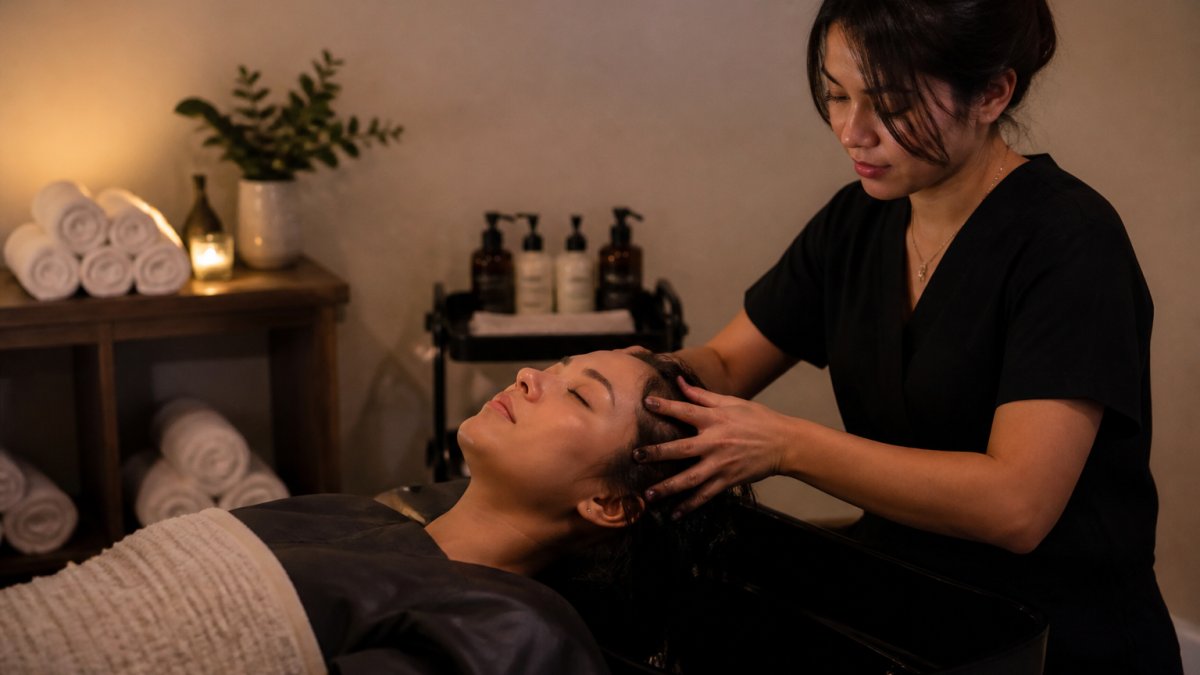
Camellia Scalp & Skin Lounge is our top pick because it starts every visit with a scalp analysis rather than a guess.
(https://www.ncbi.nlm.nih.gov/pmc/articles/PMC7796278/))
Where it fits in a dry-scalp routine
Think of a deep cleanse as a reset, not a routine. For most people with dry scalp, one deep-cleansing session every four to six weeks is enough to clear buildup, with gentler hydrating care in between. If you find yourself needing a deep cleanse every week to feel clean, the underlying issue is probably not buildup, and a scalp analysis or a dermatology visit will get you further than another clarifying session.
3. Dermatology Care for Hair and Scalp Disorders
If your symptoms persist despite good at-home care, dermatology care is the right next step. Local dermatology practices treat hair and scalp disorders including dandruff and folliculitis, and they can tell the difference between dry scalp and conditions that mimic it.
This matters because seborrheic dermatitis, psoriasis, and fungal infections all cause flaking but need medical treatment, not a spa service. A dermatologist can also flag hair thinning or loss that warrants evaluation. Spa treatments support scalp health; they don’t diagnose disease.
4. At-Home Dry Scalp Treatment: Oils, Serums, and Treatment Drops
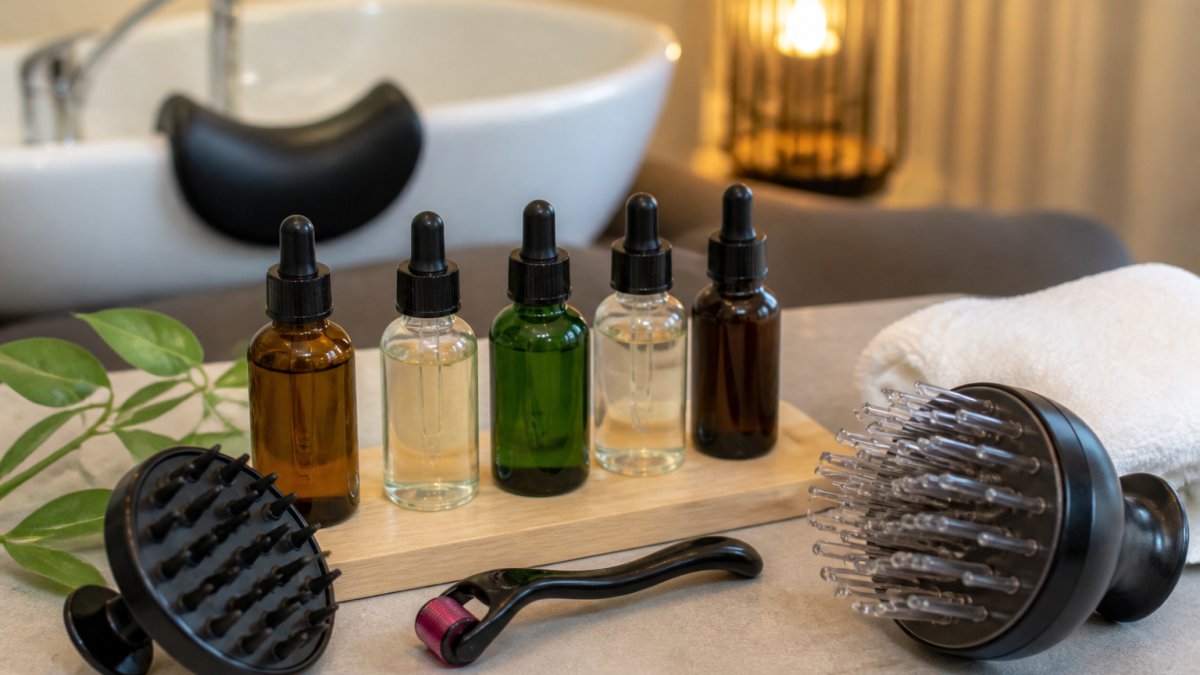
At-home care works best as maintenance between professional visits, not as a replacement for them. A dry scalp treatment at home typically means topical oils, leave-on serums, or treatment drops applied directly to the scalp. What most guides skip is the part that matters here: the local climate and water supply change which at-home habits help and which ones quietly make dryness worse.
Why the local environment changes your at-home routine
Two local factors drive most of the dry-scalp complaints we see:
- Low humidity and heat. Desert air pulls moisture from skin continuously, and heat increases perspiration, which can leave salt and residue on the scalp. The result is a scalp that feels dry and tight even when it is not truly dehydrated.
- Hard water. Mineral-heavy water leaves deposits on skin and hair. Those deposits can interfere with how cleansers rinse away and can leave a film that itches. If your scalp feels coated after washing, hard water is a likely contributor.
A practical response is to reduce how much you strip the scalp and to add moisture back deliberately. That means shorter, cooler rinses, a gentle moisturizing shampoo instead of a harsh clarifying one, and a leave-on hydrating step after washing rather than before.
The four at-home categories, and how each one works
- Oils. Coconut oil is a common pick because it is occlusive, meaning it slows moisture loss from the skin surface. Tea tree oil is used for itch, but it is a known irritant on broken or sensitive skin, so dilute it heavily and patch-test first. Apply oils to the scalp, not the hair, and wash them out within a few hours unless the product is designed to stay on.
- Serums and drops. Leave-on hydration is usually lighter than oil and less likely to leave hair greasy. These are the best fit for daily or every-other-day use on a dry scalp, especially in low humidity.
- Mild shampoo. A moisturizing formula cleans without stripping the barrier. Look for gentle surfactants and hydrating ingredients rather than strong clarifying agents.
Ingredients worth looking for include aloe vera for soothing and salicylic acid for exfoliation. Patch-test anything new on a small area behind the ear and wait a full day before applying it to the whole scalp.
A simple weekly sequence
| Day | What to do | Why |
|---|---|---|
| Wash days | Gentle moisturizing shampoo, cool rinse | Cleans without stripping the barrier |
| After washing | Leave-on serum or drops on the scalp | Replaces moisture lost to dry air |
| Once a week | Exfoliating treatment, then hydrate | Clears scale without over-drying |
| As needed | Oil treatment, washed out within hours | Occludes moisture on very dry days |
What at-home care cannot do
At-home products manage symptoms; they do not diagnose causes. If your flaking is greasy, if you have redness or open skin, or if you are losing more hair than usual, no oil or serum will fix the underlying issue. That is the point at which a scalp analysis or a dermatology visit is the better use of your money. Used correctly, though, at-home care is what keeps a professional treatment from wearing off in a week.
In a dry, low-humidity climate with hard water, the goal of at-home care is to stop stripping the scalp and start replacing moisture. Gentle washing plus a leave-on hydrating step does more for most people than any single oil.
5. Scalp Hydration Treatment: What It Is and Who It Fits
A scalp hydration treatment is a moisture-focused service that conditions the scalp and supports its barrier without stripping it. It suits people with dryness and tightness but little buildup, and it’s the gentlest option on this list.
It fits well if your scalp feels dry but not congested, or if you’ve overdone clarifying products. It’s a poor fit if you have heavy flaking from buildup, since hydration alone won’t remove residue.
Spa Treatment or Dermatologist? How to Decide
Choose a spa treatment if your scalp is dry, tight, or flaky without redness, sores, or sudden hair loss.
Use this checklist before you book:
- Is the flaking white and dry, or greasy and yellow? (Greasy points to a medical cause)
- Is there redness, swelling, or open skin?
- Has it lasted more than a few weeks despite at-home care?
If you checked any of the last four boxes, start with a dermatologist. If your answers point to plain dryness, a professional scalp treatment is a reasonable first step.
Dry scalp in this climate is stubborn, and guessing your way through product after product gets expensive.
Frequently Asked Questions
What is the best treatment for dry scalp skin?
There is no single best option, because dry scalp has several possible causes. For surface dryness and flaking, a hydrating scalp treatment with gentle cleansing, massage, and a leave-on oil or serum often helps. For persistent flaking, itching, or inflammation, a dermatology evaluation is the safer first step. Many people combine both: professional scalp treatments for maintenance and a dermatologist for diagnosis.
Can a head spa help with a dry, itchy scalp?
A Japanese head spa focuses on scalp cleansing, exfoliation, hydration, and massage, which can ease itching and flaking tied to dryness and product buildup. It is not a medical treatment, so it will not resolve conditions like seborrheic dermatitis or folliculitis. If itching persists after a few sessions, or you notice redness, sores, or unusual shedding, see a dermatologist.
How often should you use a scalp treatment for dryness?
Most people do well with a professional scalp hydration treatment every two to four weeks, paired with gentle at-home cleansing in between. Dry, flaky scalp often needs consistent care rather than a single session, since the scalp barrier takes time to recover. Your provider can adjust frequency based on how your scalp responds and how much time you spend in dry, low-humidity conditions.
When should you see a dermatologist for a dry scalp?
See a dermatologist if flaking does not improve after several weeks of gentle cleansing and hydration, if you have intense itching, pain, redness, or open sores, or if you notice patches of hair loss. A dermatologist can tell the difference between dry scalp, dandruff, seborrheic dermatitis, and folliculitis, since each needs a different approach and some require prescription treatment.
What does a dermatologist recommend for a dry scalp?
Dermatology guidance for dry scalp typically starts with gentle, moisturizing cleansing and avoiding harsh sulfates and frequent hot-water washing. Some sources mention applying certain oils as an at-home remedy and using moisturizing over-the-counter shampoos. If those steps do not help, a dermatologist may look for an underlying condition and recommend targeted care, which is why an in-person evaluation matters more than any single product.