Table of Contents
- What Is Scalp Analysis for Hair Loss?
- How Dermatologists Diagnose Hair Loss
- Hair and Scalp Evaluation: What Professionals Look For
- Scalp Conditions and Hair Growth: What Findings Mean
- How to Prepare for a Scalp Analysis
- What to Expect During Your Appointment
- Limitations and Accuracy of Scalp Analysis
- Frequently Asked Questions
Last Updated: October 10, 2026
What Is Scalp Analysis for Hair Loss?
Scalp analysis for hair loss explained is a professional examination that helps identify the underlying cause of hair thinning or loss. During this assessment, a dermatologist or trained specialist evaluates your scalp and hair to determine what’s actually happening at the root level.
Hair loss can signal miniaturization, inflammation, infection, or temporary shedding. A proper scalp analysis for hair loss explained cuts through guesswork and identifies the actual problem.
A thorough scalp analysis examines your individual pattern, scalp health, and hair condition, giving you the information needed to move forward with confidence.
How Dermatologists Diagnose Hair Loss
Professional hair-loss diagnosis involves more than a visual glance. Dermatologists use a structured approach that combines medical history, physical examination, and sometimes laboratory testing to pinpoint the exact cause.
Medical and Hair-Loss History
Your dermatologist asks detailed questions about your health and hair-loss timeline, since stress, illness, medication changes, and nutritional deficiencies directly trigger shedding.
Key questions typically include:
- When did you first notice increased hair loss?
- Has the loss been gradual or sudden?
- Do you have a family history of hair loss?
- Are you under significant stress?
- Have you recently changed medications or diet?
- Do you have any scalp symptoms like itching or pain?
Your medical history reveals patterns. Telogen effluvium shows sudden increase after a major life event; androgenetic alopecia shows gradual thinning over years with family history.
Visual Scalp and Hair Examination
The dermatologist inspects your scalp for inflammation, redness, scaling, sores, or scarring, and examines hair shafts and follicles to assess quality and changes.
Visual examination reveals:
- Overall scalp health and condition
- Signs of inflammation or infection
- Hair texture and shaft abnormalities
- Distribution of hair loss across the scalp
- Whether hair loss is localized or diffuse
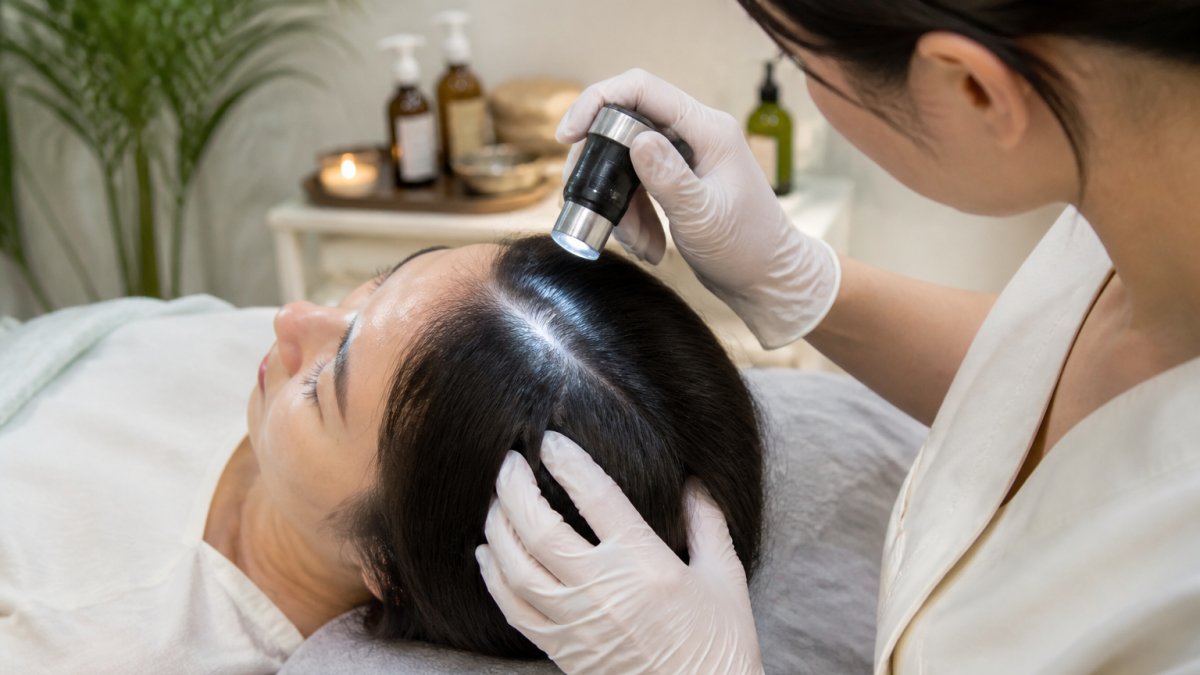
A dermatoscope reveals miniaturized hairs, follicle changes, and scalp patterns invisible to the naked eye.
Hair-Pull Test and Shedding Assessment
The hair-pull test gently pulls about 60 hairs to assess shedding rate and distinguish normal shedding from excessive hair loss.
Fewer than three hairs indicates normal shedding; more than three suggests active hair loss.
Hair and Scalp Evaluation: What Professionals Look For
Understanding what dermatologists observe during a scalp analysis for hair loss explained helps you interpret your own results and understand next steps.
Hair-Loss Pattern and Severity
Hair loss follows recognizable patterns: pattern baldness at hairline or crown, telogen effluvium across entire scalp, alopecia areata in circular patches.
Standardized scales (Norwood for male pattern loss, Ludwig for female pattern loss) track progression over time.
Hair Miniaturization and Follicle Changes
Miniaturization, visible shrinking of hair follicles producing thinner, shorter hairs, is a hallmark of pattern hair loss.
This indicates androgen-sensitive follicles; as they miniaturize, hairs shed before reaching full length. Early recognition guides treatment decisions.
Scalp Inflammation, Redness, and Scaling
Redness, scaling, or sores suggest infection, dermatitis, or other scalp conditions contributing to hair loss.
Conditions like folliculitis, seborrheic dermatitis, psoriasis, and fungal infections directly cause or accelerate hair loss. Addressing scalp inflammation improves hair health and slows shedding.
Scalp Conditions and Hair Growth: What Findings Mean
A scalp analysis produces specific findings that, when interpreted together, point toward a diagnosis and treatment path. Understanding what your dermatologist observes, and what it means for your hair and scalp, helps you make informed decisions about next steps.
Pattern Hair Loss (Androgenetic Alopecia)
What the dermatologist sees: Miniaturized hairs at hairline or crown in a predictable pattern, with healthy scalp and family history.
What it means: Genetically androgen-sensitive follicles shrink over time. Without treatment, subtle thinning can advance to significant baldness, but this condition responds to proven treatments.
Treatment options: Minoxidil (topical, twice daily) and finasteride (daily pill) slow loss and regrow hair. Combination therapy is more effective than either alone. Hair transplantation suits advanced loss. Early intervention preserves more hair.
Telogen Effluvium (Stress-Induced Shedding)
What the dermatologist sees: Diffuse thinning without miniaturization, normal hair shafts, healthy scalp, and positive hair-pull test (more than three hairs).
What it means: A stressor (illness, surgery, pregnancy, stress, weight loss, or medication change) pushed follicles into the resting phase. After 2-3 months, those hairs shed.
What to expect: Shedding peaks 2-4 months after the trigger and decreases over months. Full recovery takes 6-12 months; new growth occurs simultaneously.
Treatment options: Address the underlying cause. Stress reduction, medication adjustment, and nutritional support (protein, iron, zinc, B vitamins) optimize regrowth. Most cases resolve without treatment once the stressor is removed.
Alopecia Areata (Autoimmune Hair Loss)
What the dermatologist sees: Circular or oval patches of complete hair loss with clean borders, smooth scalp, and possible exclamation-mark hairs at margins.
What it means: Your immune system attacks hair follicles, causing them to stop growing and shed. This autoimmune condition is not caused by genetics, stress, or scalp health.
What to expect: Some experience single patches that regrow spontaneously; others develop multiple patches or progression to total hair loss.
Treatment options:
Intralesional corticosteroid injections directly into bald patches can suppress immune activity and promote regrowth. Topical corticosteroids or topical immunotherapy may help smaller patches.
Scalp Inflammation or Infection (Folliculitis, Dermatitis, Fungal Infection)
What the dermatologist sees: Redness, scaling, pustules, or crusting. Follicles may be inflamed or contain pus. Fungal infections show thick, well-demarcated scaling; bacterial folliculitis shows inflamed follicles; seborrheic dermatitis shows yellow or white flaking. (Source: National Institutes of Health)
What it means: Infection or inflammation damages follicles and creates an unhealthy scalp environment, triggering secondary hair loss or accelerating existing loss. This is treatable with targeted therapy.
Treatment options:
Bacterial folliculitis requires topical or oral antibiotics. Fungal infections (such as tinea capitis or seborrheic dermatitis) respond to antifungal shampoos, creams, or oral medications depending on severity.
Scarring Alopecia (Cicatricial Alopecia)
What the dermatologist sees: Smooth, shiny, or thinned scalp with absent or severely reduced follicles. Biopsy may confirm diagnosis.
What it means: Hair follicles are permanently destroyed by inflammation, infection, trauma, or autoimmune attack. Unlike non-scarring alopecia, scarring alopecia destroys follicle structure. Early treatment prevents progression, but existing scarred areas cannot regrow naturally.
Treatment options:
Treatment focuses on stopping progression and managing appearance. Topical or systemic corticosteroids, immunosuppressants, or antibiotics target the underlying inflammatory process. Hair transplantation can restore appearance in stable, non-progressive cases.
When Findings Are Unclear or Mixed
Overlapping conditions are common. Your dermatologist may recommend follow-up appointments, scalp biopsy, blood work (thyroid, iron, vitamin D, zinc), or combination treatment addressing multiple factors simultaneously.
A scalp analysis for hair loss explained is your diagnostic starting point, it identifies what’s happening now and guides next steps toward effective treatment.
How to Prepare for a Scalp Analysis
Proper preparation ensures your dermatologist can see your scalp clearly and gather accurate information about your hair loss. Small steps before your appointment make a meaningful difference in diagnostic accuracy.
Scalp and Hair Preparation
Wash your hair the night before your appointment to remove product buildup while preserving natural oils. Avoid heavy styling products, conditioners, or oils for 24 hours before your visit.
Avoid heat tools on appointment day, as they can mask or mimic inflammation. Wear hair down or in a loose style; avoid tight braids or buns that obscure scalp sections.
Schedule scalp analysis before hair coloring, as dye can create temporary inflammation that interferes with diagnosis.
Medication and Supplement Documentation
Bring a complete list of all medications and supplements you take, including:
- Prescription medications (especially those affecting hormones, immune function, or circulation)
- Over-the-counter pain relievers or allergy medications
- Vitamins and mineral supplements
- Herbal remedies or adaptogens
- Topical treatments you’ve applied to your scalp
Many medications influence hair growth (blood pressure drugs, anticoagulants, retinoids, hormonal contraceptives, corticosteroids, immunosuppressants, chemotherapy). Include dose and duration for each medication.
Medical and Hair-Loss History Documentation
Write down: timeline of loss (sudden or gradual), pattern (where it started, if spreading), family history, recent stress or life events, scalp symptoms, previous treatments, and nutritional changes.
Bring this written summary to your appointment to help your dermatologist ask targeted questions and spend more time on examination.
Visual Documentation
Bring photos of your hair loss progression taken from the same angle and lighting over weeks or months to show how quickly your condition is changing.
If tracking shedding, note approximate numbers and timeline to help your dermatologist assess whether shedding is stable, improving, or worsening.
What NOT to Do Before Your Appointment
Avoid starting new hair-loss treatments or supplements before your appointment, as this can complicate diagnosis.
Avoid over-washing your scalp before your appointment, as this can cause temporary redness or flaking that might be misinterpreted as a scalp condition.
If you have a scalp biopsy scheduled as part of your evaluation, ask your dermatologist about pre-appointment instructions. Some practitioners request that you avoid blood thinners or certain supplements for a few days before biopsy to reduce bleeding risk.
What to Expect During Your Appointment
Your scalp analysis appointment typically lasts 30 to 45 minutes, beginning with medical history questions and moving to physical examination.
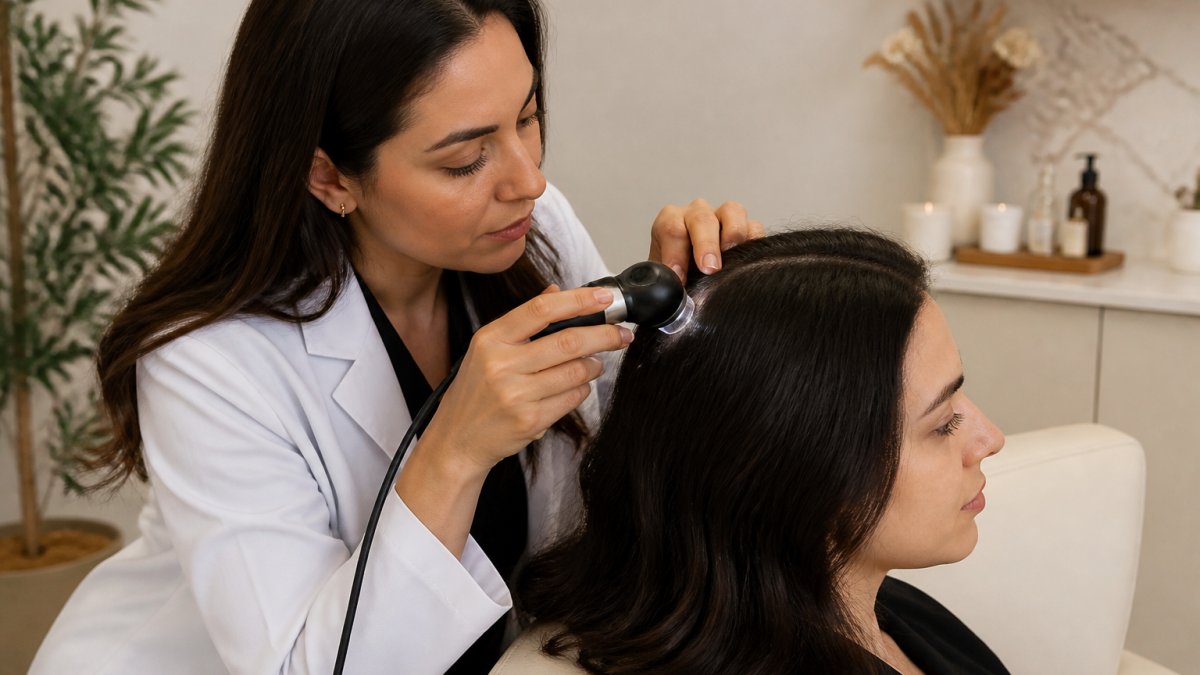
You’ll sit comfortably while the specialist inspects your scalp with magnification, parts your hair in sections, performs the hair-pull test, and may photograph your scalp for documentation.
Your dermatologist may recommend scalp biopsy or blood tests to reveal nutritional deficiencies, thyroid problems, or hormonal imbalances.
Bring photos of your hair loss progression if you have them. Visual documentation helps your dermatologist assess how quickly your condition is changing and whether previous treatments worked.
Limitations and Accuracy of Scalp Analysis
A professional scalp analysis is far more reliable than guessing, but it has real limitations.
Visual examination and the hair-pull test accurately identify most common hair-loss conditions. However, some diagnoses require additional testing.
Early-stage hair loss can be harder to diagnose confidently. Subtle miniaturization or the very beginning of pattern baldness might not show obvious changes yet.
Some conditions coexist. You might have both pattern hair loss and a scalp inflammation contributing to shedding. Identifying all factors ensures comprehensive treatment.
A scalp analysis for hair loss explained is your starting point, not your entire answer.
| Finding | What It Means | Next Steps |
|---|---|---|
| Miniaturized hairs in pattern | Pattern hair loss | Medication or topical treatments |
| Diffuse shedding without miniaturization | Telogen effluvium | Address underlying cause |
| Circular bald patches | Alopecia areata | Dermatology treatment options |
| Inflamed, scaly scalp | Scalp condition | Targeted scalp therapy |
| Normal findings with reported loss | Requires further testing | Blood work or biopsy |
Frequently Asked Questions
What exactly happens during a scalp analysis for hair loss?
A scalp analysis typically begins with a review of your medical and hair-loss history, followed by a visual examination of your scalp and hair using magnification tools. Your specialist will assess hair-loss patterns, check for shedding with a hair-pull test, examine hair shafts and follicles, and evaluate the scalp for inflammation, redness, scaling, or other abnormalities. The appointment usually takes 30 to 60 minutes and may include recommendations for further testing or treatment based on findings.
Can a scalp analysis identify the cause of hair loss?
A professional scalp analysis can identify many causes of hair loss, including androgenetic alopecia, alopecia areata, telogen effluvium, and scalp conditions like inflammation or scaling. However, some causes require blood tests or scalp biopsy for definitive diagnosis. Your specialist will explain what the visual findings suggest and whether additional laboratory testing is needed to confirm the underlying cause.
How is a professional scalp analysis different from examining my scalp at home?
At-home scalp checks cannot match professional assessment. Dermatologists and scalp specialists use magnification tools like dermatoscopes and trichoscopy to see details invisible to the naked eye, including hair miniaturization, follicle density changes, and microscopic scalp abnormalities. They also have training to recognize patterns across different hair types and skin tones, and to distinguish between temporary shedding and progressive hair loss based on clinical signs.
Should I see a dermatologist about my hair loss?
Consider seeing a dermatologist if you experience sudden or progressive hair loss, bald patches, persistent scalp itching or flaking, or shedding that lasts more than a few months. Early evaluation is important because some conditions respond better to treatment when caught early. A professional scalp analysis can determine whether your hair loss is temporary or requires intervention, and what treatment options may help.
Hair loss doesn’t have to remain a mystery. A professional scalp analysis for hair loss explained gives you clarity and direction. At Camellia Scalp and Skin Lounge, our scalp analysis service combines careful examination with personalized guidance. Understanding your scalp’s actual condition, not assumptions or internet diagnoses, is the first step toward healthier hair. Book Now to schedule your scalp evaluation and discover what your scalp actually needs.