Category: Blog

  • Head Spa Benefits: A Complete 2026 Guide

    Head Spa Benefits: A Complete 2026 Guide

    Table of Contents

    Last Updated: September 29, 2026

    What Is a Japanese Head Spa?

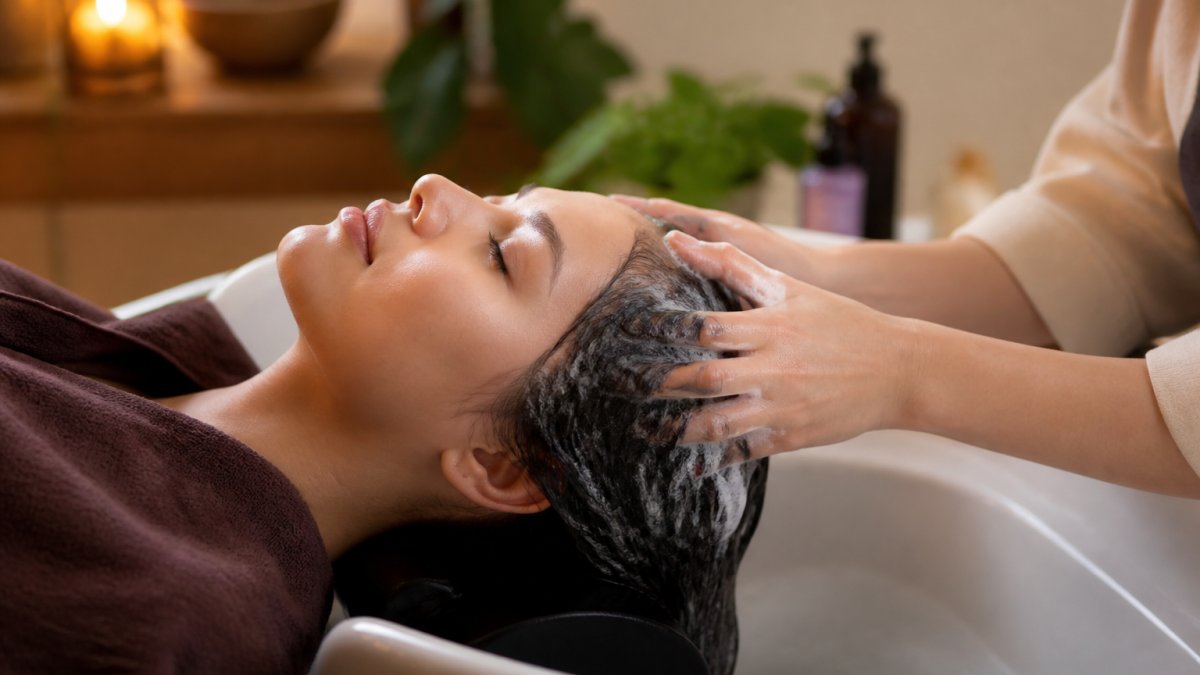
    A head spa is a specialized scalp treatment that combines deep cleansing, therapeutic massage, and targeted skincare to promote scalp health and relaxation, delivering numerous head spa benefits. Originating in Japan, this treatment uses warm water, gentle pressure, and specialized techniques to cleanse the scalp, remove product buildup, and stimulate blood circulation to hair follicles.

    Unlike a standard salon shampoo, a professional head spa treatment involves multiple stages. The therapist uses a combination of water pressure, massage techniques, and sometimes specialized serums or cleansing solutions to address specific scalp conditions. The experience typically includes a scalp analysis to identify your individual needs, followed by customized treatment steps designed to restore balance and vitality to your scalp environment.

    At Camellia Scalp and Skin Lounge, our head spa treatments combine Japanese-inspired techniques with advanced scalp analysis to support scalp health and comfort. The treatment addresses concerns from visible flaking and itchiness to underlying sebum regulation and follicle stimulation.

    Core Benefits of Head Spa Treatments

    Deep Cleansing and Scalp Detox

    The primary benefit of a head spa is thorough cleansing that goes far beyond what regular shampooing achieves. Product buildup accumulates on the scalp over time from styling products, conditioners, dry shampoos, and environmental pollutants. This buildup blocks the scalp’s natural ability to regulate itself and can trap moisture or create an environment where irritation develops.

    A professional head spa uses targeted water pressure and specialized cleansing techniques to dissolve and remove this buildup without stripping the scalp of its natural oils. The deep cleansing action helps restore the scalp’s natural pH balance and allows the skin to breathe. Many clients report that their scalp feels noticeably lighter and clearer immediately after treatment, with improved comfort.

    The scalp detox process also helps prepare your scalp for better absorption of any treatments or products applied afterward. A cleansed scalp environment is more receptive to hydrating serums or therapeutic ingredients that support long-term scalp health.

    Addressing Scalp Issues: Dandruff, Dryness, and Oil Imbalance

    Scalp problems like dandruff, excessive dryness, and oily buildup often stem from an imbalanced scalp environment. When the scalp’s natural microbiome and moisture barrier are disrupted, these issues develop and persist despite home care efforts.

    A head spa treatment directly addresses these root causes by restoring scalp hydration, regulating sebum production, and rebalancing the scalp’s natural ecosystem. For clients dealing with persistent flaking or itchiness, the combination of gentle exfoliation and targeted hydration often provides relief. The therapeutic massage component also improves circulation to the scalp, which supports the skin’s natural healing and regeneration processes.

    Professional scalp analysis identifies whether your issue is truly dryness, dehydration, excess oil, or a combination of factors. This distinction matters because the treatment approach differs. A truly dry scalp needs moisture replenishment, while an oily scalp often needs better sebum regulation and cleansing. Addressing the actual problem rather than guessing at it makes the difference between temporary relief and lasting improvement.

    Stress Relief and Relaxation Through Therapeutic Massage

    The scalp massage component of a head spa treatment delivers significant stress relief benefits. The scalp contains numerous nerve endings, and therapeutic massage in this area activates the parasympathetic nervous system, which is responsible for relaxation and recovery (pubmed.ncbi.nlm.nih.gov).

    During a professional head spa session, the therapist uses specific massage techniques that release tension in the scalp, neck, and shoulder areas. Many clients experience a profound sense of calm during treatment. The combination of warm water, gentle pressure, and skilled touch creates a deeply rejuvenating sensory experience.

    Regular head spa treatments can help manage stress-induced scalp tension and may support better sleep quality. The relaxation response triggered during treatment extends beyond the appointment itself.

    Benefits of Scalp Massage for Hair Growth

    Follicle Stimulation and Blood Circulation

    One of the most sought-after benefits of scalp massage is its potential to support hair growth through improved blood circulation. When blood flow to the scalp increases, hair follicles receive more oxygen and nutrients, which supports the hair growth cycle and follicle health (Checking your browser).

    #1 head spa in Vegas

    Samantha March

    The therapeutic massage techniques used in a professional head spa session are specifically designed to stimulate blood circulation without causing irritation. This sustained increase in blood flow to the scalp can help nourish hair follicles over time. For clients concerned with thinning hair or slow hair growth, regular head spa treatments combined with proper home care offer a non-invasive way to support hair vitality.

    The follicle stimulation benefits are cumulative, meaning that regular treatments tend to show better results than occasional sessions.

    Hair Manageability and Shine Enhancement

    A healthy scalp environment directly translates to healthier-looking hair. When the scalp is properly cleansed, hydrated, and balanced, hair becomes more manageable, shinier, and stronger from root to tip.

    Book Now →

    The deep cleansing and hydration from a head spa treatment removes the dullness caused by product buildup and environmental deposits. Hair that emerges from a clean, nourished scalp has better texture, more natural shine, and improved styling capability.

    Enhanced hair vitality may support the lifespan of color treatments and reduce breakage. Hair that grows from a healthy scalp environment is naturally stronger and more resilient, which means better overall hair quality regardless of styling or coloring choices.

    Scalp Analysis Benefits and Professional Assessment

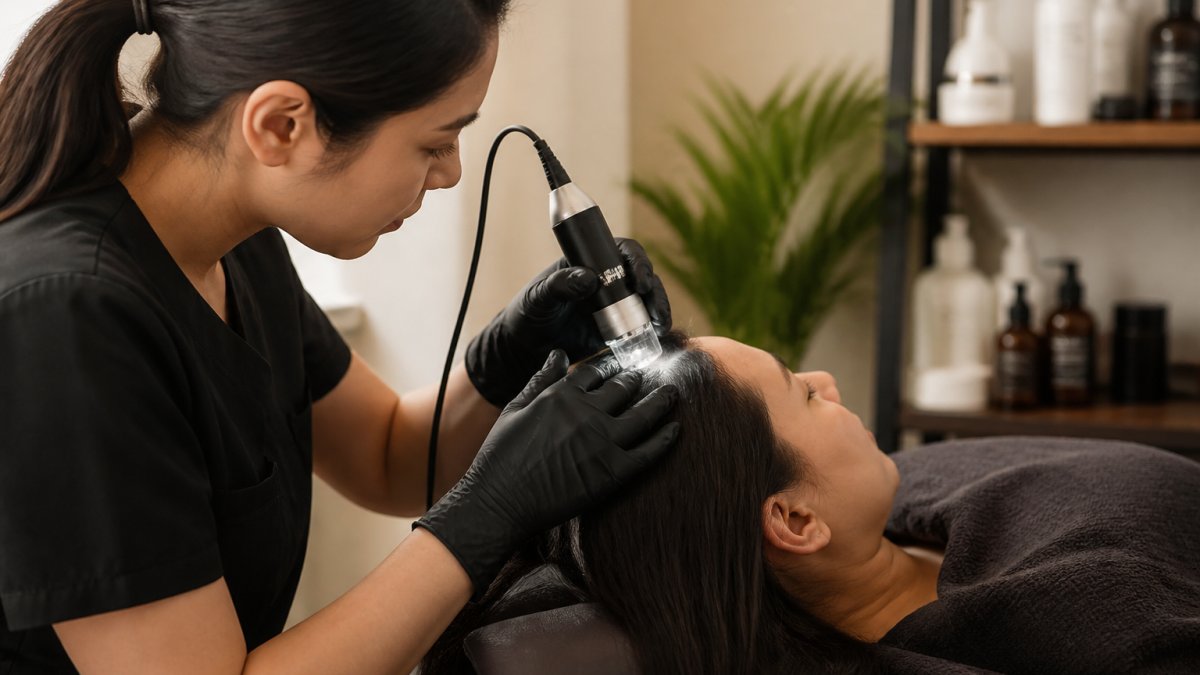
    Professional scalp analysis is a critical component of an effective head spa treatment. Rather than guessing at what your scalp needs, a trained professional uses microscopic examination or detailed visual assessment to identify your specific scalp condition and recommend targeted treatment.

    A thorough scalp analysis reveals information that you cannot see with the naked eye: the actual moisture level of your scalp, the degree of buildup, the health of individual follicles, and any areas of irritation or inflammation. This diagnostic information allows the therapist to customize the treatment to address your exact needs rather than applying a one-size-fits-all approach.

    The assessment also establishes a baseline for measuring improvement over time.

    Japanese Head Spa Treatment Duration and Session Structure

    Understanding the structure of a professional head spa session helps you prepare for what to expect and plan your time accordingly. A typical head spa treatment follows a specific sequence designed to maximize benefits.

    What to Expect During Your First Session

    Your first head spa appointment begins with a detailed consultation about your scalp concerns, hair history, and any sensitivities. The therapist will ask about your current routine, products you use, and any previous scalp issues you’ve experienced. This conversation informs the entire treatment plan.
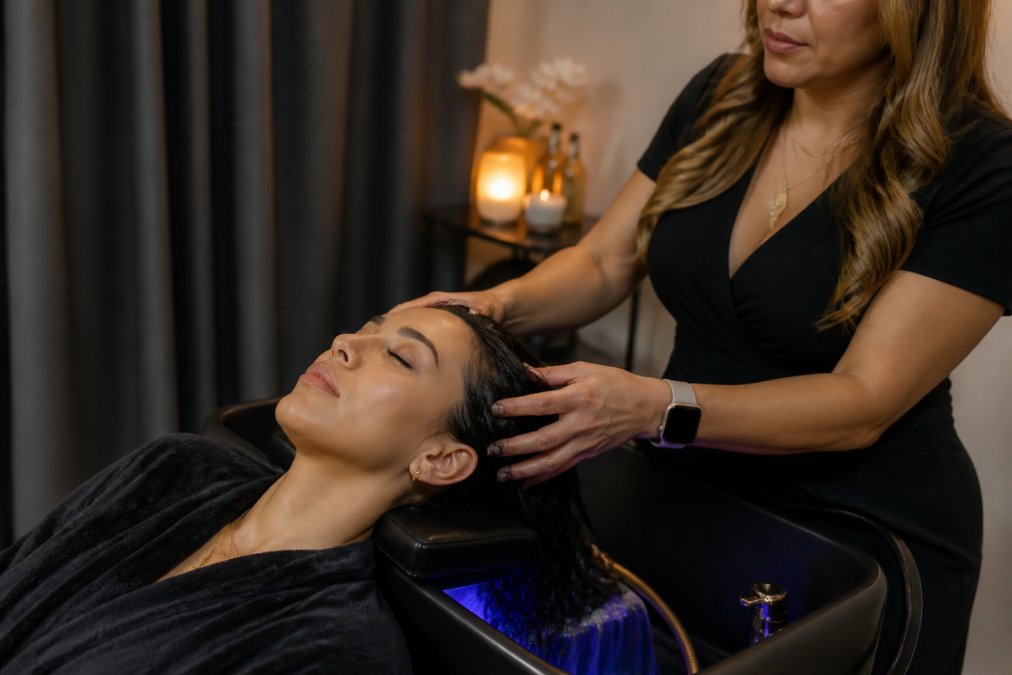
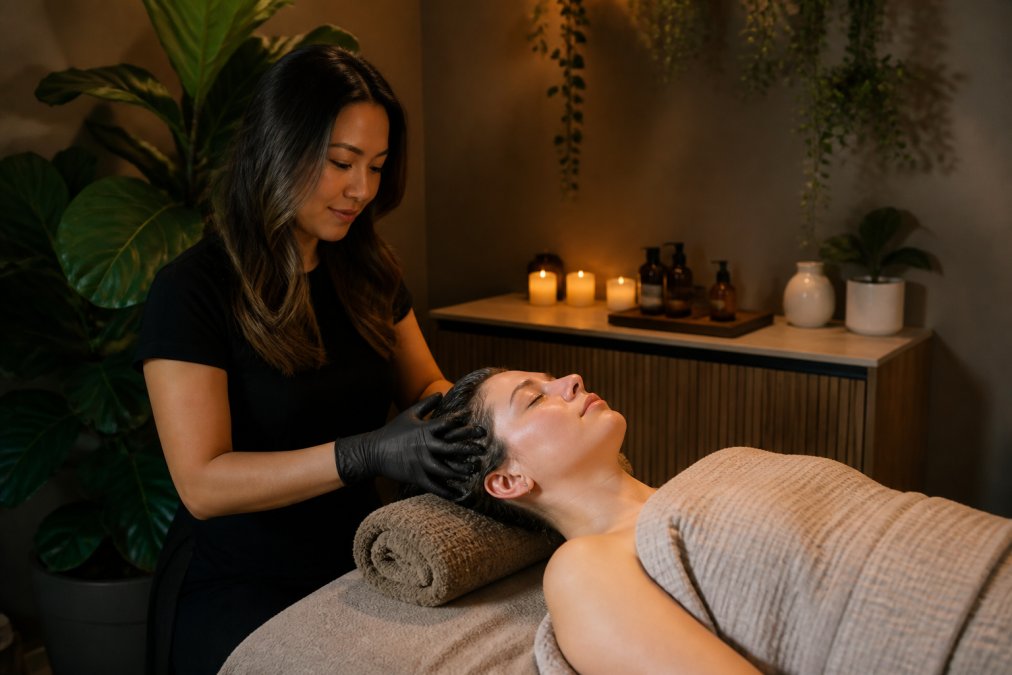
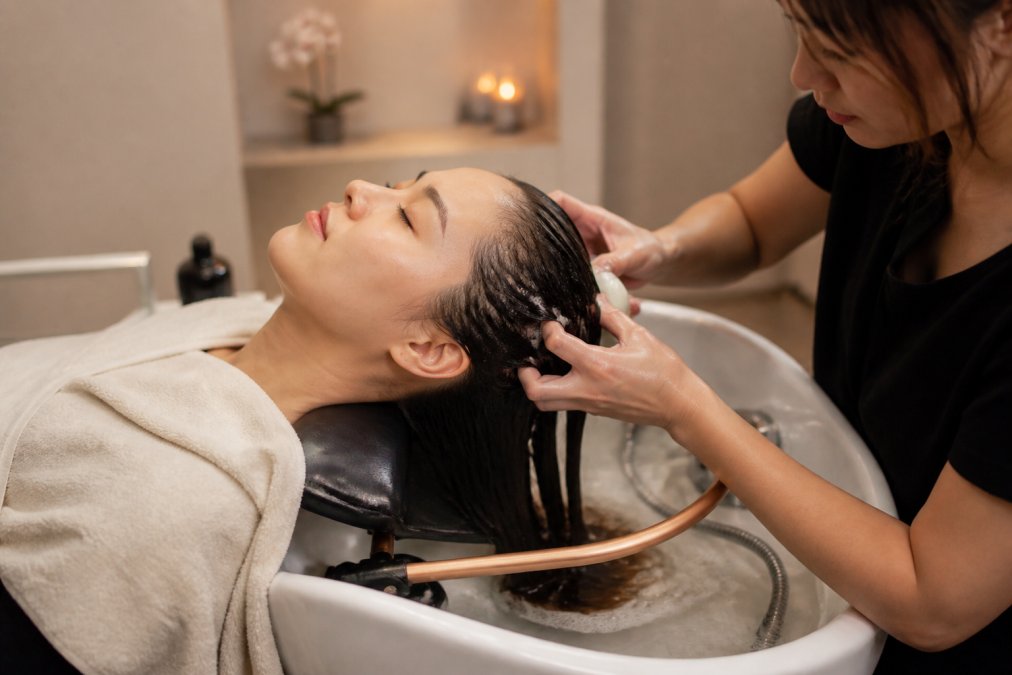
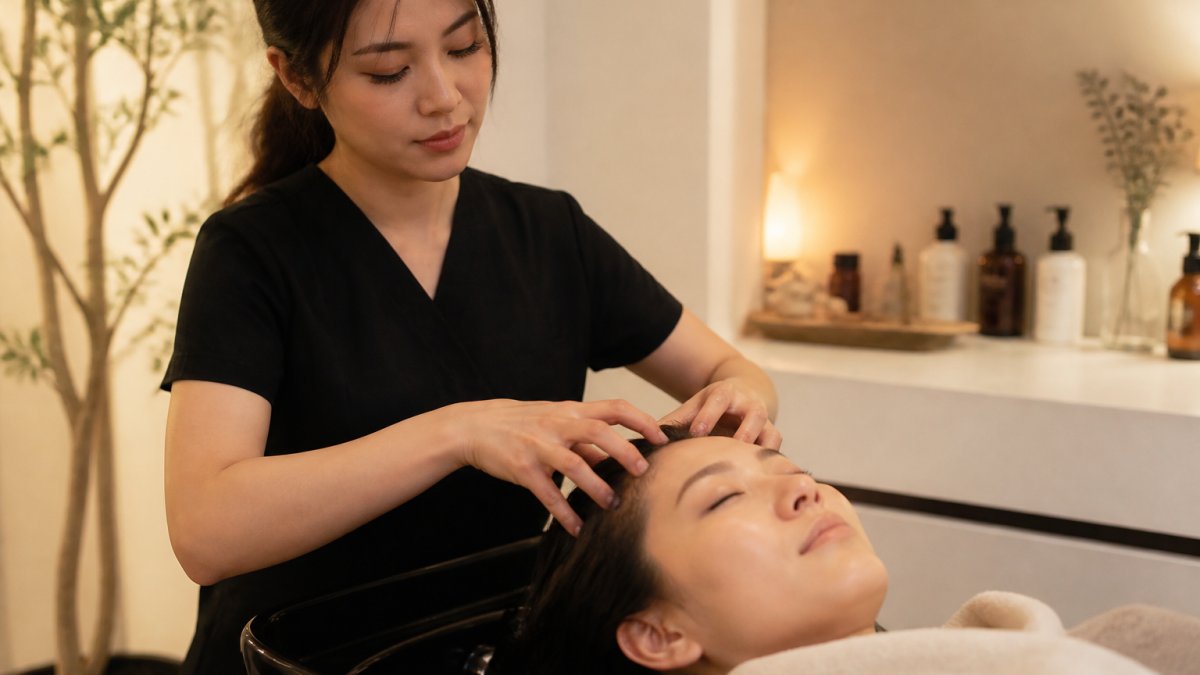
    Therapist performing a relaxing scalp massage to demonstrate head spa benefits in a calm, modern treatment lounge
    Therapist performing a relaxing scalp massage to demonstrate head spa benefits in a calm, modern treatment lounge

    Important Pre-Treatment Screening

    • Active scalp infections or wounds: Fungal infections (ringworm), bacterial infections, or open cuts should be fully healed before treatment, as massage and water pressure can spread infection or cause pain.
    • Recent head or neck surgery: Clients should wait at least 2-4 weeks post-surgery before receiving scalp massage, depending on the procedure and surgeon approval.
    • Severe sunburn or chemical burns on the scalp: Thermal or chemical damage requires healing before treatment.
    • Certain skin conditions: Clients with psoriasis, eczema, or seborrheic dermatitis may benefit from head spa treatments, but the therapist should use gentler pressure and avoid exfoliation during flare-ups.
    • Migraine or tension headache disorders: While many clients find head spa relaxing, those prone to migraines triggered by pressure or temperature changes should discuss this with their therapist beforehand.
    • High blood pressure or cardiovascular concerns: The relaxation response and blood flow changes during treatment are generally safe, but clients on blood pressure medication should inform their therapist.
    • Pregnancy: Head spa treatments are typically safe during pregnancy, but certain pressure points and heat exposure should be discussed with your healthcare provider.

    DIY vs. Professional Head Spa Treatments

    While at-home scalp care is valuable, professional head spa treatments deliver benefits that DIY approaches cannot match. The difference comes down to equipment, technique, expertise, and the depth of treatment possible.

    Frequency and Long-Term Results

    How often you should receive head spa treatments depends on your specific scalp condition and goals. For clients addressing active scalp issues like dandruff or significant buildup, regular treatments may provide noticeable improvement. Once the condition improves, maintenance treatments may help sustain results.


    Frequently Asked Questions

    What are the main benefits of getting a head spa treatment?

    Head spa treatments deliver multiple benefits: deep cleansing that removes product buildup and impurities, improved scalp hydration and sebum regulation, reduced dandruff and itchiness, enhanced blood circulation to follicles, and stress relief through therapeutic massage. Many people report noticeable improvements in hair shine, manageability, and overall scalp comfort within the first few sessions.

    How does scalp analysis benefit my hair health?

    Professional scalp analysis identifies your specific scalp condition, including moisture levels, oil imbalance, sensitivity, and any underlying issues like product buildup or inflammation. This assessment allows your therapist to customize treatments to your exact needs rather than using a one-size-fits-all approach. Understanding your scalp environment is the foundation for targeted, effective care that actually addresses your concerns.

    Can head spa treatments help with hair thinning or loss?

    While head spa treatments cannot reverse genetic hair loss, they support scalp health in ways that may benefit hair growth. The therapeutic massage increases blood circulation to follicles, the deep cleansing removes buildup that can suffocate hair roots, and scalp hydration creates an optimal environment for hair vitality. For concerns about significant hair loss, consult a dermatologist or qualified professional to rule out underlying conditions that require medical treatment.

    How long does a typical Japanese head spa treatment take?

    A standard Japanese head spa treatment includes scalp analysis, deep cleansing, exfoliation, massage, and hydration steps. Some facilities offer extended sessions that combine head spa with facial treatments or other services, which can run longer. Your therapist will explain the timeline during your consultation.

    How often should I get a head spa treatment for best results?

    Frequency depends on your scalp condition. Your therapist will recommend a schedule tailored to your scalp’s needs during your first assessment.

    Is a head spa treatment safe for all scalp types?

    Head spa treatments are generally safe for most people, but certain conditions warrant caution. Avoid treatment if you have open wounds, severe scalp infections, or recent head surgery. Those with sensitive skin, migraines triggered by scalp touch, or certain medical conditions should consult their healthcare provider first. Inform your therapist of any allergies, sensitivities, or health concerns so they can adjust the treatment appropriately.
  • 5 Best Scalp Treatments for Dry Skin in Las Vegas

    5 Best Scalp Treatments for Dry Skin in Las Vegas

    Table of Contents

    Last Updated: October 4, 2026

    Why Dry Scalp Is So Common in Las Vegas

    Dry scalp is a common complaint in Las Vegas because the desert climate pulls moisture from skin, and hard water can leave residue that irritates the scalp. At Camellia Scalp and Skin Lounge, we see this constantly in clients who have tried every drugstore shampoo without relief.

    The city’s low humidity and intense heat strip the scalp’s natural moisture barrier. Add hard water minerals and you get itching, flaking, and irritation that a standard wash day won’t fix. Most guides treat dry scalp like a shampoo problem.

    Below, we break down five treatment paths, from a Japanese head spa to dermatology care, so you can pick the one that actually fits your scalp.

    How We Ranked These 5 Scalp Treatments

    We ranked these options on five factors: suitability for dry, flaky scalp, depth of treatment, transparency, convenience, and whether the provider offers a real scalp analysis before treating. A scalp treatment is any service or product applied to the scalp to address dryness, flaking, irritation, or buildup.

    Our top pick is a full head spa ritual because it combines analysis, cleansing, exfoliation, and hydration in one session.

    Rank Treatment Best For Approach
    1 Camellia Scalp & Skin Lounge Personalized scalp and skin care Japanese head spa, scalp analysis, massage
    2 Tea Scalp Hair Spa Deep cleansing for flaking Basic and deep scalp treatments
    3 Dermatology care Persistent or medical symptoms Diagnosis and prescription care
    4 At-home oils and serums Maintenance between visits Topical oils, treatment drops
    5 Scalp hydration treatment Dryness without buildup Moisture-focused conditioning

    1. Camellia Scalp & Skin Lounge: Japanese Head Spa and Scalp Analysis

    Camellia Scalp & Skin Lounge is our top pick because it starts every visit with a scalp analysis rather than a guess.

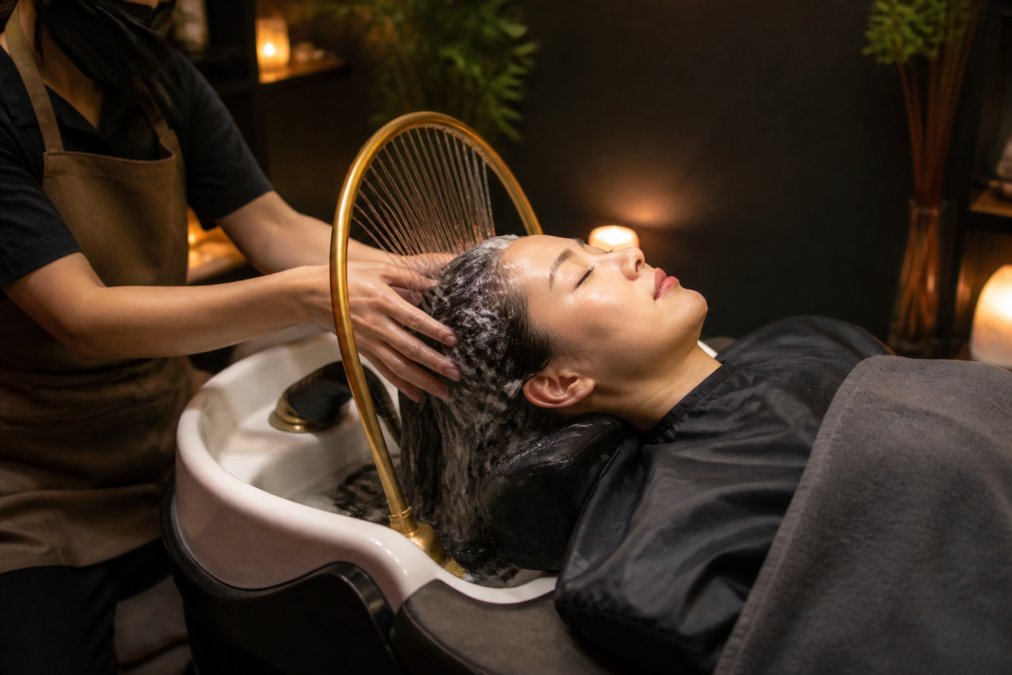
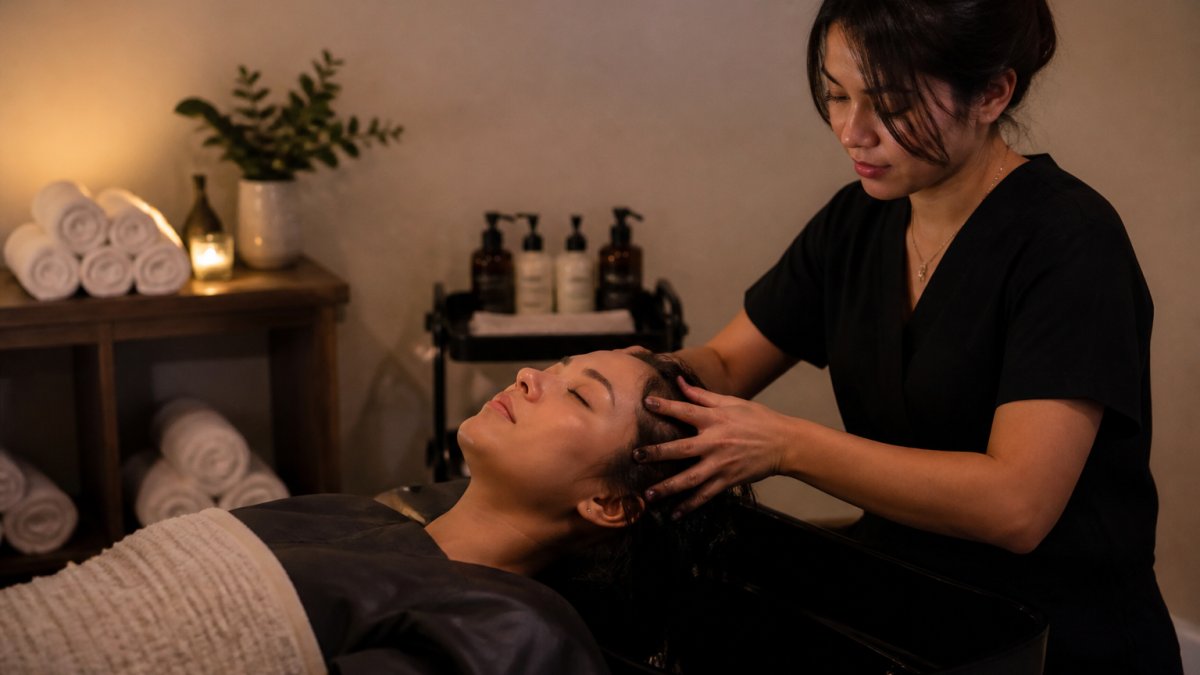
    Stylist performing a relaxing massage during professional scalp treatments in a serene Japanese head spa room
    Stylist performing a relaxing massage during professional scalp treatments in a serene Japanese head spa room

    (https://www.ncbi.nlm.nih.gov/pmc/articles/PMC7796278/))

    Where it fits in a dry-scalp routine

    Think of a deep cleanse as a reset, not a routine. For most people with dry scalp, one deep-cleansing session every four to six weeks is enough to clear buildup, with gentler hydrating care in between. If you find yourself needing a deep cleanse every week to feel clean, the underlying issue is probably not buildup, and a scalp analysis or a dermatology visit will get you further than another clarifying session.

    3. Dermatology Care for Hair and Scalp Disorders

    If your symptoms persist despite good at-home care, dermatology care is the right next step. Local dermatology practices treat hair and scalp disorders including dandruff and folliculitis, and they can tell the difference between dry scalp and conditions that mimic it.

    This matters because seborrheic dermatitis, psoriasis, and fungal infections all cause flaking but need medical treatment, not a spa service. A dermatologist can also flag hair thinning or loss that warrants evaluation. Spa treatments support scalp health; they don’t diagnose disease.

    4. At-Home Dry Scalp Treatment: Oils, Serums, and Treatment Drops

    At-home care works best as maintenance between professional visits, not as a replacement for them. A dry scalp treatment at home typically means topical oils, leave-on serums, or treatment drops applied directly to the scalp. What most guides skip is the part that matters here: the local climate and water supply change which at-home habits help and which ones quietly make dryness worse.

    Why the local environment changes your at-home routine

    Two local factors drive most of the dry-scalp complaints we see:

    • Low humidity and heat. Desert air pulls moisture from skin continuously, and heat increases perspiration, which can leave salt and residue on the scalp. The result is a scalp that feels dry and tight even when it is not truly dehydrated.
    • Hard water. Mineral-heavy water leaves deposits on skin and hair. Those deposits can interfere with how cleansers rinse away and can leave a film that itches. If your scalp feels coated after washing, hard water is a likely contributor.

    A practical response is to reduce how much you strip the scalp and to add moisture back deliberately. That means shorter, cooler rinses, a gentle moisturizing shampoo instead of a harsh clarifying one, and a leave-on hydrating step after washing rather than before.

    The four at-home categories, and how each one works

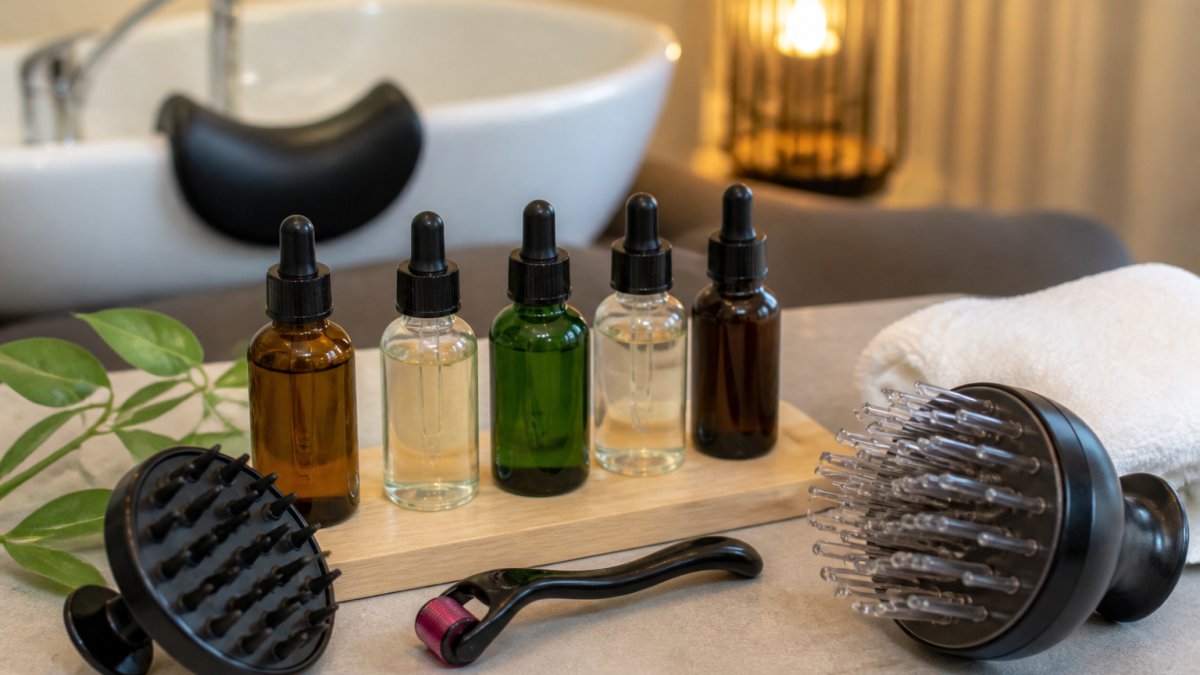
    • Oils. Coconut oil is a common pick because it is occlusive, meaning it slows moisture loss from the skin surface. Tea tree oil is used for itch, but it is a known irritant on broken or sensitive skin, so dilute it heavily and patch-test first. Apply oils to the scalp, not the hair, and wash them out within a few hours unless the product is designed to stay on.
    • Serums and drops. Leave-on hydration is usually lighter than oil and less likely to leave hair greasy. These are the best fit for daily or every-other-day use on a dry scalp, especially in low humidity.
    • Mild shampoo. A moisturizing formula cleans without stripping the barrier. Look for gentle surfactants and hydrating ingredients rather than strong clarifying agents.

    Ingredients worth looking for include aloe vera for soothing and salicylic acid for exfoliation. Patch-test anything new on a small area behind the ear and wait a full day before applying it to the whole scalp.

    Book Now →

    A simple weekly sequence

    Day What to do Why
    Wash days Gentle moisturizing shampoo, cool rinse Cleans without stripping the barrier
    After washing Leave-on serum or drops on the scalp Replaces moisture lost to dry air
    Once a week Exfoliating treatment, then hydrate Clears scale without over-drying
    As needed Oil treatment, washed out within hours Occludes moisture on very dry days

    What at-home care cannot do

    At-home products manage symptoms; they do not diagnose causes. If your flaking is greasy, if you have redness or open skin, or if you are losing more hair than usual, no oil or serum will fix the underlying issue. That is the point at which a scalp analysis or a dermatology visit is the better use of your money. Used correctly, though, at-home care is what keeps a professional treatment from wearing off in a week.

    Key Takeaway
    In a dry, low-humidity climate with hard water, the goal of at-home care is to stop stripping the scalp and start replacing moisture. Gentle washing plus a leave-on hydrating step does more for most people than any single oil.

    5. Scalp Hydration Treatment: What It Is and Who It Fits

    A scalp hydration treatment is a moisture-focused service that conditions the scalp and supports its barrier without stripping it. It suits people with dryness and tightness but little buildup, and it’s the gentlest option on this list.

    It fits well if your scalp feels dry but not congested, or if you’ve overdone clarifying products. It’s a poor fit if you have heavy flaking from buildup, since hydration alone won’t remove residue.

    Spa Treatment or Dermatologist? How to Decide

    Choose a spa treatment if your scalp is dry, tight, or flaky without redness, sores, or sudden hair loss.

    Use this checklist before you book:

    • Is the flaking white and dry, or greasy and yellow? (Greasy points to a medical cause)
    • Is there redness, swelling, or open skin?
    • Has it lasted more than a few weeks despite at-home care?

    If you checked any of the last four boxes, start with a dermatologist. If your answers point to plain dryness, a professional scalp treatment is a reasonable first step.


    Dry scalp in this climate is stubborn, and guessing your way through product after product gets expensive.

    Frequently Asked Questions

    What is the best treatment for dry scalp skin?

    There is no single best option, because dry scalp has several possible causes. For surface dryness and flaking, a hydrating scalp treatment with gentle cleansing, massage, and a leave-on oil or serum often helps. For persistent flaking, itching, or inflammation, a dermatology evaluation is the safer first step. Many people combine both: professional scalp treatments for maintenance and a dermatologist for diagnosis.

    Can a head spa help with a dry, itchy scalp?

    A Japanese head spa focuses on scalp cleansing, exfoliation, hydration, and massage, which can ease itching and flaking tied to dryness and product buildup. It is not a medical treatment, so it will not resolve conditions like seborrheic dermatitis or folliculitis. If itching persists after a few sessions, or you notice redness, sores, or unusual shedding, see a dermatologist.

    How often should you use a scalp treatment for dryness?

    Most people do well with a professional scalp hydration treatment every two to four weeks, paired with gentle at-home cleansing in between. Dry, flaky scalp often needs consistent care rather than a single session, since the scalp barrier takes time to recover. Your provider can adjust frequency based on how your scalp responds and how much time you spend in dry, low-humidity conditions.

    When should you see a dermatologist for a dry scalp?

    See a dermatologist if flaking does not improve after several weeks of gentle cleansing and hydration, if you have intense itching, pain, redness, or open sores, or if you notice patches of hair loss. A dermatologist can tell the difference between dry scalp, dandruff, seborrheic dermatitis, and folliculitis, since each needs a different approach and some require prescription treatment.

    What does a dermatologist recommend for a dry scalp?

    Dermatology guidance for dry scalp typically starts with gentle, moisturizing cleansing and avoiding harsh sulfates and frequent hot-water washing. Some sources mention applying certain oils as an at-home remedy and using moisturizing over-the-counter shampoos. If those steps do not help, a dermatologist may look for an underlying condition and recommend targeted care, which is why an in-person evaluation matters more than any single product.

  • Scalp Buildup Solutions: 9 Best Treatments for Hair Thinning

    Scalp Buildup Solutions: 9 Best Treatments for Hair Thinning

    Table of Contents

    Last Updated: October 2, 2026

    What Is Scalp Buildup and Why It Causes Hair Thinning

    Scalp buildup, dead skin cells, sebum, product residue, and environmental pollutants, clogs hair follicles and restricts blood circulation, making it a primary cause of hair thinning and loss, though effective scalp buildup solutions can reverse this damage. Many people address it with products alone rather than professional intervention.

    How Product Residue and Sebum Block Hair Follicles

    Silicones, waxes, and conditioning agents coat the scalp, trapping moisture and bacteria. Sebum oxidizes and hardens into waxy plugs inside follicles. Hard water minerals bind to this residue, creating stubborn buildup that regular shampooing can’t remove, starving hair roots of oxygen and nutrients.

    The Connection Between Follicle Congestion and Hair Density Loss

    Congested follicles shorten the growth phase, reducing hair density and volume over months. Buildup disrupts the scalp microbiome, allowing harmful bacteria to thrive and triggering inflammation that accelerates hair loss. Professional scalp cleansing restores microbial balance and removes this inflammation trigger.


    9 Best Scalp Buildup Solutions: Comparison Table

    Product/Service Type Best For Key Benefit
    Camellia Scalp and Skin Lounge Professional treatment Comprehensive scalp wellness Deep cleansing + personalized analysis
    K18 Peptide Prep Detox Shampoo Chemical exfoliant Heavy product buildup Salicylic acid penetrates follicles
    Biolage Scalp Sync Clarifying Shampoo Professional-grade cleanser Balanced deep clean Mint cooling + oil control
    Neutrogena Hair Restore Triple Action Budget option Weekly maintenance Affordable, accessible
    LolaVie Exfoliate & Detox Scalp Shampoo Physical exfoliant Flaky, itchy scalps Dual exfoliation + detox
    Aavrani Scalp Detox Jelly Cleanser Chemical exfoliant (AHA) Gentle chemical exfoliation Unique jelly texture
    Kérastase Initialiste Scalp & Hair Serum Treatment serum Hair thinning support Peptide-rich formula
    OGX ProGrowth + Peptide Shampoo Growth-focused cleanser Entry-level thinning Peptides + affordability
    Bentonite Clay Powder (DIY) Natural mineral mask Cost-conscious DIY users Customizable, mineral-rich

    1. Camellia Scalp and Skin Lounge: Professional Head Spa for Deep Scalp Cleansing

    Pro Tip
    Professional scalp treatments work best as part of a routine. Monthly or bi-monthly sessions maintain follicle health and prevent buildup from returning to problematic levels. Between treatments, use a clarifying shampoo to extend results.

    Best for: Anyone serious about addressing hair thinning at the root. Ideal for those who’ve tried products without lasting results or who want personalized, professional-grade care in a calm, spa-like environment.


    2. K18 Peptide Prep Detox Shampoo: Salicylic Acid for Deep Cleansing

    K18 uses salicylic acid to dissolve sebum buildup and product residue from inside the follicle. It’s color-safe, removes heavy metals, and uses a pH-optimized formula that prevents over-drying.

    Pros: Effectively clears follicle congestion. Color-safe. Non-stripping formula.


    3. Biolage Scalp Sync Clarifying Shampoo: Balance Without Over-Drying

    Biolage deeply cleanses while maintaining moisture balance, with mint leaf infusion providing a cooling sensation. Formulated for fine and thinning hair, it removes buildup without weakening delicate strands.


    4. Neutrogena Hair Restore Triple Action Scalp Detox: Budget-Friendly Buildup Removal

    Watch Out
    This product works best for weekly maintenance, not daily cleansing. Overuse can irritate sensitive scalps. Stick to once-weekly application for best results.

    Pros: Highly affordable. Widely available. Effective at removing heavy residue.


    5. LolaVie Exfoliate & Detox Scalp Shampoo: Physical Exfoliation for Flaky Scalps

    LolaVie combines physical and chemical exfoliation to address dead skin cells and sebum. The dual approach provides faster relief for flaky, itchy scalps with gentle particles safe for regular use.


    6. Aavrani Scalp Detox Jelly Cleanser: Chemical Exfoliation With AHAs

    Aavrani’s jelly texture applies easily and distributes evenly. AHAs dissolve bonds between dead skin cells for gentle but deep exfoliation. The formula includes antioxidants that nourish while cleansing and rinses cleanly without residue.


    7. Kérastase Initialiste Scalp & Hair Serum: Premium Support for Thinning Hair

    Key Takeaway
    Use Kérastase alongside a clarifying shampoo for complete care: remove buildup with K18 or Biolage, then strengthen hair fiber with Initialiste.

    Pros: High-end, scientifically-backed ingredients. Improves hair texture and resilience. Lightweight formula.

    Cons: Premium pricing. Requires consistent use to see results.


    8. OGX ProGrowth + Peptide Shampoo: Entry-Level Growth Support

    OGX makes peptide-based hair care accessible at drugstore prices and supports scalp environment for healthier growth. Use it as your daily shampoo paired with weekly clarifying treatments.

    Pros: Very affordable. Easy to find. Peptide support included.


    9. Bentonite Clay Powder (DIY Detox): Natural Mineral Cleansing

    Bentonite clay is mineral-rich with natural absorbent properties that draw out scalp impurities. Mix with water or apple cider vinegar to create a customizable paste, though application is messy and results less consistent than formulated products.

    Book Now →

    Pros: Extremely cost-effective. Fully customizable. Natural, chemical-free option.


    Scalp Analysis for Hair Thinning: Identifying Your Buildup Type

    Licensed professional performing detailed scalp analysis with magnification device on client's scalp in calm clinical setting with soft natural lighting
    Licensed professional performing detailed scalp analysis with magnification device on client’s scalp in calm clinical setting with soft natural lighting

    Chemical vs. Physical Scalp Exfoliators: Which Works Better

    Chemical exfoliants (salicylic acid, AHAs, BHAs) dissolve bonds holding dead skin cells and sebum, penetrating deep follicle congestion. Physical exfoliants remove surface buildup but can’t reach deep congestion. The best approach combines both: use chemical exfoliants weekly, then gentle physical exfoliants if flaking persists.


    How to Perform a Scalp Detox at Home

    Pro Tip
    Perform a scalp detox weekly if you use styling products regularly, or bi-weekly for lighter product use. More frequent detoxing can strip your scalp’s natural protective oils.

    Follow detox with lightweight conditioner on hair ends only; avoid conditioning the scalp itself, which can reintroduce buildup.


    The Role of Salicylic Acid in Scalp Health

    Salicylic acid dissolves in sebum, penetrating follicles to remove waxy plugs that restrict growth. Products with 0.5-2% are effective for weekly use; higher concentrations (2-5%) work for intensive treatments but shouldn’t exceed once weekly. Weekly use for 6-8 weeks shows meaningful improvement; monthly maintenance thereafter prevents buildup return.


    Best Ingredients for Removing Product Residue

    Key ingredients: Chelating agents (EDTA, citric acid) bind mineral deposits. Surfactants (decyl glucoside, cocamidopropyl betaine) lift oils gently. Exfoliating acids (salicylic, glycolic, lactic) dissolve buildup. Antioxidants (green tea, vitamin E) reduce inflammation. Protein-based ingredients (keratin, wheat protein) strengthen weakened fibers. Products listing exfoliating acids in the first five ingredients are more effective.


    Benefits of Deep Scalp Cleansing for Hair Thinning

    Deep cleansing removes follicle congestion, allowing stronger, healthier hair growth. Massage and exfoliation increase blood flow, delivering oxygen and nutrients to roots. Scalp barrier restoration maintains pH balance and supports the beneficial microbiome that protects against inflammation.


    How Professional Head Spa Treatments Support Scalp Wellness

    Professional head spa treatments use specialized techniques to cleanse deeply while stimulating follicle health through targeted massage. Professionals customize treatment based on your specific buildup type. Monthly or bi-monthly sessions maintain scalp wellness long-term.


    Hard Water vs. Product Buildup: Understanding the Difference

    Hard water minerals bind to sebum and product residue, creating stubborn deposits. Signs include stiff, dull hair and chalky scalp feeling. Chelating shampoos target mineral deposits; use weekly for hard water, monthly for soft water with heavy products. A shower filter reduces mineral exposure at the source.


    Scalp Microbiome Science and Hair Thinning

    Your scalp’s microbiome protects against inflammation when balanced. Buildup reduces oxygen, favoring anaerobic bacteria that trigger inflammation and accelerate hair loss. Deep cleansing removes buildup, allowing beneficial microbes to reestablish and reduce inflammation. Weekly clarification is ideal. Some newer products include prebiotics that feed beneficial bacteria, supporting microbiome rebalancing while cleansing.


    Age-Specific Scalp Thinning Protocols

    Hair thinning patterns differ by age. Younger adults (20s-30s) experience thinning from product buildup and stress; establish weekly clarifying routines early. Middle-aged adults combine deep cleansing with follicle-stimulating treatments as natural density declines. Older adults need gentler exfoliants and barrier protection as scalps become more sensitive.


    When to Seek Professional Scalp Treatment

    Seek professional treatment when buildup persists despite weekly clarifying shampoos for 6+ weeks, scalp feels itchy or inflamed, hair thinning accelerates, or you’re unsure of your buildup type. Professional scalp analysis reveals problems at-home assessment can’t detect.


    Maintaining Results After Scalp Cleansing

    Maintain results with: Weekly maintenance using clarifying shampoo once weekly. Monthly intensive treatment with potent clarifying formula or professional care. Daily gentle care using sulfate-free shampoo. Product selection reducing heavy styling products. Consistency matters more than intensity; sustainable weekly routines deliver better long-term results.


    Frequently Asked Questions

    How do I detox my scalp from buildup to support hair growth?

    Scalp detox starts with a clarifying shampoo containing salicylic acid or AHAs to remove dead skin cells, product residue, and sebum buildup. Use a detox treatment once weekly for 4-6 weeks. Follow with a gentle conditioner to maintain scalp barrier health. For stubborn buildup, consider professional scalp cleansing treatments that use advanced techniques to dissolve follicle congestion without damaging hair. Consistent detoxification helps restore a healthy scalp environment, allowing hair follicles to function optimally.

    Can a deeply cleansed scalp actually help with hair thinning?

    Yes. When product residue, sebum, and dead skin cells block hair follicles, they restrict nutrient delivery and oxygen flow to the root, contributing to hair thinning. Removing this buildup through deep cleansing restores scalp circulation and reduces micro-inflammation around follicles. A clean scalp environment supports stronger, healthier hair growth. Professional scalp analysis can identify whether your thinning is related to follicle congestion or other factors, helping you choose the right treatment approach.

    What ingredients should I look for in scalp treatments for thinning hair?

    Look for salicylic acid or glycolic acid for chemical exfoliation that removes buildup without stripping the scalp. Peptides and wheat protein strengthen hair fiber and improve resilience. Antioxidants protect against scalp inflammation. Mint leaf provides cooling relief and stimulates scalp circulation. Avoid products with heavy silicones or sulfates that can worsen buildup. For professional treatments, scalp analysis identifies your specific needs, allowing customized ingredient selection that addresses both cleansing and hair density support.

    How often should I get a professional scalp facial for buildup removal?

    For significant buildup or hair thinning, professional scalp facial treatments are most effective when done every 4-6 weeks initially, then monthly for maintenance. The frequency depends on your scalp condition, product use, and water quality. A professional scalp analysis determines your ideal treatment schedule. Between professional visits, use a clarifying shampoo weekly or biweekly. This combination of professional deep cleansing and at-home maintenance creates the best results for reducing buildup and supporting hair health.

  • Refreshed Complexion: 7 Treatments for Radiance & Clarity

    Refreshed Complexion: 7 Treatments for Radiance & Clarity

    Table of Contents

    Last Updated: October 1, 2026

    How a Refreshed Complexion Improves Your Overall Appearance

    A refreshed complexion radiance with improved clarity and tone transforms more than just your skin, it shifts how you present yourself to the world. When your skin glows, your confidence follows. At Camellia Scalp and Skin Lounge, clients who invest in professional skin treatments often report feeling more like themselves, more polished, and more ready to take on their day.

    The connection between skin health and overall appearance runs deeper than surface-level aesthetics. Clear, radiant skin signals wellness to others. It reduces the visual impact of fatigue, stress, and environmental damage. Whether you’re preparing for a high-profile event or simply want to feel your best during daily life, a refreshed complexion creates an immediate, visible difference.

    Woman with glowing, radiant complexion showing improved clarity and even tone in natural daylight, smiling confidently
    Woman with glowing, radiant complexion showing improved clarity and even tone in natural daylight, smiling confidently

    Dullness and uneven tone develop gradually. Environmental exposure, stress, product buildup, and natural aging all contribute to a tired-looking complexion. The good news: professional treatments target these issues directly. They don’t just mask problems, they stimulate your skin’s natural regeneration, revealing fresher, brighter skin beneath.

    Key Takeaway
    A refreshed complexion isn’t vanity, it’s a visible marker of skin health that affects how you feel and how others perceive you.

    1. HydraFacial: Deep Pore Cleansing with Vortex-Fusion Technology

    HydraFacial uses patented Vortex-Fusion technology to deliver deep pore cleansing and hydration without the downtime of traditional resurfacing treatments. The device combines gentle suction, exfoliation, and infusion of intensive serums to remove impurities while simultaneously nourishing the skin.

    The treatment works in four steps. First, the device exfoliates dead skin cells and debris. Second, it uses a vacuum-like action to extract congestion from pores. Third, it infuses hydrating and brightening serums tailored to your skin type. Fourth, it applies a protective serum to lock in results. The entire process takes 30-45 minutes, and you can return to normal activities immediately.

    What makes HydraFacial stand out: it bridges scalp and facial care beautifully. The same technology that cleanses facial pores can be adapted for scalp health, making it a natural complement to head spa treatments. Clients appreciate the non-invasive approach, no needles, no downtime, immediate visible improvement in skin clarity and radiance.

    Pro Tip
    While you’ll see immediate radiance after one treatment, a series of treatments may produce more dramatic improvements in tone and texture.

    The treatment addresses dullness, uneven tone, and congestion without irritating sensitive skin. If your clients struggle with product buildup or environmental damage, HydraFacial delivers visible results in a single session.

    2. Professional Chemical Peels for Skin Resurfacing and Brightness

    Chemical peels use customizable acid solutions to exfoliate the outer layers of skin, revealing brighter, clearer skin underneath. Unlike at-home peels, professional-grade treatments use higher concentrations of AHA (alpha hydroxy acids) and BHA (beta hydroxy acids) that penetrate deeper and produce more dramatic results.

    The key advantage: customization. A skilled esthetician analyzes your skin type, sensitivity level, and specific concerns, dullness, hyperpigmentation, uneven texture, then selects the appropriate acid strength and application method. Light peels require minimal downtime. Medium peels may cause mild flaking for a few days. The stronger the peel, the more dramatic the results, but also the more healing time required.

    Chemical peels excel at addressing pigmentation issues and dullness. They stimulate cellular regeneration, encouraging your skin to shed damaged cells and produce fresh, radiant skin. Results appear gradually over 7-14 days as the skin naturally exfoliates. Many clients report their complexion looks noticeably brighter and more even-toned within two weeks.

    Chemical peels attract clients seeking visible, measurable results. They can deliver impressive improvements in skin clarity and tone.

    Watch Out
    Chemical peels require careful post-treatment care. Sun exposure during healing can cause hyperpigmentation, undoing the benefits. Always provide clients with clear aftercare instructions and recommend broad-spectrum SPF 30+.

    3. Microneedling: Stimulating Collagen for Texture and Tone

    Microneedling uses fine needles to create controlled micro-injuries in the skin, triggering the body’s natural healing response and stimulating collagen synthesis. The treatment sounds intense but causes minimal discomfort and produces remarkable improvements in skin texture, fine lines, and overall radiance.

    During the procedure, a device with dozens of tiny needles gently rolls across the skin, creating microscopic channels. This stimulates fibroblasts, cells responsible for producing collagen and elastin. As new collagen forms over the following weeks, the skin becomes firmer, smoother, and more radiant. The treatment also enhances the absorption of topical serums, making it an ideal complement to professional skincare routines.

    Results aren’t immediate but develop progressively. You’ll notice improved texture within one week. Collagen remodeling continues for up to three months, with peak results visible around the 12-week mark. Most clients benefit from a series of three treatments spaced 4-6 weeks apart.

    Book Now →

    Microneedling addresses fine lines, rough texture, dullness, and uneven tone, making it versatile for most skin concerns. It works on all skin types and tones, with minimal risk of hyperpigmentation compared to laser treatments. For trichology centers, microneedling pairs naturally with scalp treatments, offering clients a comprehensive approach to skin and hair rejuvenation.

    Best For
    Clients seeking gradual, natural-looking improvement in skin texture and radiance who are willing to commit to a treatment series for optimal results.

    Benefits of Head Spa Treatments for Skin and Scalp Health

    The connection between scalp health and facial skin quality is often overlooked, but it’s profound. A healthy scalp creates the foundation for healthy hair growth while also supporting overall skin wellness through improved circulation and reduced inflammation.

    Head spa treatments cleanse the scalp deeply, removing buildup from products, environmental pollutants, and sebum that accumulate over time. This deep cleansing reduces inflammation, improves blood flow to the scalp and face, and creates an environment where hair can grow stronger. Many clients report their skin looks clearer and more radiant after regular head spa treatments, not just their scalp, but their entire complexion.

    The scalp and facial skin share similar structures and concerns. Both can experience dullness, congestion, and sensitivity. Both benefit from exfoliation, hydration, and improved circulation. When you address scalp health through professional treatments, you’re supporting the skin’s natural regeneration processes from the root level.

    At Camellia Scalp and Skin Lounge, we combine head spa rituals with facial treatments to create a holistic approach. The improved circulation and reduced inflammation from scalp treatment can enhance skin clarity and radiance.

    Pro Tip
    Schedule head spa and facial treatments on the same day or within a few days of each other for cumulative benefits. The improved circulation from scalp treatment carries over to facial skin, enhancing the results of your facial treatment.

    4. Fractional Laser Resurfacing for Advanced Pigmentation Correction

    Fractional laser resurfacing uses targeted laser energy to create microscopic treatment zones in the skin, stimulating collagen production and addressing pigmentation issues that other treatments can’t reach. It’s ideal for clients with significant hyperpigmentation, dark spots, or uneven tone that resists chemical peels or microneedling.

    The laser creates thousands of tiny columns of treated skin surrounded by untreated skin.

    5. SkinVive by Juvederm: Injectable Radiance from Within

    SkinVive by Juvederm represents a different approach to skin rejuvenation: hydration from within. This injectable hyaluronic acid treatment is designed specifically to improve skin smoothness, hydration, and luminosity rather than adding volume or correcting specific lines.

    Best For
    Clients seeking improved skin hydration and radiance without downtime, who appreciate subtle but noticeable improvement in glow and smoothness.

    How to Improve Skin Clarity and Tone with Personalized Treatment Plans

    The most effective approach to achieving a refreshed complexion isn’t one-size-fits-all. Your skin type, specific concerns, lifestyle, and timeline all influence which treatments deliver the best results.

    Treatment Primary Benefit Timeline to Results Downtime Best For
    HydraFacial Deep cleansing & hydration Immediate None Congestion, dullness
    Chemical Peels Brightness & exfoliation 7-14 days Minimal Uneven tone, texture
    Microneedling Collagen stimulation 4-12 weeks Minimal Fine lines, texture
    Fractional Laser Pigmentation correction 4-12 weeks 5-7 days Advanced hyperpigmentation
    SkinVive Hydration & radiance 2 weeks None Subtle glow improvement
    Head Spa Circulation & scalp health Immediate None Overall skin & scalp wellness

    Frequently Asked Questions

    How does scalp health impact facial skin radiance?

    Scalp health and facial radiance are closely connected through the body’s circulatory and lymphatic systems. When your scalp is clean, exfoliated, and well-nourished, blood flow increases to the face, delivering oxygen and nutrients that enhance skin glow. Professional head spa treatments remove buildup and impurities from the scalp, improving this circulation. This holistic connection, what trichologists call the trichology-skin axis, means that a refreshed complexion often begins with scalp wellness. Combining scalp treatments with facial rejuvenation creates synergistic benefits for overall radiance.

    What are the benefits of head spa treatments for skin?

    Head spa treatments offer multiple skin benefits beyond scalp care. The deep cleansing and massage techniques increase blood flow to the face, promoting cellular regeneration and a more radiant appearance. Improved circulation delivers oxygen and nutrients to facial skin, enhancing elasticity and tone. The relaxation response from head spa rituals also reduces stress-related inflammation, which can improve skin clarity. When combined with facial treatments like HydraFacial or chemical peels, head spa services create a comprehensive approach to achieving a refreshed complexion with improved clarity and radiance.

    How often should you get professional skin and scalp rejuvenation treatments?

    Treatment frequency depends on your skin type, concerns, and the specific service. Most professionals recommend monthly facials for maintaining radiance and clarity, while chemical peels typically work best on a 4-6 week cycle to allow proper skin recovery. Microneedling usually requires 4-6 weeks between sessions for optimal collagen synthesis. Head spa treatments can be enjoyed monthly or bi-monthly for maintenance and relaxation. A personalized treatment plan developed during a professional consultation, such as a ScalpCheck evaluation or trichoscope examination, ensures you receive the right frequency for your individual needs and skin goals.

    What is the difference between a standard facial and a professional deep pore facial?

    Standard facials typically include basic cleansing, exfoliation, and hydration. Professional deep pore facials like HydraFacial use advanced technology such as Vortex-Fusion to penetrate deeper into pores, removing buildup and impurities more thoroughly. Deep pore treatments often include customizable serum infusions targeting specific concerns like hyperpigmentation or dullness. They deliver superior results for skin resurfacing, improved clarity, and refined pore appearance. Professional deep pore facials are designed to create more dramatic improvements in radiance and tone compared to standard treatments, making them ideal for clients seeking visible, corrective results.

  • Scalp Treatment for Women Over 40: 7 Best Options

    Scalp Treatment for Women Over 40: 7 Best Options

    Table of Contents

    Last Updated: September 30, 2026

    Quick Comparison: Best Scalp Treatments for Women Over 40

    Scalp treatment for women over 40 looks different than it did in your twenties, and the right scalp treatment for women changes with it. Hormonal shifts, years of styling, and slower cell turnover change what your scalp needs. This guide from Camellia Scalp and Skin Lounge breaks down seven options, from drugstore fixes to in-lounge rituals.

    Here’s the short version before the detail:

    Treatment Best For Where It Fits
    Medicated shampoo (ketoconazole) Flaking, itching, fungal irritation At-home, first line
    Leave-in scalp tonic Daily maintenance, mild dryness At-home, daily
    Rosemary clarifying shampoo Product buildup, dull roots At-home, weekly
    Hair fall defense serum Early thinning, density support At-home, daily
    Prescription topical Confirmed hair loss Via a clinician
    Professional head spa ritual Buildup, dryness, relaxation In-lounge, monthly
    Exfoliating scalp treatment Clogged follicles, heavy buildup In-lounge, monthly

    Why Scalp Health Changes After 40

    The scalp you have at 45 is not the scalp you had at 25. Sebum production slows, cell turnover drops, and hormonal shifts during perimenopause and menopause change how follicles behave, often showing up as more shedding, a drier or itchier scalp, and slower regrowth at once.

    Key Takeaway
    Scalp changes after 40 are usually hormonal and microbial, not just cosmetic. Treat the scalp, not only the hair, and you address both.

    How to Fix Dry Itchy Scalp at Home

    Start with the simplest change: stop over-washing with harsh sulfates and stop under-rinsing. A dry, itchy scalp is often a barrier problem, not a dirt problem. Stripping it further makes it worse.

    • Barrier dryness. Tight, rough, small white flakes, worse in winter and after hot showers. Cause: depleted lipids and a compromised barrier from sulfates, hot water, and over-washing.
    • Seborrheic dermatitis. Greasy yellow-white scale, redness along the hairline and behind the ears, itching that flares with stress. Cause: Malassezia yeast overgrowth plus inflammation, a microbiome problem, not a moisture problem.
    • Contact irritation. Itching and burning within a day or two of a new product, sometimes with a rash at the hairline or neck. Cause: a reaction to fragrance, preservatives, or a strong active.
    • Hormonal dryness. Diffuse itching and thinning with no visible scale, tracking with perimenopause. Cause: declining estrogen reduces sebum and skin thickness.
    1. Wash two to three times a week with a gentle, pH-balanced shampoo, around pH 4.5 to 5.5, close to the scalp’s natural acid mantle. Sulfate-free formulas are the safer default for a dry or reactive scalp.
    2. Rinse with lukewarm water, not hot, for a full 30 seconds longer than feels necessary. Residue at the roots commonly triggers itch a day after washing.
    3. Apply a leave-in scalp tonic to damp skin, not hair, and massage it in with fingertips. Niacinamide, panthenol, glycerin, and ceramides support the barrier; hyaluronic acid serums hydrate without adding oil.
    4. Skip heavy oils near the roots if you’re prone to buildup. Oils can feed Malassezia, so if your flaking is greasy rather than dry, oil likely makes it worse.
    5. If flaking persists after two weeks, switch to a medicated shampoo with ketoconazole (1% over the counter) or zinc pyrithione, two to three times a week. If it clears, drop to once weekly for maintenance.

    Two more things most guides skip:

    • Ingredient safety. With sensitive skin, eczema, or allergies, avoid fragrance and essential oils in leave-on scalp products, and patch-test anything new behind the ear for 48 hours. If pregnant or nursing, check with a clinician before prescription topicals or high-percentage actives.
    • When to escalate. See a dermatologist for open sores, oozing, patchy hair loss, or flaking that hasn’t improved after four to six weeks of consistent treatment. Persistent seborrheic dermatitis often needs a prescription-strength antifungal or a short course of a topical corticosteroid.

    Mayo Clinic overview of dandruff causes and treatment

    Key Takeaway
    Dry and itchy are symptoms, not a diagnosis. Identify whether the cause is barrier dryness, yeast overgrowth, contact irritation, or hormonal change before you buy, the wrong treatment makes each one worse.

    Scalp Exfoliation for Thinning Hair

    Scalp exfoliation for thinning hair clears dead skin, oil, and styling residue that clog follicles and dull regrowth. It doesn’t create new hair, it removes what’s blocking the follicles you still have. For women over 40, the goal is protecting existing density.

    Two ways to do it:

    • Physical exfoliation: a silicone scalp brush used gently during washing, once or twice a week. Use light, circular pressure for 60 to 90 seconds, no scrubbing. Soft bristles are fine for most scalps; stiff bristles and metal tools are not.
    • Chemical exfoliation: a salicylic acid or enzyme-based scalp treatment, applied and rinsed. Salicylic acid is oil-soluble, so it penetrates sebum and suits oily, flaky, or buildup-prone scalps; over-the-counter scalp concentrations run around 1% to 3%. For drier or sensitive scalps, lactic acid or a fruit-enzyme (papain, bromelain) treatment is gentler. Apply to a dry scalp before washing and rinse thoroughly.

    Frequency depends on your scalp type:

    • Oily or buildup-prone: chemical exfoliation once a week, physical exfoliation once a week on a different day.
    • Normal: once a week, alternating methods week to week.
    • Dry or sensitive: every 10 to 14 days, chemical only, at the lowest effective concentration.
    • Actively inflamed, raw, or flaking: skip exfoliation until the scalp calms down. Exfoliating irritated skin makes it worse and can open the barrier to infection.

    A few cautions before you start:

    • Don’t stack exfoliation with other actives. If you use a medicated shampoo, prescription topical, or scalp retinoid, exfoliating within the same 24 hours can trigger irritation that mimics the original problem.
    • Avoid exfoliating over broken skin, sunburn, or a fresh chemical service. Wait at least a week after coloring, relaxing, or a keratin treatment.
    • Check ingredients if you’re sensitive. Some exfoliating scalp products include fragrance, menthol, or essential oils like peppermint and tea tree, which can sting on a compromised scalp. Patch-test first.
    • Exfoliation is not a substitute for treatment. If your part is widening or you’re shedding more than usual, exfoliation supports the scalp but won’t address a hormonal or medical cause.
    Pro Tip
    Exfoliate the night before you plan to use a leave-in scalp tonic or serum. A clear follicle opening means more of the active actually reaches the skin instead of sitting on top of dead cells.

    Professional Head Spa Benefits: What to Expect

    A professional head spa is a multi-step scalp and hair treatment by a trained specialist, typically combining scalp analysis, deep cleansing, exfoliation, massage, and hydration. It targets buildup and circulation in ways at-home washing can’t reach.

    Woman in her 40s enjoying a relaxing scalp treatment for women in a serene, dimly lit spa environment.
    Woman in her 40s enjoying a relaxing scalp treatment for women in a serene, dimly lit spa environment.

    A session usually involves:

    • Scalp analysis under magnification to identify dryness, buildup, or irritation
    • Deep cleansing to lift oil, product residue, and dead skin
    • Exfoliation to unclog follicles
    • Massage to support scalp circulation and relaxation
    • Hydration with a serum or tonic matched to your scalp type
    Pro Tip
    Book your first head spa session when your scalp is at its worst, not its best. The analysis is far more useful when the specialist can see the real problem.

    Top 7 Scalp Treatments for Women Over 40

    1. Camellia Scalp and Skin Lounge, Best Overall for Professional Care

    For persistent flaking, buildup, or thinning, a professional scalp treatment beats guessing at products. Camellia Scalp and Skin Lounge offers Japanese-inspired head spa rituals built around scalp cleansing, analysis, and massage, plus customized facials and HydraFacial treatments.

    Book Now →

    2. Moroccanoil Revitalizing Scalp Tonic, Best Daily Maintenance

    A lightweight leave-in tonic for daily upkeep, mess-free and easy to work into a morning routine. Best for mild dryness rather than active flaking. The catch: it needs consistent daily use to show anything.

    3. Ro Hair Solution Rx, Best for Clinician-Supported Hair Loss

    A prescription-grade topical for hair loss and scalp health, delivered by subscription with ongoing medical support. It requires a consultation to access, which is the point. If your shedding is significant, discuss this category with a clinician rather than self-treating.

    4. Nioxin Hair Fall Defense Serum, Best for Density Support

    A leave-in spray that targets hair fall at the root and gives hair a fuller look. Easy to apply and visibly thickening. On some hair types it can feel slightly tacky, so apply sparingly.

    5. Nizoral Anti-Dandruff Shampoo, Best for Persistent Flaking

    A medicated shampoo with 1% ketoconazole that controls flaking and itching. Highly effective for fungal-related scalp issues and widely available. Used too often, it can dry the scalp, so follow the label rather than washing daily.

    6. Nécessaire The Rosemary Shampoo, Best for Buildup Removal

    A clarifying, pH-balanced shampoo infused with rosemary. It gently removes product residue and supports a healthy scalp microbiome. You’ll likely need a separate conditioner, since clarifying formulas don’t add much moisture.

    7. Remedy Skin Medicated Dandruff Shampoo, Best for Sensitive Scalps

    A medicated shampoo for severe dryness and irritation, including eczema-prone skin. Soothing and dermatologist-tested. The medicinal scent is noticeable, the trade-off for how calming it is.

    Hormonal Shifts, Scalp Microbiome, and Ingredient Safety

    Three things most scalp guides skip, and all three change what you should do.

    Watch Out
    Don’t stack multiple active treatments at once. Combining a medicated shampoo, an exfoliant, and a prescription topical in the same week often triggers irritation that looks like the original problem getting worse.

    Conclusion: Building Your Scalp Care Routine

    The hardest part isn’t finding a treatment. It’s matching it to what your scalp is actually doing, and most women over 40 are guessing. Start with a gentle at-home routine, add exfoliation once a week, and bring in professional help when flaking, buildup, or thinning persists.

    Frequently Asked Questions

    What is the best treatment for aging scalp?

    The best approach combines daily care with periodic professional treatments. For home use, a gentle exfoliating scrub and a hydrating serum can help maintain scalp health. Professional options provide deeper cleansing and stimulation. Women over 40 often benefit from a customized plan that addresses hormonal changes, reduced oil production, and thinning hair. Consulting a dermatologist or licensed esthetician can help determine which treatments suit your specific needs.

    Is it possible to regrow hair after 40?

    Hair regrowth after 40 is possible, though results vary based on the cause of thinning. Treatments can stimulate follicles and improve density. However, if a follicle is no longer active, regrowth may be limited. A proper diagnosis from a dermatologist is essential to identify whether the hair loss is hormonal, genetic, or due to nutritional deficiencies. Early intervention often yields the best outcomes.

    How often should women over 40 get a professional scalp facial?

    Most women over 40 benefit from a professional scalp facial every 4 to 6 weeks, aligning with the hair growth cycle. This frequency helps manage buildup, improve circulation, and support a healthy scalp environment. If you have specific concerns like dandruff or excessive shedding, a specialist may recommend more frequent sessions initially. Many head spas offer customized treatment plans, so it’s best to consult with a professional to determine the ideal schedule for your scalp condition.

    Can scalp treatments help with menopausal hair thinning?

    Yes, scalp treatments can help manage menopausal hair thinning by addressing inflammation, improving blood flow, and removing follicle-clogging buildup. Hormonal shifts during menopause can shrink hair follicles and reduce density. Treatments may support follicle health. Additionally, certain ingredients can reduce inflammation. For best results, combine in-office treatments with at-home care and consult a healthcare provider about hormonal therapies.

    What ingredients should I avoid if I have a sensitive scalp?

    If you have a sensitive scalp, avoid harsh sulfates (like sodium lauryl sulfate), parabens, and synthetic fragrances, which can trigger irritation. Also steer clear of high concentrations of alcohol, which can dry out the scalp. Instead, look for gentle surfactants, soothing agents like aloe vera or chamomile, and pH-balanced formulas. For medicated shampoos, use only as directed; overuse can cause dryness. Always patch-test new products and consult a dermatologist if you have a diagnosed condition like eczema or psoriasis.

  • What Is a Deep Cleansing Head Spa Treatment?

    What Is a Deep Cleansing Head Spa Treatment?

    Table of Contents

    Last Updated: September 28, 2026

    What Is a Deep Cleansing Head Spa Treatment?

    A deep cleansing head spa treatment is a multi-step scalp and hair ritual that clears buildup, balances oil, and calms the scalp using steam, exfoliation, and massage. At Camellia Scalp and Skin Lounge, we describe it as a facial for your scalp: same care, different skin. (Source: a 2026 report on the U.S. beauty services market)

    Most people treat their scalp like an afterthought. Shampoo, rinse, repeat, and hope for the best. That approach leaves behind product buildup, dead skin, and excess oil, which shows up as flakes, itch, and dull hair.

    Here’s what most guides get wrong: they call this a fancy shampoo. It isn’t. A real head spa treatment combines scalp analysis, exfoliation, steam, and therapeutic massage in one session. Below, we’ll walk through each step, how long it takes, and who actually benefits.

    What Happens During a Session?

    A session follows a set sequence: consultation, scalp analysis, exfoliation, steam, cleansing, massage, and conditioning. Each step builds on the last, so nothing gets skipped or rushed. What separates a professional ritual from a salon wash is that every step has a job, and a reason it comes when it does.

    A licensed scalp therapist performing a relaxing scalp massage on a client lying on a comfortable treatment bed in a calm, softly lit spa room with natural elements and warm tones
    A licensed scalp therapist performing a relaxing scalp massage on a client lying on a comfortable treatment bed in a calm, softly lit spa room with natural elements and warm tones

    Your therapist starts by asking about your scalp history. Dryness? Oiliness? Dandruff? Recent color or chemical treatments? Medications like isotretinoin or blood thinners? That conversation shapes everything that follows, and it’s also where a good therapist screens for reasons to pause or modify the service.

    Step-by-Step Treatment Process

    1. Consultation and scalp analysis. A trichoscope, a handheld digital camera with magnification typically in the 50x-200x range, is moved across several zones of the scalp. Your therapist is looking at follicle density, sebum pattern, redness, scaling, and whether flakes are dry (dead skin) or oily (seborrheic). The images often get saved so you can compare at your next visit.
    2. Dry exfoliation. Before any water touches the scalp, a fine scrub or a soft brush lifts dead skin, dried sebum, and product residue. Doing this dry matters: water makes buildup slick and harder to dislodge, so the mechanical lift happens first.
    3. Steam treatment. Warm steam softens the sebum plug sitting at the follicle opening and relaxes the tissue around it. Most practitioners keep the steam at a comfortable, low temperature and shield the face, the goal is softening, not heat.
    4. Clay wash or scalp scrub. A kaolin- or bentonite-based clay, or a sugar/salt scrub, is worked in to draw out oil and debris loosened by the steam. This is the step that most resembles a facial’s deep-clean phase.
    5. Deep cleansing shampoo. Applied with slow, circular movements rather than a quick lather. The pressure is deliberate, fingertips, not nails, and the shampoo is chosen for your scalp type, not your hair type.
    6. Therapeutic massage. Ten to twenty minutes targeting the occipital ridge, temples, and crown. The mechanical goals are microcirculation and lymphatic drainage; the felt goal is that heavy, unwound feeling clients describe afterward.
    7. Deep conditioning. A pH-balanced mask, typically in the 4.5-5.5 range to match the scalp’s acid mantle, is applied to hair, kept off the roots unless the scalp is dry, and left to sit.
    8. Rinse and finish. A cool-water seal closes the cuticle and calms any redness from exfoliation, followed by a light blow-dry or air-dry and minimal styling.

    Many clients say the massage is the part they remember. It’s also the part doing quiet work on microcirculation.

    Pro Tip
    Ask your therapist to show you the trichoscope images before and after. Seeing the same follicle clear of buildup is the most concrete proof the session did what it promised.

    How Long Is a Head Spa Treatment?

    A head spa treatment typically runs 45 to 90 minutes, depending on the service level and add-ons. A basic cleanse and massage sits at the shorter end. A full ritual with scalp analysis, steam, and deep conditioning takes closer to 90 minutes.

    Here’s how the time usually breaks down:

    Phase Time What Happens
    Consultation and analysis 10 min Trichoscope check, scalp history
    Exfoliation and steam 15 min Buildup removal, follicle prep
    Cleanse and massage 25 min Clay wash, therapeutic massage
    Conditioning and rinse 15 min Deep conditioning, cool rinse

    First-time clients should plan for the longer end. Your therapist needs extra time to assess your scalp and adjust the products.

    Pro Tip
    Book your first session on a day when you don’t have plans right after. The post-treatment calm is real, and rushing out of the chair defeats half the point.

    Japanese Head Spa Benefits

    Japanese head spa benefits center on scalp health first, with hair and relaxation gains following. The approach treats the scalp as living skin that needs exfoliation, hydration, and stimulation, not just shampoo.

    What clients tend to notice:

    • Less flaking and itchiness within a few sessions
    • Softer, shinier hair from reduced buildup
    • A calmer nervous system after the massage portion
    • Better product absorption, since the follicle isn’t blocked

    Scalp health drives hair appearance. When sebum regulation improves and the scalp microbiome settles, hair texture often follows. That’s the logic behind the ritual, and it’s why the massage isn’t decorative.

    Scalp Analysis for Hair Health

    Scalp analysis for hair health uses a trichoscope, a magnifying camera that shows the scalp and follicles up close. It turns guesswork into a plan.

    Book Now →

    Your therapist looks for redness, scaling, oil pattern, follicle density, and signs of inflammation. From there, they match products and pressure to what your scalp actually needs. Someone with an oily crown and dry ends gets a different routine than someone with uniform dryness.

    This diagnostic step is what separates a head spa treatment from a standard salon wash. A wash cleans hair. An analysis tells you why your scalp behaves the way it does.

    Watch Out
    Skip the analysis and you risk treating the wrong problem. Using heavy oils on an oily, buildup-prone scalp can make flaking worse, not better.

    Head Spa vs. Traditional Scalp Massage

    A head spa treatment goes well beyond a traditional scalp massage. A massage focuses on relaxation and blood flow. A head spa adds exfoliation, steam, cleansing, and conditioning on top of it.

    Feature Head Spa Treatment Traditional Scalp Massage
    Scalp analysis Yes, with trichoscope Rarely
    Exfoliation Yes No
    Steam treatment Yes No
    Massage Included Main focus
    Typical length 45-90 min 15-30 min
    Goal Scalp and hair health Relaxation

    If your only goal is to unwind, a massage works. If you’re dealing with buildup, flakes, or dull hair, the full ritual does more.

    Is a Deep Cleansing Head Spa Treatment Worth It?

    For most people with an active scalp concern, yes. A deep cleansing head spa treatment is worth it when you want real change in scalp comfort and hair appearance, not just a pleasant hour. But “worth it” depends on three things most guides skip: what you’re paying, how often you’ll need to come back, and whether you’re a safe candidate in the first place.

    The cost picture. In most markets, a single deep cleansing session runs somewhere in the $80-$200 range, with premium rituals and add-ons pushing higher. That’s a real number to weigh against a $15-$30 clarifying shampoo, but they aren’t solving the same problem. A shampoo addresses surface oil. A head spa addresses the scalp environment: the sebum plug, the dead-skin layer, the follicle opening. If your issue is buildup and flaking, the cheaper option often just delays the same complaint.

    The maintenance math. Results aren’t permanent.

    • Open wounds, cuts, or a fresh surgical site on the scalp
    • Active, severe psoriasis or seborrheic dermatitis that is currently inflamed or weeping
    • A recent chemical burn, relaxer burn, or scalp injury from coloring or perming
    • An active fungal or bacterial scalp infection that hasn’t been treated
    • A known allergy to a specific oil, clay, or fragrance used in the service
    Key Takeaway
    The scalp is skin. Treat it with the same exfoliation, hydration, and analysis you’d give your face, and your hair reflects the difference.

    Frequently Asked Questions

    Are head spas actually worth it?

    A deep cleansing head spa treatment can be worth it if you deal with product buildup, dryness, or scalp tension. It goes beyond a standard shampoo by using exfoliation, steam, and therapeutic massage to support scalp health. Many people find their scalp feels cleaner and their hair looks healthier. For lasting results, regular sessions and at-home care help. Book a consultation to see if it fits your needs.

    Do I wash my hair before going to a head spa?

    No, you do not need to wash your hair beforehand. In fact, arriving with unwashed hair lets your therapist assess your scalp’s natural condition, including oiliness, flaking, or buildup. The treatment itself includes a thorough cleanse, so you will leave with fresh, clean hair. Just avoid heavy styling products on the day of your appointment to help the scalp analysis be more accurate.

    How long does a head spa treatment typically last?

    Most deep cleansing head spa treatments last between 45 and 90 minutes, depending on the specific service and any add-ons. A basic session might run about 60 minutes, while a more comprehensive ritual with extended massage and scalp analysis can take closer to 90 minutes. It is best to check with the provider when booking so you can plan your visit accordingly.

    Can a deep cleansing head spa help with dry scalp or dandruff?

    A deep cleansing head spa treatment can help manage dry scalp and dandruff by removing flakes, excess oil, and product buildup. Exfoliation and hydration work together to support a healthier scalp environment. However, if you have a medical condition like seborrheic dermatitis, consult a dermatologist first. Many people see improvement in comfort and flaking with regular professional treatments.


    Most people wait until flaking, itch, or thinning becomes obvious before they act on scalp health. By then, buildup and inflammation have had months to settle in. Camellia Scalp and Skin Lounge offers scalp analysis, deep cleansing head spa rituals, and customized care in a calm lounge setting, with transparent pricing and same-day availability. Our licensed professionals build each session around your scalp, not a script. Book now and give your scalp the care it’s been missing.

  • How to Fix Dry Itchy Scalp at Home: 7 Proven Steps

    How to Fix Dry Itchy Scalp at Home: 7 Proven Steps

    Table of Contents

    Last Updated: September 25, 2026

    Quick Start: What Actually Works for a Dry Itchy Scalp

    You can fix a dry itchy scalp at home by reducing how often you strip it, adding moisture back, and calming inflammation. Most people see real relief within two to four weeks of consistent care. The catch: you have to treat the cause, not just the itch. (Source: the National Eczema Association’s guidance)

    Key Takeaway
    Dry scalp is a moisture and barrier problem, not a hygiene problem. Washing more often usually makes it worse, not better.

    Understand the Causes of Dry and Itchy Scalp

    Dry scalp happens when the skin on your head loses water faster than it can hold it. That triggers flaking, tightness, and the itch-scratch cycle. Several things drive it:

    • Cold, dry air and indoor heating
    • Hot showers and harsh sulfates
    • Over-washing or under-rinsing
    • Hard water minerals left on the skin
    • Product buildup that traps irritants
    • Stress, which raises inflammation

    How the Scalp Barrier and Microbiome Affect Dryness

    Your scalp has a protective barrier and a community of helpful microbes. When the barrier weakens, water escapes. This is called transepidermal water loss. When the microbiome shifts, irritation and flaking follow.

    Product Buildup vs. True Dryness: How to Tell Them Apart

    This is the part most guides get wrong. Buildup and dryness look similar but need opposite fixes.

    Sign True Dryness Product Buildup
    Flakes Fine, white, powdery Waxy, yellowish, clumpy
    Scalp feel Tight, dry Oily or coated
    Hair near root Dry, dull Limp, heavy
    Response to washing Worse with frequent washing Better after a clarifying rinse

    Natural Remedies for Dry Scalp That Soothe Without Stripping

    Natural remedies for dry scalp work best when they add moisture and calm irritation without stripping oils. The goal is comfort, not a squeaky-clean feeling.

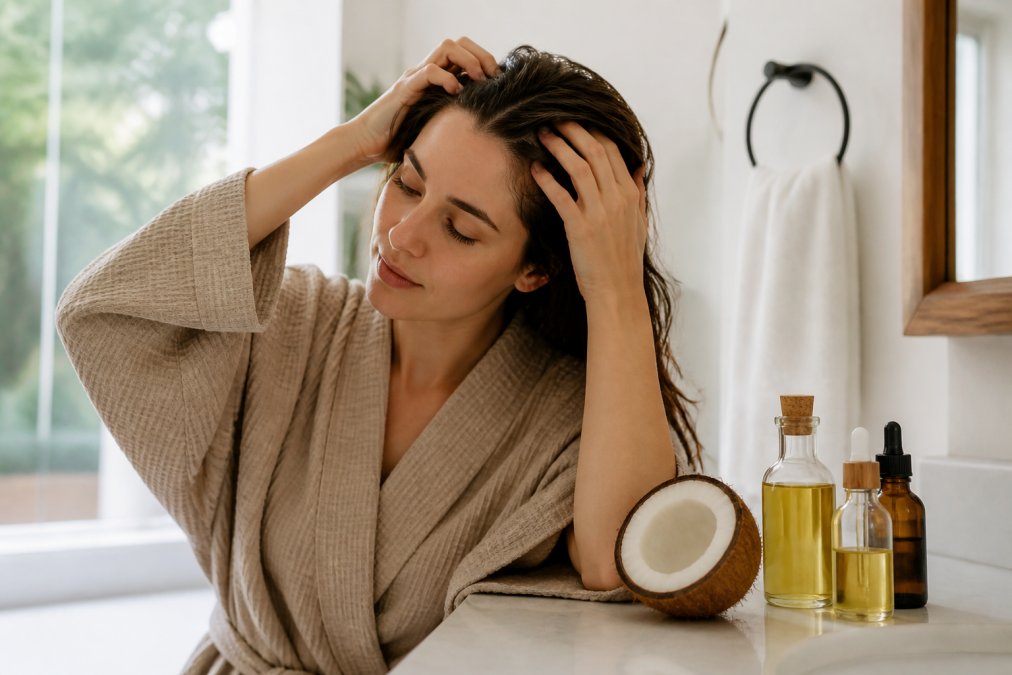
    Woman applying soothing coconut oil to her dry itchy scalp in a calm bathroom setting
    Woman applying soothing coconut oil to her dry itchy scalp in a calm bathroom setting

    Options many people find helpful:

    • Coconut oil for deep moisture before washing
    • Jojoba oil because it closely matches scalp oils
    • Aloe vera to cool irritation
    • Colloidal oatmeal to calm itching
    • Tea tree oil diluted, for its soothing properties
    • Apple cider vinegar rinse to help reset pH

    Step-by-Step Application: Oils, Rinses, and Compresses

    1. Patch-test a small area behind your ear 24 hours ahead.
    2. Warm a small amount of oil in your palms.
    3. Massage it into the scalp with fingertips, not nails, for 3 to 5 minutes.
    4. Rest for 20 to 30 minutes, or overnight with a towel on your pillow.
    5. Rinse with lukewarm water, then wash gently.
    6. Repeat once or twice a week.

    A scalp massage also boosts blood flow to the follicle, which supports healthier-looking hair over time.

    Pro Tip
    Rinse with cool water at the end of your shower. It helps seal the scalp barrier and calms itch almost immediately.

    Dandruff vs Dry Scalp Symptoms: Spotting the Difference

    Dandruff vs dry scalp symptoms differ in one key way: dandruff flakes are larger, greasier, and often yellowish. Dry scalp flakes are small, white, and dry.

    When to See a Dermatologist for Scalp Itch

    See a dermatologist for scalp itch if it lasts more than a few weeks, spreads, or comes with redness, sores, or hair loss. Persistent symptoms can point to conditions like seborrheic dermatitis, which need a proper diagnosis.

    Watch for these red flags:

    • Itching that disrupts your sleep
    • Open sores or crusting
    • Sudden or patchy hair loss
    • Flaking that spreads to eyebrows or beard
    • No improvement after several weeks of home care

    How to Choose the Right Shampoo and Build a Home Routine

    Choose a gentle, non-medicated shampoo with a mild surfactant and no added fragrance. For a dry itchy scalp, mild beats strong almost every time. But “mild” is a marketing word, not a regulated one, so you have to read the label yourself.

    What to Look For on the Ingredient List

    Surfactants are the cleansing agents that lift oil and dirt. They range from harsh to gentle, and the difference matters more than any botanical on the back of the bottle.

    • Harsher surfactants to limit: sodium lauryl sulfate (SLS), ammonium lauryl sulfate (ALS), and sodium C14-16 olefin sulfonate. These clean aggressively and can strip the scalp barrier.
    • Gentler surfactants to favor: sodium cocoyl isethionate, cocamidopropyl betaine, sodium methyl cocoyl taurate, and glucosides (decyl glucoside, coco-glucoside). These lift residue without leaving skin tight.
    • Moisturizers that actually stay: glycerin, panthenol (provitamin B5), hyaluronic acid, and ceramides. Glycerin is a humectant, it pulls water into the skin. Ceramides help rebuild the barrier itself.
    • Soothers: colloidal oatmeal, allantoin, bisabolol, and niacinamide.
    • Fragrance and essential oils: even “natural” ones like lavender, citrus, and peppermint can trigger contact irritation on a compromised scalp. If your scalp is actively itchy, go fragrance-free until it calms.

    Why pH Matters More Than You Think

    A healthy scalp sits at a slightly acidic pH, commonly cited as around 4.5 to 5.5. That acidity keeps the barrier intact and discourages the overgrowth of irritants. Many traditional bar soaps and older “deep clean” formulas sit closer to neutral or alkaline, which can push the scalp out of range and leave it feeling tight and reactive.

    Match the Shampoo to What You Actually Have

    • True dryness (tight, powdery flakes): a hydrating, sulfate-free or low-sulfate shampoo with glycerin or panthenol. Wash two to three times a week.
    • Product buildup (waxy, coated feel): a clarifying shampoo used no more than once every one to two weeks, followed by a moisturizing wash. Over-clarifying will make dryness worse.
    • Dandruff or seborrheic dermatitis (greasy, yellowish flakes): a medicated shampoo with zinc pyrithione, ketoconazole, salicylic acid, or selenium sulfide. These are treatments, not moisturizers, use them on the schedule on the label, not daily unless directed.
    • Sensitive or reactive scalp: fragrance-free, dye-free, and short ingredient lists. Fewer ingredients means fewer chances for a reaction.

    Build a Simple Routine

    • Wash two to three times a week, not daily. If you exercise heavily or use styling products, a gentle co-wash or water-only rinse between washes can bridge the gap.
    • Use lukewarm water, never hot. Hot water dissolves the lipids that hold moisture in.
    • Massage the shampoo in with fingertips, not nails, for at least 30 seconds.
    • Rinse longer than feels necessary, residue is a common hidden irritant.
    • Follow with a light scalp moisturizer, serum, or oil. Conditioner belongs on the mid-lengths and ends, not the scalp, unless it is labeled as a scalp product.

    Common Hair-Washing Mistakes That Make Itching Worse

    • Scratching with fingernails instead of massaging
    • Piling hair on top of your head and tangling it
    • Skipping the final rinse and leaving residue
    • Using very hot water because it feels soothing
    • Applying conditioner directly to the scalp
    • Switching shampoos every week before any one of them has had a chance to work
    Pro Tip
    If you are unsure whether your shampoo is the problem, wash with it for two weeks and change nothing else. If the itch tracks with the wash days, the formula is a likely culprit.
    Watch Out
    Scratching feels good for about ten seconds and then makes itching worse. It breaks the scalp barrier and can lead to infection. If you must touch it, massage, don’t scratch.

    Product Buildup vs. True Dryness: A Quick Self-Check

    Before you buy anything, figure out which problem you actually have, the fixes are opposite.

    Sign True Dryness Product Buildup
    Flakes Fine, white, powdery Waxy, yellowish, clumpy
    Scalp feel Tight, dry Oily or coated
    Hair near root Dry, dull Limp, heavy
    Response to washing Worse with frequent washing Better after a clarifying rinse

    Prevention: Daily Habits for Long-Term Scalp Health

    Prevention comes down to consistency, not intensity. Small daily habits keep your scalp hydrated and calm. But the habits that matter most are the ones tied to your environment, and most guides skip that entirely.

    Seasonal and Environmental Triggers

    Your scalp responds to the air around it. Two people with identical routines can have completely different scalps in January versus July.

    • Winter and indoor heating: cold outdoor air holds little moisture, and forced-air heating drops indoor humidity further. The result is faster transepidermal water loss and a tighter, itchier scalp. Running a humidifier and cutting shower temperature are the two highest-yield fixes.
    • Summer and sweat: heat and sweat can trap residue and irritate the scalp, especially under hats or helmets. Rinsing after heavy sweating helps more than adding more product.
    • Hard water: water high in calcium and magnesium leaves mineral film on the scalp and hair. That film can feel like buildup, interfere with shampoo lather, and leave skin feeling tight even after a good wash. If your scalp improved on vacation and flared when you got home, hard water is a strong suspect. A showerhead filter or a final rinse with distilled or filtered water can help.
    • Dry, windy climates: wind accelerates moisture loss from exposed skin. A light scalp oil or serum before going outside can act as a partial barrier.

    Daily Habits That Actually Move the Needle

    • Drink enough water to support scalp hydration. There is no magic number, but pale-yellow urine is a reasonable everyday gauge.
    • Eat foods rich in healthy fats and omega-3s, fatty fish, walnuts, flaxseed, and olive oil. The scalp barrier is built from lipids, and diet supplies the raw material.
    • Manage stress, which drives inflammation. Even short daily practices, a walk, breathing exercises, or a scalp massage, can lower the baseline.
    • Use a humidifier in dry months, and aim for indoor humidity in the 30-50% range.
    • Limit heat styling near the scalp. Direct heat on the skin is a common and under-recognized irritant.
    • Wear loose hats that let skin breathe, and wash them regularly, a dirty hat band is a repeat offender.
    • Change your pillowcase every few days if you use oils or leave-in scalp products overnight.

    Protect the Barrier, Don’t Over-Clean It

    Key Takeaway
    Long-term scalp health is a routine, not a rescue. The people who stop itching are the ones who stay consistent, and who adjust for the season, the water, and the air around them.

    For stubborn cases, a professional scalp analysis can identify buildup, dryness, and pH imbalance that home care can’t reach. At Camellia Scalp and Skin Lounge, our Japanese-inspired head spa rituals combine deep cleansing, exfoliation, and relaxing scalp massage to support comfort and healthier-looking hair.

    Frequently Asked Questions

    What vitamin deficiency causes an itchy scalp?

    Low levels of vitamin D, B vitamins (especially B7 biotin), zinc, and iron have been linked to dry, itchy scalp. However, deficiency is not the most common cause. A doctor can order blood work to check your levels. Do not start high-dose supplements without testing first, because some vitamins can build up to unsafe levels. If a deficiency is found, a healthcare provider will recommend the right dose and form. In many cases, dryness comes from external factors like harsh shampoos or cold weather rather than a missing nutrient.

    Is my itchy scalp caused by dryness or a medical condition?

    Dry scalp usually produces small, white flakes and feels tight or itchy, often worse in winter. Dandruff flakes are larger, yellowish, and greasy, and they come with a different itch pattern. Seborrheic dermatitis causes red, inflamed patches with stubborn scaling. Psoriasis shows thick, silvery scales. If you see redness, swelling, crusting, or open sores, or if the itch does not improve after two to three weeks of gentle home care, see a dermatologist. They can examine your scalp and tell you exactly what you are dealing with.

    How do I rehydrate my scalp without making my hair greasy?

    Apply lightweight oils like jojoba or squalane to your scalp 30 minutes before washing, then rinse thoroughly. Use a non-medicated, sulfate-free shampoo and focus conditioner on your ends, not your roots. Turn down the water temperature to lukewarm, because hot water strips oils. Add a weekly scalp mask with colloidal oatmeal or aloe vera. A humidifier in your bedroom helps if the air is dry. Pat your scalp dry instead of rubbing. These steps boost scalp hydration without leaving a heavy residue on your strands.

    Can a head spa treatment help with a dry itchy scalp?

    A professional head spa treatment can remove product buildup, calm irritation, and support moisture through exfoliation, gentle cleansing, and massage. It is not a medical cure, but it supports scalp health and can reduce itch from dryness and buildup. Look for a provider that offers scalp analysis and customized care. At Camellia Scalp and Skin Lounge, licensed professionals assess your scalp and tailor each session. If your itch is from a medical condition, a head spa complements but does not replace dermatologist care. Book a consultation to see if it fits your needs.


    A dry itchy scalp rarely resolves with one product. It takes the right diagnosis, gentle habits, and patience. If home care isn’t enough, Camellia Scalp and Skin Lounge offers personalized scalp treatments, including scalp analysis, deep cleansing, and HydraFacial Keravive for hair and scalp wellness. Pricing is transparent and available on our website, with same-day options when schedules allow. Get started with Camellia Scalp and Skin Lounge and give your scalp the care it’s been asking for.

  • Head Spa Near Me: What to Expect From a Session

    Head Spa Near Me: What to Expect From a Session

    Table of Contents

    Last Updated: September 24, 2026

    What a Head Spa Near Me Actually Is

    A head spa is a dedicated scalp and hair treatment that cleanses, exfoliates, and massages the scalp using warm water, targeted products, and gentle stimulation techniques. Unlike a standard shampoo at a salon, a head spa session focuses on the skin where hair grows, not just the strands themselves.

    This guide from Camellia Scalp and Skin Lounge breaks down what actually happens during a session, how long it takes, who should avoid it, and how to pick the right provider.

    Most people treat scalp problems with a new shampoo and hope for the best. That approach misses the root cause.

    Japanese Head Spa Benefits: Scalp Detox and Follicle Stimulation

    Japanese head spa benefits center on three measurable outcomes: a cleaner scalp surface, improved blood flow to the follicle, and a measurable drop in tension held in the scalp, neck, and shoulders. The treatment combines water therapy, manual massage, and gentle exfoliation to remove what regular washing leaves behind, but the interesting part is why each step matters.

    Scalp Analysis and Sebum Control

    A quality session starts with a scalp analysis. A trained professional uses a magnified camera, often a trichoscope or a digital scalp scope, to check for dryness, oiliness, flaking, and product buildup. This step determines which products and techniques get used.

    Circulation, Stress Relief, and Deep Relaxation

    Manual massage does more than feel good. The scalp sits directly on top of a dense network of blood vessels, and the hair follicle is one of the most metabolically active structures in the body, it needs steady blood flow to receive oxygen and nutrients. Sustained, rhythmic pressure from a trained practitioner is one of the few ways to influence that flow from the outside.

    Pro Tip
    Ask for a scalp analysis before your first treatment, even if it costs extra. Knowing whether your scalp is oily, dry, or combination prevents you from paying for the wrong service, and it gives you a baseline to compare against at your next visit.
    Key Takeaway
    A head spa is not a hair-growth treatment. It is a scalp-health treatment. The benefits that hold up are cleaner follicles, better circulation to the tissue around the follicle, and real relaxation. Anyone promising regrowth from a scalp massage alone is overselling.

    Head Spa Treatment Duration and What Happens in Each Phase

    Head spa treatments vary in duration depending on the service level and add-ons. A basic session typically covers cleansing and massage, while extended sessions may include additional steps like scalp exfoliation and aromatherapy.

    Stylist performing a relaxing scalp massage during a Japanese head spa treatment under warm water
    Stylist performing a relaxing scalp massage during a Japanese head spa treatment under warm water

    Here’s how a typical session breaks down:

    Phase Duration What Happens
    Consultation and analysis 10-15 min Scalp check, product selection
    Cleansing and exfoliation 15-20 min Warm water rinse, gentle scrub
    Massage and treatment 20-30 min Pressure point work, serum application
    Steam and rinse 10-15 min Water therapy, final cleanse
    Finishing 5-10 min Blow dry, styling, aftercare advice

    Water Therapy and Aromatherapy Massage

    Water therapy uses a continuous flow of warm water across the scalp to loosen buildup and improve circulation. The temperature stays controlled, which prevents the shock of a cold rinse.

    How to Prepare for a Head Spa Appointment

    Preparing for a head spa appointment takes about five minutes of planning. Arrive with dry, unwashed hair so your provider can assess your scalp in its natural state.

    A few practical steps make the session smoother:

    • Skip heavy styling products for 24 hours before your visit. Buildup masks the real condition of your scalp.
    • Eat something light beforehand. Sessions run long, and lying still on an empty stomach gets uncomfortable.
    • Bring a hair tie or clip if you have long hair. It makes the transition between phases easier.
    • List any scalp concerns you want addressed, including itching, flaking, or thinning.
    • Avoid caffeine right before your appointment if you want to fully relax.

    Contraindications and Safety: Who Should Skip a Head Spa

    A head spa isn’t right for everyone, and the honest version of this section is more useful than the version most providers publish. The key distinction is between conditions that mean wait, conditions that mean modify the service, and conditions that mean skip it entirely.

    When to Wait

    These are temporary. Reschedule once the skin has healed.

    • Active scalp infections, fungal, bacterial, or viral. Massage and warm water can spread the infection and irritate the surrounding skin.
    • Open wounds, cuts, or scratches on the scalp. Even minor ones. Warm water and product will sting and slow healing.
    • Recent chemical burns from bleach, relaxers, or a bad color service. The barrier is compromised and needs time to rebuild.
    • Sunburn on the scalp or hairline. Same logic, the skin is inflamed and any friction makes it worse.
    • Recent head, neck, or hair transplant surgery. Follow your surgeon’s clearance timeline, not the spa’s.

    When to Modify the Service

    These don’t rule out a session, but they change how it should be performed. Tell your provider before you book.

    • Pregnancy. Some essential oils, rosemary, sage, and clary sage among them, are commonly avoided during pregnancy. A trained provider can swap to pregnancy-safe options and adjust pressure and positioning. This is a reason to communicate, not a reason to skip.
    • Sensitive or reactive skin. Skip exfoliating scrubs and high-concentration essential oils. Ask for a fragrance-free or low-fragrance protocol.
    • Essential oil or fragrance allergies. Bring the specific list. “Natural” does not mean “safe” for someone with a known sensitivity.
    • Scalp psoriasis or seborrheic dermatitis. A gentle session can help loosen scale, but aggressive exfoliation can trigger a flare. Ask the provider to work around active patches.
    • Recent chemical treatments, perms, relaxers, keratin. Wait at least a week so the treatment doesn’t strip or react with the service.

    When to Skip It

    These need a medical opinion first, not a spa booking.

    • A diagnosed skin condition affecting the scalp that is currently active or being treated.
    • Severe allergies with a history of anaphylaxis to any ingredient in a spa product line.
    • Unexplained hair loss, sudden shedding, or patchy bald spots. These are symptoms, not cosmetic problems. See a dermatologist before booking a scalp treatment, a spa visit can mask the timeline and delay a diagnosis.
    • Active outbreak of any kind on the scalp, face, or neck.

    Why This Section Matters

    Licensed professionals are trained to spot contraindications during the consultation, and a reputable provider will ask about health history before the first drop of water hits your scalp. Be honest. Hiding a condition to avoid rescheduling puts you at risk and makes the provider’s job harder.

    Watch Out
    If you are experiencing sudden or unexplained hair loss, do not book a head spa as a first step. See a dermatologist. A scalp treatment can feel soothing and still delay a diagnosis that matters.

    American Academy of Dermatology scalp care guidance

    Aftercare: Keeping Your Scalp Healthy Between Visits

    Aftercare decides how long your results last. The scalp continues to produce oil and shed dead skin, so maintenance between visits keeps things balanced.

    A simple routine keeps your scalp in good shape:

    • Wash with lukewarm water, not hot
    • Avoid scratching or picking at the scalp
    • Use a scalp brush gently during washing
    • Limit dry shampoo to once or twice a week
    • Book your next session before problems return
    Watch Out
    Don’t apply heavy oils or leave-in treatments right after a session. They undo the deep clean and can clog follicles within days. Wait at least 48 hours before reintroducing styling products.

    How to Choose a Head Spa Near Me and Book With Confidence

    Choosing a head spa near me comes down to four checks: licensing, transparency, consultation process, and hygiene. Ask about all four before you book.

    American Academy of Dermatology scalp care guidance

    Frequently Asked Questions

    How much do head spas usually cost?

    Pricing depends on the provider, treatment length, and add-ons like scalp analysis or aromatherapy massage. A head spa near me may charge more in a luxury lounge than a walk-in salon, so ask for the full menu before booking. Camellia Scalp and Skin Lounge publishes transparent pricing on its website, so you can see exact costs before you commit. Compare what each session includes, not just the base rate, since a longer ritual with scalp detox and consultation often delivers more value.

    Is going to a head spa worth it?

    For many people, yes. A professional head spa treatment goes beyond a salon shampoo by combining scalp analysis, exfoliation, follicle stimulation, and deep relaxation. If you deal with buildup, flaking, or tension, the focused scalp health work can be more effective than drugstore products alone. Results vary by person and condition, so think of it as ongoing scalp care rather than a one-time fix. Booking a consultation first helps you decide if the investment matches your goals.

    What does a head spa typically include?

    Most sessions include a consultation, scalp analysis, cleansing, exfoliation, a scalp massage, and hydration. Many providers add water therapy, aromatherapy massage, and a brief shoulder or neck massage. The exact menu varies, so ask what is included before you book. At Camellia Scalp and Skin Lounge, the ritual is customized based on your scalp condition, which means the esthetician may adjust steps after reviewing your scalp.

    How often should you get a professional scalp treatment?

    Frequency depends on your scalp condition, hair type, and goals. Some individuals find monthly visits beneficial for maintaining scalp health and managing buildup, while others may prefer a different schedule as part of their hair care routine. If you are addressing specific concerns like flaking or product buildup, a provider may suggest a particular frequency initially, which can then be adjusted. It’s best to ask your esthetician for a schedule based on your individual scalp analysis rather than following a generic rule.


    Scalp issues rarely fix themselves with a new product alone. They need consistent, professional care and a routine that supports what happens in the treatment room.

    At Camellia Scalp and Skin Lounge, we build that routine around your scalp, not a generic menu. Our scalp analysis, customized treatment plans, and transparent pricing make it easy to know what you’re getting before you book. Get started with Camellia Scalp and Skin Lounge and give your scalp the consistent care it needs.

  • Head Spa vs Regular Scalp Massage: Key Differences

    Head Spa vs Regular Scalp Massage: Key Differences

    Table of Contents

    Last Updated: October 3, 2026

    Head Spa vs Regular Scalp Massage: What Sets Them Apart

    When comparing head spa vs regular scalp massage, a head spa is a multi-step, technology-assisted treatment designed to deeply cleanse and rejuvenate your scalp, while a regular scalp massage at a salon is typically a 10-20 minute add-on focused on relaxation and basic circulation. These aren’t the same thing. (Source: a 2026 report on the beauty and personal care market)

    A professional head spa addresses scalp buildup, product residue, and follicle health in ways a standard massage cannot reach. This guide breaks down what separates these treatments and helps you choose the right solution for your scalp concerns.

    What Is a Deep Cleansing Head Spa Treatment

    A deep cleansing head spa combines exfoliation, extraction, massage, and hydration in a structured protocol to target sebum buildup, dead skin cells, and product residue that accumulate on your scalp.

    The Multi-Step Process

    A typical head spa session begins with scalp analysis, often using micro-camera technology to assess your condition and guide the treatment.

    Exfoliation removes dead skin cells and loosens buildup. Then comes extraction and deep cleansing using micro-bubble technology or specialized tools to lift impurities, work a manual massage cannot accomplish.

    Massage therapy follows, improving blood circulation and relieving tension, followed by hydration treatments. The entire process takes 60-90 minutes.

    Technology and Techniques

    Professional head spas use micro-bubble technology to extract buildup more effectively than manual pressure, and specialized scalp analysis cameras to customize treatment and track improvements.

    Japanese head spa techniques emphasize specific pressure points and kneading motions that target physical tension, lymphatic drainage, and stress relief.

    How Long Is a Professional Head Spa Treatment

    A professional head spa treatment typically lasts 60-90 minutes, allowing time for each phase without rushing.

    Some facilities offer 30-minute express sessions, but the full 60-90 minute experience delivers real results in scalp health and hair vitality, unlike regular salon massages that run 10-20 minutes.

    Cost and Value Breakdown

    Professional head spa pricing varies.

    Measurable improvements in scalp health, hair texture, and reduced flaking can emerge after consistent treatments.

    Over-the-counter treatments (medicated shampoos, serums, conditioners) often fail to resolve persistent scalp issues because they cannot address the root cause, buildup and impurities that a head spa targets.

    What to Look for in a Provider

    Not all head spa facilities are equal. A legitimate professional head spa provider should:

    Conduct a thorough scalp analysis. If a facility skips this step, they’re not offering a true head spa. Micro-camera technology is ideal, but trained visual assessment is acceptable.

    Use specialized equipment. Ask about extraction and cleansing technology. Micro-bubble systems, ultrasonic tools, or specialized extraction devices indicate a professional setup.

    Employ licensed professionals. Verify that technicians are licensed estheticians, cosmetologists, or massage therapists with specific head spa training.

    Customize treatments. A quality provider asks about your scalp condition, recent treatments, sensitivities, and goals.

    Use quality products. Ask what brands and product types they use during treatment. Professional-grade scalp treatments typically use pH-balanced, hypoallergenic formulations.

    Provide realistic expectations. Avoid providers who promise permanent solutions or dramatic results after one session. Honest practitioners explain that scalp health improvements are cumulative and require consistency.

    Frequency and Long-Term Investment

    For optimal results, consistent head spa treatments are often recommended. This schedule allows your scalp to stabilize and maintain improved health without over-treating.

    If you’re investing in regular treatments, consider the long-term commitment. This is comparable to high-end haircare routines or dermatology treatments for other skin concerns. The question becomes: is scalp health worth this investment to you? For those with persistent scalp issues, significant hair concerns, or high stress levels, the answer is often yes. For those with naturally healthy scalps seeking occasional relaxation, quarterly treatments or a regular scalp massage may suffice.

    Benefits of Japanese Head Spa Treatments

    Japanese head spa treatments deliver benefits that extend beyond simple relaxation.

    Professional therapist performing a relaxing head spa vs regular scalp massage technique in a serene setting.
    Professional therapist performing a relaxing head spa vs regular scalp massage technique in a serene setting.

    One of the most immediate benefits is the removal of sebum buildup and product residue.

    Hair health improves noticeably. When your scalp is deeply cleansed and blood circulation increases, hair follicles receive better oxygen and nutrient delivery.

    Book Now →

    Stress relief is another significant benefit. The scalp contains numerous nerve endings and tension points.

    Scalp pH balance is restored through hydration and specialized products used during the treatment. A balanced scalp microbiome means fewer flakes, less irritation, and healthier conditions for hair growth.

    Regular Scalp Massage: What to Expect

    A regular scalp massage at a salon is straightforward: your stylist applies pressure to your scalp using their hands, usually while you’re at the shampoo bowl. The focus is on relaxation and improving circulation through kneading motions.

    A typical salon scalp massage lasts 10-20 minutes. It feels good in the moment and does improve blood flow temporarily. However, it doesn’t address product buildup, doesn’t include exfoliation, and doesn’t use diagnostic tools to identify specific scalp issues.

    The massage itself uses manual pressure and kneading techniques. Without specialized equipment or a multi-step protocol, a regular massage cannot extract the deeper impurities that accumulate on your scalp.

    Head Spa vs Scalp Massage: Direct Comparison

    Aspect Head Spa Regular Scalp Massage
    Duration 60-90 minutes 10-20 minutes
    Scalp Analysis Yes, often with micro-camera No
    Exfoliation Yes, specialized No
    Deep Cleansing Yes, using technology and extraction Manual pressure only
    Buildup Removal Targets sebum, product residue Minimal impact
    Massage Techniques Structured, pressure-point focused Basic kneading
    Blood Circulation Improved significantly Temporary improvement
    Hydration/Conditioning Yes, with specialized products Typically not included
    Scalp Health Outcomes Measurable improvements in 4-6 weeks Short-term relaxation
    Best For Addressing scalp issues, hair health Quick relaxation add-on

    Scalp Analysis and Customization

    This is where head spas separate themselves most clearly. A professional head spa begins with scalp analysis, often using micro-camera technology to magnify your scalp and identify specific issues: flaking, inflammation, sebum levels, follicle health, and product buildup patterns.

    This analysis informs the entire treatment. Your technician adjusts pressure, product selection, and technique based on what they see. Someone with inflamed, sensitive skin receives a gentler approach. Someone with heavy product buildup gets more intensive extraction.

    A regular scalp massage has no diagnostic component. Your stylist applies the same technique to everyone, regardless of individual scalp condition.

    Results and Long-Term Scalp Health

    Regular head spa treatments produce cumulative, measurable results. After consistent treatments, many clients report significantly reduced flaking, less itching, improved hair texture, and better hair density. Your scalp feels healthier because it actually is healthier, the microbiome is balanced, circulation is improved, and impurities are regularly removed.

    A single scalp massage feels relaxing but produces no lasting change in scalp health. You might feel tension relief for a few hours, but your scalp’s underlying condition remains unchanged. For long-term scalp wellness, consistency matters. Monthly head spa treatments maintain scalp health in ways occasional salon massages cannot.

    Who Should Choose a Professional Head Spa

    A professional head spa is ideal for anyone experiencing scalp issues that haven’t resolved with over-the-counter products.

    People dealing with product-heavy styling routines benefit significantly. If you use dry shampoo, texturizing sprays, or frequent heat styling, buildup accumulates faster than normal washing removes it. A head spa extracts what regular shampoos miss.

    Those concerned with hair thinning or loss should consider professional head spa treatments. Improved scalp health, blood circulation, and follicle cleansing support hair growth stimulation.

    Stress-focused individuals seeking deep relaxation find value in the therapeutic benefits.

    Who Should Avoid or Postpone a Head Spa

    While head spas are generally safe, certain conditions warrant caution or postponement.

    Recent chemical treatments require timing consideration. If you’ve had a chemical relaxer, permanent wave, or color treatment within the past 7-10 days, your scalp may be sensitized.

    Open wounds, severe sunburn, or active dermatitis on the scalp should heal first. The massage pressure and extraction techniques could aggravate these conditions.

    Pregnant individuals can typically receive head spas, but some practitioners recommend avoiding them during the first trimester as a precaution.

    Hair Type and Scalp Condition Suitability

    Head spas work well across most hair types, but customization matters. Those with fine or thinning hair benefit from gentler extraction and lighter pressure to avoid unnecessary stress on fragile follicles.

    Oily scalps respond excellently to head spa treatments because extraction directly addresses excess sebum production. Dry scalps also benefit, though the focus shifts toward hydration and barrier restoration rather than aggressive extraction.

    Anyone new to scalp treatments can start with a head spa. It’s designed for all scalp types and conditions. At your first appointment, communicate any scalp sensitivities, recent treatments, or medical conditions to your technician so they can customize the experience to your needs.

    Frequently Asked Questions

    What is the main difference between a head spa and a regular scalp massage?

    A head spa is a comprehensive treatment combining deep cleansing, scalp analysis, exfoliation, and extended massage therapy, typically lasting 60-90 minutes. A regular scalp massage is a shorter add-on service at salons, usually 10-20 minutes, focused on relaxation without specialized cleansing or analysis. Head spas use advanced techniques to address buildup, follicle health, and scalp microbiome, while regular massages provide basic relaxation and blood circulation stimulation.

    Can a professional head spa treatment help with dry, flaky, or oily scalp issues?

    Yes. Professional head spa treatments address scalp health through deep cleansing that removes product residue, sebum buildup, and impurities. The scalp analysis component identifies your specific condition, whether dryness, flaking, or excess oil, and treatments are customized accordingly. Exfoliation removes dead skin cells, while hydration and massage improve scalp pH balance and microcirculation, creating conditions for healthier hair growth and reduced inflammation.

    How often should I get a professional head spa treatment?

    Consistent head spa sessions are often recommended for optimal scalp health maintenance. If you have specific concerns like product buildup, dandruff, or hair thinning, your first treatment should be followed by a consultation on frequency. Factors like your scalp condition, stress levels, and hair care routine affect how often you’ll benefit. Regular treatments support long-term scalp wellness better than occasional visits.

    Is a head spa treatment worth the cost compared to a regular salon scalp massage?

    The value depends on your scalp concerns and wellness goals. Head spas deliver deeper cleansing, professional assessment, and longer-term scalp health improvements, addressing issues like product buildup, inflammation, and hair density that a basic salon massage cannot. If you have persistent scalp issues or prioritize scalp health, the investment in a professional head spa typically yields better results. For occasional relaxation alone, a scalp massage may suffice.

  • Deep Pore Facial: Benefits, Process & Aftercare

    Deep Pore Facial: Benefits, Process & Aftercare

    Table of Contents

    Last Updated: September 26, 2026

    What Is a Deep Pore Facial?

    A deep pore facial is a professional skincare treatment that combines exfoliation, manual extraction, and hydration to remove built-up impurities, dead skin cells, and excess sebum from deep within the pores.

    How Long Does a Deep Pore Facial Take?

    A typical deep pore facial lasts 60-90 minutes, depending on skin condition, congestion level, extractions needed, and sensitivity. Adequate time ensures thorough results without irritation.

    Benefits of Deep Pore Cleansing for Your Skin

    Deep pore cleansing delivers a cleaner, clearer complexion with reduced breakouts and congestion.

    Clearing Blackheads and Whiteheads

    Manual extraction removes blackheads and whiteheads that topical treatments cannot address. Professional extraction is safer than at-home picking, which causes scarring and infection. An esthetician uses proper techniques and sterilized tools to remove impurities without damage, leaving pores smaller and complexion clearer.

    Pro Tip
    The key to lasting results is consistent post-treatment skincare. Using a gentle cleanser and non-comedogenic moisturizer prevents new blackheads and whiteheads from forming as quickly.

    Improving Skin Texture and Tone

    Exfoliation removes dead skin cells, revealing fresher, smoother skin. Regular deep pore facials smooth uneven patches, reduce pore appearance, even skin tone, and enhance radiance. Results are visible immediately and improve with consistency.

    Who Benefits Most From Deep Pore Facials?

    Deep pore facials work best for specific skin types. Understanding whether this treatment suits your skin is essential before booking.

    Best candidates include:

    • People with oily skin prone to congestion
    • Those dealing with acne-prone skin and breakouts
    • Anyone with visible blackheads or whiteheads
    • Individuals with dull, uneven skin tone
    • People preparing for important events who want radiant skin
    • Those seeking rejuvenation and improved complexion clarity

    Avoid deep pore facials if you have:

    • Active, severe cystic acne requiring dermatology care
    • Rosacea or conditions that worsen with extraction
    • Recent chemical peels or laser treatments (wait 1-2 weeks minimum)
    • Very sensitive skin or active inflammation
    • Eczema, psoriasis, or other inflammatory skin conditions
    • Open wounds, active cold sores, or skin infections

    Medical contraindications, consult your dermatologist before booking:

    • Accutane (isotretinoin) use or recent discontinuation: Skin is extremely fragile during and for 6-12 months after Accutane therapy. Manual extraction can cause severe scarring and prolonged healing.
    • Oral retinoids (tretinoin, adapalene): These medications thin the skin and increase sensitivity. Extraction during retinoid use increases bruising, irritation, and post-inflammatory hyperpigmentation.
    • Topical retinoids (Retin-A, retinol): Pause use 3-5 days before your facial and resume 3-5 days after to minimize irritation.
    • Immunosuppressant medications: Conditions like lupus or medications that suppress immune function slow healing and increase infection risk.
    • Blood thinners (warfarin, aspirin, NSAIDs): These increase bruising and bleeding during extraction. Discuss timing with your physician.
    • Photosensitizing medications: Certain antibiotics (doxycycline, tetracycline) and other drugs increase sun sensitivity post-facial (Checking your browser).
    • Uncontrolled diabetes: High blood sugar impairs wound healing and increases infection risk after extraction.

    Skin conditions requiring professional assessment:

    • Hormonal acne: Deep pore facials help temporarily, but hormonal acne requires dermatology treatment for lasting results.
    • Fungal acne (Malassezia folliculitis): Manual extraction can spread fungal infection. A dermatologist must confirm the diagnosis first.
    • Perioral dermatitis: Extraction can trigger flare-ups; dermatology consultation is necessary.
    Watch Out
    If you take any prescription medications, use prescription-strength skincare, or have a diagnosed skin condition, inform your esthetician and consult your dermatologist before booking. Some combinations of treatments and medications make deep pore facials unsafe.
    Key Takeaway
    The best candidate for a deep pore facial is someone with oily or acne-prone skin, no active inflammation or infections, no recent prescription retinoid use, and no medical contraindications. When in doubt, a brief dermatology consultation ensures safety and optimal results.

    The Professional Skin Extraction Process Explained

    Professional skin extraction is a carefully controlled process that differs significantly from at-home attempts. A trained esthetician uses proper technique, sterilized tools, and appropriate timing to safely remove impurities without causing damage.

    Esthetician performing a deep pore facial on a client in a serene, softly-lit spa treatment room
    Esthetician performing a deep pore facial on a client in a serene, softly-lit spa treatment room

    Preparation and Exfoliation

    Your esthetician cleanses your skin, then exfoliates using physical scrubs, chemical peels, or steam to soften skin and open pores. This preparation reduces irritation during extraction.

    Manual Extraction and Purifying

    Your esthetician carefully extracts blackheads and whiteheads using controlled pressure and sterilized tools, preventing scarring and infection. Purifying masks and serums then draw out remaining impurities and prepare skin for hydration.

    Watch Out
    Never attempt aggressive extractions at home. Improper technique causes scarring, infection, and can worsen acne. Professional extraction uses the right pressure, angle, and tools to safely remove impurities.

    Hydration and Protection

    Your esthetician applies hydrating serums, nourishing masks, and protective moisturizers to soothe skin, reduce inflammation, and strengthen your skin barrier against future congestion.

    Post-Facial Skincare Routine for Best Results

    Post-facial skincare determines how long results last. A proper routine extends benefits and prevents new congestion from forming.

    Long-term maintenance routine for acne-prone skin (weeks 4 onward):

    Book Now →

    Daily cleansing:

    • Morning: Gentle cleanser + hydrating toner + lightweight moisturizer + SPF 30+
    • Evening: Gentle cleanser + hydrating toner + lightweight moisturizer

    Weekly treatments (rotate or combine based on skin response):

    • 1-2x weekly: Gentle chemical exfoliant containing salicylic acid (BHA) at 0.5-2% concentration to keep pores clear
    • 1x weekly: Purifying clay or charcoal mask to draw out sebum and impurities
    • Optional: Niacinamide serum (4-5%) to regulate sebum production and strengthen skin barrier

    Active ingredients for acne-prone skin between facials:

    • Salicylic acid (BHA): Use 2-3x weekly at 0.5-2% to dissolve sebum inside pores and prevent blackheads. Start low and increase frequency as tolerated.
    • Azelaic acid: Use 1-2x weekly at 10-20% to reduce inflammation and prevent post-inflammatory hyperpigmentation from acne.
    • Niacinamide: Use daily at 4-5% to regulate sebum, strengthen barrier, and reduce pore appearance.
    • Retinoids (if not recently used before facial): Introduce after 1 week post-facial at low strength (0.025% retinol or equivalent) 2-3x weekly to increase cell turnover and prevent congestion.

    What NOT to do between facials:

    • Do not pick, squeeze, or manually extract at home, this causes scarring and infection
    • Do not use multiple active ingredients simultaneously (e.g., retinoid + BHA + vitamin C daily)
    • Do not over-exfoliate; this damages the skin barrier and increases sensitivity
    • Do not use heavy, occlusive moisturizers if you have oily, acne-prone skin
    • Do not skip SPF; sun exposure darkens post-inflammatory hyperpigmentation from acne
    Pro Tip
    Consistency matters more than complexity. A simple routine with the right products prevents congestion better than complicated multi-step routines with products that irritate your skin. Stick with one routine for at least 4-6 weeks before assessing results.

    Adjusting frequency based on results:

    • If your skin stays clear for 6-8 weeks, you can extend the interval between professional facials to every 8-10 weeks.
    • If congestion returns within 3-4 weeks, schedule facials every 4 weeks and increase at-home BHA use to 3-4x weekly.
    • If your skin becomes irritated or sensitive, reduce active ingredient frequency and focus on hydration and barrier repair.
    Key Takeaway
    The goal of post-facial skincare is to maintain pore clarity without over-treating. Use gentle daily cleansing, weekly exfoliation with BHA, and consistent hydration. This foundation prevents congestion from returning quickly and extends the results of your professional deep pore facial.

    How Often Should You Get a Deep Pore Facial?

    Frequency depends on your skin type, congestion level, and treatment goals. There’s no one-size-fits-all answer, but guidelines help you determine the right schedule.

    For oily, congestion-prone skin:

    • Start with monthly facials to establish clarity
    • Maintain with facials every 4-6 weeks once results are achieved
    • Some people benefit from every 2-3 weeks initially

    For combination or normal skin:

    • Every 6-8 weeks is typically sufficient
    • Adjust based on how quickly congestion returns
    • Seasonal changes may require more frequent treatments

    For sensitive skin:

    • Every 8-12 weeks to avoid over-treating
    • Monitor how your skin responds between treatments
    • Space out facials if irritation or sensitivity increases

    Is a Deep Pore Facial Right for You?

    Deciding whether to try a deep pore facial depends on your skin concerns, type, and goals. This treatment isn’t right for everyone, but it’s highly effective for the right candidate.

    Choose a deep pore facial if:

    • You struggle with blackheads, whiteheads, or visible congestion
    • Your skin feels rough or uneven in texture
    • You want to improve skin clarity and radiance
    • You have oily or acne-prone skin
    • You’re preparing for an event and want glowing skin
    • Topical treatments haven’t resolved your congestion

    Consider other options if:

    • You have active, severe acne requiring dermatology care
    • Your skin is extremely sensitive or reactive
    • You have rosacea, eczema, or similar conditions
    • You’ve had recent chemical peels or laser treatments
    • You’re uncomfortable with extraction procedures

    Aspect Details
    Treatment Duration 60-90 minutes
    Best For Oily, acne-prone, congested skin
    Recommended Frequency Monthly to every 6-8 weeks
    Immediate Results Clearer pores, smoother texture, radiant glow
    Recovery Time Minimal; avoid makeup for 24 hours
    Cost Pricing available on Camellia Scalp and Skin Lounge website

    Frequently Asked Questions

    What is a deep pore facial and how does it differ from a standard facial?

    A deep pore facial is a specialized treatment designed to thoroughly cleanse congested skin by removing impurities, sebum, blackheads, and whiteheads from pores. Unlike a standard facial that focuses on surface hydration and mild exfoliation, a deep pore facial combines manual extraction, enzyme peels, and steam to access buildup deep within pores. Professional estheticians use specialized techniques to purify the skin without causing unnecessary inflammation or damage to the skin barrier.

    How long does a deep pore facial take, and what should I expect during my appointment?

    A typical deep pore facial appointment lasts 60 to 90 minutes. The process begins with cleansing and exfoliation to prepare the skin, followed by steam to soften pores and loosen impurities. Your esthetician will then perform manual extractions on congested areas, apply purifying masks or enzyme peels, and finish with hydration and protection products. The exact timeline depends on your skin’s condition and the specific techniques your provider uses.

    What should my post-facial skincare routine include after a deep pore facial?

    Your post-facial skincare routine should prioritize hydration and gentle care for 24 to 48 hours after treatment. Use a fragrance-free cleanser, apply a hydrating serum or moisturizer to support your skin barrier, and wear SPF 30 or higher daily. Avoid active ingredients like retinol or vitamin C for at least 3 days, skip exfoliating products, and don’t pick at any minor redness or sensitivity. Keep your skin cool and avoid heat exposure, heavy sweating, and direct sunlight during the healing period.

    Are deep pore facials safe for acne-prone or sensitive skin?

    Deep pore facials can be beneficial for acne-prone skin when performed by a qualified professional, as they remove comedones and reduce bacterial buildup. However, if you have very sensitive skin or active severe acne, discuss this with your esthetician first. They can adjust the intensity of extractions and choose gentler techniques or medical-grade products suited to your skin type. Some skin conditions may require a dermatologist’s approval before treatment. Your provider should always assess your skin and discuss any contraindications before proceeding.