Table of Contents
- Quick Start: What Actually Works for a Dry Itchy Scalp
- Understand the Causes of Dry and Itchy Scalp
- Natural Remedies for Dry Scalp That Soothe Without Stripping
- Dandruff vs Dry Scalp Symptoms: Spotting the Difference
- When to See a Dermatologist for Scalp Itch
- How to Choose the Right Shampoo and Build a Home Routine
- Prevention: Daily Habits for Long-Term Scalp Health
- Frequently Asked Questions
Last Updated: September 25, 2026
Quick Start: What Actually Works for a Dry Itchy Scalp
You can fix a dry itchy scalp at home by reducing how often you strip it, adding moisture back, and calming inflammation. Most people see real relief within two to four weeks of consistent care. The catch: you have to treat the cause, not just the itch. (Source: the National Eczema Association’s guidance)
Dry scalp is a moisture and barrier problem, not a hygiene problem. Washing more often usually makes it worse, not better.
Understand the Causes of Dry and Itchy Scalp
Dry scalp happens when the skin on your head loses water faster than it can hold it. That triggers flaking, tightness, and the itch-scratch cycle. Several things drive it:
- Cold, dry air and indoor heating
- Hot showers and harsh sulfates
- Over-washing or under-rinsing
- Hard water minerals left on the skin
- Product buildup that traps irritants
- Stress, which raises inflammation
How the Scalp Barrier and Microbiome Affect Dryness
Your scalp has a protective barrier and a community of helpful microbes. When the barrier weakens, water escapes. This is called transepidermal water loss. When the microbiome shifts, irritation and flaking follow.
Product Buildup vs. True Dryness: How to Tell Them Apart
This is the part most guides get wrong. Buildup and dryness look similar but need opposite fixes.
| Sign | True Dryness | Product Buildup |
|---|---|---|
| Flakes | Fine, white, powdery | Waxy, yellowish, clumpy |
| Scalp feel | Tight, dry | Oily or coated |
| Hair near root | Dry, dull | Limp, heavy |
| Response to washing | Worse with frequent washing | Better after a clarifying rinse |
Natural Remedies for Dry Scalp That Soothe Without Stripping
Natural remedies for dry scalp work best when they add moisture and calm irritation without stripping oils. The goal is comfort, not a squeaky-clean feeling.
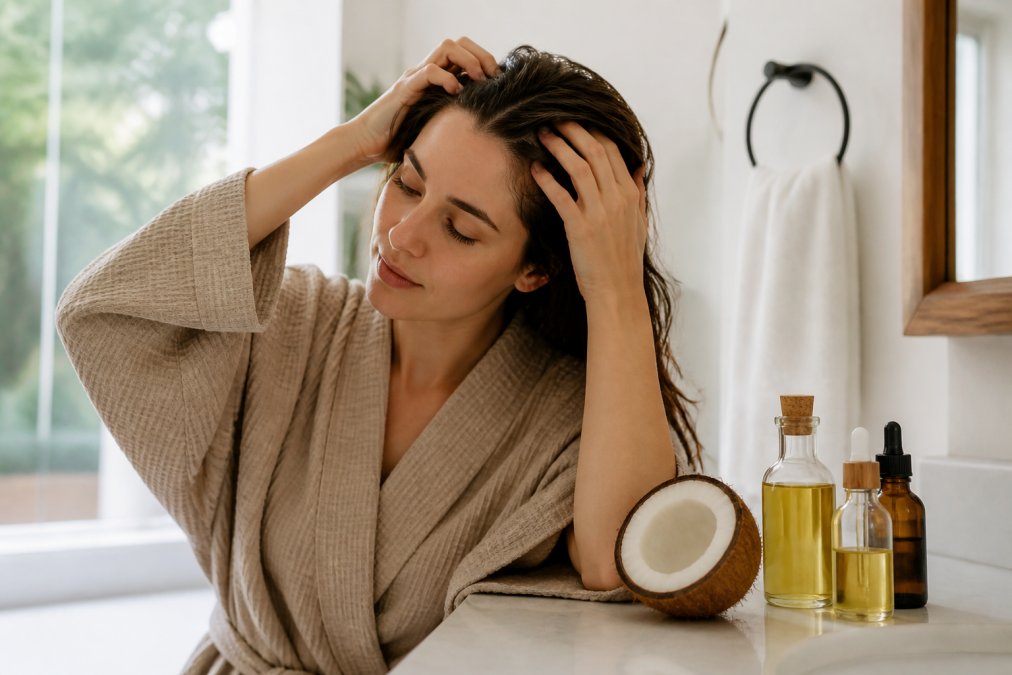
Options many people find helpful:
- Coconut oil for deep moisture before washing
- Jojoba oil because it closely matches scalp oils
- Aloe vera to cool irritation
- Colloidal oatmeal to calm itching
- Tea tree oil diluted, for its soothing properties
- Apple cider vinegar rinse to help reset pH
Step-by-Step Application: Oils, Rinses, and Compresses
- Patch-test a small area behind your ear 24 hours ahead.
- Warm a small amount of oil in your palms.
- Massage it into the scalp with fingertips, not nails, for 3 to 5 minutes.
- Rest for 20 to 30 minutes, or overnight with a towel on your pillow.
- Rinse with lukewarm water, then wash gently.
- Repeat once or twice a week.
A scalp massage also boosts blood flow to the follicle, which supports healthier-looking hair over time.
Rinse with cool water at the end of your shower. It helps seal the scalp barrier and calms itch almost immediately.
Dandruff vs Dry Scalp Symptoms: Spotting the Difference
Dandruff vs dry scalp symptoms differ in one key way: dandruff flakes are larger, greasier, and often yellowish. Dry scalp flakes are small, white, and dry.
When to See a Dermatologist for Scalp Itch
See a dermatologist for scalp itch if it lasts more than a few weeks, spreads, or comes with redness, sores, or hair loss. Persistent symptoms can point to conditions like seborrheic dermatitis, which need a proper diagnosis.
Watch for these red flags:
- Itching that disrupts your sleep
- Open sores or crusting
- Sudden or patchy hair loss
- Flaking that spreads to eyebrows or beard
- No improvement after several weeks of home care
How to Choose the Right Shampoo and Build a Home Routine
Choose a gentle, non-medicated shampoo with a mild surfactant and no added fragrance. For a dry itchy scalp, mild beats strong almost every time. But “mild” is a marketing word, not a regulated one, so you have to read the label yourself.
What to Look For on the Ingredient List
Surfactants are the cleansing agents that lift oil and dirt. They range from harsh to gentle, and the difference matters more than any botanical on the back of the bottle.
- Harsher surfactants to limit: sodium lauryl sulfate (SLS), ammonium lauryl sulfate (ALS), and sodium C14-16 olefin sulfonate. These clean aggressively and can strip the scalp barrier.
- Gentler surfactants to favor: sodium cocoyl isethionate, cocamidopropyl betaine, sodium methyl cocoyl taurate, and glucosides (decyl glucoside, coco-glucoside). These lift residue without leaving skin tight.
- Moisturizers that actually stay: glycerin, panthenol (provitamin B5), hyaluronic acid, and ceramides. Glycerin is a humectant, it pulls water into the skin. Ceramides help rebuild the barrier itself.
- Soothers: colloidal oatmeal, allantoin, bisabolol, and niacinamide.
- Fragrance and essential oils: even “natural” ones like lavender, citrus, and peppermint can trigger contact irritation on a compromised scalp. If your scalp is actively itchy, go fragrance-free until it calms.
Why pH Matters More Than You Think
A healthy scalp sits at a slightly acidic pH, commonly cited as around 4.5 to 5.5. That acidity keeps the barrier intact and discourages the overgrowth of irritants. Many traditional bar soaps and older “deep clean” formulas sit closer to neutral or alkaline, which can push the scalp out of range and leave it feeling tight and reactive.
Match the Shampoo to What You Actually Have
- True dryness (tight, powdery flakes): a hydrating, sulfate-free or low-sulfate shampoo with glycerin or panthenol. Wash two to three times a week.
- Product buildup (waxy, coated feel): a clarifying shampoo used no more than once every one to two weeks, followed by a moisturizing wash. Over-clarifying will make dryness worse.
- Dandruff or seborrheic dermatitis (greasy, yellowish flakes): a medicated shampoo with zinc pyrithione, ketoconazole, salicylic acid, or selenium sulfide. These are treatments, not moisturizers, use them on the schedule on the label, not daily unless directed.
- Sensitive or reactive scalp: fragrance-free, dye-free, and short ingredient lists. Fewer ingredients means fewer chances for a reaction.
Build a Simple Routine
- Wash two to three times a week, not daily. If you exercise heavily or use styling products, a gentle co-wash or water-only rinse between washes can bridge the gap.
- Use lukewarm water, never hot. Hot water dissolves the lipids that hold moisture in.
- Massage the shampoo in with fingertips, not nails, for at least 30 seconds.
- Rinse longer than feels necessary, residue is a common hidden irritant.
- Follow with a light scalp moisturizer, serum, or oil. Conditioner belongs on the mid-lengths and ends, not the scalp, unless it is labeled as a scalp product.
Common Hair-Washing Mistakes That Make Itching Worse
- Scratching with fingernails instead of massaging
- Piling hair on top of your head and tangling it
- Skipping the final rinse and leaving residue
- Using very hot water because it feels soothing
- Applying conditioner directly to the scalp
- Switching shampoos every week before any one of them has had a chance to work
If you are unsure whether your shampoo is the problem, wash with it for two weeks and change nothing else. If the itch tracks with the wash days, the formula is a likely culprit.
Scratching feels good for about ten seconds and then makes itching worse. It breaks the scalp barrier and can lead to infection. If you must touch it, massage, don’t scratch.
Product Buildup vs. True Dryness: A Quick Self-Check
Before you buy anything, figure out which problem you actually have, the fixes are opposite.
| Sign | True Dryness | Product Buildup |
|---|---|---|
| Flakes | Fine, white, powdery | Waxy, yellowish, clumpy |
| Scalp feel | Tight, dry | Oily or coated |
| Hair near root | Dry, dull | Limp, heavy |
| Response to washing | Worse with frequent washing | Better after a clarifying rinse |
Prevention: Daily Habits for Long-Term Scalp Health
Prevention comes down to consistency, not intensity. Small daily habits keep your scalp hydrated and calm. But the habits that matter most are the ones tied to your environment, and most guides skip that entirely.
Seasonal and Environmental Triggers
Your scalp responds to the air around it. Two people with identical routines can have completely different scalps in January versus July.
- Winter and indoor heating: cold outdoor air holds little moisture, and forced-air heating drops indoor humidity further. The result is faster transepidermal water loss and a tighter, itchier scalp. Running a humidifier and cutting shower temperature are the two highest-yield fixes.
- Summer and sweat: heat and sweat can trap residue and irritate the scalp, especially under hats or helmets. Rinsing after heavy sweating helps more than adding more product.
- Hard water: water high in calcium and magnesium leaves mineral film on the scalp and hair. That film can feel like buildup, interfere with shampoo lather, and leave skin feeling tight even after a good wash. If your scalp improved on vacation and flared when you got home, hard water is a strong suspect. A showerhead filter or a final rinse with distilled or filtered water can help.
- Dry, windy climates: wind accelerates moisture loss from exposed skin. A light scalp oil or serum before going outside can act as a partial barrier.
Daily Habits That Actually Move the Needle
- Drink enough water to support scalp hydration. There is no magic number, but pale-yellow urine is a reasonable everyday gauge.
- Eat foods rich in healthy fats and omega-3s, fatty fish, walnuts, flaxseed, and olive oil. The scalp barrier is built from lipids, and diet supplies the raw material.
- Manage stress, which drives inflammation. Even short daily practices, a walk, breathing exercises, or a scalp massage, can lower the baseline.
- Use a humidifier in dry months, and aim for indoor humidity in the 30-50% range.
- Limit heat styling near the scalp. Direct heat on the skin is a common and under-recognized irritant.
- Wear loose hats that let skin breathe, and wash them regularly, a dirty hat band is a repeat offender.
- Change your pillowcase every few days if you use oils or leave-in scalp products overnight.
Protect the Barrier, Don’t Over-Clean It
Long-term scalp health is a routine, not a rescue. The people who stop itching are the ones who stay consistent, and who adjust for the season, the water, and the air around them.
For stubborn cases, a professional scalp analysis can identify buildup, dryness, and pH imbalance that home care can’t reach. At Camellia Scalp and Skin Lounge, our Japanese-inspired head spa rituals combine deep cleansing, exfoliation, and relaxing scalp massage to support comfort and healthier-looking hair.
Frequently Asked Questions
What vitamin deficiency causes an itchy scalp?
Low levels of vitamin D, B vitamins (especially B7 biotin), zinc, and iron have been linked to dry, itchy scalp. However, deficiency is not the most common cause. A doctor can order blood work to check your levels. Do not start high-dose supplements without testing first, because some vitamins can build up to unsafe levels. If a deficiency is found, a healthcare provider will recommend the right dose and form. In many cases, dryness comes from external factors like harsh shampoos or cold weather rather than a missing nutrient.
Is my itchy scalp caused by dryness or a medical condition?
Dry scalp usually produces small, white flakes and feels tight or itchy, often worse in winter. Dandruff flakes are larger, yellowish, and greasy, and they come with a different itch pattern. Seborrheic dermatitis causes red, inflamed patches with stubborn scaling. Psoriasis shows thick, silvery scales. If you see redness, swelling, crusting, or open sores, or if the itch does not improve after two to three weeks of gentle home care, see a dermatologist. They can examine your scalp and tell you exactly what you are dealing with.
How do I rehydrate my scalp without making my hair greasy?
Apply lightweight oils like jojoba or squalane to your scalp 30 minutes before washing, then rinse thoroughly. Use a non-medicated, sulfate-free shampoo and focus conditioner on your ends, not your roots. Turn down the water temperature to lukewarm, because hot water strips oils. Add a weekly scalp mask with colloidal oatmeal or aloe vera. A humidifier in your bedroom helps if the air is dry. Pat your scalp dry instead of rubbing. These steps boost scalp hydration without leaving a heavy residue on your strands.
Can a head spa treatment help with a dry itchy scalp?
A professional head spa treatment can remove product buildup, calm irritation, and support moisture through exfoliation, gentle cleansing, and massage. It is not a medical cure, but it supports scalp health and can reduce itch from dryness and buildup. Look for a provider that offers scalp analysis and customized care. At Camellia Scalp and Skin Lounge, licensed professionals assess your scalp and tailor each session. If your itch is from a medical condition, a head spa complements but does not replace dermatologist care. Book a consultation to see if it fits your needs.
A dry itchy scalp rarely resolves with one product. It takes the right diagnosis, gentle habits, and patience. If home care isn’t enough, Camellia Scalp and Skin Lounge offers personalized scalp treatments, including scalp analysis, deep cleansing, and HydraFacial Keravive for hair and scalp wellness. Pricing is transparent and available on our website, with same-day options when schedules allow. Get started with Camellia Scalp and Skin Lounge and give your scalp the care it’s been asking for.
Leave a Reply