Table of Contents
- Does Scalp Massage Promote Hair Growth? What the Research Actually Shows
- How Scalp Massage May Support Hair Health
- How to Massage Your Scalp for Hair Growth
- How Often to Massage Your Scalp for Hair Growth
- Scalp Massager for Hair Growth: Fingertips vs. Tools
- Scalp Massage for Hair Growth Before and After: Setting Realistic Expectations
- When to Seek Professional Help for Hair Loss
- Frequently Asked Questions
Last Updated: October 12, 2026
Does Scalp Massage Promote Hair Growth? What the Research Actually Shows
The question of whether scalp massage hair growth is possible is more nuanced than a simple yes or no. At Camellia Scalp and Skin Lounge, we work with clients daily who are curious about this very topic. Understanding what studies actually demonstrate, and where they fall short, helps you set realistic expectations and make informed decisions about scalp care.
Scalp massage has gained attention as a potential support for hair health. The idea is appealing: a simple, accessible practice that might improve circulation and support your hair’s natural growth cycle. But does the science back this up? The answer depends on what specific outcomes you’re looking for and how you approach the practice.
What studies have found
Research on scalp massage for hair growth has produced mixed but encouraging results. Studies examining blood flow to the scalp suggest that massage may increase circulation in the area.
However, most studies have involved small groups of participants. The research timeframes are often short, weeks or a few months rather than years. This means we can’t yet make absolute claims about hair regrowth from scalp massage alone.
One consistent finding across studies is that scalp massage does increase blood flow to the scalp region. Better circulation means more oxygen and nutrients can reach hair follicles.
The limitations of current evidence
Here’s what the research doesn’t show: scalp massage is not a proven treatment for hair loss conditions like androgenetic alopecia (male or female pattern baldness). If you’re experiencing significant hair thinning or loss, massage alone won’t reverse it.
The research also doesn’t prove that scalp massage works equally for everyone. Hair growth depends on genetics, hormones, nutrition, stress levels, and overall health. Massage may support one person’s hair health while having minimal effect on another’s.
Most studies measure outcomes like hair thickness or shedding over relatively short periods. We don’t have long-term data showing whether benefits persist over years or whether they plateau.
How Scalp Massage May Support Hair Health
Blood circulation and nutrient delivery
Scalp massage works primarily through its effects on blood flow. When you apply gentle pressure and use circular motions on your scalp, you stimulate the small blood vessels in the skin and tissue layers beneath.
Hair follicles are living structures that need consistent nourishment to function optimally. They depend on blood vessels to deliver amino acids, vitamins, minerals, and oxygen. Better circulation supports the follicle’s ability to produce strong, healthy hair.
The scalp also contains layers of tissue, skin, subcutaneous tissue, and muscle, that can become tight or tense. Massage helps relax these tissues and improve overall scalp flexibility. A healthier scalp environment may better support hair growth cycles.
Scalp tension and inflammation
Many people carry tension in their scalp without realizing it. Stress, poor posture, and muscle tension in the neck and shoulders can contribute to scalp tightness.
Scalp massage helps release this tension. Regular massage can reduce inflammation in the scalp tissue. Inflammation disrupts the hair growth cycle and can accelerate shedding. By promoting relaxation and reducing inflammatory responses, massage supports a healthier scalp environment.
A calm, relaxed scalp is more conducive to healthy hair function. This is one reason many people report feeling better, not just in their scalp, but overall, after a professional scalp massage.
How to Massage Your Scalp for Hair Growth
Step-by-step technique
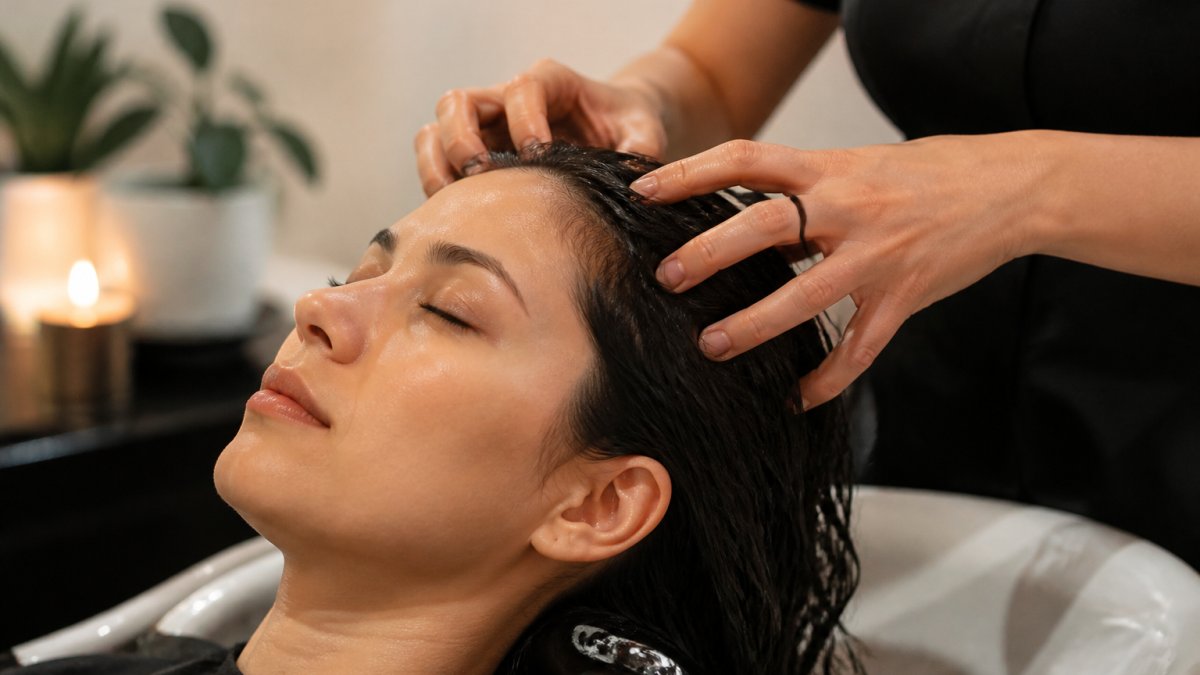
A proper scalp massage technique focuses on gentle, consistent pressure rather than aggressive rubbing. Here’s how to perform an effective scalp massage:
-
Start at the front hairline. Use your fingertips (not your nails) to make contact with your scalp. Position your fingers just above the hairline at the center of your forehead.
-
Apply gentle pressure. Press your fingertips into the scalp with moderate firmness, enough to feel the pressure, but not so hard that it causes discomfort. You should never feel pain.
-
Use small circular motions. Move your fingertips in slow circles, roughly the size of a coin. Let your fingertips stay in one spot for 2-3 seconds, then move slightly forward or to the side.
-
Work systematically across your scalp. Move from the front hairline toward the crown, then work across the sides and back of your head. Cover your entire scalp over 5-10 minutes.
-
Focus on areas of tension. If you notice tight spots, spend extra time there. Many people hold tension at the base of the skull and along the sides.
-
Finish with gentle strokes. End your massage with light, sweeping motions from front to back, or in whatever direction feels most relaxing.
Pressure and motion
The pressure you use matters more than you might think. Too much pressure can irritate your scalp and create discomfort. Too little pressure won’t stimulate blood flow effectively.
Most people find that a pressure level of 5-7 out of 10 (where 10 is as hard as you can press) works well. Your scalp should feel stimulated, not sore. If you experience pain or irritation, reduce the pressure.
The motion should always be slow and deliberate. Quick, aggressive rubbing doesn’t provide the same benefits as sustained, gentle pressure with circular movements. Slow massage gives your body time to respond and promotes relaxation.
How Often to Massage Your Scalp for Hair Growth
Consistency matters more than intensity when it comes to scalp massage hair growth. A daily 5-minute massage is more effective than an occasional 20-minute session. Your scalp responds best to regular, gentle stimulation.
Most practitioners recommend daily scalp massage for best results. If daily massage isn’t realistic for your schedule, aim for at least 4-5 times per week. This frequency allows your scalp to experience consistent benefits without overwhelming your routine.
Each massage session should last 5-10 minutes. This timeframe is long enough to cover your entire scalp and promote circulation, but short enough to fit into most daily schedules.
Scalp Massager for Hair Growth: Fingertips vs. Tools
Manual massage with fingertips
Using your fingertips to massage your scalp offers several advantages. Your hands provide natural feedback, you can feel where you’re experiencing tension and adjust your pressure accordingly. Fingertip massage is free, requires no equipment, and you can do it anywhere.
Fingertips also allow for precise control. You can target specific areas of tension and vary your pressure based on what your scalp needs. Many people find the personal touch of hand massage more relaxing than using a tool.
The main drawback is that manual massage requires your hands and arms to do the work. If you have limited hand strength, arthritis, or fatigue, this method may not be sustainable long-term.
Scalp massage tools and devices
Scalp massagers come in various designs: electric vibrating devices, manual rollers, and handheld tools with multiple nodes or bristles. These tools can provide consistent stimulation without requiring hand strength or dexterity.
Electric scalp massagers offer convenience and can deliver steady vibration that some people find more stimulating than manual massage. They work well for people who want consistent pressure without fatigue.
Manual scalp massage tools like rollers or bristle brushes require more effort but give you direct control. They’re usually affordable and don’t require batteries or charging.
The choice between fingertips and tools depends on your preferences, physical ability, and lifestyle. Both methods can be effective when used consistently.
Hygiene and safety considerations
Keep your hands or tools clean before scalp massage. Wash your hands thoroughly and trim your nails short to avoid accidentally scratching your scalp. If you use a scalp massager tool, clean it regularly according to the manufacturer’s instructions.
If you have an active scalp infection, open wounds, or severe inflammation, avoid massage until the condition improves. Massage can spread infection or worsen inflammation in these cases.
People with certain medical conditions, such as blood clotting disorders or those taking blood thinners, should check with their doctor before starting scalp massage. While massage is generally safe, these conditions may require modifications or clearance from a healthcare provider.
Scalp Massage for Hair Growth Before and After: Setting Realistic Expectations
Timeline for visible results
If you’re hoping to see visible changes in your hair from scalp massage, patience is essential. Most people who practice consistent scalp massage don’t notice dramatic changes within the first few weeks.
Many practitioners suggest giving scalp massage at least 3-6 months of consistent practice before evaluating results. This timeframe allows your scalp to adapt to the massage routine and for your hair growth cycle to progress through its natural phases.
Hair growth itself is slow. Your hair grows approximately half an inch per month. Even if massage optimizes your hair’s growth potential, you won’t see dramatic length changes for many months.
Measuring progress and tracking changes
To track whether scalp massage is working for you, take baseline measurements and photos before starting. Document your current hair thickness, shedding patterns, and scalp comfort level. This gives you a reference point for comparison.
After 3 months of consistent massage, reassess these factors:
- Hair shedding: Are you noticing less hair in your brush or shower drain?
- Scalp comfort: Does your scalp feel healthier, less itchy, or less dry?
- Hair texture: Does your hair feel stronger or shinier?
- Hair thickness: Does your hair appear fuller or denser?
Keep realistic expectations about what to measure. You probably won’t see dramatic hair regrowth from massage alone. You might notice improved scalp health, reduced shedding, or stronger-feeling hair. These subtle improvements are meaningful even if they’re not dramatic.
Document your observations in a simple log. Write down the date, what you noticed, and any changes in your routine or scalp condition.
When to Seek Professional Help for Hair Loss
If you’re experiencing significant hair loss, thinning, or changes in your hair growth patterns, professional evaluation is important.
Hair loss can result from many different causes: genetics, hormonal changes, nutritional deficiencies, stress, medical conditions, medications, or scalp health issues (the American Academy of Dermatology).
Professional scalp treatments, like those offered at Camellia Scalp and Skin Lounge, can complement your home care routine.
If you’ve been practicing scalp massage consistently for 6 months and haven’t seen any improvement in your hair concerns, talk to a healthcare provider.
Scalp massage can be a valuable part of your hair and scalp care routine.
Frequently Asked Questions
How often should you massage your scalp for hair growth?
Research suggests daily or near-daily scalp massage may be most effective. Many people find that 5-10 minutes per day, performed consistently, produces the best results. Some studies examined massage sessions lasting 4-5 minutes daily over several months. Consistency matters more than duration, a short daily routine is better than occasional longer sessions. If daily massage isn’t realistic, aim for at least 3-4 times per week to maintain benefits.
Can scalp massage actually help regrow hair?
Scalp massage shows promise for supporting hair health, but evidence for regrowing lost hair is limited. Studies suggest it may increase hair thickness and strength, and it can improve scalp blood flow and reduce tension. However, scalp massage alone is not a hair loss treatment. If you’re experiencing significant hair thinning or loss, consult a dermatologist to identify the underlying cause, whether genetics, hormonal changes, or scalp conditions, and discuss evidence-based treatments that may be right for you.
Is it better to use your fingers or a scalp massager tool for hair growth?
Both fingertips and massage tools can be effective. Fingertips offer control, warmth, and feedback, you can feel the scalp and adjust pressure easily. Scalp massage tools and devices provide consistent pressure and can cover larger areas quickly. Choose based on comfort and what you’ll use consistently. If a tool feels awkward, your fingers are just as valid. Keep any tool clean to prevent bacteria or fungal buildup, and avoid excessive pressure that could cause irritation or hair breakage.
How long does it take to see results from scalp massage for hair growth?
Most people need to massage consistently for at least 3-6 months before noticing visible changes in hair thickness or density. Hair growth cycles are slow, a single hair takes months to grow noticeably. Early benefits you might notice include reduced scalp tension, less flaking, and improved scalp comfort within weeks. For measurable hair growth or thickness changes, patience and consistency are essential. Keep a photo record every 4-6 weeks to track subtle progress you might otherwise miss.