Tag: japanese head spa

  • Is a Japanese Head Spa Worth the Money? A 2026 Review

    Is a Japanese Head Spa Worth the Money? A 2026 Review

    Table of Contents

    Last Updated: October 7, 2026

    What a Japanese Head Spa Actually Is (and Isn’t)

    A Japanese head spa is a professional scalp treatment that combines deep cleansing, steam, and massage to address buildup, dryness, and tension at the root. At Camellia Scalp and Skin Lounge, we perform scalp analysis before treatment, then tailor each session to what your scalp actually needs.
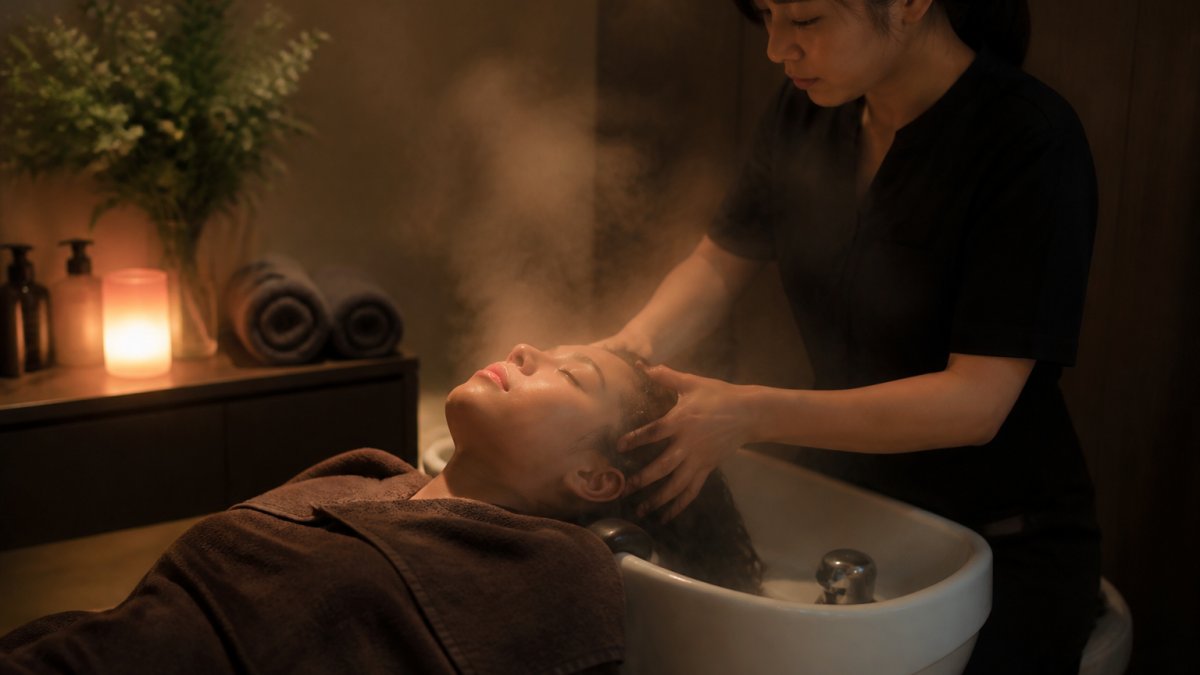
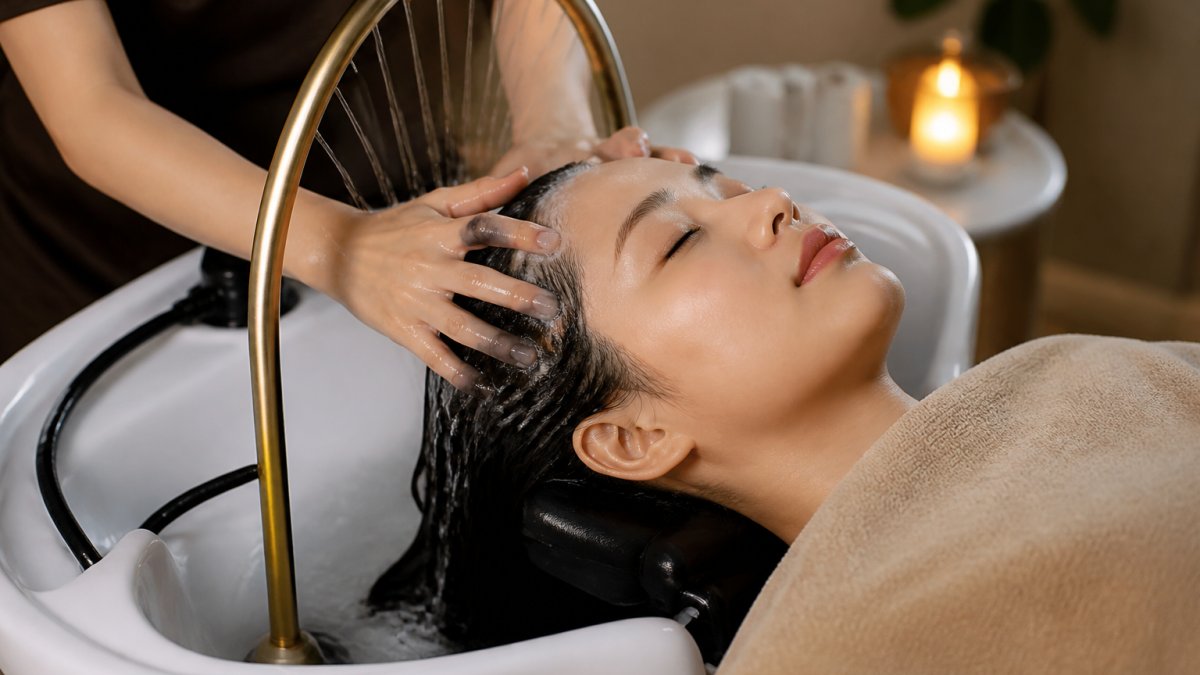
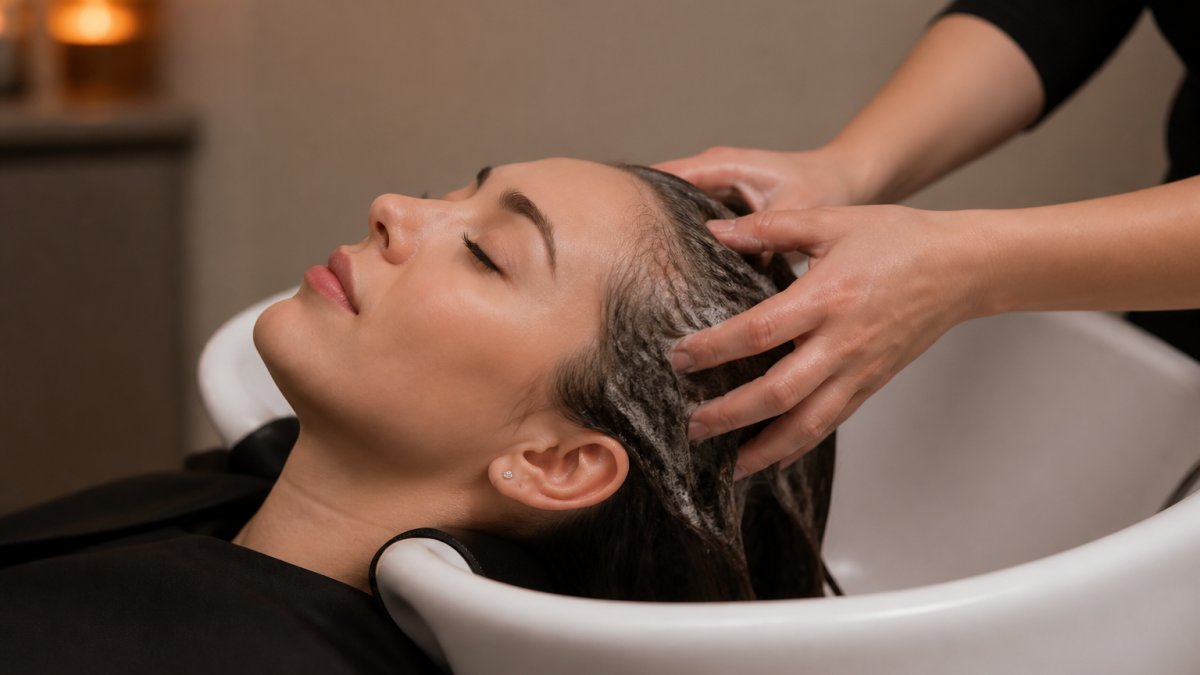
    Technician performing a relaxing Japanese head spa treatment with warm steam in a tranquil, dimly lit room.
    Technician performing a relaxing Japanese head spa treatment with warm steam in a tranquil, dimly lit room.

    The core ritual has three phases. First, a technician examines your scalp under magnification to identify flaking, oil imbalance, or product buildup. Second, warm water and gentle exfoliation clear dead skin and residue. Third, steam and massage support hydration and blood circulation.

    The Core Ritual: Cleansing, Steaming, and Massage

    Cleansing removes what shampoo leaves behind. Many people use styling products, dry shampoo, or hard water that deposits minerals on the scalp over time.

    Steaming opens the door to hydration. Warm steam softens the scalp surface and helps serums absorb more evenly.

    Massage does more than relax you. Slow, deliberate scalp massage supports blood circulation and relieves tension in the neck and temples.

    Key Takeaway
    A Japanese head spa treats the scalp as skin, not just hair. That distinction explains both what it can do and what it cannot.

    Japanese Head Spa Cost: What You’re Paying For

    Japanese head spa cost varies by market, session length, and the products used. You are paying for trained hands, magnified scalp analysis, professional-grade cleansers, steam equipment, and time. A standard salon wash takes minutes. A head spa session typically runs 45 to 90 minutes because each phase gets attention.

    Here is what separates a lower-cost session from a higher one:

    Service Tier Typical Focus Time Investment What Drives the Price
    Basic wash and rinse Clean hair Short Convenience
    Salon wash with scalp massage Clean hair plus brief massage Moderate Staff time
    Head spa session Scalp analysis, exfoliation, steam, massage Longer Training, equipment, products
    Head spa with treatment add-ons Everything above plus targeted serums Longest Specialized products, expertise

    What Actually Justifies a Premium Price

    Not every upcharge is worth it. These are the line items that genuinely change your outcome:

    • Magnified scalp analysis. A camera-based look at your scalp before treatment is the difference between a tailored session and a generic one. If a studio skips this, you are paying premium prices for a standard wash.
    • Steam. Steam softens the scalp surface and helps serums absorb more evenly. It is equipment-intensive, which is part of why it costs more, and part of why it matters.
    • Session length. A 90-minute session is not just a longer 45-minute session. The extra time usually goes into massage and a slower exfoliation phase, both of which drive the perceived and actual benefit.
    • Product tier. Professional-grade cleansers and serums cost more per application than retail shampoo. Ask what is being used on your scalp and why.

    Cost-Per-Benefit: How a Head Spa Compares

    A head spa is one option among several. Here is how the alternatives stack up on cost, time, and likely outcome:

    • Standard salon wash and style. Lowest cost, shortest time. Cleans hair, does not address scalp buildup, flaking, or tension. Reasonable if your scalp is already comfortable.
    • At-home scalp care. A gentle scalp scrub once a week plus a hydrating serum after washing costs a fraction of a session and handles mild buildup. It does not replicate steam, magnified analysis, or professional massage.
    • Dermatologist visit. Higher cost per visit, often with insurance coverage for diagnosed conditions. The right choice if you have persistent flaking, pain, or hair loss, a head spa cannot diagnose or treat a medical condition.
    • Head spa session. Mid-to-high cost, 45 to 90 minutes. Best value when your goal is deep cleansing, hydration, and relaxation, and when you want a trained eye on your scalp.

    The Long-Term Math

    A single session is a reset, not a permanent fix. Most people who see ongoing benefit book every four to six weeks.

    If a quote seems unusually low, ask what is included. Some listings advertise a scalp massage but skip analysis and steam.

    Pricing depends on your specific concerns, session length, and add-ons, so we publish our full menu rather than quoting a single number.

    Watch Out
    Do not book based on price alone. A cheap session that skips scalp analysis and steam is a salon wash with a nicer name. You will pay less and get less.

    Japanese Head Spa vs Scalp Massage: Key Differences

    A scalp massage focuses on relaxation and circulation through touch alone. A Japanese head spa includes massage but adds cleansing, exfoliation, steaming, and often scalp analysis.

    Think of it this way. A scalp massage soothes. A head spa diagnoses and treats. If your main complaint is tension, a massage may be enough.

    The difference shows up in results. Massage leaves you relaxed.

    How Often to Get a Japanese Head Spa

    Most people do well with a session every four to six weeks. That rhythm matches how quickly scalp buildup returns for average product use and water quality.

    Your scalp type matters more than a fixed schedule. Oily scalps tend to need more regular cleansing.

    Watch for these signs it is time to rebook:

    Book Now →

    • Roots feel heavy or coated within a few days of washing
    • Flaking returns despite consistent at-home care
    • Your scalp feels tight or itchy after normal shampooing
    • Styling products stop performing the way they used to

    At-home scalp care between visits keeps results steady. A gentle scalp scrub once a week and a hydrating serum after washing go a long way.

    Japanese Head Spa for Hair Growth: What the Evidence Says

    A Japanese head spa can support a healthier scalp environment, but it is not a hair loss treatment. This is where marketing often outruns evidence, and it is worth being precise about what the research actually supports.

    What the Evidence Supports

    • Cleansing and exfoliation. Removing dead skin, oil, and product residue is a documented, mechanical effect. You can see it under magnification before and after.
    • Hydration. Steam and leave-on serums improve the scalp surface’s moisture balance in the short term. This is a comfort and texture benefit, not a regrowth one.
    • Relaxation and circulation. Slow scalp massage feels good and may support blood flow to the scalp. Whether that translates into measurable hair changes is not established by strong evidence.

    What the Evidence Does Not Support

    • Regrowing hair lost to genetics. Androgenetic alopecia is driven by hormones and genetics (Androgenetic Alopecia: An Update on Pathogenesis and Pharmacological Treatment). No scalp treatment reverses it. If a studio promises regrowth, that is a marketing claim, not a medical one.
    • Treating diagnosed scalp conditions. Seborrheic dermatitis, psoriasis, and fungal infections need medical diagnosis and treatment. A head spa can complement care but cannot replace it.
    • Permanent reduction in shedding. Shedding has many drivers, hormones, nutrition, stress, medication, thyroid function. A cleaner scalp does not address any of them.

    How to Tell Relaxation Claims From Medical Claims

    A useful rule: if a claim describes how your scalp feels or looks, it is probably within a head spa’s scope. If a claim describes a change in hair count, thickness, or growth rate, it is a medical claim and should be backed by clinical evidence, which a spa visit is not.

    What a head spa can reasonably do:

    • Reduce buildup that can weigh down fine hair
    • Improve scalp comfort so you are less likely to scratch and irritate
    • Support hydration and oil balance
    • Complement, not replace, medical treatment for diagnosed conditions

    If Hair Loss Is Your Concern

    If you are noticing more shedding or thinning, the honest answer is that a head spa may help with scalp health while you address the underlying cause with a medical professional.

    We tell clients the same thing every time: if your goal is relaxation and scalp comfort, a head spa delivers. If your goal is regrowing hair, talk to a doctor first.

    Key Takeaway
    A head spa can make your scalp healthier and your hair feel lighter. It cannot change the biology of hair loss. Knowing which claim you are buying is the difference between a good experience and a disappointing one.

    Safety, Hygiene, and Who Should Skip It

    A professional head spa is generally well tolerated, but it is not right for everyone. Skip it, or get medical clearance first, if you have an active scalp infection, open cuts or sores, a recent chemical burn, or a diagnosed skin condition that is currently flaring.

    Hygiene is non-negotiable. Ask how tools are sanitized between clients, whether single-use items are used where appropriate, and how often equipment is replaced. A legitimate studio answers these questions without hesitation.

    Pro Tip
    Ask about patch testing if you have sensitive skin or known product allergies. A short consultation before your first session costs you a few minutes and prevents a reaction you would rather avoid.

    Also flag any of the following during your consultation:

    • Recent scalp treatments or chemical services
    • Prescription scalp medications
    • Known allergies to fragrances or specific ingredients
    • Pregnancy, since some products and positions may need adjustment

    The Verdict: Is a Professional Japanese Head Spa Worth the Money?

    For most people dealing with buildup, dryness, or stress, yes. A professional Japanese head spa is worth the money when your goal is a cleaner, more comfortable scalp and genuine relaxation.

    Here is how we would decide:

    • Book a session if you have persistent flaking, heavy buildup, or tension you cannot shake.
    • Skip it if you are looking for a hair regrowth treatment. See a doctor instead.
    • Compare tiers carefully. Pay for analysis, exfoliation, and steam, not just a longer wash.

    At Camellia Scalp and Skin Lounge, we start every visit with a scalp analysis so the treatment matches your actual condition. Our menu includes scalp treatments, customized facials, and HydraFacial services, with transparent pricing and same-day availability options.

    Frequently Asked Questions

    How often should I get a Japanese head spa treatment?

    Most people benefit from a session every 4 to 6 weeks, aligning with the natural scalp renewal cycle. If you have significant buildup, oily roots, or flaking, a technician may suggest starting with sessions every 2 to 3 weeks until the scalp stabilizes, then spacing them out. Those with dry scalp or sensitive skin might do well with monthly visits. The right frequency depends on your scalp condition, lifestyle, and how your hair responds. A professional scalp analysis can help tailor a schedule.

    Is a Japanese head spa good for hair growth?

    A Japanese head spa supports scalp health by removing buildup, improving blood circulation through massage, and hydrating the scalp. These factors create a healthier environment for hair to grow, but no spa treatment directly causes new hair growth. If you have thinning hair or hair loss, a head spa can complement other treatments but should not replace medical evaluation. Realistic expectations: you may see improved texture, shine, and less shedding, but not a full reversal of genetic hair loss.

    What happens during a professional Japanese head spa treatment?

    A typical session lasts 60 to 90 minutes. It starts with a scalp analysis using a magnifying camera to assess buildup, oiliness, and sensitivity. Then comes a warm water rinse, exfoliating scalp scrub, steam treatment to open pores, and a gentle massage to stimulate circulation. Some treatments include a serum or mask. You’ll end with a cool rinse and sometimes a blow-dry. The focus is on deep cleansing, hydration, and relaxation, not haircutting or styling.

    Who should avoid a Japanese head spa?

    Avoid a head spa if you have an active scalp infection, open wounds, severe dermatitis, or a recent chemical burn. If you’re pregnant or have a medical condition, consult your doctor first. Those with very sensitive skin should patch-test products. Also, if you have a history of allergic reactions to essential oils or certain ingredients, inform your technician. A reputable spa will screen for contraindications during consultation. Always disclose your health history before booking.

    How much does a Japanese head spa cost?

    Costs vary by location, service length, and inclusions. Some salons offer packages or memberships that lower the per-session price. Because pricing depends on the specific menu, check the spa’s website or call ahead for current rates. At Camellia Scalp and Skin Lounge, transparent pricing is available on our website, and we offer same-day availability options.


    If your scalp feels heavy, itchy, or just tired of the same routine, the right treatment can change how you feel day to day. Camellia Scalp and Skin Lounge offers scalp analysis, Japanese-inspired head spa rituals, and customized facial treatments in a calm, refined setting. Our licensed professionals build each session around your scalp, not a script. Get started with Camellia Scalp and Skin Lounge and give your scalp the reset it has been asking for.
  • Japanese Head Spa Benefits: What the Scalp Gains

    Japanese Head Spa Benefits: What the Scalp Gains

    Last Updated: November 12, 2026

    Quick Summary

    A japanese head spa is a scalp-focused ritual that combines cleansing, massage, and warm water treatment to care for the scalp and hair. It aims to remove buildup, balance oil and moisture, and leave the scalp feeling clean and relaxed. It is supportive care, not a treatment for hair loss or medical scalp conditions.

    • Scalp analysis at the start personalizes the session to your needs.
    • Treatments aim to remove product buildup and balance oil and moisture.
    • Over-scrubbing can irritate sensitive scalps, so pressure should be adjusted to your skin.
    • Head spas do not regrow hair; persistent flaking or hair loss needs a clinician’s evaluation.
    • Oily scalps may start weekly to biweekly, while dry scalps often start every two to four weeks.
    Is your scalp holding you back?Camellia Scalp and Skin Lounge offers personalized scalp analysis and head spa treatments in Las Vegas.

    Book Your Scalp Assessment

    Table of Contents

    What a Japanese Head Spa Is and How the Treatment Works

    A Japanese head spa is a scalp-focused ritual that combines cleansing, massage, and warm water treatment to care for the scalp and hair. At Camellia Scalp and Skin Lounge in Las Vegas, the treatment includes a scalp analysis so the session can be personalized to your needs. (Source: American Academy of Dermatology)

    A head spa session generally involves scalp cleansing and a relaxing scalp massage. The aim is to leave the scalp clean, comfortable, and relaxed.

    What separates this from a standard salon wash is intent. A salon shampoo is designed to clean the hair shaft quickly. A head spa is designed to reach the scalp itself, where oil, dead skin cells, and product buildup collect.

    Japanese Head Spa Benefits for Scalp Health and Hair Loss

    Scalp treatments generally aim at three things: removing buildup, balancing oil and moisture, and improving how the scalp feels day to day. Each benefit below is easier to judge when you know what the treatment does and what it cannot promise.

    Deep cleansing and product buildup removal

    Dry shampoo, styling products, and daily oil production can leave residue that ordinary washing misses. A deep-cleansing step is intended to lift this material from the scalp surface and hair roots. The aim is for the roots to feel lighter and cleaner afterward, although results vary with hair type and product use.

    A common mistake is assuming more cleansing is always better. Over-scrubbing can irritate a sensitive scalp, so a good provider adjusts pressure and product strength to your skin.

    Oil balance, hydration, and dandruff or itchiness

    Scalp oil is normal, but too much or too little can cause problems. Oily scalps may build up residue that contributes to an itchy, uncomfortable feeling, while dry scalps can flake and feel tight.

    Dandruff and itchiness have many causes, and a head spa is not a medical treatment. If flaking or irritation is persistent, painful, or spreading, a dermatologist or physician should assess it before you rely on any spa service.

    Circulation, stimulation, and what the evidence shows for hair growth

    A scalp massage can leave you feeling relaxed in the moment. The research connecting scalp massage to hair growth is limited, and a head spa should not be expected to regrow hair.

    If hair thinning is your main concern, treat a head spa as supportive care rather than a solution. Hair loss can have many causes, from genetics and hormones to medical conditions and medications, and each calls for a different approach (the American Academy of Dermatology). A clinician can help identify the cause.

    Japanese Head Spa What to Expect During Your First Visit

    A first visit usually runs in three phases: consultation, treatment, and aftercare. Knowing the sequence in advance makes it easier to judge whether a provider is doing a thorough job and to speak up when something does not feel right.

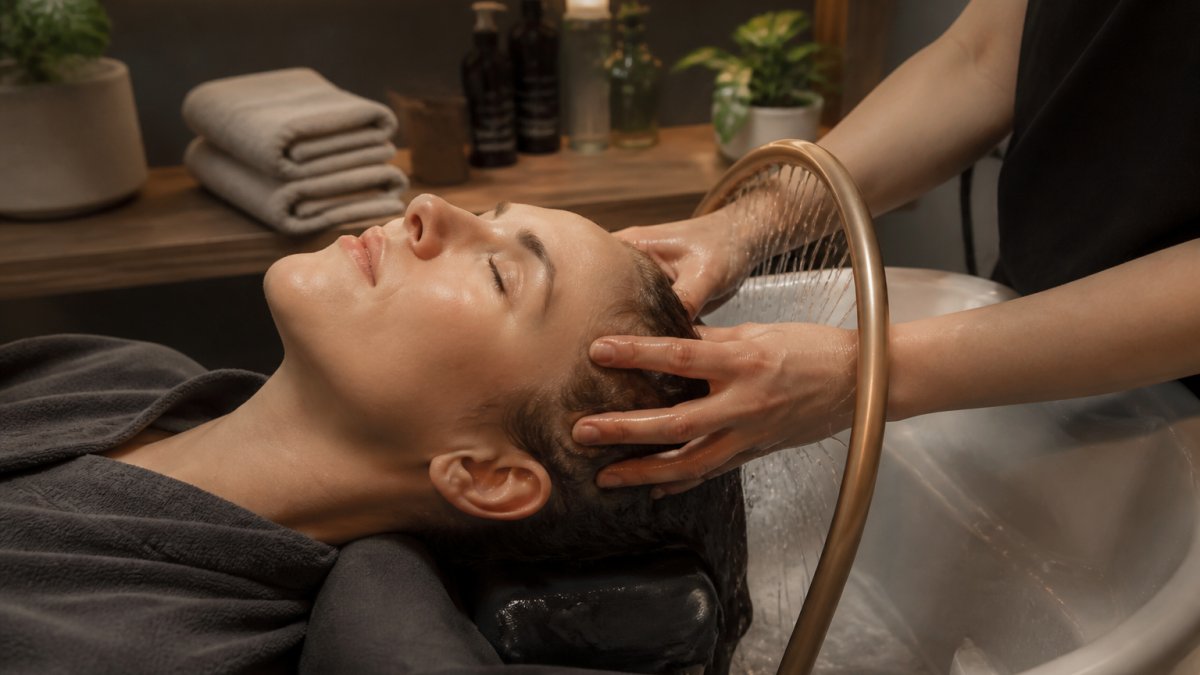
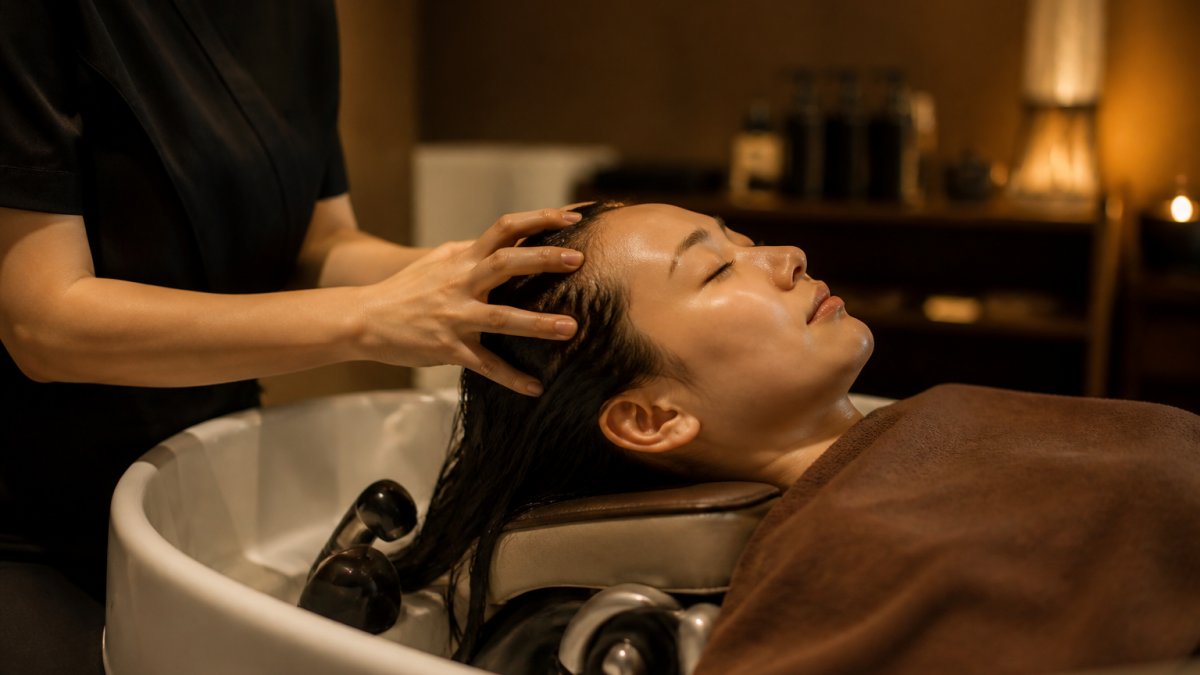
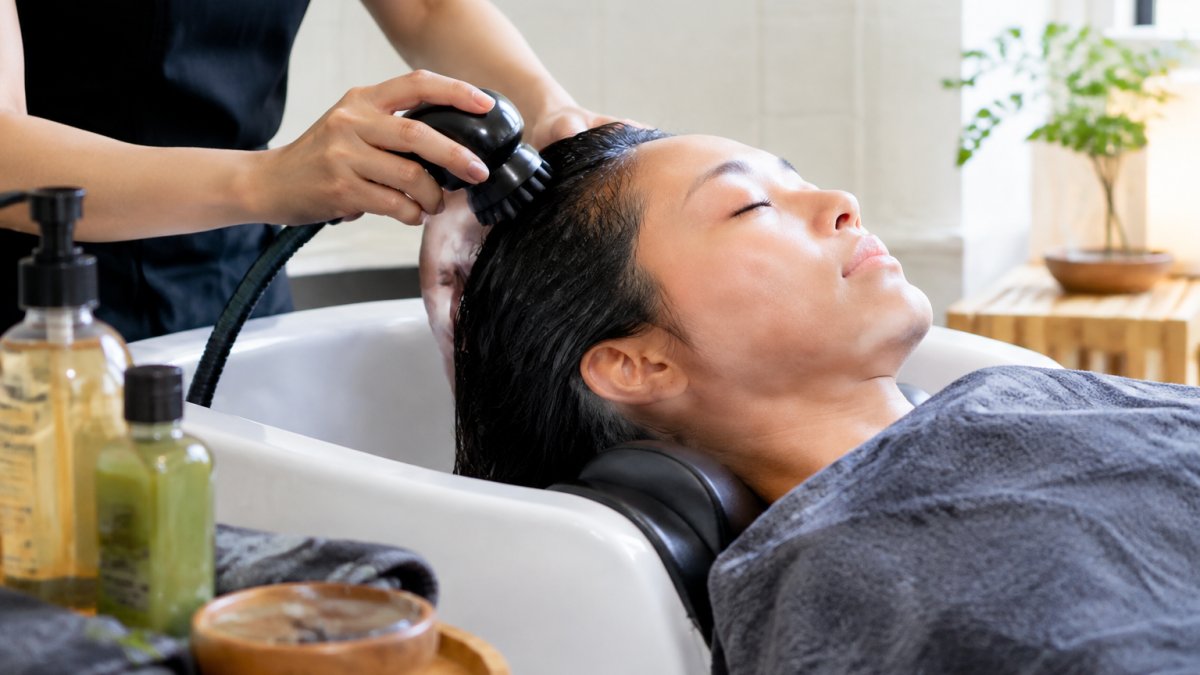
    Licensed therapist performing a relaxing Japanese head spa treatment on a client in a serene lounge setting
    Licensed therapist performing a relaxing Japanese head spa treatment on a client in a serene lounge setting

    The consultation

    Expect the therapist to ask about your scalp concerns, sensitivities, recent color or chemical treatments, medications, and what you want from the session. A good consultation includes a hands-on or magnified look at the scalp, many providers use a scalp camera or loupe to check for flaking, redness, oiliness, and buildup at the roots. This is an observation, not a diagnosis.

    Watch out: a provider who skips the consultation and moves straight to washing cannot customize pressure, water temperature, or product strength to your scalp.

    The treatment sequence

    While exact routines vary, a typical session follows a recognizable order:

    1. Dry brushing or pre-cleanse massage. A soft brush or fingertips loosen dead skin cells and product residue before water is added.
    2. Warm-water rinse. Water temperature is usually kept comfortably warm rather than hot, since hot water can strip oil and aggravate a dry or sensitive scalp.
    3. Scalp cleansing. A mild cleanser is worked into the scalp in sections rather than scrubbed into the hair shaft. Some providers use a soft silicone brush; others work entirely by hand.
    4. Massage. Slow fingertip and palm pressure across the whole head, including the hairline, temples, and base of the skull. This is the relaxation centerpiece and typically the longest single step.
    5. Rinse and finish. A thorough rinse, a light towel dry, and often a leave-in serum or scalp tonic matched to your scalp type.

    Session length depends on the service you choose. Ask ahead of time what is included.

    What to tell your therapist

    Speak up about pressure, temperature, and anything that stings or burns. Discomfort is not a sign the treatment is working. Tell the therapist about recent chemical treatments, sunburn on the scalp, or any active skin condition before the session begins. (Source: U.S. Food and Drug Administration)

    How to choose a qualified provider

    Licensing requirements for hair and scalp services vary by state, so check your state’s board of cosmetology or barbering for the current rules. Beyond licensing, ask practical questions:

    • Sanitation. Ask how tools and equipment are cleaned between clients.
    • Product disclosure. What cleanser and tonic are being used, and can you see the ingredient list if you have sensitivities?
    • Customization. Does the provider adjust the routine based on your scalp type, or does everyone get the same sequence?
    • Scope of practice. Does the provider describe the service as relaxation and cleansing, or make medical-sounding claims about treating dandruff, seborrheic dermatitis, or hair loss? The latter is a red flag.

    Aftercare

    Expect suggestions for home care, a gentle shampoo, a rinse routine after styling products, and a massage technique you can repeat between visits. Ask what to watch for over the following weeks: less itchiness, less flaking, or roots that feel clean longer. Those are the outcomes a spa service can plausibly influence. Regrowth is not one of them.

    How Often to Get a Japanese Scalp Treatment

    There is no single correct schedule, but there is a useful way to decide: match frequency to your scalp type, your product load, and how your scalp responds between visits. Most providers suggest a starting rhythm and adjust from there.

    A starting point by scalp type

    • Oily scalp or heavy product use. Weekly to every two weeks is a common starting rhythm, especially if you use dry shampoo, pomade, or leave-in styling products regularly. The goal is to keep residue from accumulating faster than ordinary washing removes it.
    • Dry or tight scalp. Every two to four weeks is a more typical starting point, paired with a milder cleanser and cooler water. Over-cleansing a dry scalp can make tightness and flaking worse.
    • Sensitive or reactive scalp. Start with a single session, note how the scalp feels for the following week, and space visits further apart until you know how it responds. Patch-test any new product before a full treatment.
    • Textured or tightly coiled hair. Frequency should follow your normal wash schedule rather than forcing extra washing, since frequent wetting and manipulation can stress the hair. Ask the provider to work primarily on the scalp and minimize manipulation of the hair shaft.
    • Flaking or persistent itchiness. A spa service can remove surface buildup, but recurring flaking or itch that does not improve warrants a dermatologist’s evaluation rather than a more aggressive spa schedule.

    Signs your schedule is working

    Track a few simple markers between visits: how many days the roots feel clean, whether itchiness decreases, whether flaking lessens, and whether the scalp feels tight or comfortable. If you see improvement that fades within a few days, you may be spacing visits too far apart.

    Watch out: more frequent sessions are not automatically better. Over-scrubbing and repeated strong cleansing can irritate a sensitive scalp and undermine the balance the treatment is meant to support.

    Consistency beats intensity

    A steady routine that fits your schedule and budget is more useful than an occasional intensive session followed by long gaps. Pick a cadence you can sustain, reassess after four to six weeks, and adjust based on what you observe rather than on a fixed rule.

    When to pause and see a clinician

    If you notice spreading redness, open sores, sudden patchy hair loss, or flaking that does not respond to gentle care, stop booking spa sessions and have a physician or dermatologist evaluate the scalp. A head spa is supportive care for a healthy scalp, not a treatment for a medical condition.

    The right frequency depends on your scalp type, so this rough guide sets a starting point for each.

    Scalp type Starting rhythm Key note
    Oily or heavy product use Weekly to every two weeks Keeps residue from building up faster than washing removes it
    Dry or tight Every two to four weeks Use a milder cleanser and cooler water
    Sensitive or reactive One session, then space visits out Patch-test new products before a full treatment
    Textured or tightly coiled hair Follow your normal wash schedule Minimize manipulation of the hair shaft
    Flaking or persistent itch Evaluate with a dermatologist first Recurring flaking calls for medical review, not more sessions

    Japanese Head Spa at Home: What You Can and Cannot Replicate

    Some elements of a head spa can be copied at home. A gentle scalp massage with your fingertips, a thorough rinse after styling products, and choosing a mild shampoo suited to your scalp all support basic scalp care. Brushing before washing can also help loosen debris.

    What you cannot easily replicate is the combination of professional technique, equipment, and a scalp analysis tailored to you. Home routines also cannot stand in for medical evaluation of hair loss or persistent scalp conditions.

    Booking Your First Scalp Assessment at Camellia Scalp and Skin Lounge

    If you are considering a head spa for dryness, flaking, buildup, or simply a relaxing reset, a first scalp assessment is a practical place to start. At Camellia Scalp and Skin Lounge, our licensed professionals begin with an analysis of your scalp and tailor the treatment to what they find, in a calm lounge setting at The Shops at Peace Plaza. Same-day availability can make it easier to fit a session into a busy schedule.

    For current pricing and availability, check the pricing page on our website or contact the lounge directly.


    Frequently Asked Questions

    Is a Japanese head spa good for the scalp?

    A Japanese head spa can support scalp health by removing product buildup, dead skin cells and excess oil, and by improving hydration and comfort. Results vary with scalp type and habits, so a consultation with a licensed professional helps set realistic expectations. Anyone with an existing scalp condition, irritation or open skin should check with a clinician before booking.

    Can a Japanese head spa help with hair loss?

    A head spa can improve the scalp environment and promote circulation, but current evidence does not show that it reverses hair loss on its own. Hair loss has many causes, including genetics, hormones, nutrition and medical conditions, and some need medical evaluation. A head spa may complement a broader plan but should not replace a diagnosis. If shedding is sudden, patchy or heavy, see a dermatologist or physician first.

    How often should you get a Japanese scalp treatment?

    How often to book depends on your scalp type and habits, and your provider can recommend a schedule. Frequency depends on scalp type, hair length, climate and how much styling product you use. Start with a single session, observe how your scalp responds, and adjust with your provider. Your provider can recommend a schedule that fits your needs and budget.

    Is a Japanese head spa different from a regular salon shampoo?

    A regular shampoo cleans the hair shaft, while a head spa focuses on the scalp itself, using scalp-focused cleansing and massage. The session is structured around scalp analysis and relaxation rather than only rinsing hair. Because the scalp is treated directly, sessions typically take longer than a standard wash. Choose a licensed provider who explains each step and adapts it to your scalp.

  • How Often Should You Get a Japanese Head Spa?

    How Often Should You Get a Japanese Head Spa?

    Last Updated: November 4, 2026

    Quick Summary

    Most people should get a Japanese head spa every three to four weeks, which lines up with the scalp renewal cycle. Oily or flaky scalps may start every two to three weeks, while dry or sensitive scalps do better every four to six weeks.

    • A Japanese head spa combines scalp analysis, deep cleansing, exfoliation, massage, and hydration.
    • Some people do well on a six-week schedule, while others need visits every two to three weeks at first.
    • For curly hair, a less frequent schedule may suit you since curls can be drier and more sensitive.
    • Redness, tightness, or stinging after a treatment are signs you are over-treating and should space visits out.
    • A Japanese head spa is a cosmetic and relaxation treatment, not a medical one.

    Table of Contents

    How Often to Get a Japanese Head Spa: A Schedule by Scalp Type and Goal

    The right frequency for a Japanese head spa depends on your scalp. Many people book every three to four weeks, but oil level, flaking, and goals can call for a shorter or longer interval. At Camellia Scalp and Skin Lounge, we built this guide around one idea: frequency should follow your scalp, not a calendar.

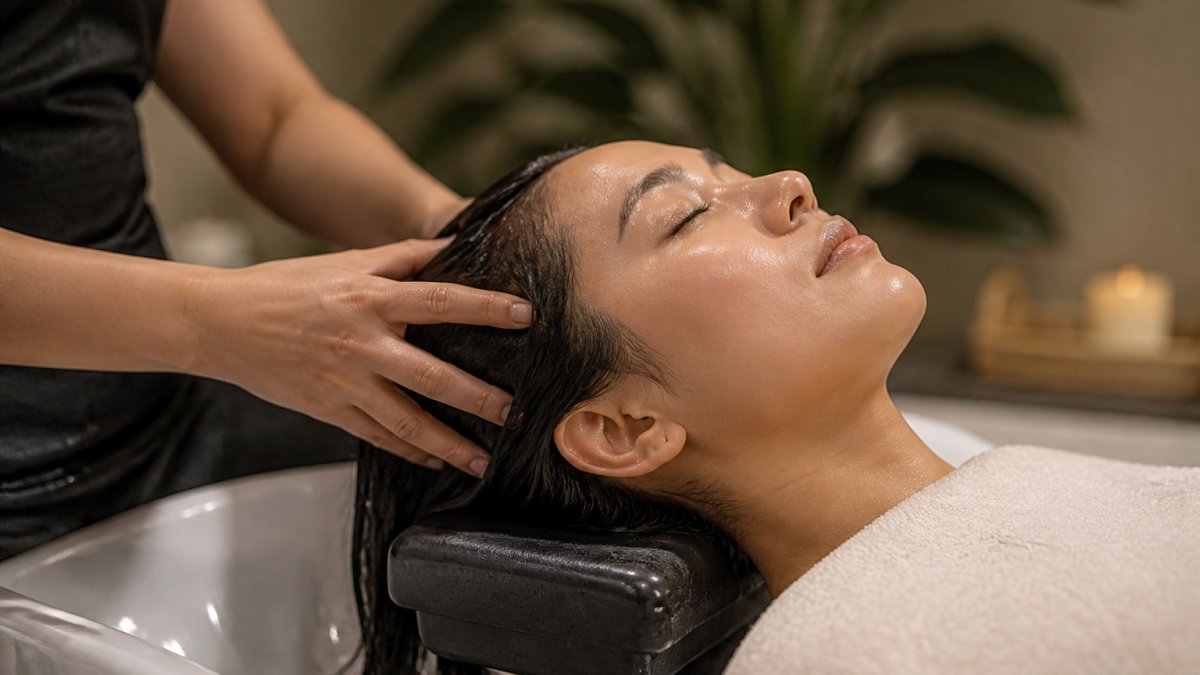
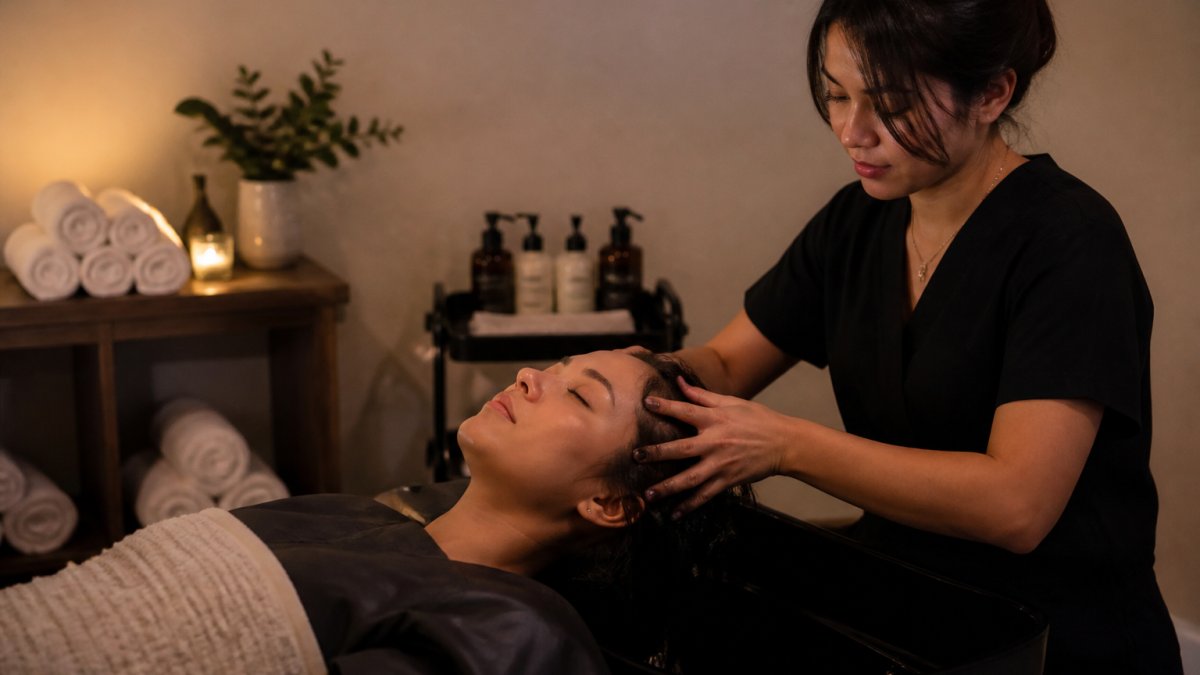
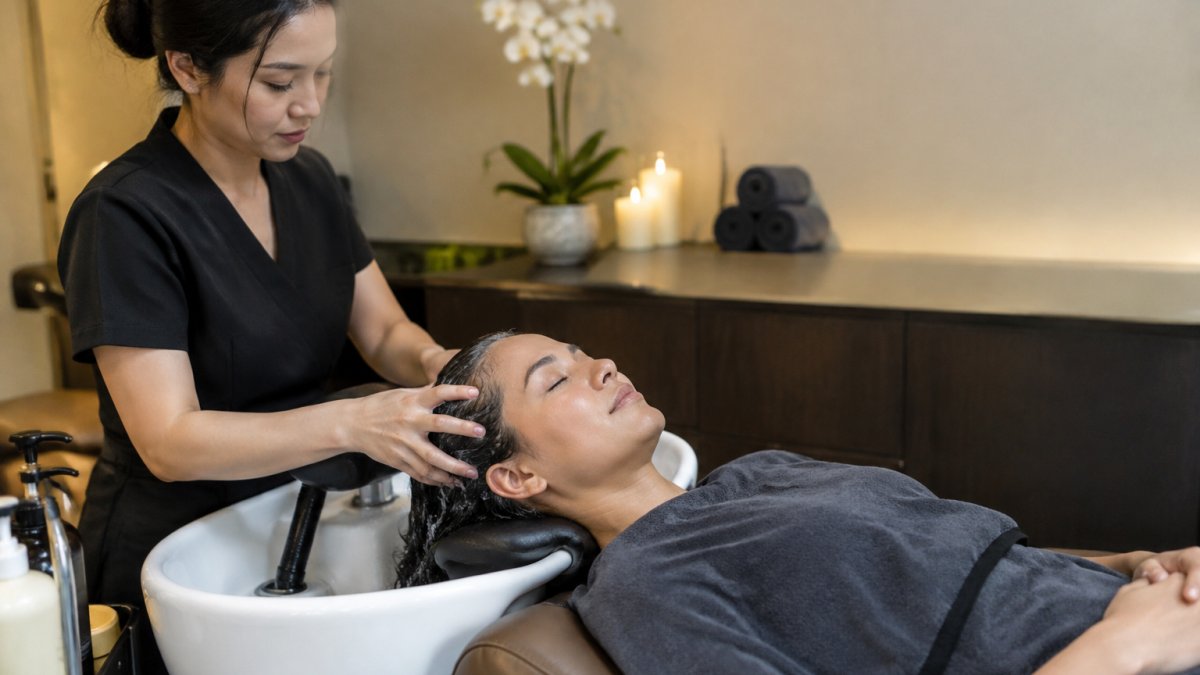
    Technician performing a relaxing Japanese head spa scalp massage on a woman in a serene, softly lit treatment room.
    Technician performing a relaxing Japanese head spa scalp massage on a woman in a serene, softly lit treatment room.

    A Japanese head spa is a multi-step scalp treatment that combines scalp analysis, deep cleansing, exfoliation, massage, and hydration. It targets the skin under your hair, not just the strands.

    Below, we break down a schedule by scalp type, explain what each visit does, and flag the signs you are booking too often.

    The General Rule: Every Three to Four Weeks

    Every three to four weeks is the standard interval for most people. That timing lines up with the scalp renewal cycle, the roughly month-long window in which skin cells turn over.

    Booking in that window can help clear buildup before it becomes flaking and keep oil production steadier between visits.

    Some people do well on a six-week schedule, while others with oily or flaky scalps may benefit from visits every two to three weeks at first.

    Matching Frequency to Your Scalp Condition

    Your scalp condition should set the pace, not a fixed rule. Here is how we map it:

    Scalp Condition Starting Frequency Why It Fits
    Oily scalp, heavy buildup Every 2-3 weeks Frequent deep cleansing controls excess oil
    Dandruff or flaking Every 2-3 weeks, then monthly Regular exfoliation clears dead skin
    Dry or sensitive scalp Every 4-6 weeks Gentler pace avoids irritation
    Normal scalp, maintenance Every 3-4 weeks Keeps scalp health steady
    Thinning hair concerns Every 3-4 weeks Supports a clean, healthy scalp environment

    More visits is not automatically better, so it is worth discussing your scalp’s needs with a professional before booking frequently.

    Japanese Head Spa Benefits: What Regular Treatments Actually Do

    Regular Japanese head spa visits are often described as supporting scalp comfort and relaxation. Benefits may build with consistency rather than from a single session.

    What the Treatment Actually Does

    A Japanese head spa works on the skin under your hair through a sequence of steps:

    • Scalp analysis to assess oil, flaking, and sensitivity before products are applied
    • Deep cleansing with targeted products to lift product residue and excess oil
    • Exfoliation to loosen dead skin cells so they can be rinsed away
    • Scalp massage to ease tension and support circulation
    • Hydration and finish to leave the scalp comfortable rather than tight

    Buildup of oil, dead skin, and styling residue can make a scalp feel itchy, flaky, or heavy, and gentle cleansing plus exfoliation can help remove that layer. Massage may add a relaxing effect.

    Realistic Expectations: Cosmetic and Relaxation Benefits

    It is worth being clear about what a head spa is and is not. A Japanese head spa is a cosmetic and relaxation treatment, not a medical one. Many people find the session relaxing, and some notice a calmer, cleaner-feeling scalp over time.

    What the treatment does not do is treat scalp disorders or guarantee hair growth. Any benefits relate to cleanliness and comfort, and a spa treatment is not a substitute for medical care. If you have persistent itching, inflammation, or severe flaking, a dermatologist is the right next step.

    Why Results Fade If You Stop

    Maintenance visits can help keep the scalp clear between deeper treatments, and a regular routine may support the relaxation benefit. Think of frequency as a maintenance schedule rather than a cure.

    If you notice redness, tightness, or stinging after a treatment, you may want to space visits further apart and mention it at your next appointment.

    Japanese Head Spa Treatment Duration: How Long Each Visit Takes

    Session length depends on the service and your scalp needs. Ask about treatment duration when you book so you can plan your day.

    Book Now →

    Ask about treatment duration when you book. It shapes how you plan your day.

    How Often to Get a Japanese Head Spa for Curly Hair

    For curly hair, a less frequent schedule may suit some people, since curly hair can be drier and more sensitive to frequent cleansing.

    The goal with curls is a clean scalp without stripping moisture. Spacing visits gives natural oils time to travel down the strands.

    A common mistake is treating curls like an oily scalp. If your hair feels dry and rough after a treatment, your interval is probably too tight. Stretch it out and let the scalp settle.

    Japanese Head Spa Cost and What Changes Your Interval

    Pricing depends on the service and add-ons. Current pricing is available on the Camellia Scalp and Skin Lounge website so you can check rates before you book.

    Budget shapes frequency for many clients. A practical approach is to book a deeper treatment monthly and a shorter maintenance session in between.

    Several factors can change your ideal interval:

    • Oil production that shifts with season or stress
    • Product buildup from heavy styling routines
    • Hormonal changes that affect scalp condition
    • Climate and how much you sweat
    • Your goals, from relaxation to flaking control

    At-Home Care Between Appointments and Signs You Are Over-Treating

    What you do between visits protects your results. A simple routine keeps the scalp calm and stretches the value of each appointment.

    Try these between sessions:

    • Wash with a gentle shampoo suited to your scalp type
    • Avoid scratching or picking at flaky areas
    • Skip harsh scrubs right after a professional exfoliation
    • Keep styling products off the scalp where you can
    • Use a soft towel and let hair air-dry when possible

    Watch out: redness, tightness, or stinging after a treatment are signs you are over-treating. Scale back the frequency and mention it at your next visit.

    If flaking, itching, or irritation persists despite regular care, see a dermatologist. Some scalp conditions, like seborrheic dermatitis, need medical treatment, and a spa visit is not a substitute.

    Book Your First Japanese Head Spa Session

    Figuring out your rhythm takes one visit and a honest look at your scalp. Start with a session, let our team assess your scalp condition, and build a schedule from there.

    At Camellia Scalp and Skin Lounge, our professionals provide personalized care in a calm lounge setting at The Shops at Peace Plaza. Our head spa rituals focus on scalp cleansing and hair care support. Pricing is listed on our website, and same-day availability options are offered.

    Get started with Camellia Scalp and Skin Lounge to discuss the treatment frequency that may fit your scalp.

    Frequently Asked Questions

    How often should you go to a Japanese head spa?

    For many people, a Japanese head spa every three to four weeks may suit their scalp. If you have an oily scalp or heavy product buildup, start with biweekly visits for one to three months, then move to monthly maintenance. Dry or sensitive scalps often do well with a session every four to six weeks. Ask your technician about adjusting the schedule after a scalp analysis at your first visit.

    How long should you wait between Japanese head spa treatments?

    Wait at least two weeks between sessions so the scalp can complete its renewal cycle and recover from exfoliation. Most clients settle into a three- to four-week rhythm, which matches the skin renewal cycle. After a treatment with extra exfoliation, you may want to allow more time before the next visit. If you notice redness or tightness, consider spacing visits further apart.

    Does a Japanese head spa help with hair growth?

    A Japanese head spa may help support scalp comfort by removing buildup and offering relaxing massage. A clean, balanced scalp creates a better environment for hair, but no spa treatment is a proven cure for hair loss. If you notice unusual thinning or shedding, see a dermatologist for a diagnosis. A head spa can complement that care, not replace it.

    How often should you get a Japanese head spa if you have a sensitive scalp?

    Some people with sensitive scalps prefer a longer interval and a gentle cleanse with minimal exfoliation; you can discuss this with your technician. Sensitive scalps react to over-treatment, so watch for redness, itching, or tightness after a visit and stretch the interval if those appear. You may wish to ask about a consultation before your first full treatment so the team can discuss products suitable for your scalp.

  • Scalp Massage Near Me: Costs, Benefits & Booking Guide

    Scalp Massage Near Me: Costs, Benefits & Booking Guide

    Table of Contents

    Last Updated: October 16, 2026

    Scalp Massage Near Me: What to Expect and How to Choose

    Searching for a scalp massage near me usually means one of two things: your scalp feels tight, flaky, or itchy and you want it fixed, or you want an hour where nothing is demanded of you. A scalp massage is a hands-on treatment that uses kneading, pressure-point work, and rhythmic strokes across the scalp, neck, and shoulders to release tension and support circulation. At Camellia Scalp and Skin Lounge, we built our service menu around that exact intersection of scalp health and genuine relaxation.

    Here is the honest version of what most guides skip: a single treatment will not permanently cure a long-standing scalp condition. What a professional session does well is reset your scalp, remove buildup, and give you a clear picture of what is actually going on up there. Below, we break down what treatments cost, what happens in the chair, and how to pick a provider without wasting money.

    Why Local Scalp Massage Beats Generic Salon Shampoos

    A salon shampoo is a rinse and a towel dry. A scalp treatment is a diagnostic and therapeutic appointment, and the difference shows in the details.

    At a dedicated studio, the visit typically includes a scalp analysis, warm-water cleansing, exfoliation, and pressure-point therapy rather than a quick lather. Many people find that product buildup, hard water residue, and dead skin are the real culprits behind persistent flaking, and none of those resolve with a different bottle of shampoo. A trained provider can see the difference between dryness and buildup and adjust the treatment accordingly.

    The trade-off is time and money. A proper session runs longer and costs more than a blowout appointment. If you only want clean hair, book the salon. If you want your scalp examined and treated, book the studio.

    Scalp Massage Near Me Prices: What Affects the Cost

    Pricing for a scalp massage near me prices out across a wide range because you are paying for time, technique, and what is included. The problem is that a headline number tells you almost nothing until you know what sits inside it.

    Here is what actually moves the number:

    Factor Lower Cost Higher Cost
    Session length 30 minutes 60-90 minutes
    Treatment type Basic head massage Full head spa ritual
    Add-ons None Steam eye mask, LED therapy, jelly mask
    Extras included Scalp massage only Blowout, hand massage, facial treatment
    Provider type General salon Specialized head spa studio

    What a Quote Should Actually Tell You

    A useful quote breaks into four lines, not one. Ask for each:

    • Base service: the massage, cleansing, and exfoliation that come standard.
    • Add-ons: steam, LED, jelly mask, water halo, or an extended neck and shoulder segment.
    • Finishing: blowout, dry-off, or leave-in styling. Many studios bill this separately, and skipping it can save real money if you are heading straight home.
    • Consultation: scalp analysis under magnification. At a dedicated studio this is usually folded into the base price; at a general salon it is often not offered at all.

    Ask for the all-in number before you book, not after.

    Packages, Memberships, and Frequency

    Packages and memberships bring the per-visit cost down if you plan to go monthly. Before you commit, ask three questions:

    1. Does the package expire, and how long do you have to use it?
    2. Is the discounted rate locked in, or does it reset at renewal?
    3. Can you transfer a session to a different service if your scalp needs change?

    Red Flags in Pricing

    Be wary of any provider who will not quote you before your appointment. Transparent pricing is a fair thing to expect. Also watch for:

    • A price that only appears after the consultation, with no published menu.
    • Add-ons presented as required rather than optional.
    • A membership with no stated cancellation terms.

    At Camellia Scalp and Skin Lounge every service is listed clearly on our pricing page so you know the number before you sit down.

    Pro Tip
    When comparing quotes, ask what the price includes: scalp analysis, cleansing, exfoliation, and a blowout are often billed separately. Two studios quoting the same headline figure can differ substantially once add-ons are counted. Get the all-in number in writing before you book.
    Key Takeaway
    Compare studios on the all-in price for the same session length and the same inclusions. A lower headline rate with three required add-ons is not a lower price.

    Japanese Head Spa: The Ritual Behind the Relaxation

    A Japanese-style head spa is a multi-step scalp and hair treatment that combines deep cleansing, exfoliation, massage, and often steam or water therapy in one session. It is closer to a facial for your scalp than to a shampoo.

    The sequence usually moves through a consultation, warm-water cleansing, exfoliation with a special brush, pressure-point therapy across the scalp and neck, and a finishing mask or treatment. Some studios add a steam eye mask or LED therapy. The point of the ritual is that each step builds on the last: cleansing opens the scalp, exfoliation clears buildup, and massage supports circulation and relaxation.

    What most people notice first is not their hair. It is their neck and shoulders. The head, neck, and shoulder tension that accumulates from screens and stress tends to release during the pressure-point portion, and that is often the part clients describe as the reason they rebook.

    Scalp Cleansing Treatment: What Happens During a Session

    A scalp cleansing treatment is a professional deep-clean of the scalp that removes oil, dead skin, and product residue, then rehydrates the skin underneath. It is the step that addresses flaking and itchiness at the source rather than masking it.

    Book Now →

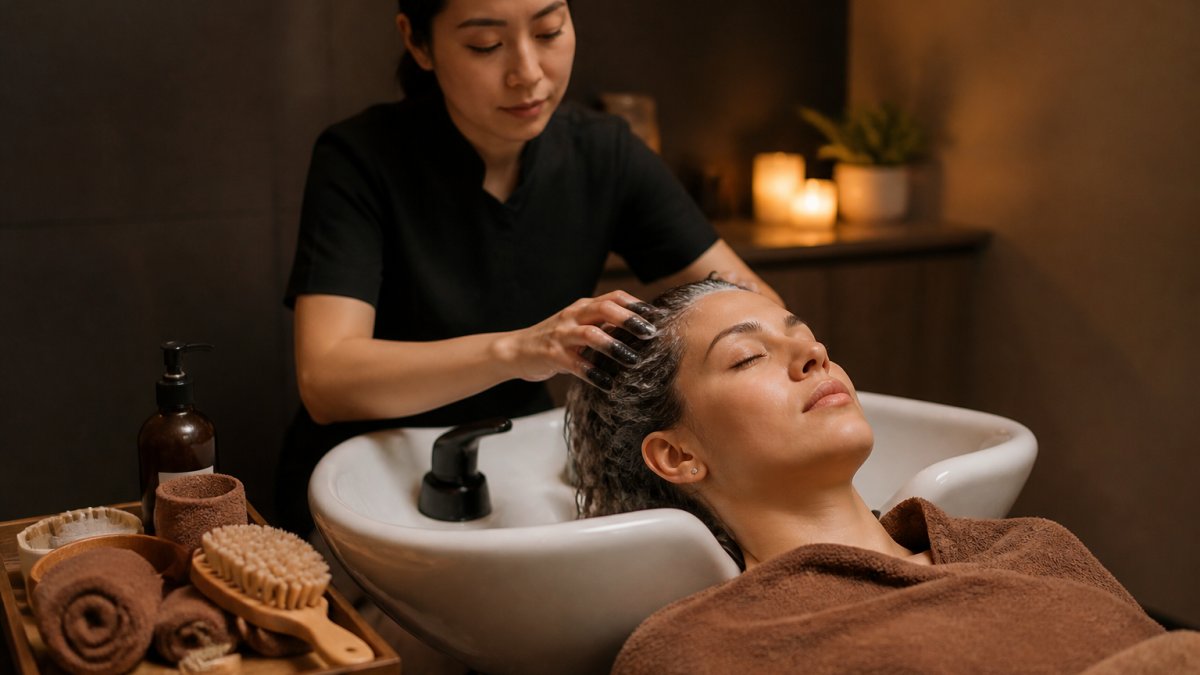
    A licensed therapist performing a scalp cleansing treatment on a relaxed client in a calm, softly lit spa room with warm towels and a special brush on a tray nearby
    A licensed therapist performing a scalp cleansing treatment on a relaxed client in a calm, softly lit spa room with warm towels and a special brush on a tray nearby

    A typical session runs through a predictable arc. Your provider starts with a scalp and hair consultation, then moves into warm-water cleansing and gentle exfoliation. Massage follows, often with a scalp and hair treatment mask, and many studios finish with a blowout so you leave presentable.

    One thing worth knowing: if you have a scalp condition like psoriasis, seborrheic dermatitis, or an active infection, a spa treatment is not a substitute for medical care. Tell your provider about any diagnosis before the session, and see a dermatologist for anything that is painful, bleeding, or spreading. A good studio will turn you away and refer you rather than treat something outside its scope.

    Scalp Analysis: Personalizing Your Treatment for Hair Type and Concerns

    Scalp analysis is the consultation step where a provider examines your scalp under magnification to identify dryness, oiliness, buildup, or irritation, then builds the treatment around what they find. It is the difference between a generic massage and a targeted one.

    Personalization matters more than most people expect. Fine or thinning hair needs gentle handling and lighter products. Oily scalps need more thorough cleansing and less heavy conditioning at the root. Dry, flaky scalps benefit from exfoliation and hydration. If hair thinning is your concern, be realistic: scalp treatments support a healthy environment for hair, but they are not a hair-loss cure, and any provider who claims otherwise is not being straight with you. For advanced concerns, ask about options like the HydraFacial Keravive treatment, which is designed to support scalp and hair health, and discuss whether it fits your situation.

    Watch Out
    Do not book a scalp treatment to self-treat a painful, bleeding, or rapidly spreading scalp condition. Spa treatments address cosmetic and comfort concerns; a dermatologist addresses medical ones. Skipping that step can delay a diagnosis.

    At-Home Scalp Massage Techniques and Safety Tips

    You can get real benefit between appointments with a five-minute at-home routine. It will not replace a professional scalp cleansing treatment, but it keeps your scalp comfortable and your hair looking healthier. Here is the version that actually accounts for your hair type, your products, and your safety.

    The Five-Minute Sequence

    Try this two to three times a week:

    • Warm up: Spend one minute pressing your fingertips across your whole scalp, no pressure yet.
    • Circle: Move your fingertips in small circles from your hairline to your crown, two minutes.
    • Press: Hold steady pressure on the base of your skull and behind your ears for five seconds each, one minute.
    • Sweep: Drag your fingers from your forehead back to your nape, one minute.
    • Finish: Massage your neck and shoulders for one minute.

    Personalize It for Your Hair Type

    Pressure and technique should change with your hair, not just your mood.

    • Fine or thinning hair: Use light pressure and flat fingertips rather than digging in. Skip heavy oils at the root, which can weigh down fine strands and flatten volume.
    • Thick or coarse hair: You can use firmer pressure and work in sections so you actually reach the scalp instead of just moving the surface hair.
    • Curly and coily hair: Never massage dry. Work on damp, conditioned hair and use your fingertips along the scalp in the direction of the curl pattern to avoid disrupting definition or causing frizz.
    • Oily scalp: Massage before washing, not after, so you are not pushing oil through clean hair. Keep products off the root.
    • Dry or flaky scalp: A light oil or serum applied to the scalp before massage can help, but keep it light so it does not clog the follicles you are trying to help.
    • Sensitive scalp: Reduce pressure, shorten the session, and stop at the first sign of stinging or burning.

    Product Guidance

    If you use oil, choose one that rinses cleanly and apply it to the scalp, not the lengths. A common pattern is that people over-apply, then blame the oil for buildup. A few drops warmed between your palms is usually enough for the whole scalp. If you use a scalp serum, follow the label’s frequency rather than layering it on daily.

    Safety Basics and When to Stop

    Use fingertips, never nails, and keep the pressure firm but never sharp. Skip massage over any cut, rash, or tender spot. If you have a scalp condition or recent scalp procedure, check with your doctor first.

    Stop and seek medical advice if you notice:

    • Pain, bleeding, or an open sore on the scalp.
    • A rash that is spreading or not improving.
    • Sudden or patchy hair loss.
    • Scalp tenderness that was not there before.

    If you want the full ritual without the guesswork, that is what we do. Camellia Scalp and Skin Lounge offers Japanese-inspired head spa treatments, scalp analysis, and relaxing scalp massage in a calm lounge setting, with same-day availability options and clear pricing. Our licensed professionals build each session around your scalp and hair, not a script.

    Frequently Asked Questions

    How much should a scalp massage cost?

    Costs vary based on the provider, treatment length, and add-ons like scalp analysis or LED therapy. Camellia Scalp and Skin Lounge lists transparent pricing on its website, so you can see exact rates before booking. Always confirm what is included in the service menu to avoid surprises.

    Are scalp massages good for hair?

    Scalp massage can support hair and scalp care by improving circulation and reducing tension. A scalp cleansing treatment removes buildup that can clog follicles, and regular relaxing massage may help create a healthier environment for hair growth. However, massage alone does not treat medical hair loss conditions. If you notice sudden or excessive shedding, consult a dermatologist or healthcare provider for an evaluation.

    What should I expect during a scalp massage?

    A typical session begins with a scalp analysis or consultation to assess your scalp condition and hair type. The therapist then performs warm-water cleansing, exfoliation, and pressure-point therapy using a special brush or hands. Many Japanese head spa rituals include a neck and shoulder massage, steam eye mask, and sometimes LED therapy. Session duration depends on the treatment package you choose.

    Should I wash my hair before a scalp massage?

    You do not need to wash your hair before a scalp massage. In fact, arriving with unwashed hair allows the therapist to assess your scalp’s natural condition, including oil levels and buildup. The treatment itself includes scalp cleansing and warm-water rinsing. If you have product buildup, the exfoliation step will address it. Just avoid heavy styling products on the day of your appointment.

  • What Happens at a Japanese Head Spa? A Step-by-Step Guide

    What Happens at a Japanese Head Spa? A Step-by-Step Guide

    Table of Contents

    Last Updated: October 14, 2026

    What Happens at a Japanese Head Spa: The Full Experience

    A Japanese head spa is a scalp-focused treatment that combines deep cleansing, exfoliation, massage, and conditioning to support scalp health and relaxation. At Camellia Scalp and Skin Lounge, we structure every session around the scalp first, because healthy hair starts at the root. If you have ever wondered what happens at a Japanese head spa, this guide walks you through the full visit, step by step, from the moment you arrive to the days after your appointment.

    A Quick Answer Before the Details

    Most sessions follow the same arc: a scalp analysis, a warm-water cleanse, exfoliation to lift product buildup, a pressure-point scalp massage, an aromatic steam step, a conditioning mask, and a waterfall rinse. A licensed hair therapist adjusts each stage to your scalp condition.

    The exact order can shift between providers. The core stages rarely do.

    What to Expect at a Head Spa: Arrival to Aftercare

    Your visit starts with a short consultation, not with a wash basin. Expect a scalp analysis, a walkthrough of the treatment steps, and a chance to flag sensitivities before anything touches your scalp.

    A woman reclining in a spa treatment chair with eyes closed while a professional therapist performs a gentle scalp massage, warm lighting, calm and serene atmosphere
    A woman reclining in a spa treatment chair with eyes closed while a professional therapist performs a gentle scalp massage, warm lighting, calm and serene atmosphere

    Scalp Analysis and Consultation

    A scalp analysis is a close-up look at your scalp using a magnified camera or lamp. The therapist checks for dryness, flaking, redness, excess oil, and product buildup. This step decides which products and pressure levels the session will use.

    Be honest here. Mention any recent color treatments, medicated shampoos, or scalp conditions. It changes the plan.

    The Cleansing and Massage Sequence

    Cleansing comes before massage in most Japanese head spa rituals. Warm water and a gentle cleanser loosen impurities first. Then the therapist works through pressure points along the scalp and neck to release tension.

    The sequence matters. Massaging a scalp still coated in product buildup pushes residue into the hair follicles instead of clearing it out.

    The Step-by-Step Treatment Sequence Explained

    Here is the order most Japanese head spa treatments follow. Timing varies by provider and by the length of your session.

    1. Scalp analysis to assess condition and buildup
    2. Warm-water rinse to soften the scalp
    3. Scalp cleansing with a gentle, low-lather cleanser
    4. Scalp exfoliation to lift dead skin and residue
    5. Pressure-point massage across the scalp, temples, and neck
    6. Aromatic steam to open pores and relax tissue
    7. Essential oils or herbal blends worked into the scalp
    8. Deep conditioning mask applied to hair and scalp
    9. Waterfall rinse with warm water to close the session
    10. Finishing scalp massage and a light leave-in treatment

    Each step builds on the one before it. Skipping the rinse before exfoliation, for example, makes the scrub work against damp residue instead of lifting it cleanly.

    Scalp Exfoliation and Product Buildup Removal

    Scalp exfoliation is the step that separates a head spa from a standard salon wash. A scalp scrub lifts dead skin cells, dry shampoo residue, and styling product that regular shampoo leaves behind.

    Many clients with flaking or itching find this is the step that changes how their scalp feels for weeks, not days. The therapist works in small sections, using light circular pressure rather than scrubbing hard.

    Pro Tip
    Ask your therapist to show you the magnified “before” image from your scalp analysis. Seeing the buildup yourself makes it easier to spot which at-home products are causing it.

    Steam, Oils, and the Waterfall Rinse

    Aromatic steam softens the scalp and helps oils absorb. Then comes the step most first-timers remember: the waterfall rinse. Warm water flows in a slow, continuous sheet over the scalp while the therapist massages the lymph nodes at the neck and behind the ears.

    Rich oils and herbal blends go on before the conditioning mask. The mask sits for several minutes while the scalp absorbs it.

    How Long Does a Head Spa Take?

    A head spa treatment typically runs 45 to 90 minutes, depending on the provider and the package you choose. A basic scalp cleanse and massage sits at the shorter end. A full ritual with steam, exfoliation, and a conditioning mask runs longer.

    Add 10 to 15 minutes for consultation and changing. First visits tend to run longer because the scalp analysis takes more time.

    What to Wear to a Head Spa (and What to Skip)

    Wear something comfortable that you do not mind getting a little damp around the collar. Most studios provide a robe or a protective cape, so your outfit underneath matters less than you think.

    Skip these:

    • Heavy makeup around the hairline, since steam can smudge it
    • Tight collars or turtlenecks that get in the way of neck massage
    • Newly styled hair you want to keep exactly as is
    • Strong perfume, out of respect for other clients and the oils used

    Come with dry, unstyled hair if you can. It gives the therapist a cleaner read during the scalp analysis.

    Book Now →

    Treatment Variations and How to Choose One

    Head spa menus vary more than most people expect. The right pick depends on your scalp concern, not on the longest or most expensive option.

    Variation Best For Typical Focus
    Classic cleanse and massage First-timers, general relaxation Warm water, pressure-point massage
    Deep-cleansing scalp treatment Flaking, itching, heavy product buildup Exfoliation, steam, clarifying cleanse
    Hydrating scalp ritual Dryness, tightness, sensitivity Oils, conditioning mask, gentle pressure
    Extended relaxation session Stress relief, tension headaches Longer massage, steam, aromatherapy

    If you are new to scalp treatments, start with the classic option. You can add exfoliation or steam on a later visit once you know how your scalp responds.

    Watch Out
    Do not book a deep-cleansing or exfoliating treatment right before a color appointment. Freshly exfoliated scalp skin can be more sensitive to dye and may sting.

    Safety, Contraindications, and Realistic Results

    Tell your therapist about any scalp condition, recent chemical treatment, or skin sensitivity before the session starts. A head spa is a cosmetic and relaxation service, not a medical treatment. The consultation is the right time to disclose anything that could change how the therapist works, because most adjustments happen before the first rinse, not during it.

    When to Disclose and What Changes

    Some conditions do not rule out a treatment, but they do change it. A therapist may switch to fragrance-free products, lower the water temperature, skip exfoliation, reduce pressure, or avoid certain areas entirely.

    Disclose these before your appointment:

    • Scalp psoriasis or seborrheic dermatitis. Exfoliation and strong massage can irritate active flares. A gentler cleanse and conditioning-only service is often safer.
    • Recent color, bleach, or relaxer. Wait at least 48 to 72 hours after chemical services. Freshly treated scalp skin is more permeable and can sting.
    • Hair extensions, braids, or a weave. Pressure and water exposure can loosen bonds or tug at attachment points. Tell the therapist so they can work around them.
    • Essential oil or botanical allergies. Many head spa products contain tea tree, peppermint, lavender, or citrus oils. If you react to any of these, ask for a patch test or a fragrance-free alternative.
    • Pregnancy. Some essential oils are best avoided during pregnancy (Maternal Reproductive Toxicity of Some Essential Oils and Their Constituents). Mention it so the therapist can select pregnancy-safe products.
    • Recent scalp procedures. Injections, microneedling, or biopsies need time to heal before massage or steam.

    When to Skip or Postpone

    Skip or postpone a session if you have:

    • An active scalp infection, open cuts, or a rash
    • A recent chemical burn from a relaxer or bleach
    • A known allergy to essential oils or specific botanicals
    • A skin condition currently being treated by a doctor
    • A fever or active illness, since steam and reclining can worsen how you feel

    If you are unsure whether your scalp is ready, call ahead and describe what you are seeing. Most providers would rather reschedule than risk irritating a flare.

    Realistic Results: What a Head Spa Can and Cannot Do

    A head spa cleans, exfoliates, and relaxes. Those are real, measurable effects, but they are temporary. Many clients notice a cleaner, less itchy scalp and softer hair after a single visit. Those effects fade over days to weeks as oil and buildup return.

    What a head spa can reasonably do:

    • Remove surface oil, dead skin, and styling product residue
    • Temporarily reduce itching and flaking caused by buildup
    • Improve how hair feels and how easily it detangles
    • Provide relaxation and short-term relief from tension around the scalp and neck

    What it cannot do:

    • Treat hair loss, thinning, or pattern baldness
    • Cure dandruff caused by a fungal or medical condition
    • Permanently change scalp oil production
    • Replace care from a dermatologist for persistent symptoms

    A head spa supports scalp health and hair health, but it does not treat hair loss or replace care from a dermatologist. If you have persistent flaking, itching, or shedding, see a doctor before booking a cosmetic treatment.

    For general guidance on scalp and hair conditions, the American Academy of Dermatology’s scalp care resources is a reliable starting point.

    At Camellia Scalp and Skin Lounge, our licensed professionals walk you through a scalp analysis before every session, so you know exactly what your scalp needs and what the treatment can realistically do. Our services use transparent pricing, and same-day availability is often possible.

    Frequently Asked Questions

    Do I wash my hair before a Japanese head spa?

    No. Arrive with dry, unwashed hair if possible. The therapist performs a scalp analysis on dry hair first, then handles all cleansing during the treatment. Washing beforehand removes the oil and buildup the analysis is designed to assess, and it also means the exfoliation step has less to work with. If you have somewhere to be right after, let the therapist know so they can adjust the rinse and conditioning steps.

    How long does a head spa take, and can I fit one into a lunch break?

    A standard Japanese head spa treatment runs about 60 to 90 minutes, including consultation, scalp analysis, cleansing, massage, and conditioning. Shorter express versions exist at some studios and can run 30 to 45 minutes. If you are booking around a work schedule, mention your time limit when you book so the therapist can pace the session. Arriving a few minutes early helps the full treatment fit comfortably.

    What should I wear to a head spa, and do I need to undress?

    Wear something comfortable that you do not mind getting a little damp around the collar, like a loose top or a button-down. Most studios provide a robe or towel wrap, and you typically keep your clothes on or change only your top. You will be reclined for most of the treatment, so avoid tight collars, heavy jewelry, and hairstyles that are difficult to take down, such as tight braids or glued-in extensions.

    Can a Japanese head spa help with hair thinning or hair loss?

    A head spa focuses on scalp health: removing buildup, improving circulation through massage, and hydrating the scalp. Healthier scalp conditions can support healthier-looking hair, but a head spa is not a medical treatment for hair loss. If you are noticing increased shedding or thinning, speak with a dermatologist or physician first. Some studios offer advanced scalp treatments that complement professional care, and a consultation can help you decide what is appropriate.


    A flaky, itchy, or weighed-down scalp rarely fixes itself with a different bottle of shampoo. It usually needs a proper cleanse, exfoliation, and massage from someone trained to read what your scalp is telling them. Camellia Scalp and Skin Lounge offers Japanese-inspired head spa rituals, personalized scalp analysis, and a calm lounge setting built for exactly that. Book your session and let our team build a treatment around your scalp, not a template.

  • 5 Best Scalp Treatments for Dry Skin in Las Vegas

    5 Best Scalp Treatments for Dry Skin in Las Vegas

    Table of Contents

    Last Updated: October 4, 2026

    Why Dry Scalp Is So Common in Las Vegas

    Dry scalp is a common complaint in Las Vegas because the desert climate pulls moisture from skin, and hard water can leave residue that irritates the scalp. At Camellia Scalp and Skin Lounge, we see this constantly in clients who have tried every drugstore shampoo without relief.

    The city’s low humidity and intense heat strip the scalp’s natural moisture barrier. Add hard water minerals and you get itching, flaking, and irritation that a standard wash day won’t fix. Most guides treat dry scalp like a shampoo problem.

    Below, we break down five treatment paths, from a Japanese head spa to dermatology care, so you can pick the one that actually fits your scalp.

    How We Ranked These 5 Scalp Treatments

    We ranked these options on five factors: suitability for dry, flaky scalp, depth of treatment, transparency, convenience, and whether the provider offers a real scalp analysis before treating. A scalp treatment is any service or product applied to the scalp to address dryness, flaking, irritation, or buildup.

    Our top pick is a full head spa ritual because it combines analysis, cleansing, exfoliation, and hydration in one session.

    Rank Treatment Best For Approach
    1 Camellia Scalp & Skin Lounge Personalized scalp and skin care Japanese head spa, scalp analysis, massage
    2 Tea Scalp Hair Spa Deep cleansing for flaking Basic and deep scalp treatments
    3 Dermatology care Persistent or medical symptoms Diagnosis and prescription care
    4 At-home oils and serums Maintenance between visits Topical oils, treatment drops
    5 Scalp hydration treatment Dryness without buildup Moisture-focused conditioning

    1. Camellia Scalp & Skin Lounge: Japanese Head Spa and Scalp Analysis

    Camellia Scalp & Skin Lounge is our top pick because it starts every visit with a scalp analysis rather than a guess.

    Stylist performing a relaxing massage during professional scalp treatments in a serene Japanese head spa room
    Stylist performing a relaxing massage during professional scalp treatments in a serene Japanese head spa room

    (https://www.ncbi.nlm.nih.gov/pmc/articles/PMC7796278/))

    Where it fits in a dry-scalp routine

    Think of a deep cleanse as a reset, not a routine. For most people with dry scalp, one deep-cleansing session every four to six weeks is enough to clear buildup, with gentler hydrating care in between. If you find yourself needing a deep cleanse every week to feel clean, the underlying issue is probably not buildup, and a scalp analysis or a dermatology visit will get you further than another clarifying session.

    3. Dermatology Care for Hair and Scalp Disorders

    If your symptoms persist despite good at-home care, dermatology care is the right next step. Local dermatology practices treat hair and scalp disorders including dandruff and folliculitis, and they can tell the difference between dry scalp and conditions that mimic it.

    This matters because seborrheic dermatitis, psoriasis, and fungal infections all cause flaking but need medical treatment, not a spa service. A dermatologist can also flag hair thinning or loss that warrants evaluation. Spa treatments support scalp health; they don’t diagnose disease.

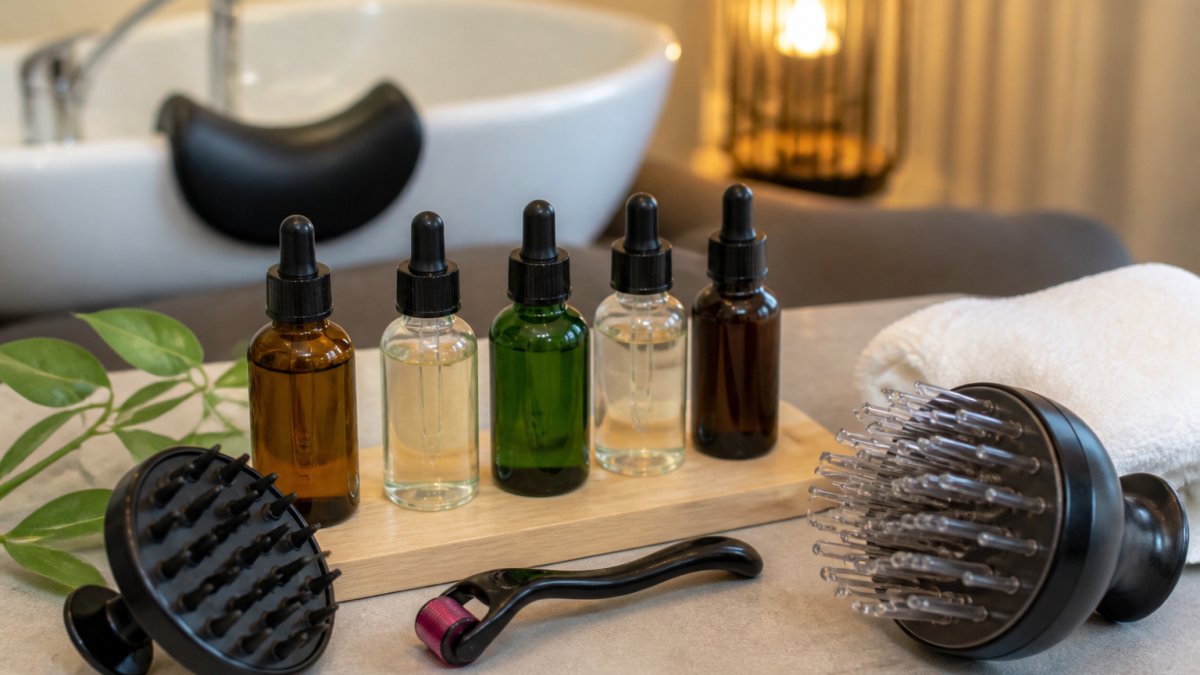
    4. At-Home Dry Scalp Treatment: Oils, Serums, and Treatment Drops

    At-home care works best as maintenance between professional visits, not as a replacement for them. A dry scalp treatment at home typically means topical oils, leave-on serums, or treatment drops applied directly to the scalp. What most guides skip is the part that matters here: the local climate and water supply change which at-home habits help and which ones quietly make dryness worse.

    Why the local environment changes your at-home routine

    Two local factors drive most of the dry-scalp complaints we see:

    • Low humidity and heat. Desert air pulls moisture from skin continuously, and heat increases perspiration, which can leave salt and residue on the scalp. The result is a scalp that feels dry and tight even when it is not truly dehydrated.
    • Hard water. Mineral-heavy water leaves deposits on skin and hair. Those deposits can interfere with how cleansers rinse away and can leave a film that itches. If your scalp feels coated after washing, hard water is a likely contributor.

    A practical response is to reduce how much you strip the scalp and to add moisture back deliberately. That means shorter, cooler rinses, a gentle moisturizing shampoo instead of a harsh clarifying one, and a leave-on hydrating step after washing rather than before.

    The four at-home categories, and how each one works

    • Oils. Coconut oil is a common pick because it is occlusive, meaning it slows moisture loss from the skin surface. Tea tree oil is used for itch, but it is a known irritant on broken or sensitive skin, so dilute it heavily and patch-test first. Apply oils to the scalp, not the hair, and wash them out within a few hours unless the product is designed to stay on.
    • Serums and drops. Leave-on hydration is usually lighter than oil and less likely to leave hair greasy. These are the best fit for daily or every-other-day use on a dry scalp, especially in low humidity.
    • Mild shampoo. A moisturizing formula cleans without stripping the barrier. Look for gentle surfactants and hydrating ingredients rather than strong clarifying agents.

    Ingredients worth looking for include aloe vera for soothing and salicylic acid for exfoliation. Patch-test anything new on a small area behind the ear and wait a full day before applying it to the whole scalp.

    Book Now →

    A simple weekly sequence

    Day What to do Why
    Wash days Gentle moisturizing shampoo, cool rinse Cleans without stripping the barrier
    After washing Leave-on serum or drops on the scalp Replaces moisture lost to dry air
    Once a week Exfoliating treatment, then hydrate Clears scale without over-drying
    As needed Oil treatment, washed out within hours Occludes moisture on very dry days

    What at-home care cannot do

    At-home products manage symptoms; they do not diagnose causes. If your flaking is greasy, if you have redness or open skin, or if you are losing more hair than usual, no oil or serum will fix the underlying issue. That is the point at which a scalp analysis or a dermatology visit is the better use of your money. Used correctly, though, at-home care is what keeps a professional treatment from wearing off in a week.

    Key Takeaway
    In a dry, low-humidity climate with hard water, the goal of at-home care is to stop stripping the scalp and start replacing moisture. Gentle washing plus a leave-on hydrating step does more for most people than any single oil.

    5. Scalp Hydration Treatment: What It Is and Who It Fits

    A scalp hydration treatment is a moisture-focused service that conditions the scalp and supports its barrier without stripping it. It suits people with dryness and tightness but little buildup, and it’s the gentlest option on this list.

    It fits well if your scalp feels dry but not congested, or if you’ve overdone clarifying products. It’s a poor fit if you have heavy flaking from buildup, since hydration alone won’t remove residue.

    Spa Treatment or Dermatologist? How to Decide

    Choose a spa treatment if your scalp is dry, tight, or flaky without redness, sores, or sudden hair loss.

    Use this checklist before you book:

    • Is the flaking white and dry, or greasy and yellow? (Greasy points to a medical cause)
    • Is there redness, swelling, or open skin?
    • Has it lasted more than a few weeks despite at-home care?

    If you checked any of the last four boxes, start with a dermatologist. If your answers point to plain dryness, a professional scalp treatment is a reasonable first step.


    Dry scalp in this climate is stubborn, and guessing your way through product after product gets expensive.

    Frequently Asked Questions

    What is the best treatment for dry scalp skin?

    There is no single best option, because dry scalp has several possible causes. For surface dryness and flaking, a hydrating scalp treatment with gentle cleansing, massage, and a leave-on oil or serum often helps. For persistent flaking, itching, or inflammation, a dermatology evaluation is the safer first step. Many people combine both: professional scalp treatments for maintenance and a dermatologist for diagnosis.

    Can a head spa help with a dry, itchy scalp?

    A Japanese head spa focuses on scalp cleansing, exfoliation, hydration, and massage, which can ease itching and flaking tied to dryness and product buildup. It is not a medical treatment, so it will not resolve conditions like seborrheic dermatitis or folliculitis. If itching persists after a few sessions, or you notice redness, sores, or unusual shedding, see a dermatologist.

    How often should you use a scalp treatment for dryness?

    Most people do well with a professional scalp hydration treatment every two to four weeks, paired with gentle at-home cleansing in between. Dry, flaky scalp often needs consistent care rather than a single session, since the scalp barrier takes time to recover. Your provider can adjust frequency based on how your scalp responds and how much time you spend in dry, low-humidity conditions.

    When should you see a dermatologist for a dry scalp?

    See a dermatologist if flaking does not improve after several weeks of gentle cleansing and hydration, if you have intense itching, pain, redness, or open sores, or if you notice patches of hair loss. A dermatologist can tell the difference between dry scalp, dandruff, seborrheic dermatitis, and folliculitis, since each needs a different approach and some require prescription treatment.

    What does a dermatologist recommend for a dry scalp?

    Dermatology guidance for dry scalp typically starts with gentle, moisturizing cleansing and avoiding harsh sulfates and frequent hot-water washing. Some sources mention applying certain oils as an at-home remedy and using moisturizing over-the-counter shampoos. If those steps do not help, a dermatologist may look for an underlying condition and recommend targeted care, which is why an in-person evaluation matters more than any single product.