Tag: japanese head spa benefits

  • What Is a Deep Cleansing Head Spa Treatment?

    What Is a Deep Cleansing Head Spa Treatment?

    Table of Contents

    Last Updated: September 28, 2026

    What Is a Deep Cleansing Head Spa Treatment?

    A deep cleansing head spa treatment is a multi-step scalp and hair ritual that clears buildup, balances oil, and calms the scalp using steam, exfoliation, and massage. At Camellia Scalp and Skin Lounge, we describe it as a facial for your scalp: same care, different skin. (Source: a 2026 report on the U.S. beauty services market)

    Most people treat their scalp like an afterthought. Shampoo, rinse, repeat, and hope for the best. That approach leaves behind product buildup, dead skin, and excess oil, which shows up as flakes, itch, and dull hair.

    Here’s what most guides get wrong: they call this a fancy shampoo. It isn’t. A real head spa treatment combines scalp analysis, exfoliation, steam, and therapeutic massage in one session. Below, we’ll walk through each step, how long it takes, and who actually benefits.

    What Happens During a Session?

    A session follows a set sequence: consultation, scalp analysis, exfoliation, steam, cleansing, massage, and conditioning. Each step builds on the last, so nothing gets skipped or rushed. What separates a professional ritual from a salon wash is that every step has a job, and a reason it comes when it does.
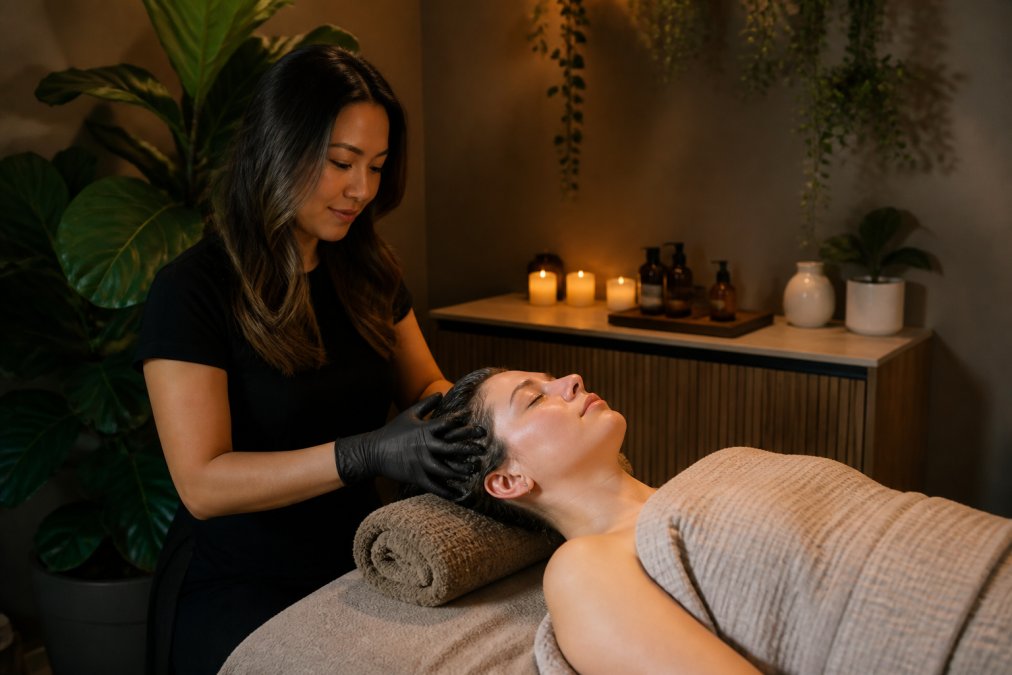
    A licensed scalp therapist performing a relaxing scalp massage on a client lying on a comfortable treatment bed in a calm, softly lit spa room with natural elements and warm tones
    A licensed scalp therapist performing a relaxing scalp massage on a client lying on a comfortable treatment bed in a calm, softly lit spa room with natural elements and warm tones

    Your therapist starts by asking about your scalp history. Dryness? Oiliness? Dandruff? Recent color or chemical treatments? Medications like isotretinoin or blood thinners? That conversation shapes everything that follows, and it’s also where a good therapist screens for reasons to pause or modify the service.

    Step-by-Step Treatment Process

    1. Consultation and scalp analysis. A trichoscope, a handheld digital camera with magnification typically in the 50x-200x range, is moved across several zones of the scalp. Your therapist is looking at follicle density, sebum pattern, redness, scaling, and whether flakes are dry (dead skin) or oily (seborrheic). The images often get saved so you can compare at your next visit.
    2. Dry exfoliation. Before any water touches the scalp, a fine scrub or a soft brush lifts dead skin, dried sebum, and product residue. Doing this dry matters: water makes buildup slick and harder to dislodge, so the mechanical lift happens first.
    3. Steam treatment. Warm steam softens the sebum plug sitting at the follicle opening and relaxes the tissue around it. Most practitioners keep the steam at a comfortable, low temperature and shield the face, the goal is softening, not heat.
    4. Clay wash or scalp scrub. A kaolin- or bentonite-based clay, or a sugar/salt scrub, is worked in to draw out oil and debris loosened by the steam. This is the step that most resembles a facial’s deep-clean phase.
    5. Deep cleansing shampoo. Applied with slow, circular movements rather than a quick lather. The pressure is deliberate, fingertips, not nails, and the shampoo is chosen for your scalp type, not your hair type.
    6. Therapeutic massage. Ten to twenty minutes targeting the occipital ridge, temples, and crown. The mechanical goals are microcirculation and lymphatic drainage; the felt goal is that heavy, unwound feeling clients describe afterward.
    7. Deep conditioning. A pH-balanced mask, typically in the 4.5-5.5 range to match the scalp’s acid mantle, is applied to hair, kept off the roots unless the scalp is dry, and left to sit.
    8. Rinse and finish. A cool-water seal closes the cuticle and calms any redness from exfoliation, followed by a light blow-dry or air-dry and minimal styling.

    Many clients say the massage is the part they remember. It’s also the part doing quiet work on microcirculation.

    Pro Tip
    Ask your therapist to show you the trichoscope images before and after. Seeing the same follicle clear of buildup is the most concrete proof the session did what it promised.

    How Long Is a Head Spa Treatment?

    A head spa treatment typically runs 45 to 90 minutes, depending on the service level and add-ons. A basic cleanse and massage sits at the shorter end. A full ritual with scalp analysis, steam, and deep conditioning takes closer to 90 minutes.

    Here’s how the time usually breaks down:

    Phase Time What Happens
    Consultation and analysis 10 min Trichoscope check, scalp history
    Exfoliation and steam 15 min Buildup removal, follicle prep
    Cleanse and massage 25 min Clay wash, therapeutic massage
    Conditioning and rinse 15 min Deep conditioning, cool rinse

    First-time clients should plan for the longer end. Your therapist needs extra time to assess your scalp and adjust the products.

    Pro Tip
    Book your first session on a day when you don’t have plans right after. The post-treatment calm is real, and rushing out of the chair defeats half the point.

    Japanese Head Spa Benefits

    Japanese head spa benefits center on scalp health first, with hair and relaxation gains following. The approach treats the scalp as living skin that needs exfoliation, hydration, and stimulation, not just shampoo.

    What clients tend to notice:

    • Less flaking and itchiness within a few sessions
    • Softer, shinier hair from reduced buildup
    • A calmer nervous system after the massage portion
    • Better product absorption, since the follicle isn’t blocked

    Scalp health drives hair appearance. When sebum regulation improves and the scalp microbiome settles, hair texture often follows. That’s the logic behind the ritual, and it’s why the massage isn’t decorative.

    Scalp Analysis for Hair Health

    Scalp analysis for hair health uses a trichoscope, a magnifying camera that shows the scalp and follicles up close. It turns guesswork into a plan.

    Book Now →

    Your therapist looks for redness, scaling, oil pattern, follicle density, and signs of inflammation. From there, they match products and pressure to what your scalp actually needs. Someone with an oily crown and dry ends gets a different routine than someone with uniform dryness.

    This diagnostic step is what separates a head spa treatment from a standard salon wash. A wash cleans hair. An analysis tells you why your scalp behaves the way it does.

    Watch Out
    Skip the analysis and you risk treating the wrong problem. Using heavy oils on an oily, buildup-prone scalp can make flaking worse, not better.

    Head Spa vs. Traditional Scalp Massage

    A head spa treatment goes well beyond a traditional scalp massage. A massage focuses on relaxation and blood flow. A head spa adds exfoliation, steam, cleansing, and conditioning on top of it.

    Feature Head Spa Treatment Traditional Scalp Massage
    Scalp analysis Yes, with trichoscope Rarely
    Exfoliation Yes No
    Steam treatment Yes No
    Massage Included Main focus
    Typical length 45-90 min 15-30 min
    Goal Scalp and hair health Relaxation

    If your only goal is to unwind, a massage works. If you’re dealing with buildup, flakes, or dull hair, the full ritual does more.

    Is a Deep Cleansing Head Spa Treatment Worth It?

    For most people with an active scalp concern, yes. A deep cleansing head spa treatment is worth it when you want real change in scalp comfort and hair appearance, not just a pleasant hour. But “worth it” depends on three things most guides skip: what you’re paying, how often you’ll need to come back, and whether you’re a safe candidate in the first place.

    The cost picture. In most markets, a single deep cleansing session runs somewhere in the $80-$200 range, with premium rituals and add-ons pushing higher. That’s a real number to weigh against a $15-$30 clarifying shampoo, but they aren’t solving the same problem. A shampoo addresses surface oil. A head spa addresses the scalp environment: the sebum plug, the dead-skin layer, the follicle opening. If your issue is buildup and flaking, the cheaper option often just delays the same complaint.

    The maintenance math. Results aren’t permanent.

    • Open wounds, cuts, or a fresh surgical site on the scalp
    • Active, severe psoriasis or seborrheic dermatitis that is currently inflamed or weeping
    • A recent chemical burn, relaxer burn, or scalp injury from coloring or perming
    • An active fungal or bacterial scalp infection that hasn’t been treated
    • A known allergy to a specific oil, clay, or fragrance used in the service
    Key Takeaway
    The scalp is skin. Treat it with the same exfoliation, hydration, and analysis you’d give your face, and your hair reflects the difference.

    Frequently Asked Questions

    Are head spas actually worth it?

    A deep cleansing head spa treatment can be worth it if you deal with product buildup, dryness, or scalp tension. It goes beyond a standard shampoo by using exfoliation, steam, and therapeutic massage to support scalp health. Many people find their scalp feels cleaner and their hair looks healthier. For lasting results, regular sessions and at-home care help. Book a consultation to see if it fits your needs.

    Do I wash my hair before going to a head spa?

    No, you do not need to wash your hair beforehand. In fact, arriving with unwashed hair lets your therapist assess your scalp’s natural condition, including oiliness, flaking, or buildup. The treatment itself includes a thorough cleanse, so you will leave with fresh, clean hair. Just avoid heavy styling products on the day of your appointment to help the scalp analysis be more accurate.

    How long does a head spa treatment typically last?

    Most deep cleansing head spa treatments last between 45 and 90 minutes, depending on the specific service and any add-ons. A basic session might run about 60 minutes, while a more comprehensive ritual with extended massage and scalp analysis can take closer to 90 minutes. It is best to check with the provider when booking so you can plan your visit accordingly.

    Can a deep cleansing head spa help with dry scalp or dandruff?

    A deep cleansing head spa treatment can help manage dry scalp and dandruff by removing flakes, excess oil, and product buildup. Exfoliation and hydration work together to support a healthier scalp environment. However, if you have a medical condition like seborrheic dermatitis, consult a dermatologist first. Many people see improvement in comfort and flaking with regular professional treatments.


    Most people wait until flaking, itch, or thinning becomes obvious before they act on scalp health. By then, buildup and inflammation have had months to settle in. Camellia Scalp and Skin Lounge offers scalp analysis, deep cleansing head spa rituals, and customized care in a calm lounge setting, with transparent pricing and same-day availability. Our licensed professionals build each session around your scalp, not a script. Book now and give your scalp the care it’s been missing.
  • Head Spa Near Me: What to Expect From a Session

    Head Spa Near Me: What to Expect From a Session

    Table of Contents

    Last Updated: September 24, 2026

    What a Head Spa Near Me Actually Is

    A head spa is a dedicated scalp and hair treatment that cleanses, exfoliates, and massages the scalp using warm water, targeted products, and gentle stimulation techniques. Unlike a standard shampoo at a salon, a head spa session focuses on the skin where hair grows, not just the strands themselves.

    This guide from Camellia Scalp and Skin Lounge breaks down what actually happens during a session, how long it takes, who should avoid it, and how to pick the right provider.

    Most people treat scalp problems with a new shampoo and hope for the best. That approach misses the root cause.

    Japanese Head Spa Benefits: Scalp Detox and Follicle Stimulation

    Japanese head spa benefits center on three measurable outcomes: a cleaner scalp surface, improved blood flow to the follicle, and a measurable drop in tension held in the scalp, neck, and shoulders. The treatment combines water therapy, manual massage, and gentle exfoliation to remove what regular washing leaves behind, but the interesting part is why each step matters.

    Scalp Analysis and Sebum Control

    A quality session starts with a scalp analysis. A trained professional uses a magnified camera, often a trichoscope or a digital scalp scope, to check for dryness, oiliness, flaking, and product buildup. This step determines which products and techniques get used.

    Circulation, Stress Relief, and Deep Relaxation

    Manual massage does more than feel good. The scalp sits directly on top of a dense network of blood vessels, and the hair follicle is one of the most metabolically active structures in the body, it needs steady blood flow to receive oxygen and nutrients. Sustained, rhythmic pressure from a trained practitioner is one of the few ways to influence that flow from the outside.

    Pro Tip
    Ask for a scalp analysis before your first treatment, even if it costs extra. Knowing whether your scalp is oily, dry, or combination prevents you from paying for the wrong service, and it gives you a baseline to compare against at your next visit.
    Key Takeaway
    A head spa is not a hair-growth treatment. It is a scalp-health treatment. The benefits that hold up are cleaner follicles, better circulation to the tissue around the follicle, and real relaxation. Anyone promising regrowth from a scalp massage alone is overselling.

    Head Spa Treatment Duration and What Happens in Each Phase

    Head spa treatments vary in duration depending on the service level and add-ons. A basic session typically covers cleansing and massage, while extended sessions may include additional steps like scalp exfoliation and aromatherapy.

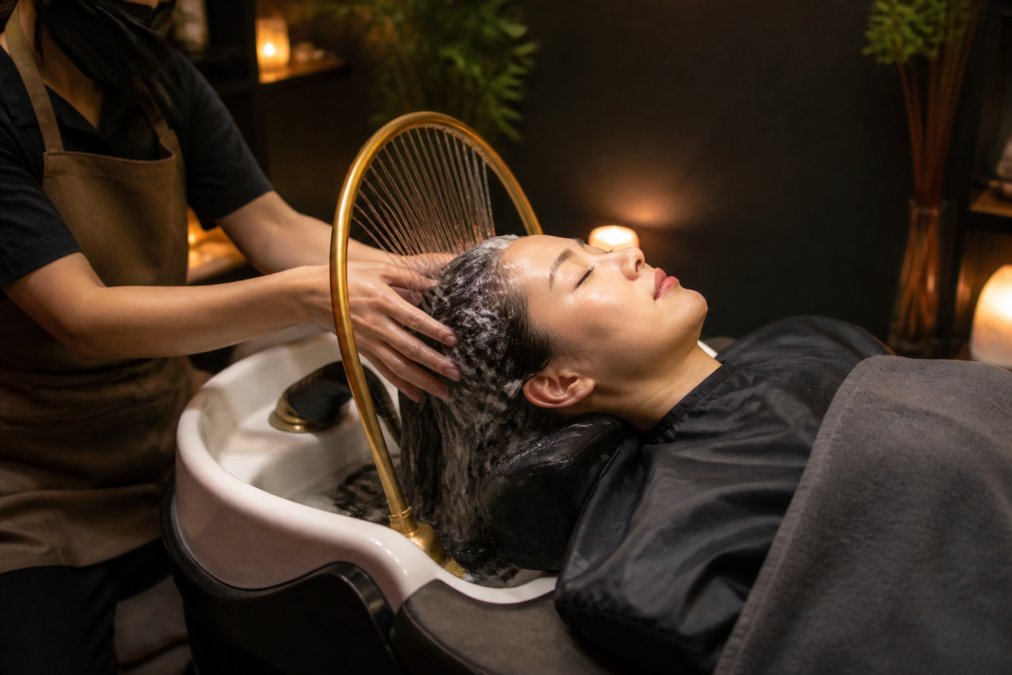
    Stylist performing a relaxing scalp massage during a Japanese head spa treatment under warm water
    Stylist performing a relaxing scalp massage during a Japanese head spa treatment under warm water

    Here’s how a typical session breaks down:

    Phase Duration What Happens
    Consultation and analysis 10-15 min Scalp check, product selection
    Cleansing and exfoliation 15-20 min Warm water rinse, gentle scrub
    Massage and treatment 20-30 min Pressure point work, serum application
    Steam and rinse 10-15 min Water therapy, final cleanse
    Finishing 5-10 min Blow dry, styling, aftercare advice

    Water Therapy and Aromatherapy Massage

    Water therapy uses a continuous flow of warm water across the scalp to loosen buildup and improve circulation. The temperature stays controlled, which prevents the shock of a cold rinse.

    How to Prepare for a Head Spa Appointment

    Preparing for a head spa appointment takes about five minutes of planning. Arrive with dry, unwashed hair so your provider can assess your scalp in its natural state.

    A few practical steps make the session smoother:

    • Skip heavy styling products for 24 hours before your visit. Buildup masks the real condition of your scalp.
    • Eat something light beforehand. Sessions run long, and lying still on an empty stomach gets uncomfortable.
    • Bring a hair tie or clip if you have long hair. It makes the transition between phases easier.
    • List any scalp concerns you want addressed, including itching, flaking, or thinning.
    • Avoid caffeine right before your appointment if you want to fully relax.

    Contraindications and Safety: Who Should Skip a Head Spa

    A head spa isn’t right for everyone, and the honest version of this section is more useful than the version most providers publish. The key distinction is between conditions that mean wait, conditions that mean modify the service, and conditions that mean skip it entirely.

    When to Wait

    These are temporary. Reschedule once the skin has healed.

    • Active scalp infections, fungal, bacterial, or viral. Massage and warm water can spread the infection and irritate the surrounding skin.
    • Open wounds, cuts, or scratches on the scalp. Even minor ones. Warm water and product will sting and slow healing.
    • Recent chemical burns from bleach, relaxers, or a bad color service. The barrier is compromised and needs time to rebuild.
    • Sunburn on the scalp or hairline. Same logic, the skin is inflamed and any friction makes it worse.
    • Recent head, neck, or hair transplant surgery. Follow your surgeon’s clearance timeline, not the spa’s.

    When to Modify the Service

    These don’t rule out a session, but they change how it should be performed. Tell your provider before you book.

    • Pregnancy. Some essential oils, rosemary, sage, and clary sage among them, are commonly avoided during pregnancy. A trained provider can swap to pregnancy-safe options and adjust pressure and positioning. This is a reason to communicate, not a reason to skip.
    • Sensitive or reactive skin. Skip exfoliating scrubs and high-concentration essential oils. Ask for a fragrance-free or low-fragrance protocol.
    • Essential oil or fragrance allergies. Bring the specific list. “Natural” does not mean “safe” for someone with a known sensitivity.
    • Scalp psoriasis or seborrheic dermatitis. A gentle session can help loosen scale, but aggressive exfoliation can trigger a flare. Ask the provider to work around active patches.
    • Recent chemical treatments, perms, relaxers, keratin. Wait at least a week so the treatment doesn’t strip or react with the service.

    When to Skip It

    These need a medical opinion first, not a spa booking.

    • A diagnosed skin condition affecting the scalp that is currently active or being treated.
    • Severe allergies with a history of anaphylaxis to any ingredient in a spa product line.
    • Unexplained hair loss, sudden shedding, or patchy bald spots. These are symptoms, not cosmetic problems. See a dermatologist before booking a scalp treatment, a spa visit can mask the timeline and delay a diagnosis.
    • Active outbreak of any kind on the scalp, face, or neck.

    Why This Section Matters

    Licensed professionals are trained to spot contraindications during the consultation, and a reputable provider will ask about health history before the first drop of water hits your scalp. Be honest. Hiding a condition to avoid rescheduling puts you at risk and makes the provider’s job harder.

    Watch Out
    If you are experiencing sudden or unexplained hair loss, do not book a head spa as a first step. See a dermatologist. A scalp treatment can feel soothing and still delay a diagnosis that matters.

    American Academy of Dermatology scalp care guidance

    Aftercare: Keeping Your Scalp Healthy Between Visits

    Aftercare decides how long your results last. The scalp continues to produce oil and shed dead skin, so maintenance between visits keeps things balanced.

    A simple routine keeps your scalp in good shape:

    • Wash with lukewarm water, not hot
    • Avoid scratching or picking at the scalp
    • Use a scalp brush gently during washing
    • Limit dry shampoo to once or twice a week
    • Book your next session before problems return
    Watch Out
    Don’t apply heavy oils or leave-in treatments right after a session. They undo the deep clean and can clog follicles within days. Wait at least 48 hours before reintroducing styling products.

    How to Choose a Head Spa Near Me and Book With Confidence

    Choosing a head spa near me comes down to four checks: licensing, transparency, consultation process, and hygiene. Ask about all four before you book.

    American Academy of Dermatology scalp care guidance

    Frequently Asked Questions

    How much do head spas usually cost?

    Pricing depends on the provider, treatment length, and add-ons like scalp analysis or aromatherapy massage. A head spa near me may charge more in a luxury lounge than a walk-in salon, so ask for the full menu before booking. Camellia Scalp and Skin Lounge publishes transparent pricing on its website, so you can see exact costs before you commit. Compare what each session includes, not just the base rate, since a longer ritual with scalp detox and consultation often delivers more value.

    Is going to a head spa worth it?

    For many people, yes. A professional head spa treatment goes beyond a salon shampoo by combining scalp analysis, exfoliation, follicle stimulation, and deep relaxation. If you deal with buildup, flaking, or tension, the focused scalp health work can be more effective than drugstore products alone. Results vary by person and condition, so think of it as ongoing scalp care rather than a one-time fix. Booking a consultation first helps you decide if the investment matches your goals.

    What does a head spa typically include?

    Most sessions include a consultation, scalp analysis, cleansing, exfoliation, a scalp massage, and hydration. Many providers add water therapy, aromatherapy massage, and a brief shoulder or neck massage. The exact menu varies, so ask what is included before you book. At Camellia Scalp and Skin Lounge, the ritual is customized based on your scalp condition, which means the esthetician may adjust steps after reviewing your scalp.

    How often should you get a professional scalp treatment?

    Frequency depends on your scalp condition, hair type, and goals. Some individuals find monthly visits beneficial for maintaining scalp health and managing buildup, while others may prefer a different schedule as part of their hair care routine. If you are addressing specific concerns like flaking or product buildup, a provider may suggest a particular frequency initially, which can then be adjusted. It’s best to ask your esthetician for a schedule based on your individual scalp analysis rather than following a generic rule.


    Scalp issues rarely fix themselves with a new product alone. They need consistent, professional care and a routine that supports what happens in the treatment room.

    At Camellia Scalp and Skin Lounge, we build that routine around your scalp, not a generic menu. Our scalp analysis, customized treatment plans, and transparent pricing make it easy to know what you’re getting before you book. Get started with Camellia Scalp and Skin Lounge and give your scalp the consistent care it needs.