Last Updated: November 1, 2026
Quick Summary
A scalp detox is a cleansing step that removes oil, dead skin, and product residue from the scalp. It does not regrow hair or fix hormonal or genetic hair loss, so it should be treated as a way to clean the scalp rather than a thinning cure.
- A scalp detox lifts light buildup from oils, styling products, and dead skin.
- Use a baking soda scrub at most once a week, leaving it on 2 to 3 minutes.
- Do a patch test on the inner forearm 24 hours before the first use of any recipe.
- Skip all home scrubs if your scalp is red, cracked, painful, or has open sores.
- See a clinician for sudden, patchy, or persistent hair loss before trying home treatments.
Table of Contents
- What a Scalp Detox Does and Doesn’t Do
- How Scalp Buildup Forms and How to Tell It Apart from a Medical Scalp Condition
- DIY Scalp Scrub for Buildup: Three Simple Recipes
- Apple Cider Vinegar Scalp Rinse: How to Mix and Use It Safely
- Gentle Scalp Exfoliation for Sensitive Skin: Ingredient Safety and Irritation Signs
- Scalp Care Routine for Hair Thinning: Setting Realistic Expectations
- When to Book a Consultation Instead of Mixing at Home
- Frequently Asked Questions
What a Scalp Detox Does and Doesn’t Do
Scalp detox is a cleansing step. It is not a hair growth treatment. A diy scalp detox recipe removes oil, dead skin, and product residue that can sit on the scalp and around the follicles. That is the whole job.
Many people with thinning hair try a home scalp detox hoping for thicker hair. Those hopes are often set too high. A clean scalp can feel better, look less flaky, and hold styling products more evenly. It does not reverse the process behind hair loss.
What a scalp detox can do:
- Lift light buildup from oils and styling products
- Reduce flakes caused by residue
- Leave the scalp feeling fresh and less itchy
- Make hair look cleaner and sit better at the roots
What it cannot do:
- Regrow hair in areas that have thinned
- Fix hormonal or genetic hair loss
- Treat a medical scalp condition
How Scalp Buildup Forms and How to Tell It Apart from a Medical Scalp Condition
Buildup forms when oil, sweat, dry shampoo, styling sprays, and dead skin cells collect at the roots. Heavy use of these products and infrequent washing make it worse. Many people notice it as a waxy feel, a dull look at the roots, or a film that makes the scalp itchy.
Buildup is not the same as a skin condition. Scalp psoriasis, seborrheic dermatitis, and fungal infections can also cause flaking and itching, and these generally need evaluation by a qualified clinician rather than a home scrub.
Signs that point to simple buildup:
- Flakes that look greasy or waxy
- Itch that eases after a wash
- Symptoms that change with product use
- Roots that feel heavy or coated
Signs that call for a doctor or dermatologist:
- Redness, sores, cracking, or pus
- Patches of scaling with clear borders
- Sudden or patchy hair loss
- Pain or burning that does not go away
- Symptoms that persist after several weeks of gentle cleansing
DIY Scalp Scrub for Buildup: Three Simple Recipes
A scrub uses a gentle abrasive to loosen buildup. Use it once a week at most, and only on a scalp without cuts, sores, or active irritation. Scrub gently with the pads of your fingertips, never the nails. Work in small sections and keep the pressure light, the goal is to lift residue, not to scrub the skin.
Each recipe below lists exact measurements, who it suits, how long to leave it on, and how to rinse. Do a patch test on the inner forearm 24 hours before the first use of any new recipe.
Recipe 1: Baking Soda Scalp Treatment
Measurements: 1 tablespoon of baking soda mixed with 2 tablespoons of water until it forms a smooth paste.
Suits: Oily scalps with light, waxy buildup. Skip it if your scalp is dry, sensitive, or already flaking from irritation.
Apply: Work the paste into a damp scalp, massage for about 1 minute with fingertips, and leave on for no more than 2 to 3 minutes.
Rinse: Rinse thoroughly with warm water, then follow with a mild shampoo. Rinse until the water runs clear, leftover baking soda can leave a gritty film.
Frequency: Once a week at most, and no more than twice a month on fine or dry hair.
Baking soda is alkaline, while the skin’s surface is naturally slightly acidic. Overuse can dry the scalp or irritate sensitive skin. Stop if stinging or redness appears.
Recipe 2: Coconut Oil and Clay Mask
Measurements: 1 tablespoon of coconut oil, 1 teaspoon of rhassoul clay, and 1 to 2 teaspoons of water to reach a smooth, spreadable consistency.
Suits: Dry or tight scalps with flaking that is not greasy. Use less coconut oil on fine hair, since it can weigh roots down.
Apply: Apply to a dry scalp in sections, leave on for 10 minutes, then rinse.
Rinse: Rinse with warm water first to loosen the oil, then shampoo twice to remove the residue. A single shampoo often leaves fine hair looking flat.
Frequency: Every one to two weeks.
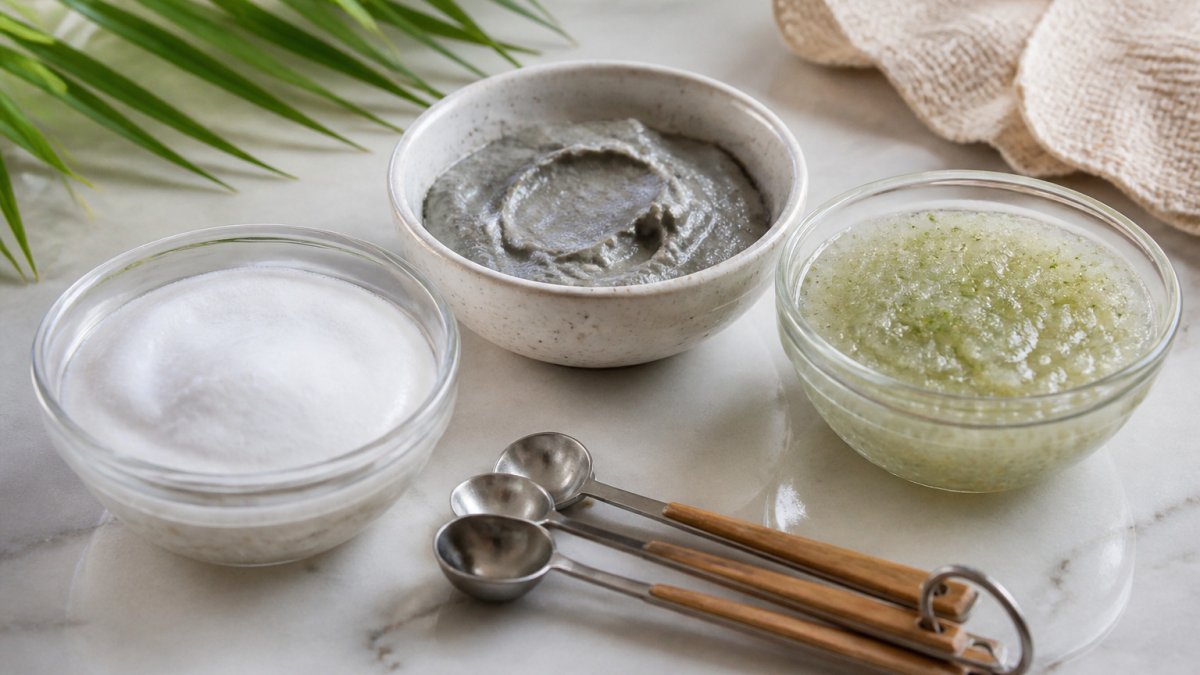
Recipe 3: Fine Sugar and Aloe Scrub
Measurements: 1 tablespoon of fine white sugar mixed with 1 tablespoon of aloe vera gel and 1 teaspoon of a mild shampoo.
Suits: Normal to oily scalps that want a lighter scrub than baking soda. The sugar grains are finer than coarse salt and dissolve as you work, which lowers the risk of abrasion.
Apply: Massage into a damp scalp for 30 to 60 seconds, then rinse immediately. Do not leave it on, the sugar dissolves and the shampoo starts to dry.
Rinse: Rinse with warm water and follow with conditioner on the lengths only, not the roots.
Frequency: Once a week at most.
Skip all three recipes if you have eczema, psoriasis, seborrheic dermatitis, open wounds, or a scalp that is red, cracked, or painful. A scrub can worsen inflamed skin. If you are shedding suddenly or in patches, see a clinician before trying any home treatment.
Apple Cider Vinegar Scalp Rinse: How to Mix and Use It Safely
An apple cider vinegar rinse may help lift residue and can leave hair feeling smoother. It is a cosmetic cleansing step and is not a treatment for scalp conditions or hair loss.
Measurements: Mix 1 part apple cider vinegar with 3 to 4 parts water. For a single application, that is 2 tablespoons of vinegar in 6 to 8 tablespoons (about 1/2 cup total) of water. Use raw, unfiltered vinegar only if it has been diluted, never pour it on straight.
Apply: Shampoo and rinse first, then pour the diluted mixture over the scalp, working it along the part lines. Leave it on for 1 to 2 minutes, no longer. Rinse with cool water.
Frequency: Once a week at most. More frequent use can dry the scalp and strip color-treated hair.
Patch test: Dab a little of the diluted mixture on the inner forearm and wait 24 hours. If redness, itching, or burning appears, do not use it on the scalp.
Skip this rinse entirely if the scalp is cracked, sore, sunburned, or has open sores. Undiluted vinegar can burn and irritate, and even diluted vinegar stings on broken skin. If you have color-treated or chemically straightened hair, test on a hidden strand first, the acid can shift some dyes and relax some treatments.
Signs to stop: Burning or stinging during the rinse, redness lasting more than an hour, tightness or dryness after rinsing, or new itching or small bumps. Rinse well with cool water and discontinue.
American Academy of Dermatology guidance on scalp care and when to see a dermatologist
The rinse is diluted and used briefly, so these are the key settings to follow.
| Setting | Value | Note |
|---|---|---|
| Vinegar to water | 1 part vinegar to 3-4 parts water | Never pour it on straight |
| Per application | 2 tbsp vinegar in 6-8 tbsp water | About 1/2 cup total |
| Leave on | 1-2 minutes | No longer |
| Frequency | Once a week at most | More often can dry the scalp |
| Patch test | 24 hours on inner forearm | Stop if redness or burning |
Gentle Scalp Exfoliation for Sensitive Skin: Ingredient Safety and Irritation Signs
Sensitive scalps need a lighter touch. Skip harsh scrubs with coarse grains. Choose fine, gentle ingredients and cut back on frequency.
Watch for these irritation signs:
- Burning or stinging during the treatment
- Redness that lasts longer than an hour
- Tightness or dryness after rinsing
- New itching or small bumps
If any of these appear, rinse well and stop. Repeated irritation can make thinning worse by stressing the scalp.
Scalp Care Routine for Hair Thinning: Setting Realistic Expectations
A calm, steady routine works better than aggressive detoxing. Many people see a cleaner scalp within a few weeks of gentle care. Visible changes in hair density take much longer, and many people see none from cleansing alone.
A simple weekly plan:
- Wash with a mild shampoo two to three times per week
- Scrub or detox once every one to two weeks, not more
- Rinse out styling products before bed
- Keep heat styling and tight hairstyles to a minimum
Track how your scalp feels over several weeks. Note flaking, itch, and shedding in a simple journal. Bring it to a clinician if thinning continues.
When to Book a Consultation Instead of Mixing at Home
Home recipes suit mild buildup in healthy skin. They are not a substitute for professional evaluation. Book a consultation if you have ongoing thinning, persistent itch, painful flaking, or any sign of infection.
Camellia Scalp and Skin Lounge in Las Vegas offers scalp analysis as part of its head spa services. A professional there can assess the scalp and discuss whether a cleansing ritual fits your needs. For thinning that persists, a physician or dermatologist should evaluate the cause first.
Note: This article provides general information only and does not replace advice from a qualified healthcare professional.
Frequently Asked Questions
Can a scalp detox help with thinning hair?
A scalp detox can make the scalp feel cleaner and can remove product residue that sits on the scalp and weighs down roots. It does not treat the underlying causes of hair loss, such as genetics, hormonal changes, nutritional deficiencies or medical conditions. If thinning is new, sudden or patchy, a qualified dermatologist or physician should evaluate it before you rely on any home treatment. Use a detox as a cosmetic cleansing step, not as a hair growth treatment.
How often should you use a scalp scrub?
Most people with sensitive or thinning-prone scalps do better with a scrub once every one to two weeks rather than weekly. Over-exfoliating can irritate the skin, cause redness or make flaking worse. Start with the gentlest recipe, watch how your scalp responds over several uses, and reduce frequency if you notice stinging, tightness or increased shedding. Stop if irritation persists.
Can baking soda or apple cider vinegar damage your hair or scalp?
Both can irritate the scalp when used too strong, too often or left on too long. Baking soda is alkaline and can dry or roughen sensitive skin, while undiluted apple cider vinegar can sting and cause burns or redness. Always dilute vinegar in water, patch test on the inner arm first, rinse thoroughly, and avoid either product on broken, sunburned or inflamed skin. Discontinue use if you notice burning or rash.
When should you see a dermatologist about hair thinning?
See a board-certified dermatologist if thinning is sudden, patchy, accompanied by scalp pain, redness, scaling or sores, or if you notice increased shedding for several months. These signs can point to conditions that need medical diagnosis and treatment. A professional consultation can also determine whether a scalp treatment or a medical option is appropriate for your situation.
