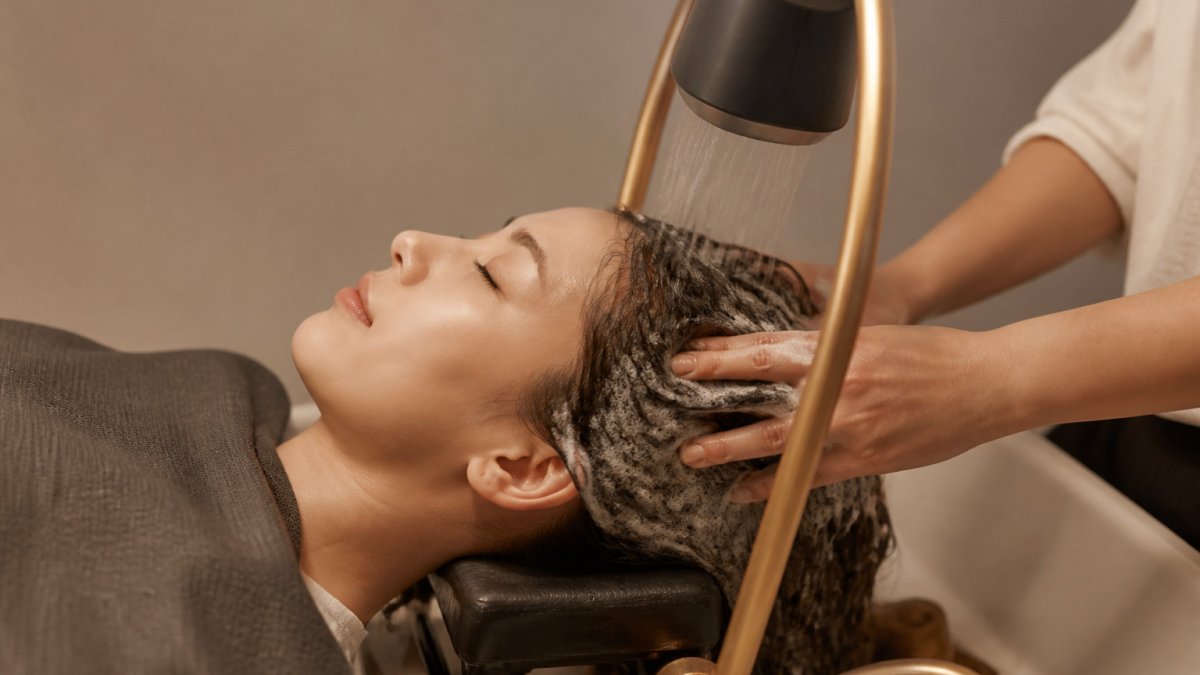
Last Updated: November 2, 2026
Quick Summary
Head spa treatments can help you relax, and many people feel calmer afterward. However, they are not a treatment for clinical anxiety. Research is limited, so a head spa may ease everyday stress for a while, but ongoing anxiety needs professional support.
- A typical session includes consultation, scalp analysis, cleansing, exfoliation, scalp massage, rinsing, and finishing.
- Research on head spa treatments and anxiety is limited, and many studies measure relaxation rather than anxiety itself.
- Track your stress on a 0 to 10 scale before and after three or four visits to judge your own response.
- Skip treatment or check with a doctor if you have open wounds, active scalp infections, or recent scalp surgery.
- If anxiety affects work, sleep, or daily life, see a licensed mental health professional.
Table of Contents
- Can Head Spa Treatments Reduce Stress and Anxiety?
- How Scalp Massage Links to the Nervous System
- What Happens During a Head Spa Treatment Process
- Scalp Massage for Anxiety: What the Evidence Shows
- How Long Does a Head Spa Treatment Take and How Often to Book
- When a Head Spa Is Not the Right Choice
- Booking Your First Relaxing Head Spa Session in Las Vegas
- Frequently Asked Questions
Can Head Spa Treatments Reduce Stress and Anxiety?
Head spa treatments can help you relax, and many people leave feeling calmer and lighter. But they are not a treatment for clinical anxiety. A head spa may ease everyday stress for a while, while long-term anxiety needs more support.
Here is what a head spa usually focuses on:
- Slow, rhythmic scalp massage that eases tension in the neck, shoulders, and head
- A quiet, low-light room that signals your body to slow down
- Warm water and gentle hair washing that make the session feel restful
- Time away from screens, calls, and daily demands
The research on this topic is still limited, and many studies look at relaxation rather than anxiety itself. So think of a head spa as a pleasant way to unwind, not a medical solution. If your stress or anxiety is heavy or lasts for weeks, talk with a doctor or licensed mental health professional first (Caring for Your Mental Health).
How Scalp Massage Links to the Nervous System
Scalp massage is often described as working partly through the nervous system, though the exact mechanisms are still being studied.
The basic idea: Slow, steady touch may help shift the body toward its rest-and-recover mode, often called the parasympathetic response. When you are stressed, your body leans toward “fight or flight.” Calm touch can nudge it the other way.
Many people notice the effect in simple ways:
- Breathing slows down
- Shoulders drop
- The jaw and forehead loosen
- Thoughts feel less crowded
Keep your expectations realistic. A relaxed feeling after a massage is common, but it usually fades over hours or days. Think of it as a short break for your nervous system, not a permanent reset.
What Happens During a Head Spa Treatment Process
A typical session follows a clear order, which helps you know what to expect.
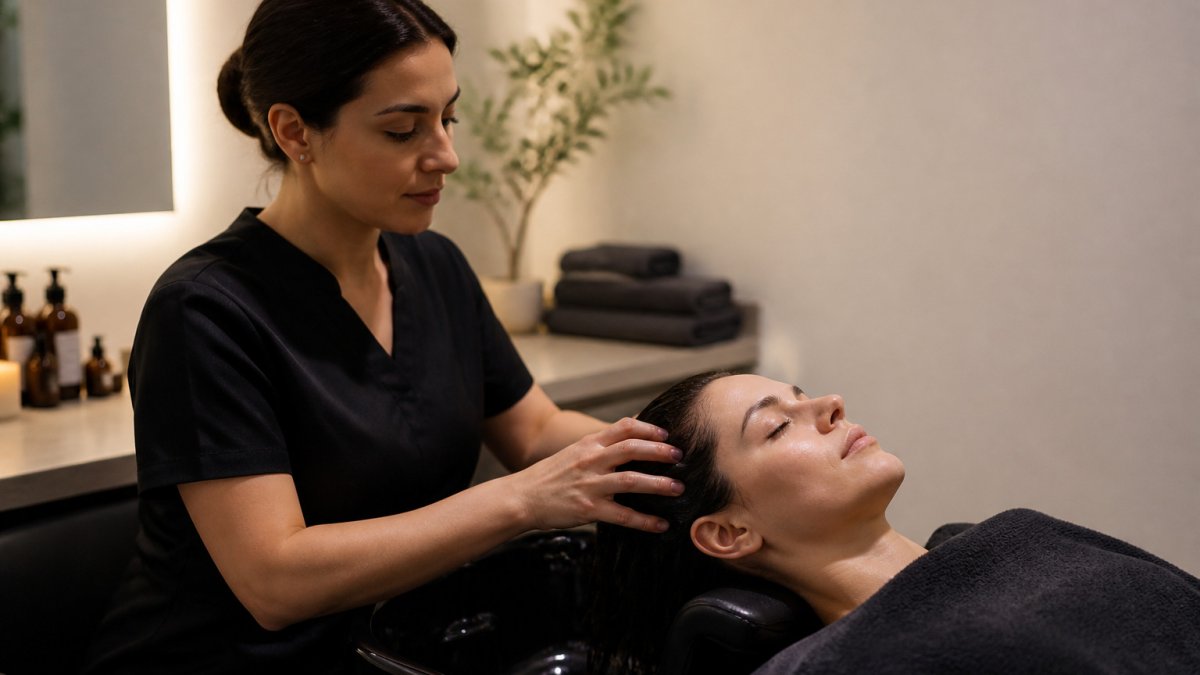
- Consultation: Your therapist asks about your scalp, hair, and any concerns, such as dryness, flaking, or product buildup.
- Scalp analysis: The therapist checks your scalp condition before starting.
- Pre-wash and cleanse: Your hair is wet and cleansed to loosen buildup.
- Exfoliation: A gentle scrub or treatment may be used to clear dead skin.
- Scalp massage: This is the main part, usually with slow, rhythmic movements.
- Rinse and condition: Your hair is rinsed and conditioned.
- Finish: You are dried and styled, and your therapist may suggest home care.
Tell your therapist about any sensitivity, injuries, or skin conditions before you begin.
A typical session follows a clear sequence, so you know what to expect from start to finish.
| Step | What happens | Notes |
|---|---|---|
| Consultation | Therapist asks about scalp, hair, and concerns | Mention dryness, flaking, or buildup |
| Scalp analysis | Therapist checks scalp condition | Done before the treatment starts |
| Pre-wash and cleanse | Hair is wet and cleansed | Loosens buildup |
| Exfoliation | Gentle scrub or treatment clears dead skin | May be used |
| Scalp massage | Slow, rhythmic movements | The main part of the session |
| Rinse and condition | Hair is rinsed and conditioned | Final care step |
| Finish | Hair is dried and styled | Therapist may suggest home care |
Scalp Massage for Anxiety: What the Evidence Shows
The research on this topic is limited. Here is a breakdown of what the evidence can and cannot tell you.
What the research generally looks like
- Small samples. Many scalp-massage studies enroll relatively few participants. Small samples make it harder to rule out chance.
- Short follow-up. A common design measures how people feel immediately after a 10- to 30-minute massage, or after a handful of sessions over a few weeks. Long-term effects on anxiety are rarely studied.
- Self-reported outcomes. Most studies rely on questionnaires where people rate their own stress, tension, or mood. That is a real signal, but it is subjective and susceptible to expectation effects, people who expect to relax often report relaxing.
- Mixed outcome measures. Some studies look at heart rate, blood pressure, or salivary cortisol (a stress hormone) alongside self-reports. Results are inconsistent: some show small drops, others show no meaningful change.
What the evidence can support
Some studies report that a single scalp massage session may be associated with a short-term, self-reported increase in relaxation. Any such effect is generally modest and short-lived.
What the evidence cannot support
- That head spa treatments treat, cure, or prevent clinical anxiety disorders
- That a session replaces therapy, medication, or other evidence-based care
- That benefits persist for weeks or months without ongoing sessions
- That one person’s result predicts another’s, response varies widely
If your anxiety interferes with work, sleep, relationships, or daily functioning, a spa treatment is not a substitute for evaluation by a licensed mental health professional. Use a head spa as a complement to care, not a replacement for it.
A practical way to judge your own response
Because group averages tell you little about your individual response, treat a few sessions as a personal trial. Before each visit, rate your stress on a simple 0-10 scale and note how you slept the night before. After the session, rate again, and repeat the rating the next morning. Do this for three or four visits. A consistent pattern, lower ratings after sessions, better sleep on session nights, is more meaningful than any single study. If you see no change after several sessions, that is useful information too: a head spa may not be the right tool for you, and it is worth discussing other options with a clinician.
National Institute of Mental Health, anxiety disorders overview
How Long Does a Head Spa Treatment Take and How Often to Book
Session length varies, so ask the lounge about the duration of the treatment you are considering.
How often you go depends on your goals:
- For relaxation: Once a month is a common choice for many people
- For scalp concerns: Your therapist may suggest a schedule based on your scalp condition
- For a special occasion or travel: A single session can still feel restorative
Check Camellia Scalp and Skin Lounge‘s website for current pricing and to ask about any package options.
When a Head Spa Is Not the Right Choice
A head spa is generally gentle, but “gentle” is not the same as “right for everyone.” This section covers who should skip or postpone treatment, how to adapt a session to sensory or physical needs, and when a symptom deserves a clinician rather than a therapist.
Skip the treatment or check with a doctor first if you have:
- Open wounds, cuts, sores, or a healing tattoo on the scalp
- Active scalp infections, rashes, or a flare of a condition such as psoriasis or seborrheic dermatitis
- Recent scalp surgery, a head injury, or a recent cosmetic procedure such as a transplant or chemical peel
- Known allergies to shampoos, oils, fragrances, or exfoliants used in the treatment
- A history of severe or ongoing anxiety that affects daily life, a spa can complement care, but it is not a substitute for it
Sensory and accessibility considerations
Many people avoid spa treatments not because of a medical issue but because the environment overwhelms them. You can ask about adapting a session if you speak up before it starts:
-
Fragrance. If scents bother you, ask in advance which oils and shampoos will be used before you book.
-
Touch sensitivity. Tell your therapist if light touch feels irritating rather than calming, some people prefer firmer, slower pressure.
-
Communication. Agree on a simple signal, a raised hand, a word, to pause or stop at any time.
When to stop and seek clinical advice
Tell your therapist right away if you feel dizzy, nauseated, short of breath, or unusually uncomfortable during a session. After a session, contact a doctor if you develop a persistent headache, scalp redness or swelling that does not settle within a day or two, or a rash. Anxiety that is worsening, or that comes with panic symptoms, chest tightness, or sleep disruption lasting more than a couple of weeks, should be evaluated by a licensed health professional, not managed with more spa visits (Caring for Your Mental Health).
Bring a short note to your first appointment listing any scalp conditions, allergies, recent procedures, and sensory preferences. Handing it to the therapist takes the pressure off you to remember everything mid-conversation.
Booking Your First Relaxing Head Spa Session in Las Vegas
If you want to try a head spa, Camellia Scalp and Skin Lounge offers head spa treatments in a calm, refined lounge. Treatments begin with a consultation so each session can be tailored to your needs. Same-day availability options are offered, so you can ask about visits that fit your schedule.
For a relaxing first visit, arrive a few minutes early, tell your therapist what you hope to get from the session, and speak up about pressure or comfort. Then notice how you feel afterward, and how you feel over the next few days.
To book, visit our website or call the lounge directly to check current availability.
Frequently Asked Questions
Can a head spa treatment reduce stress and anxiety?
A head spa treatment can promote relaxation, and the scalp massage involved may help many people feel calmer during and shortly after a session. Some research on scalp massage has explored effects on the nervous system, though studies are small and effects vary between individuals. A head spa is best seen as a supportive relaxation practice, not a treatment for clinical anxiety. If anxiety is persistent or affects daily life, speak with a qualified healthcare professional.
How long do the relaxing effects of a head spa last?
Many people report feeling relaxed for a few hours to a day after a session, though the duration differs from person to person. Regular sessions may build a more consistent sense of calm over time for some clients. Individual response depends on stress levels, sleep, and overall routine. Tracking how you feel after each visit can help you judge what works for you.
Can a head spa replace treatment for anxiety?
No. A head spa is a relaxation and scalp care service, not a medical treatment, and it should not replace care from a doctor, therapist, or other qualified professional. If you experience ongoing anxiety symptoms, speak with a healthcare provider about appropriate options. A head spa can complement a broader wellness routine but should not be your only response to anxiety.
How often should you get a head spa for relaxation?
Frequency depends on your goals, schedule, and budget. Some clients book monthly for maintenance, while others visit less often for occasional unwinding. Pricing for Camellia Scalp & Skin Lounge services is available on the brand’s website, and current rates or a quote can be requested directly. Starting with one session and noticing how you feel afterward is a practical way to decide on a schedule.
